Place d’Austerlitz in Ajaccio, Corsica

La Place d’Austerlitz in Ajaccio, Corsica is the location of an enormous monument to Napoleon Bonaparte. Not seen in the photograph below are two eagles surmounting the years in which Napoleon was born and died (1769-1821). The year of Napoleon’s birth is subject to some debate. Various documents list the date of his birth as 15 August 1769, 08 January 1768, or 05 February 1768. The date of birth on the oldest document (and therefore the one created closest to the actual event) is 15 August 1769.

The statue of Napoleon on top of the pyramid watches over the city of Ajaccio. Elsewhere in la Place d’Austerlitz are bas relief figures of angels and a plaque from the Corsican community in Argentina commemorating the 100th anniversary of Napoleon’s death.
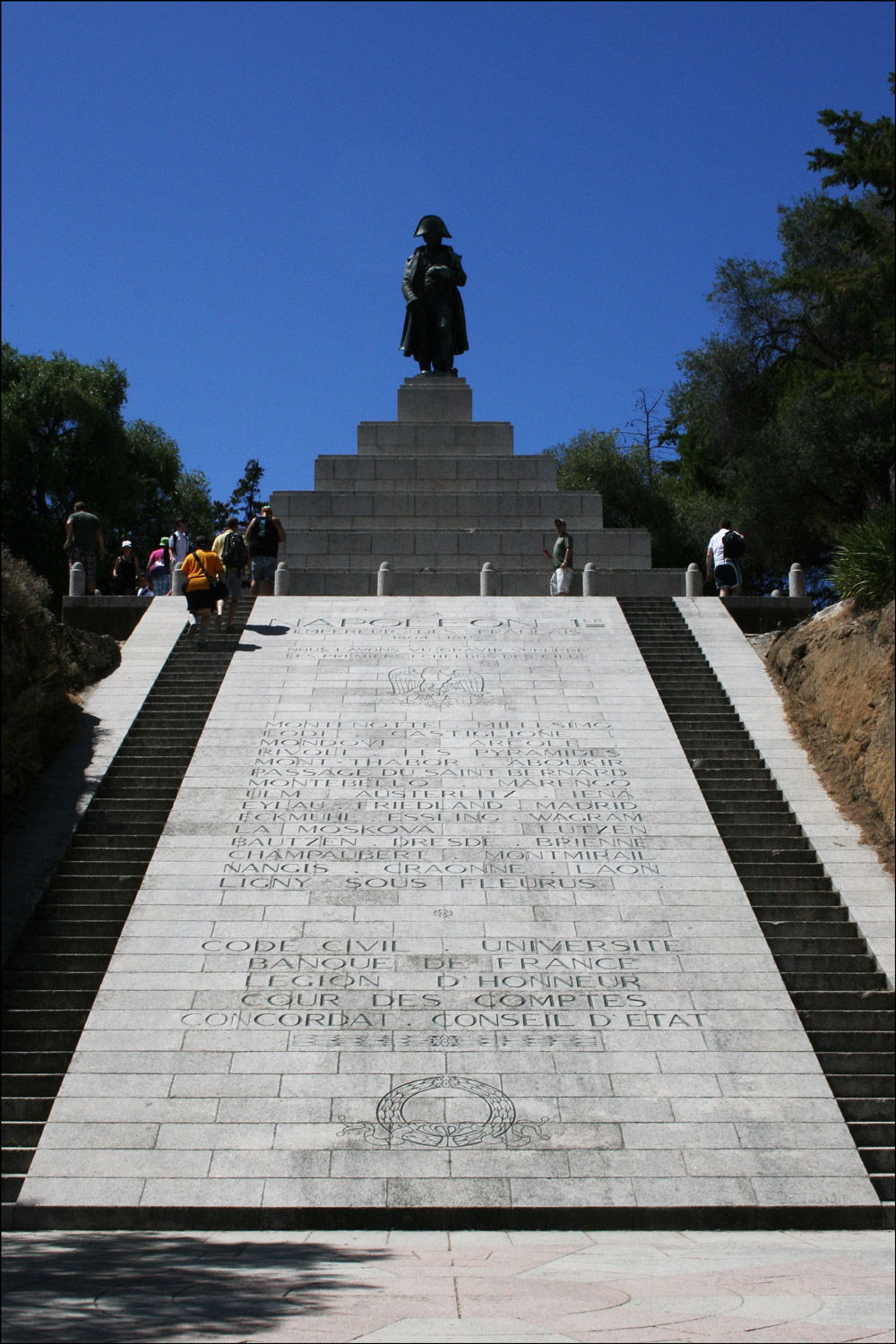
Monument to Napoleon in la Place d'Austerlitz

Monument to Napoleon in la Place d’Austerlitz

SOURCE:  Monument to Napoleon in la Place d’Austerlitz (Ajaccio, Corsica, France); photographed by Stephen J. Danko on 09 August 2011.
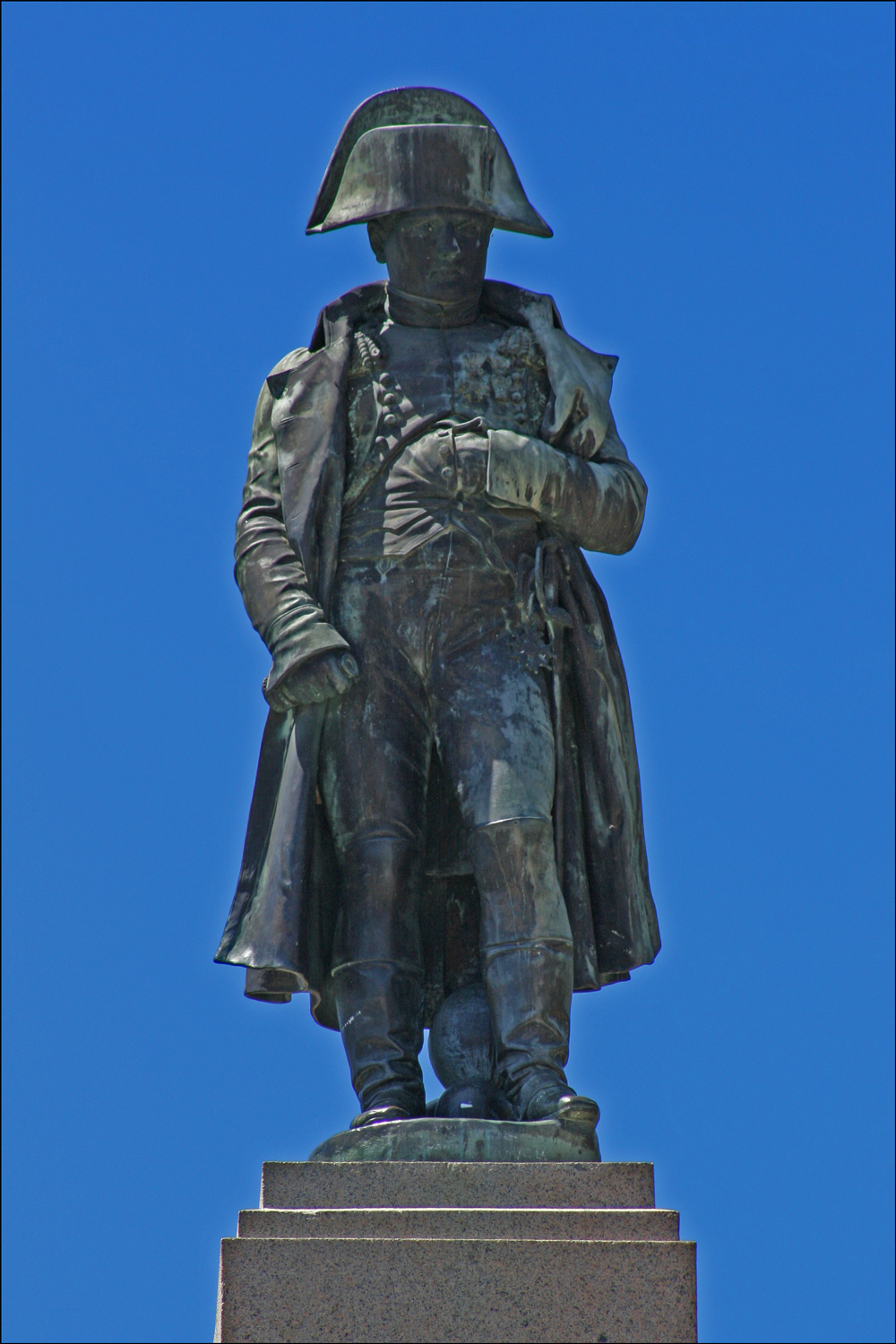
Statue of Napoleon on la Place d'Austerlitz

Statue of Napoleon in la Place d’Austerlitz

SOURCE:  Statue of Napoleon in la Place d’Austerlitz (Ajaccio, Corsica, France); photographed by Stephen J. Danko on 09 August 2011.
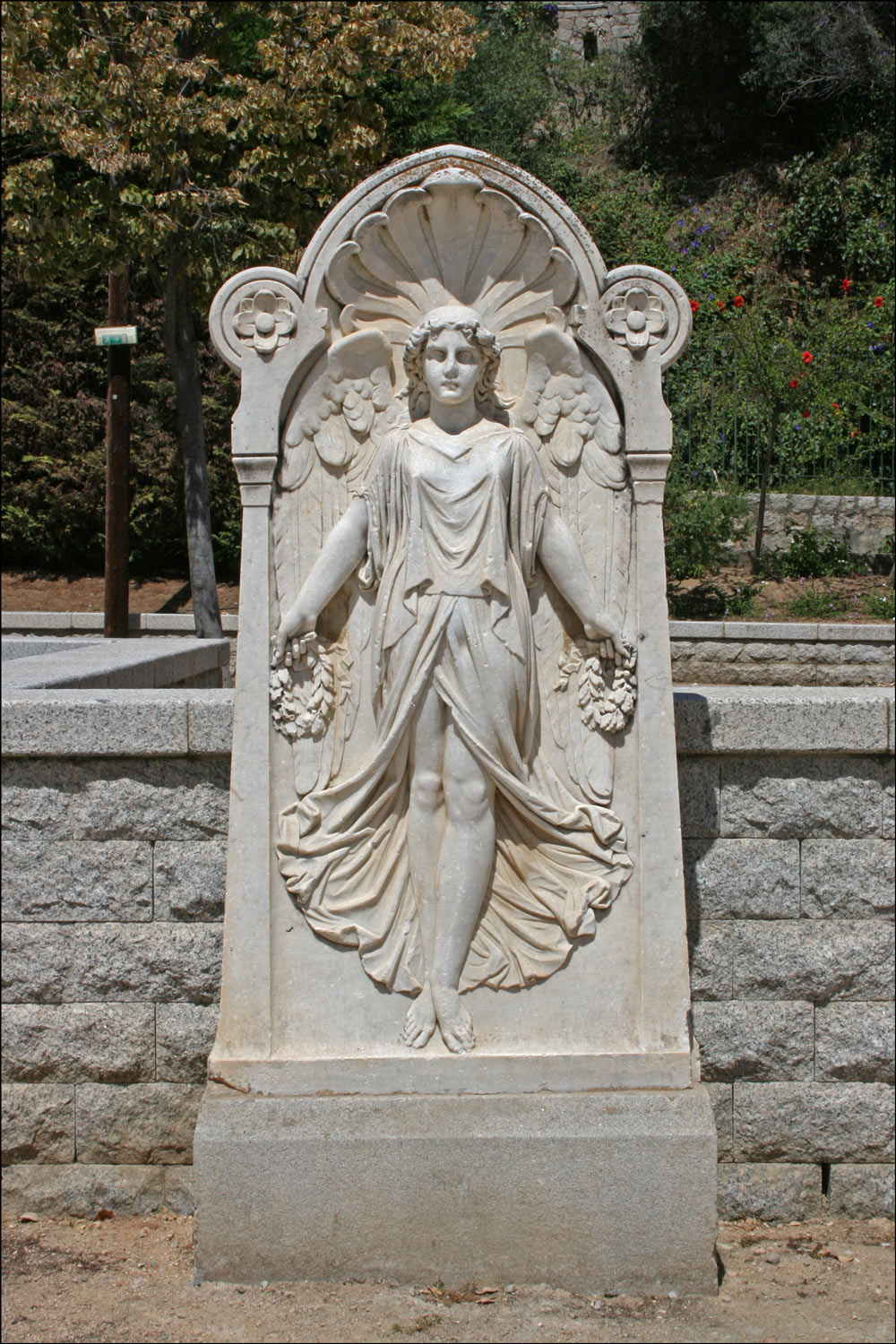
Bas Relief in la Place d'Austerlitz

Bas-Relief in la Place d’Austerlitz

SOURCE:  Bas-Relief in la Place d’Austerlitz (Ajaccio, Corsica, France); photographed by Stephen J. Danko on 09 August 2011.
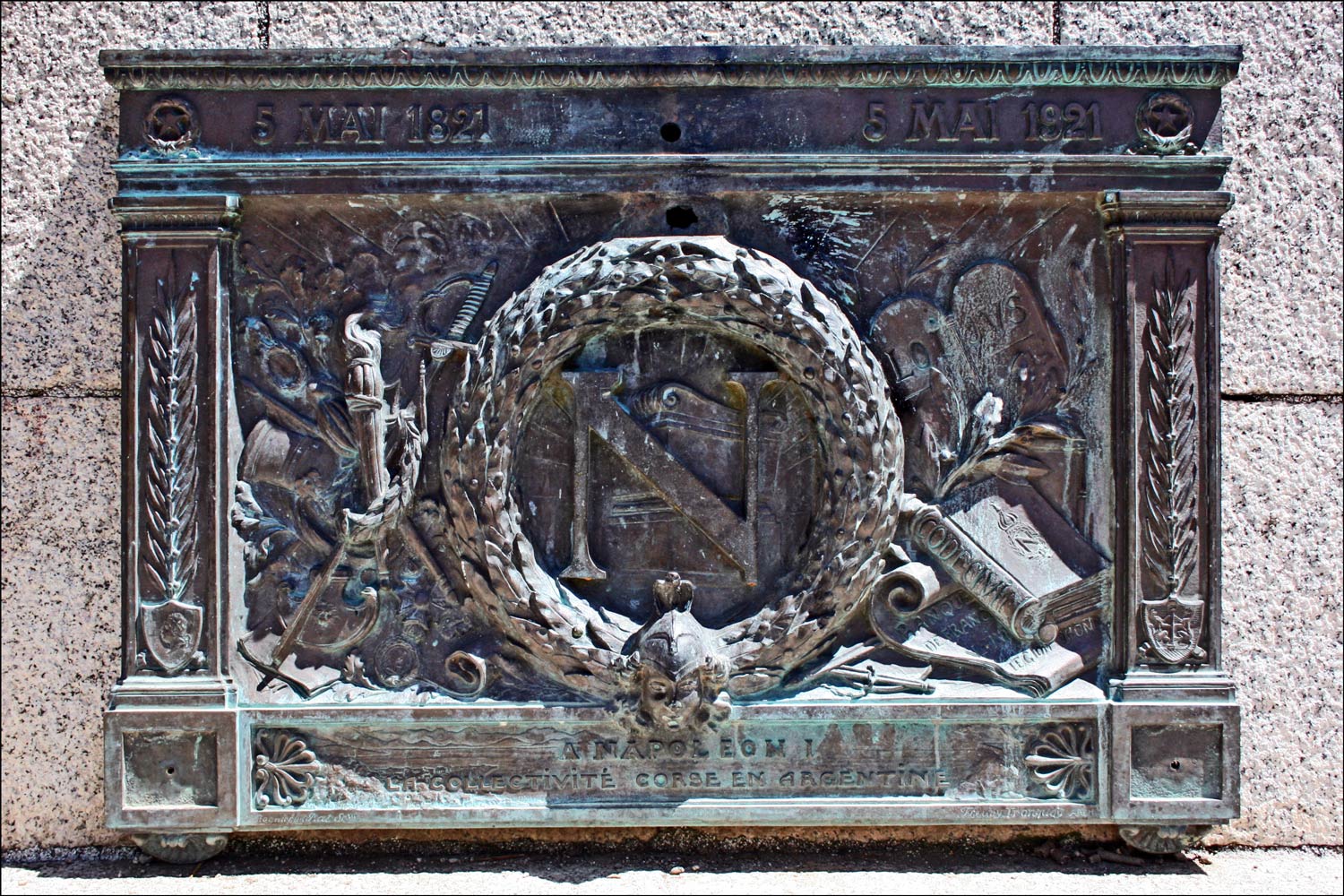
Plaque in la Place d'Austerlitz

Plaque in la Place d’Austerlitz

SOURCE:  Plaque in la Place d’Austerlitz (Ajaccio, Corsica, France); photographed by Stephen J. Danko on 09 August 2011.

Copyright © 2011 by Stephen J. Danko
Posted in Daily Journal | Tagged , , , | 1 Comment

The Granary Market and Farewell to Pompeii, Italy

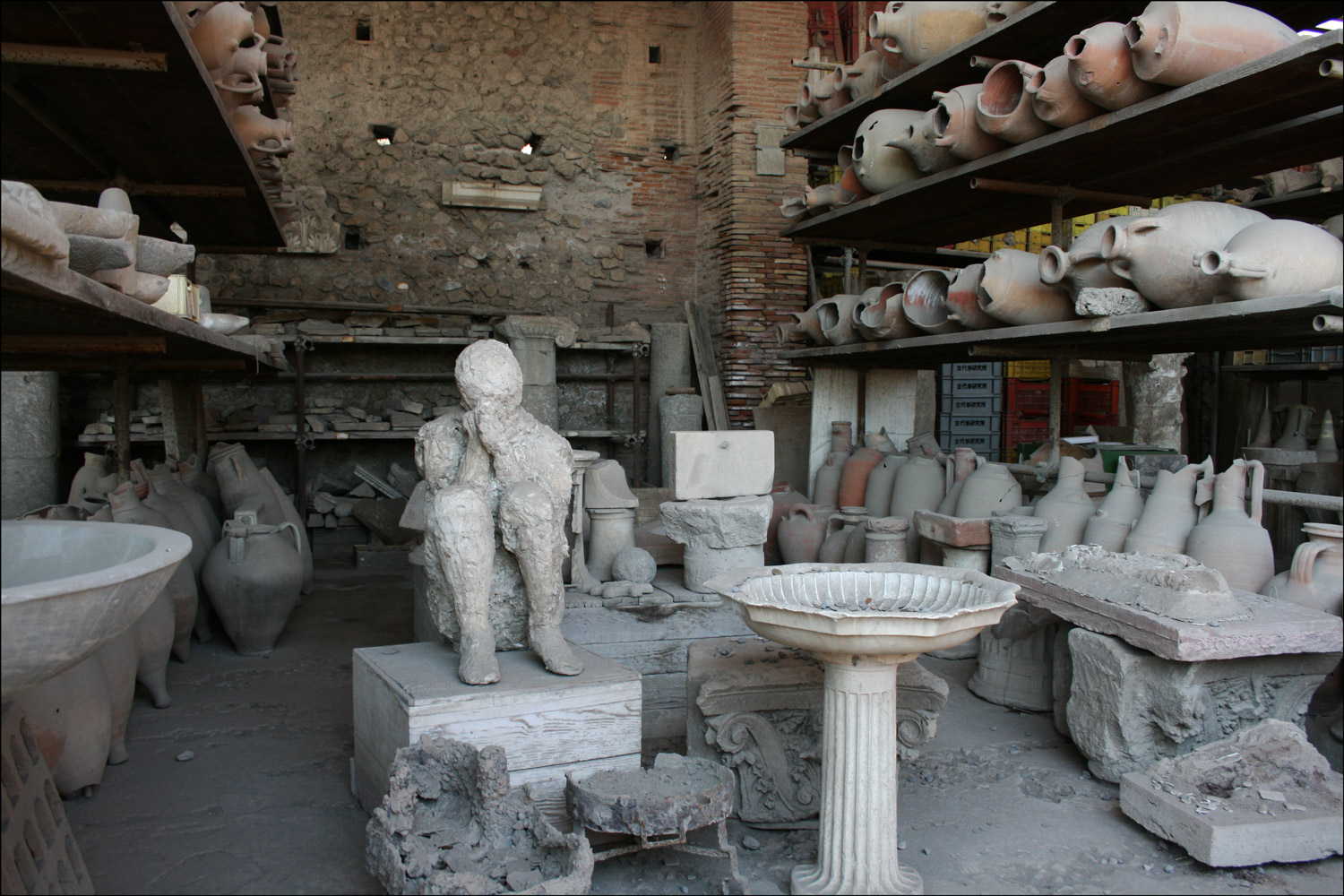
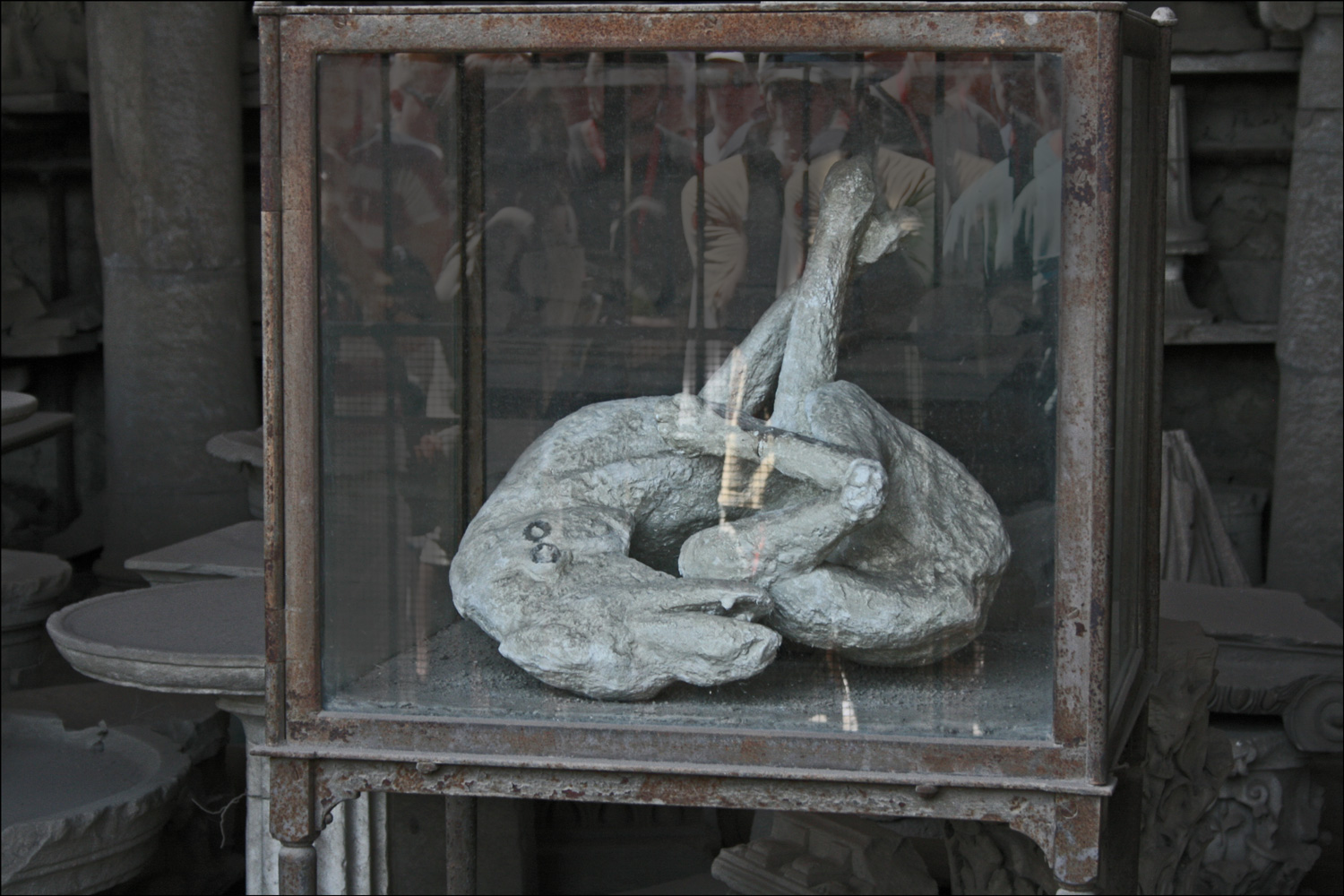
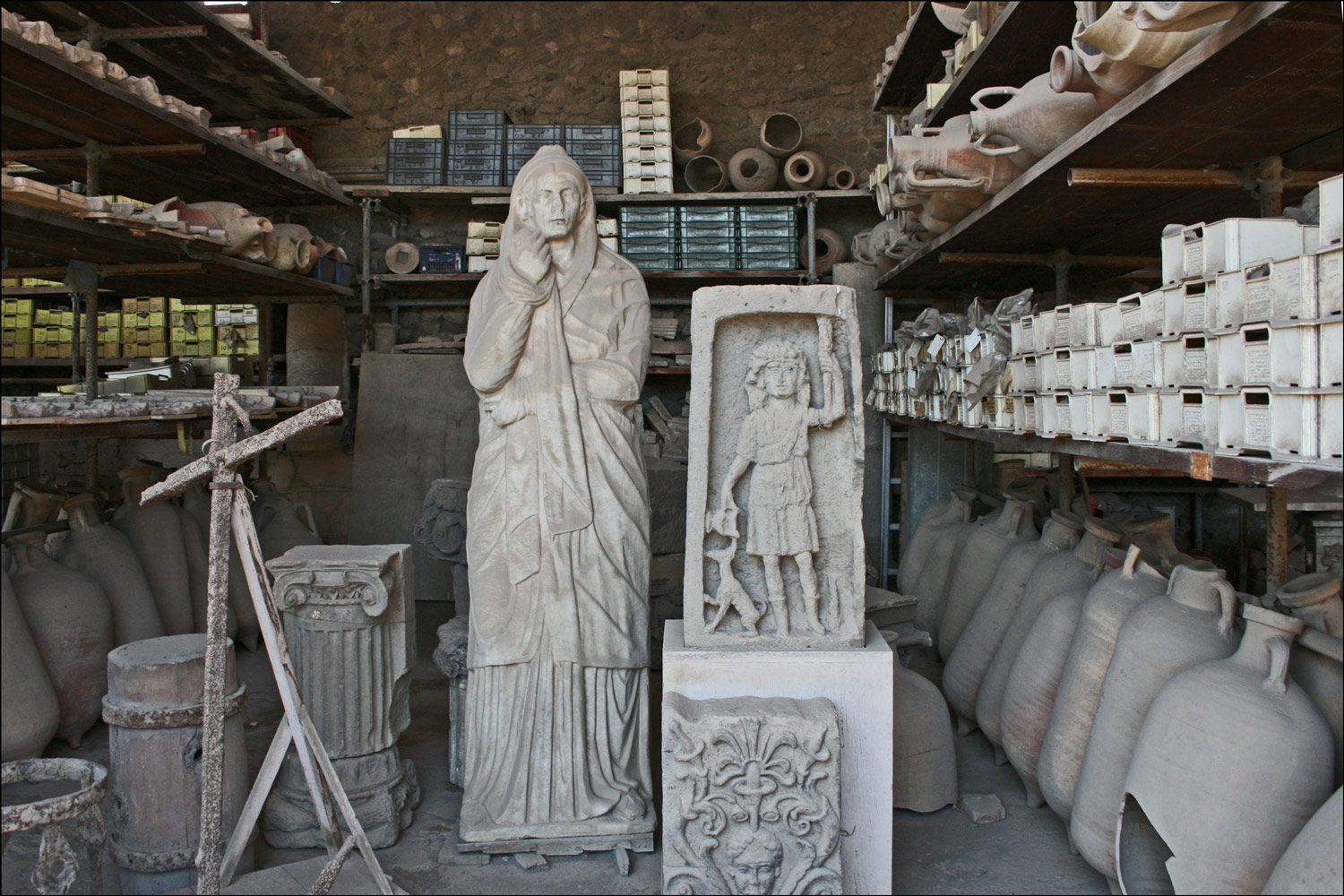
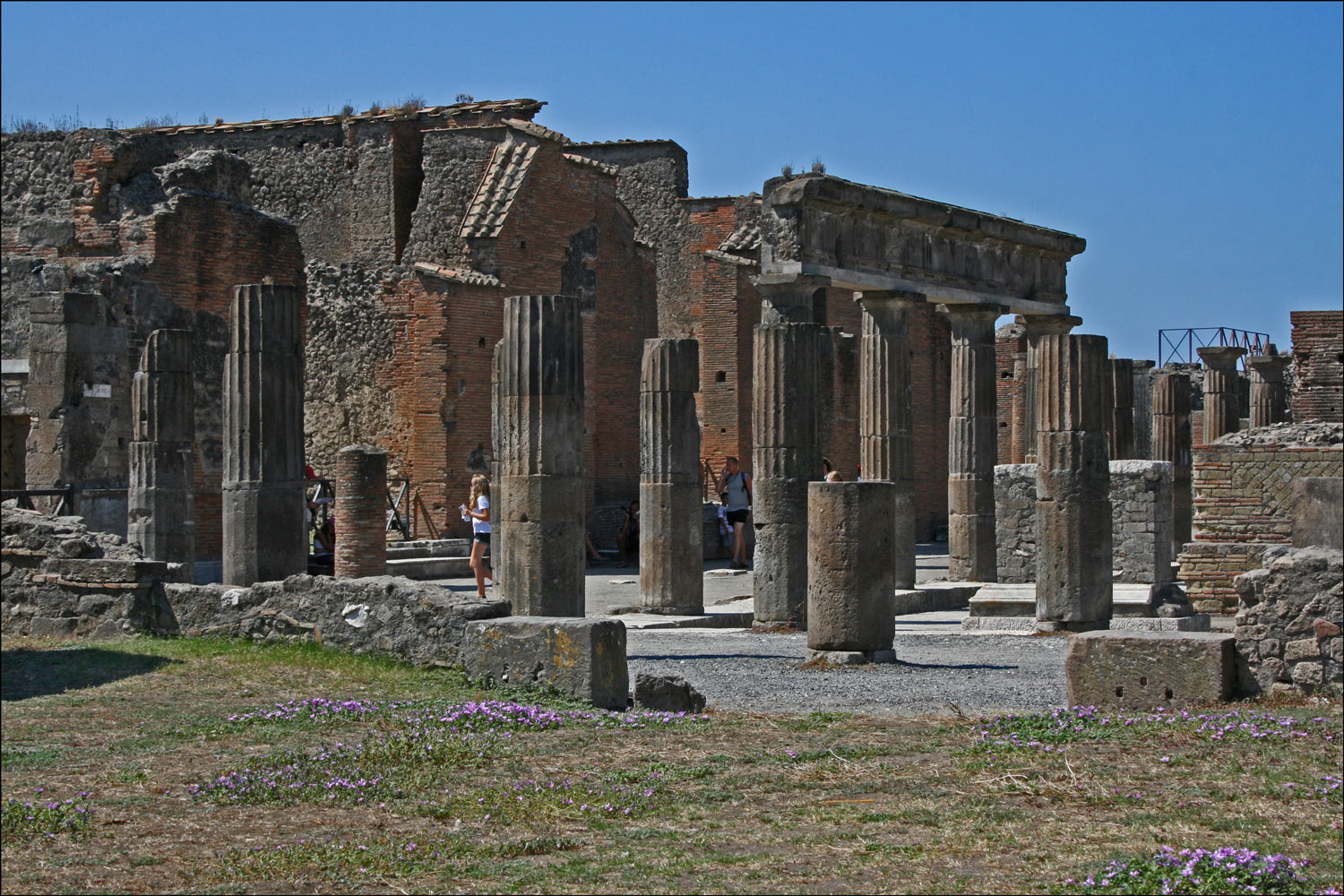
On the west side of the Pompeii forum (VII.8) was the granary market (VII.7.29), now used for the storage of supplies and artifacts. Looking into various parts of the granary market, the visitor can see the plaster cast of the body of one of the former residents of Pompeii, the plaster cast of a dog that obviously died in anguish, statues, urns, and other artifacts. On the south side of the forum is the Colonnade of Popidius in front of the City Archives (VIII.2.8) and the City Government Office (VIII.2.6). Leaving Pompeii through the Piazza Porta Marina Inferiore, there are views of the rear of the Sarno Baths (VII.2.17-21).

Granary Market with Body

Granary Market with Body

SOURCE:  Granary Market with Body (Pompeii, Campania, Italy); photographed by Stephen J. Danko on 08 August 2011.

Granary Market with Dog

Granary Market with Dog

SOURCE:  Granary Market with Dog (Pompeii, Campania, Italy); photographed by Stephen J. Danko on 08 August 2011.

Granary Market with Statues

Granary Market with Statues

SOURCE:  Granary Market with Statues (Pompeii, Campania, Italy); photographed by Stephen J. Danko on 08 August 2011.

Colonnade of Popidius with City Archive and Office

Colonnade of Popidius with City Archive and Office

SOURCE:  Colonnade of Popidius with City Archive and Office (Pompeii, Campania, Italy); photographed by Stephen J. Danko on 08 August 2011.

Leaving Pompeii

Leaving Pompeii

SOURCE:  Leaving Pompeii (Pompeii, Campania, Italy); photographed by Stephen J. Danko on 08 August 2011.

Rear of the Sarno Baths

Rear of the Sarno Baths

SOURCE:  Rear of the Sarno Baths (Pompeii, Campania, Italy); photographed by Stephen J. Danko on 08 August 2011.

Copyright © 2011 by Stephen J. Danko
Posted in Daily Journal | Tagged , , | 1 Comment

Banned Books Week 2011

Every year at this time, the last week of September, I get some enjoyment from reading through the lists of frequently challenged books at the website of the American Library Association. It’s Banned Books Week!

Every year, some of my favorite books appear on the list. At least 46 of the Radcliffe Publishing Course Top 100 Novels of the 20th Century are on the list of challenged or banned books, and the titles of those books reads like a high school required reading list. Take at look at these works of literature:

  • The Great Gatsby, by F. Scott Fitzgerald
  • The Catcher in the Rye, by J.D. Salinger
  • The Grapes of Wrath, by John Steinbeck
  • To Kill a Mockingbird, by Harper Lee
  • 1984, by George Orwell
  • Of Mice and Men, by John Steinbeck
  • Brave New World, by Aldous Huxley
  • Animal Farm, by George Orwell
  • A Farewell to Arms, by Ernest Hemingway
  • Gone with the Wind, by Margaret Mitchell
  • One Flew Over the Cuckoo’s Nest, by Ken Kesey
  • Slaughterhouse-Five, by Kurt Vonnegut

Other books that have been banned or challenged include:

  • The Adventures of Huckleberry Finn, by Mark Twain was banned for the language and treatment of African Americans depicted in the book. While the book depicts the conditions of the time, some apparently feel such descriptions are inappropriate.
  • The Diary of a Young Girl, by Anne Frank was banned for sexually offensive passages and the tragedy of the events described.
  • The Call of the Wild, by Jack London was banned because it was “too radical.” In the story, a dog named Buck reverts to his wild impulses in the Alaskan wilderness.
  • Fahrenheit 451, by Ray Bradbury is a novel about book banning and censorship. It was banned because… well… I guess that’s obvious.
  • James and the Giant Peach, by Roald Dahl was banned because it describes the abuse that James experienced. Among other things, the book was challenged because it supposedly encouraged disobedience to parents.
  • The Lord of the Flies, by William Golding is about a group of schoolboys who survive a plane crash and attempt to set up their own form of government. It was banned because of excessive violence and bad language.
  • A Wrinkle in Time, by Madeleine L’Engle was banned for offensive language and for references to witches, crystal balls, and demons.
  • In the Night Kitchen, by Maurice Sendak tells of a young boy, Mickey, who falls out of bed, out of his pajamas, and into the night kitchen where he ends up making an airplane out of dough and flying back to bed. The book was banned because some of the drawings show Mickey naked.

You can watch readings from banned books at the Banned Books You Tube Channel.

I must admit that I must be a little dense. I honestly couldn’t see the reasons for banning most of these books until someone else explained them to me.

What are your favorite banned books? During Banned Books Week, write a post on your blog or leave a comment here. Also read my article on the Index Librorum Prohibitorum, the Catholic Church’s now defunct list of banned books on the Catholic Gene blog.

Have a Happy Banned Books Week!

Copyright © 2011-2019 by Stephen J. Danko

Posted in Daily Journal | 2 Comments

The Temple of Jupiter and the Arch of Augustus in Pompeii, Italy

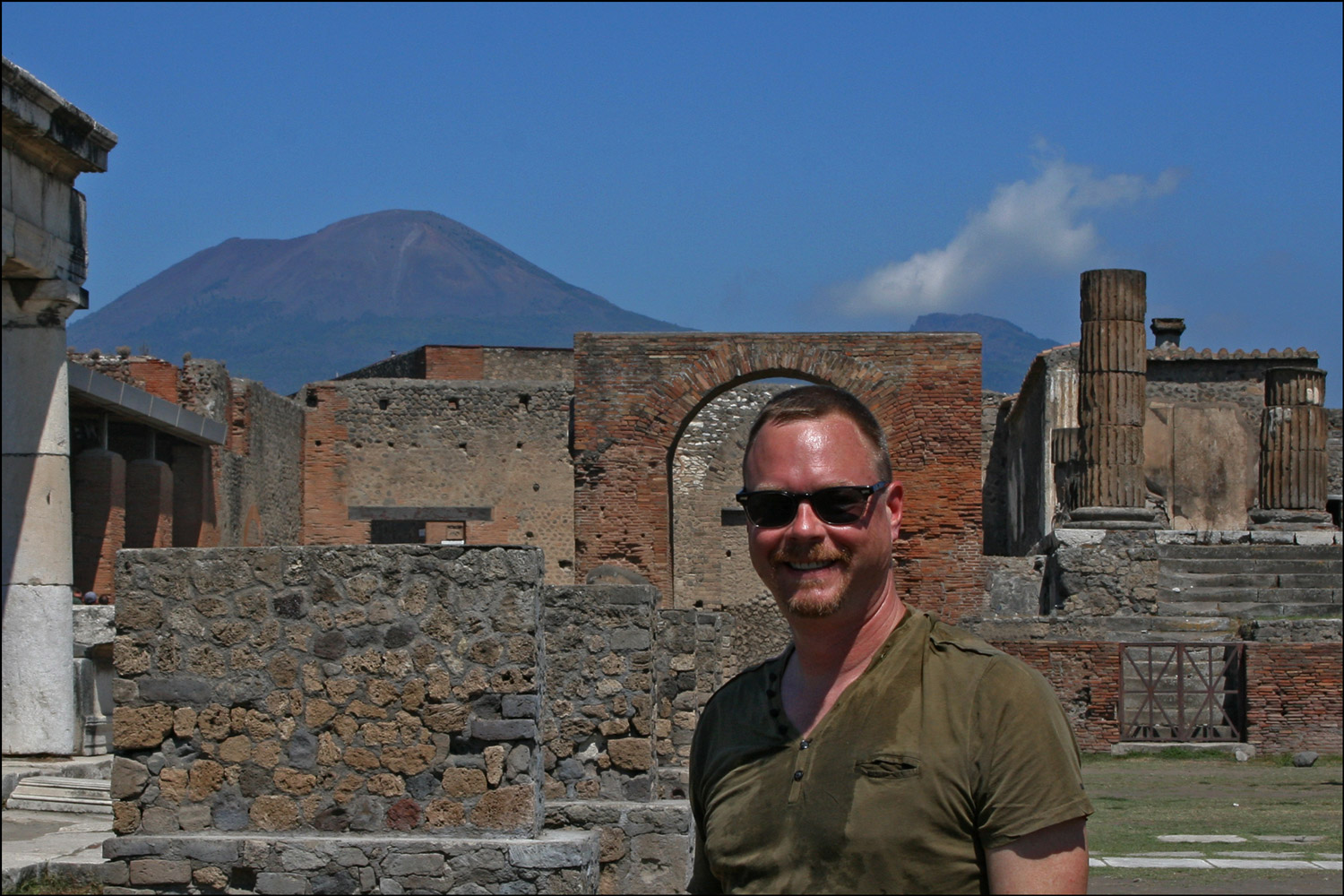
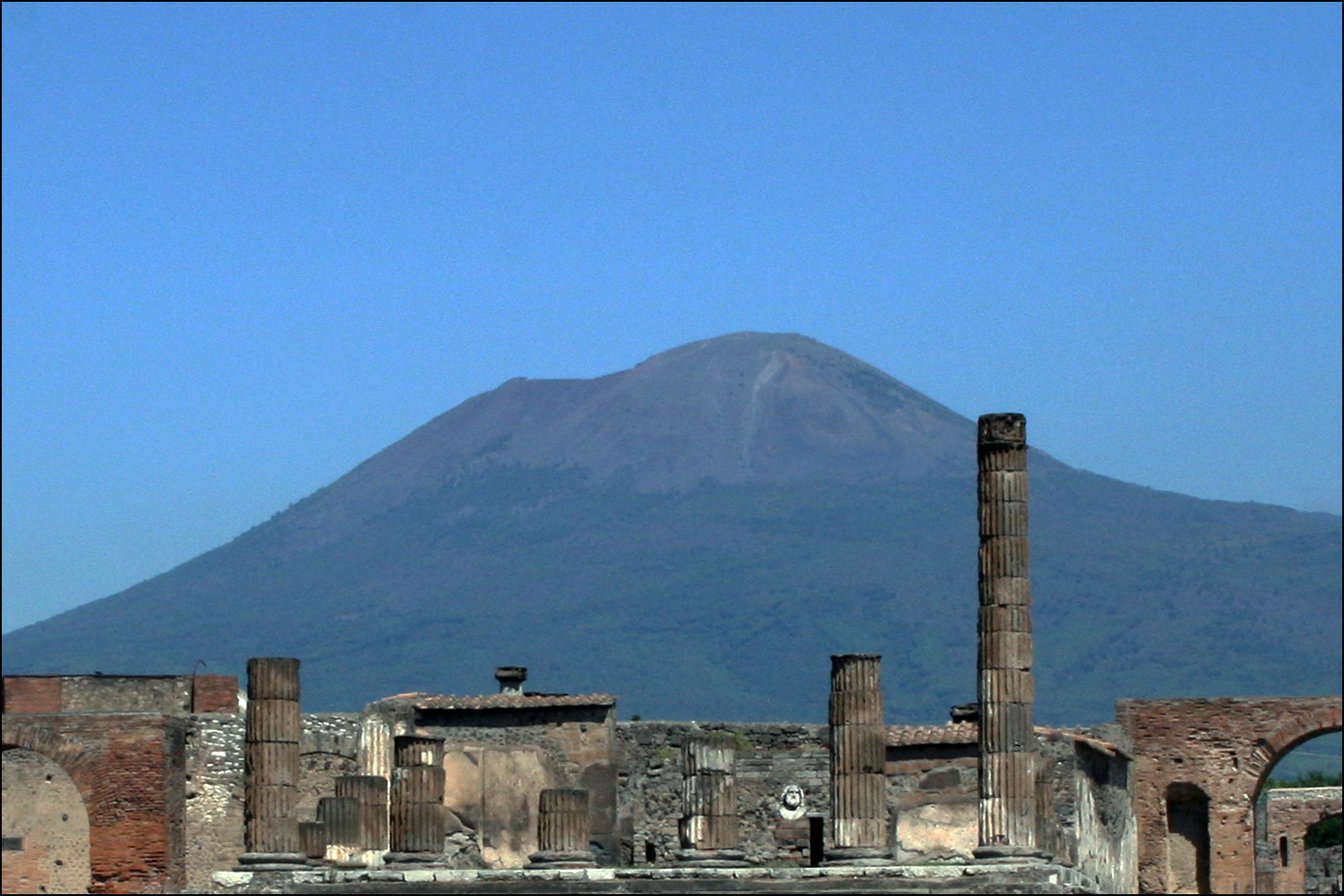
The forum was the economic, political, and religious center of Pompeii. At the north end, stand the ruins of the temple of Jupiter. To the west of the temple of Jupiter is the Arch of Augustus. To the east of the temple is the macellum or marketplace. Mount Vesuvius can be seen to the north of the forum.

Arch of Augustus, Temple of Jupiter, and Macellum

Arch of Augustus, Temple of Jupiter, and Macellum

SOURCE:  Arch of Augustus, Temple of Jupiter, and Macellum (Pompeii, Campania, Italy); photographed by Stephen J. Danko on 08 August 2011.

Temple of Jupiter from the East

Temple of Jupiter from the East

SOURCE:  Temple of Jupiter from the East (Pompeii, Campania, Italy); photographed by Stephen J. Danko on 08 August 2011.

Temple of Jupiter and Mount Vesuvius

Temple of Jupiter and Mount Vesuvius

SOURCE:  Temple of Jupiter and Mount Vesuvius (Pompeii, Campania, Italy); photographed by Stephen J. Danko on 08 August 2011.

The Author at the Forum of Pompeii

The Author at the Forum of Pompeii

SOURCE:  The Author at the Forum of Pompeii (Pompeii, Campania, Italy); photographed by Stephen J. Danko on 08 August 2011.

Copyright © 2011 by Stephen J. Danko
Posted in Daily Journal | Tagged , , | 2 Comments

The Macellum (Marketplace) in Pompeii, Italy

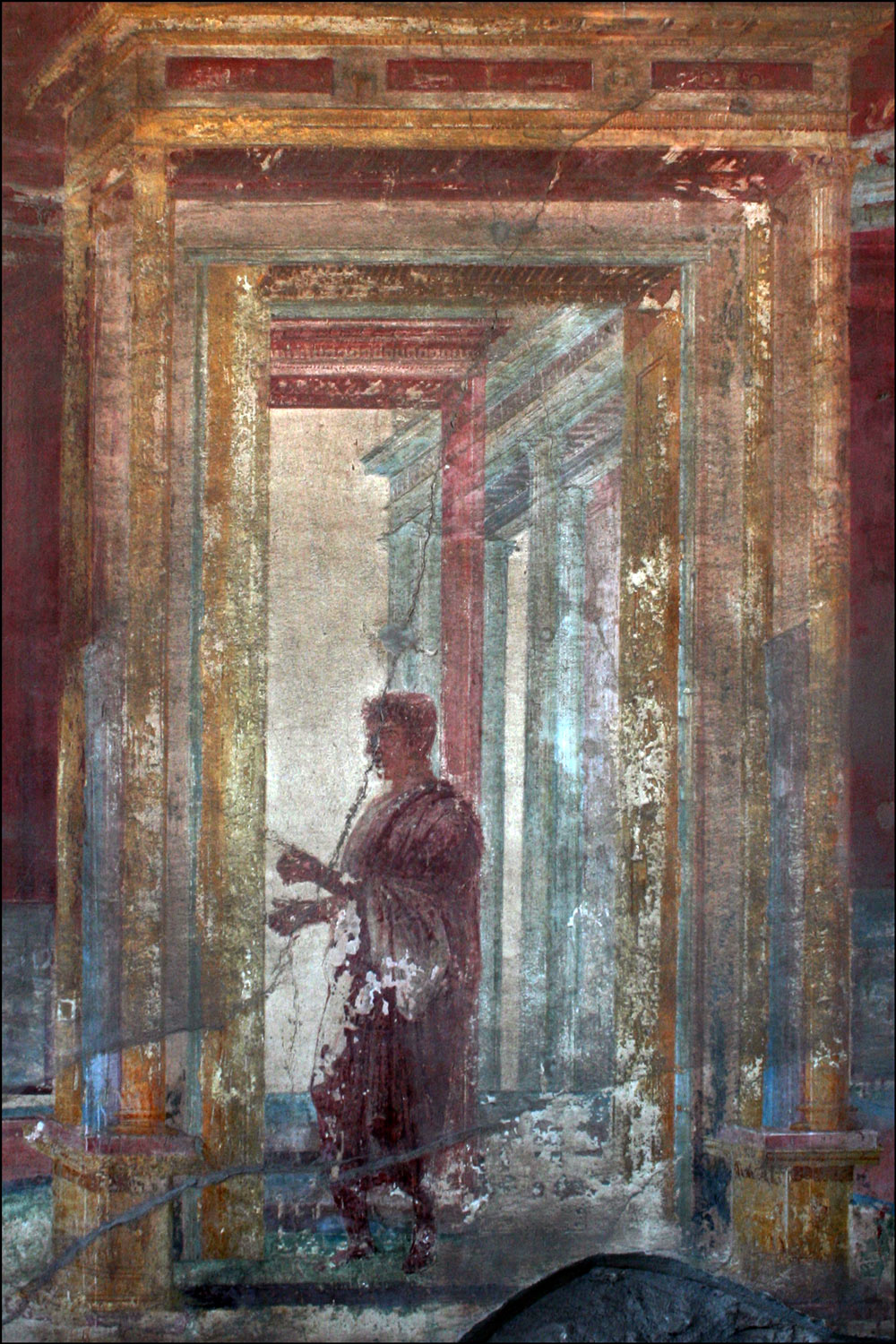
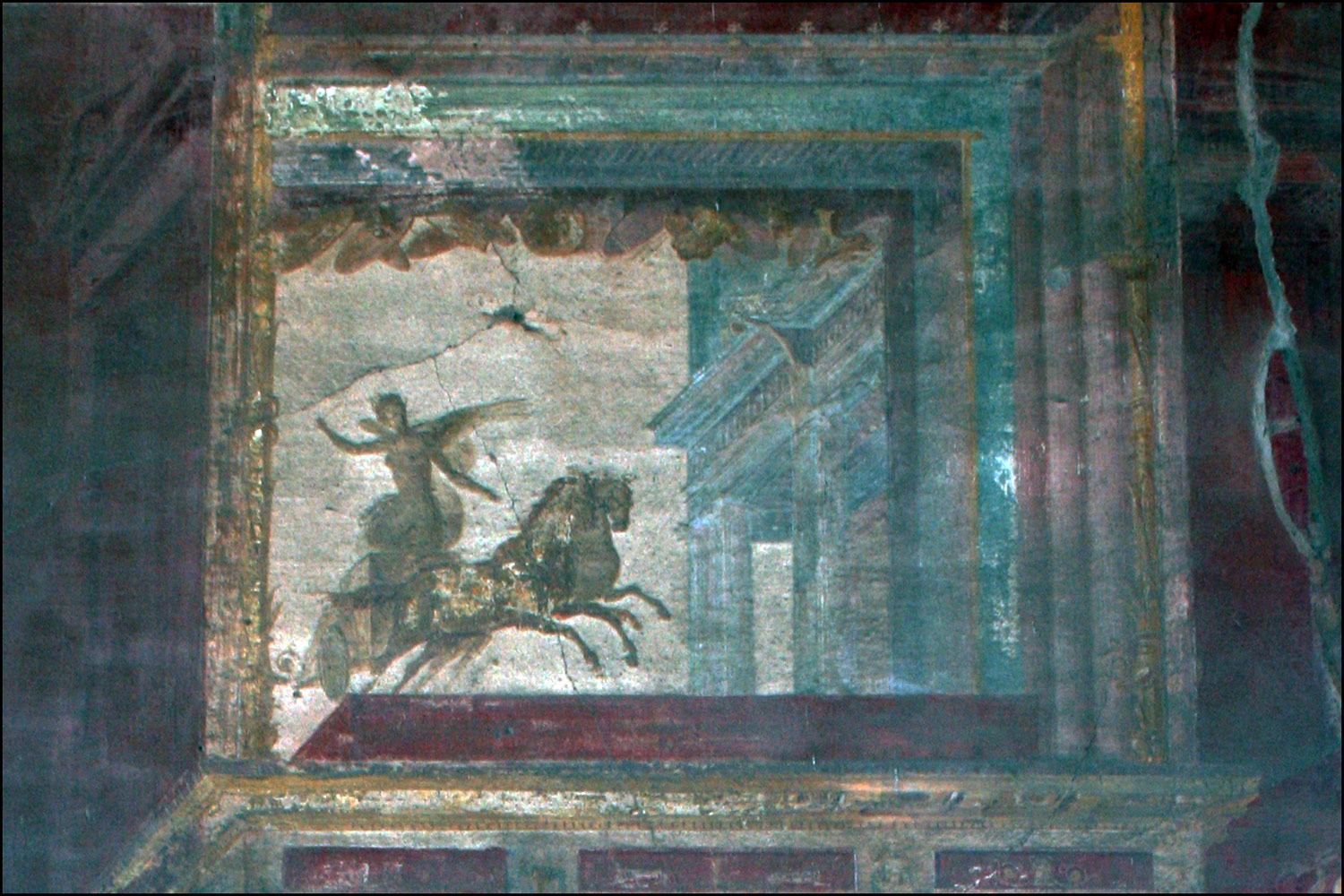
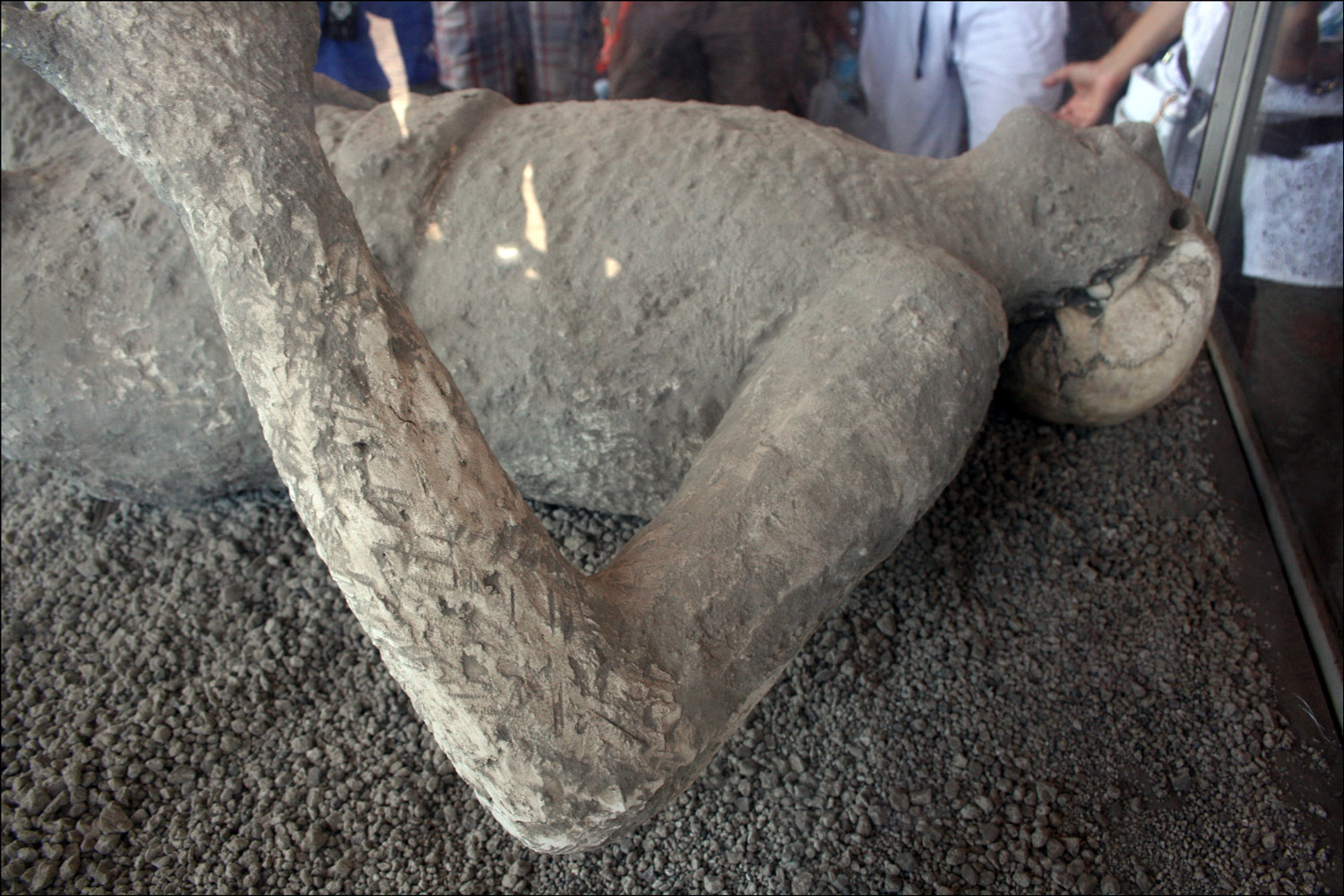
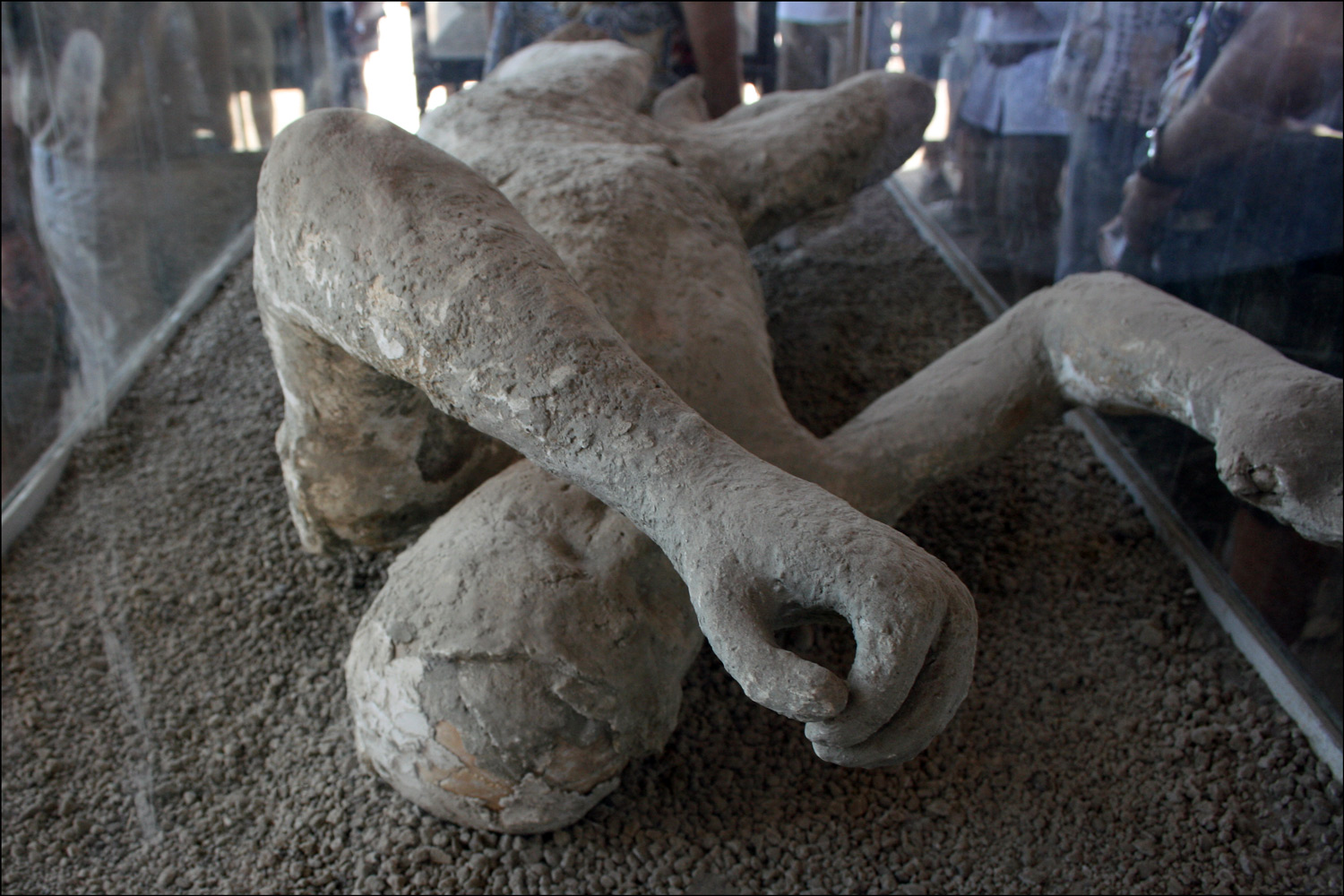
The macellum or marketplace in Pompeii is located in the forum. In the northwest corner are several well-preserved paintings on the walls. In front of the paintings are two display cases each containing a plaster cast of the body of a Pompeii citizen who died during the eruption of Mount Vesuvius in 79 AD. When these people died, probably from poisonous fumes, the ash rapidly covered their bodies and, after the bodies decomposed, cavities were left in the ash. The archeologists who discovered these cavities filled them with plaster, creating three dimensional reconstructions of these citizens of Pompeii preserved as they were at the instant of their deaths.

Painting of Man in Toga in the Macellum

Painting of Man in Toga in the Macellum

SOURCE:  Painting of Man in Toga in the Macellum (Pompeii, Campania, Italy); photographed by Stephen J. Danko on 08 August 2011.

Painting of Winged Figure in Chariot

Painting of Winged Figure in Chariot

SOURCE:  Painting of Winged Figure in Chariot (Pompeii, Campania, Italy); photographed by Stephen J. Danko on 08 August 2011.

Plaster Cast of Body No. 1 in the Macellum

Plaster Cast of Body No. 1 in the Macellum

SOURCE:  Plaster Cast of Body No. 1 in the Macellum (Pompeii, Campania, Italy); photographed by Stephen J. Danko on 08 August 2011.

Plaster Cast of Body No. 2 in the Macellum

Plaster Cast of Body No. 2 in the Macellum

SOURCE:  Plaster Cast of Body No. 2 in the Macellum (Pompeii, Campania, Italy); photographed by Stephen J. Danko on 08 August 2011.

Copyright © 2011 by Stephen J. Danko
Posted in Daily Journal | Tagged , , | 1 Comment

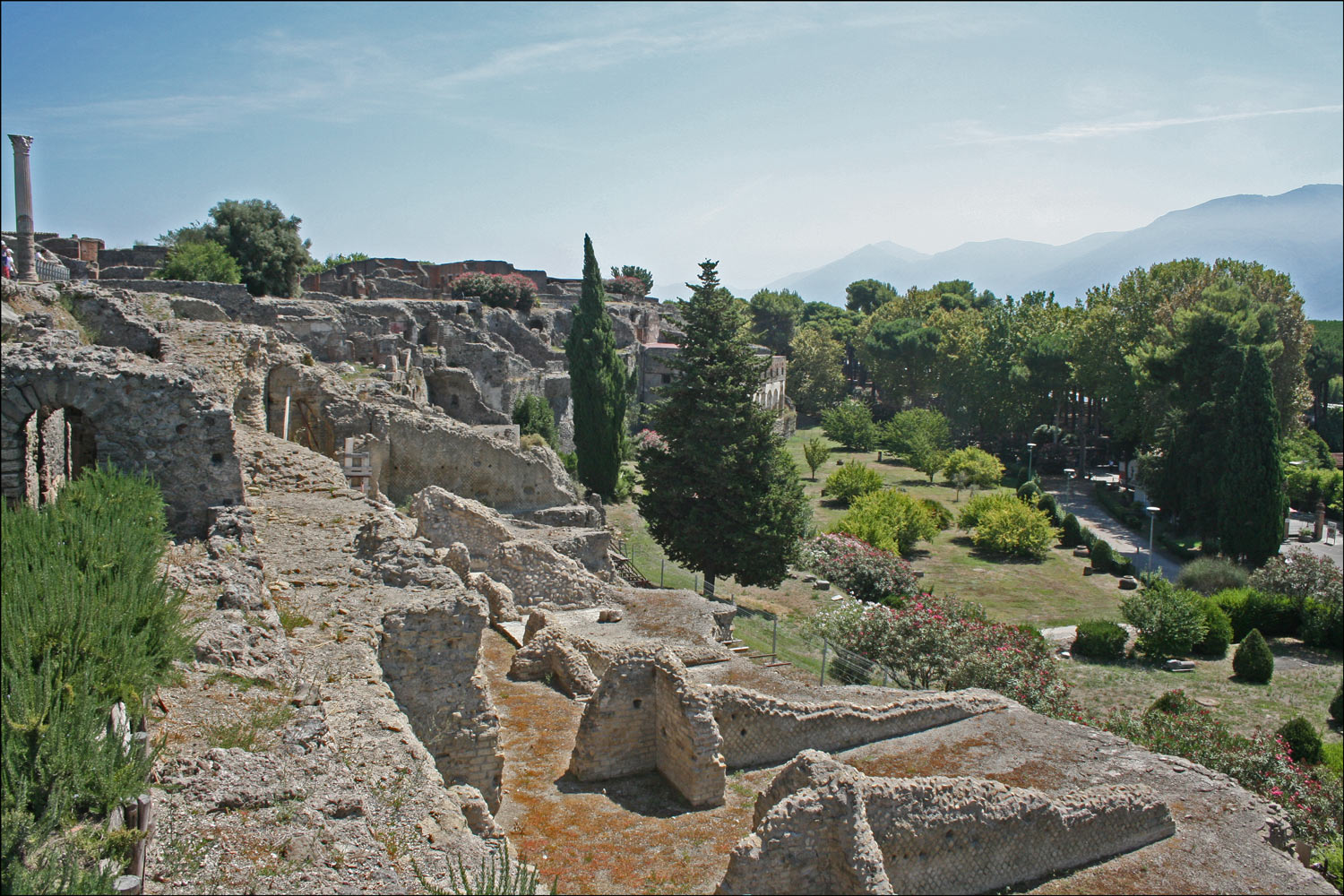
The Building of Eumachia and the House of the Popidii

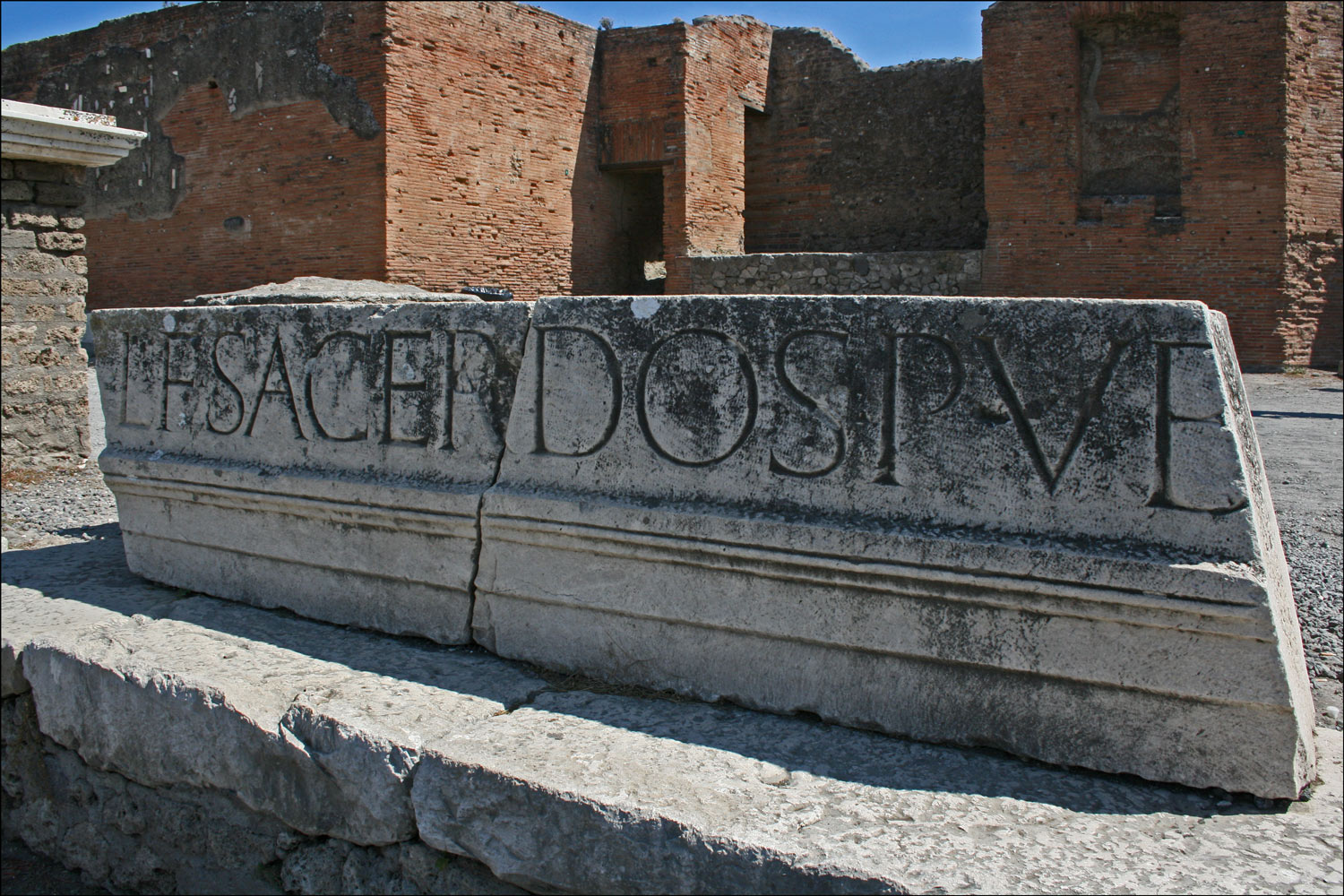
Eumachia, who inherited a large sum of money from her father, financed the construction of the Building of Eumachia, which faces the Forum of Pompeii (VII.9.1). The inscription on colonnade at the front of the building read:

Eumachia, daughter of Lucius, public priestess, in her own name and that of her son, Marcus Numistrius Fronto, built at her own expense the colonnade, corridor and portico in honor of Augustan Concord and Piety and also dedicated them.

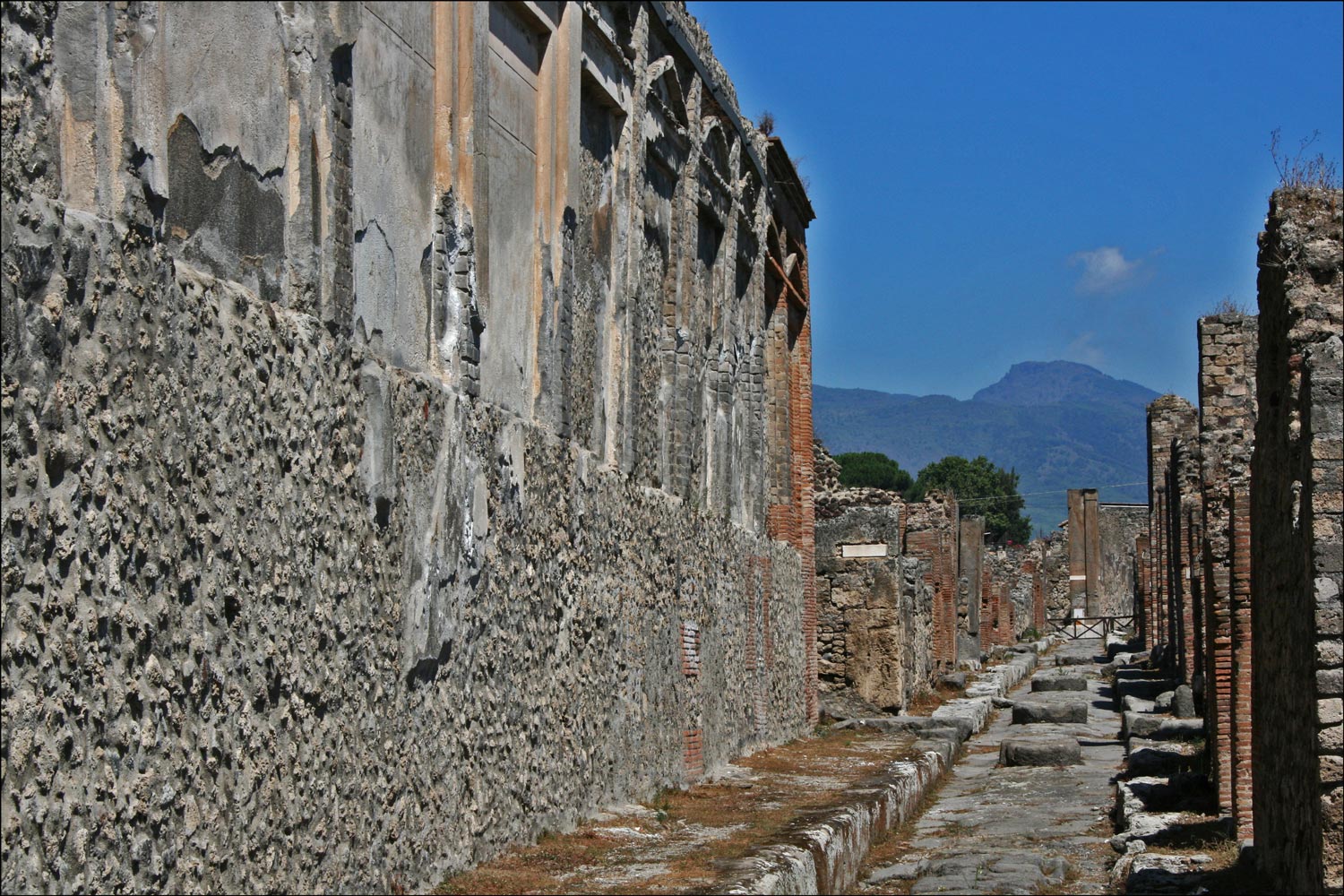
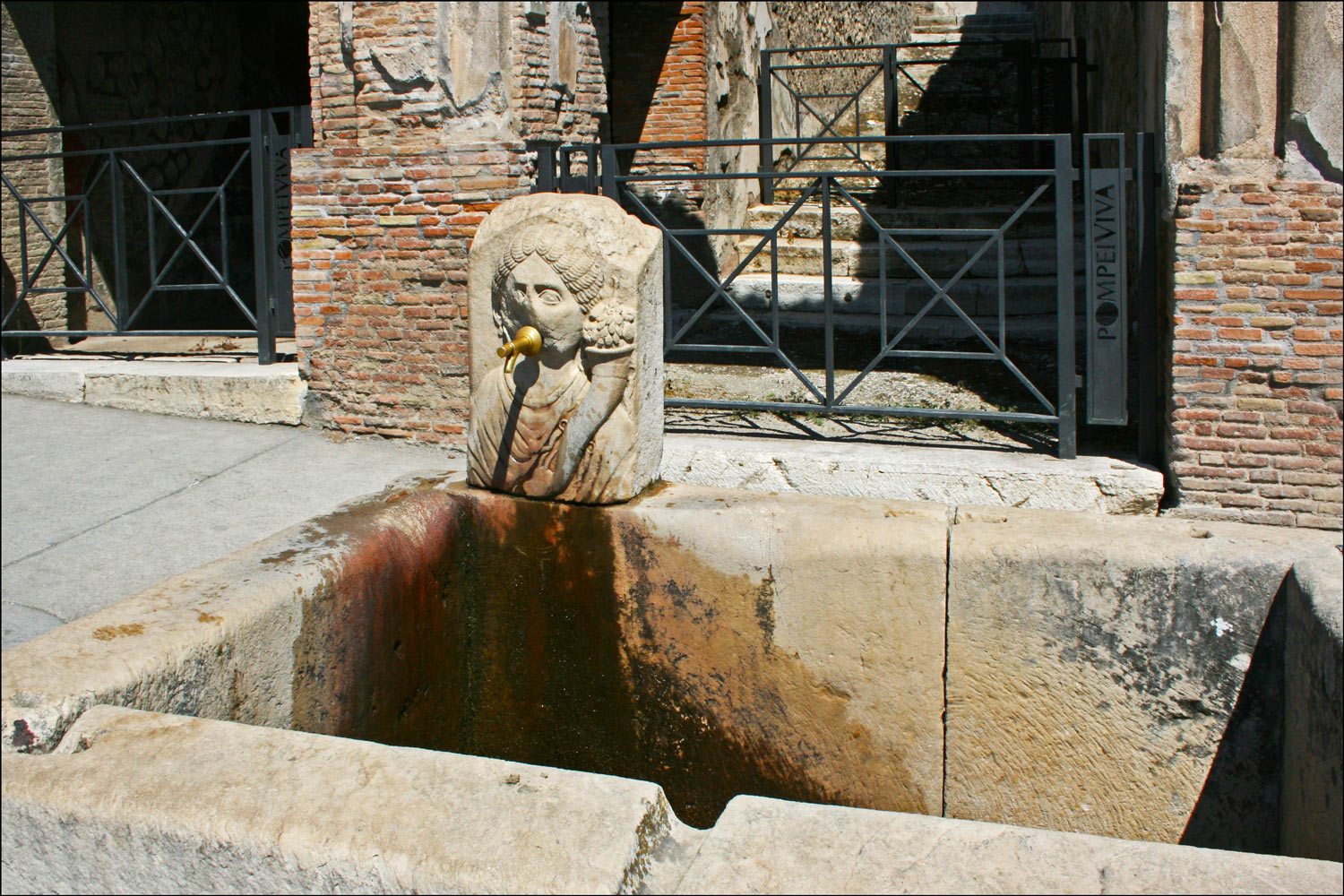
At the rear of the large building is the Vicolo di Eumachia (between VII.9.67 and VII.13.1) which intersects with Via dell’ Abbondanza. Near the rear of the building where a ramp and staircase rise from the street to the upper level is a fountain with the head of Fortuna (VII.9.67). Across Via dell’ Abbondanza from the Building of Eumachia is the house of the Popidii (VIII.3.4).

Part of Eumachia's Inscription

Part of Eumachia’s Inscription

SOURCE:  Part of Eumachia’s Inscription (Pompeii, Campania, Italy); photographed by Stephen J. Danko on 08 August 2011.

Vicolo di Eumachia

Vicolo di Eumachia

SOURCE:  Vicolo di Eumachia (Pompeii, Campania, Italy); photographed by Stephen J. Danko on 08 August 2011.

Fountain with Head of Fortuna

Fountain with Head of Fortuna

SOURCE:  Fountain with Head of Fortuna (Pompeii, Campania, Italy); photographed by Stephen J. Danko on 08 August 2011.

House of the Popidii

House of the Popidii

SOURCE:  House of the Popidii (Pompeii, Campania, Italy); photographed by Stephen J. Danko on 08 August 2011.

Copyright © 2011 by Stephen J. Danko
Posted in Daily Journal | Tagged , , | Comments Off on The Building of Eumachia and the House of the Popidii

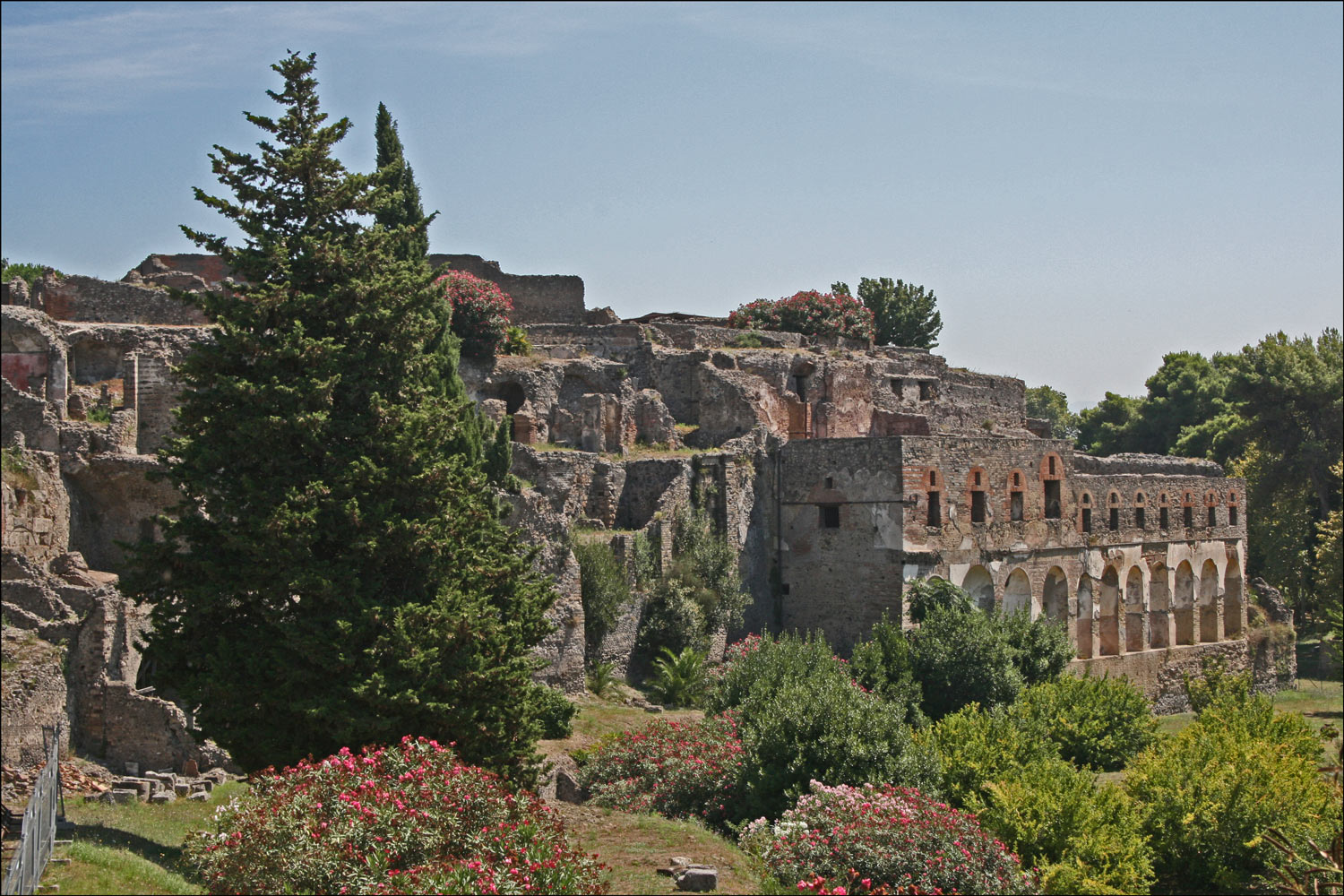
The Lupanare in Pompeii, Italy

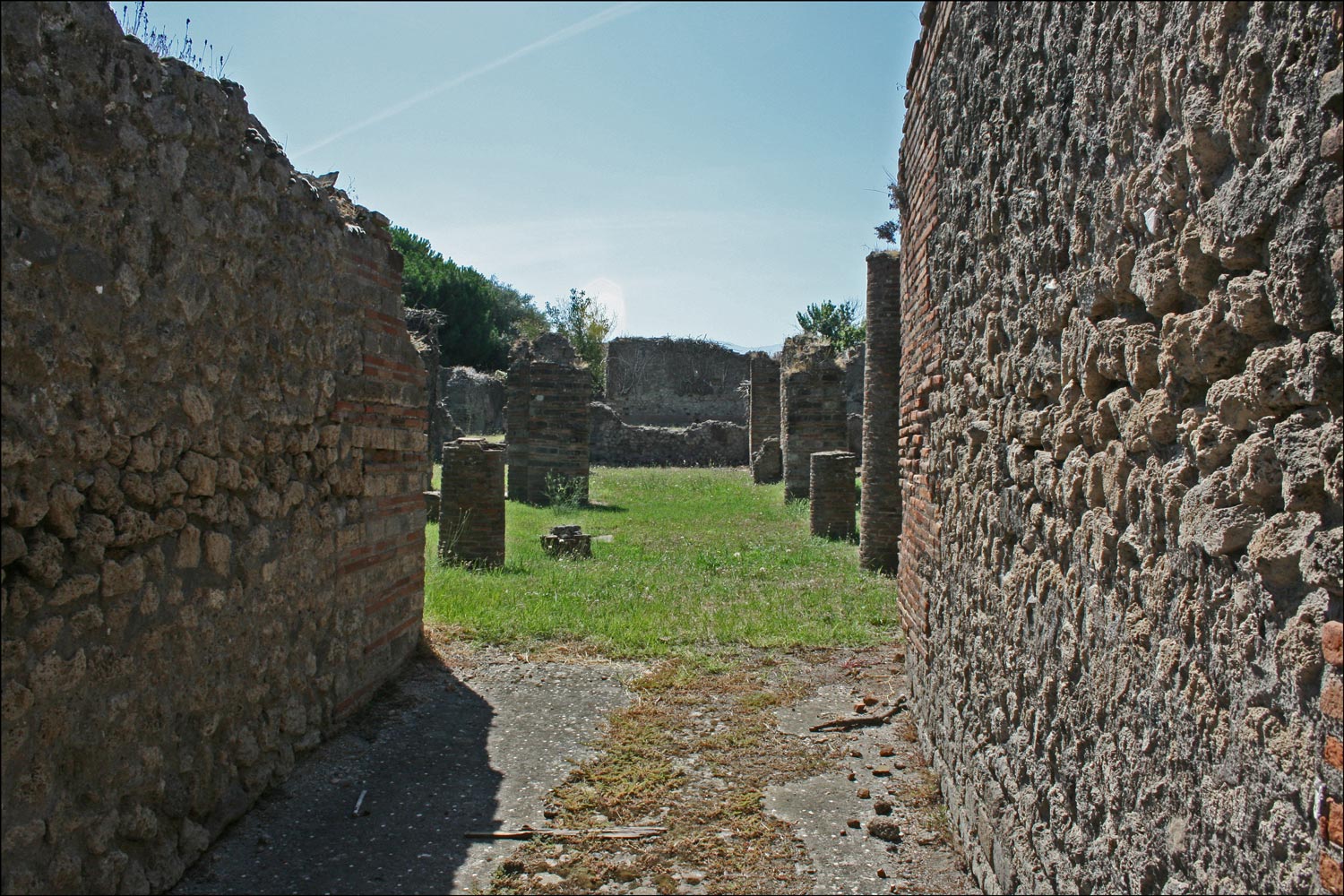
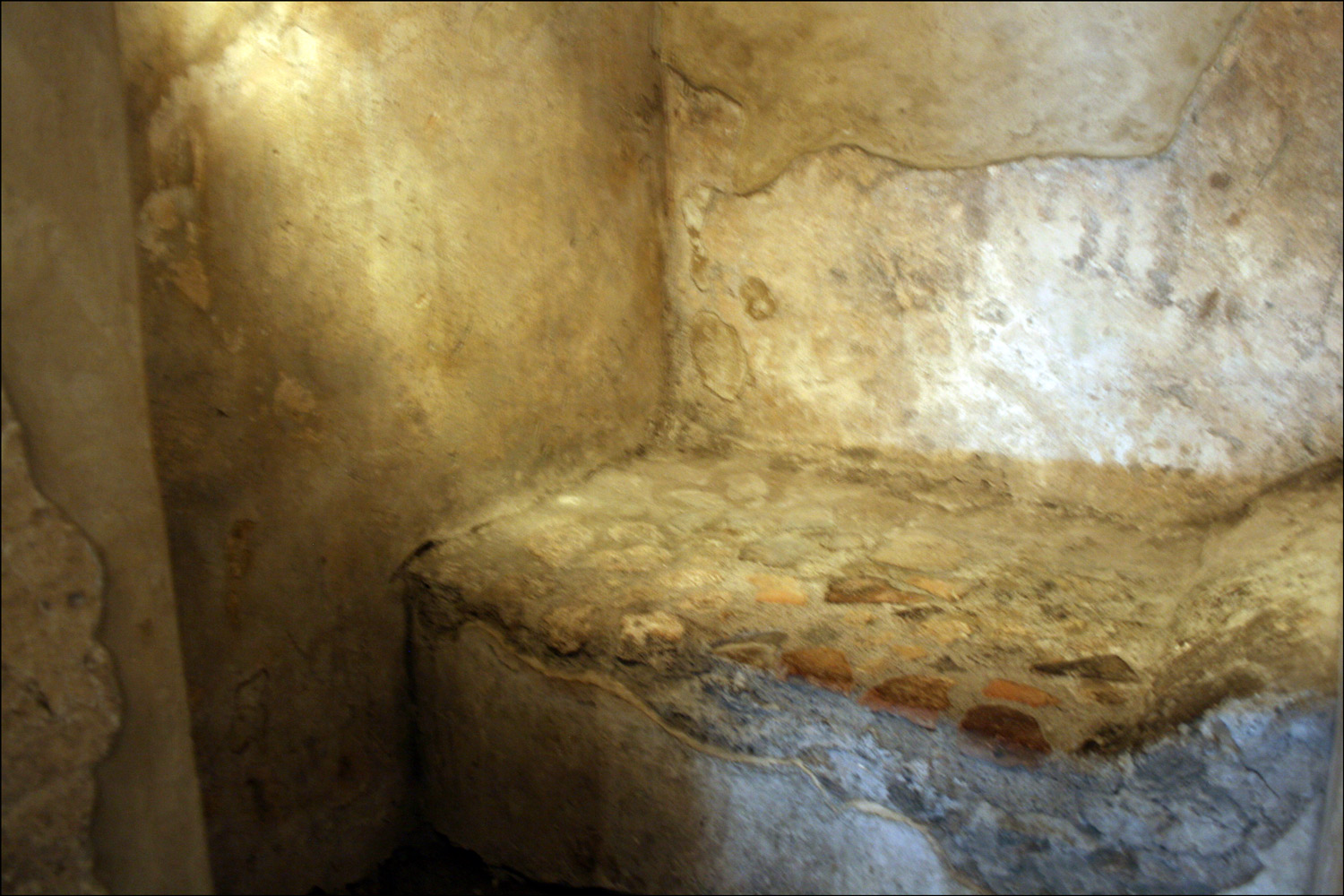
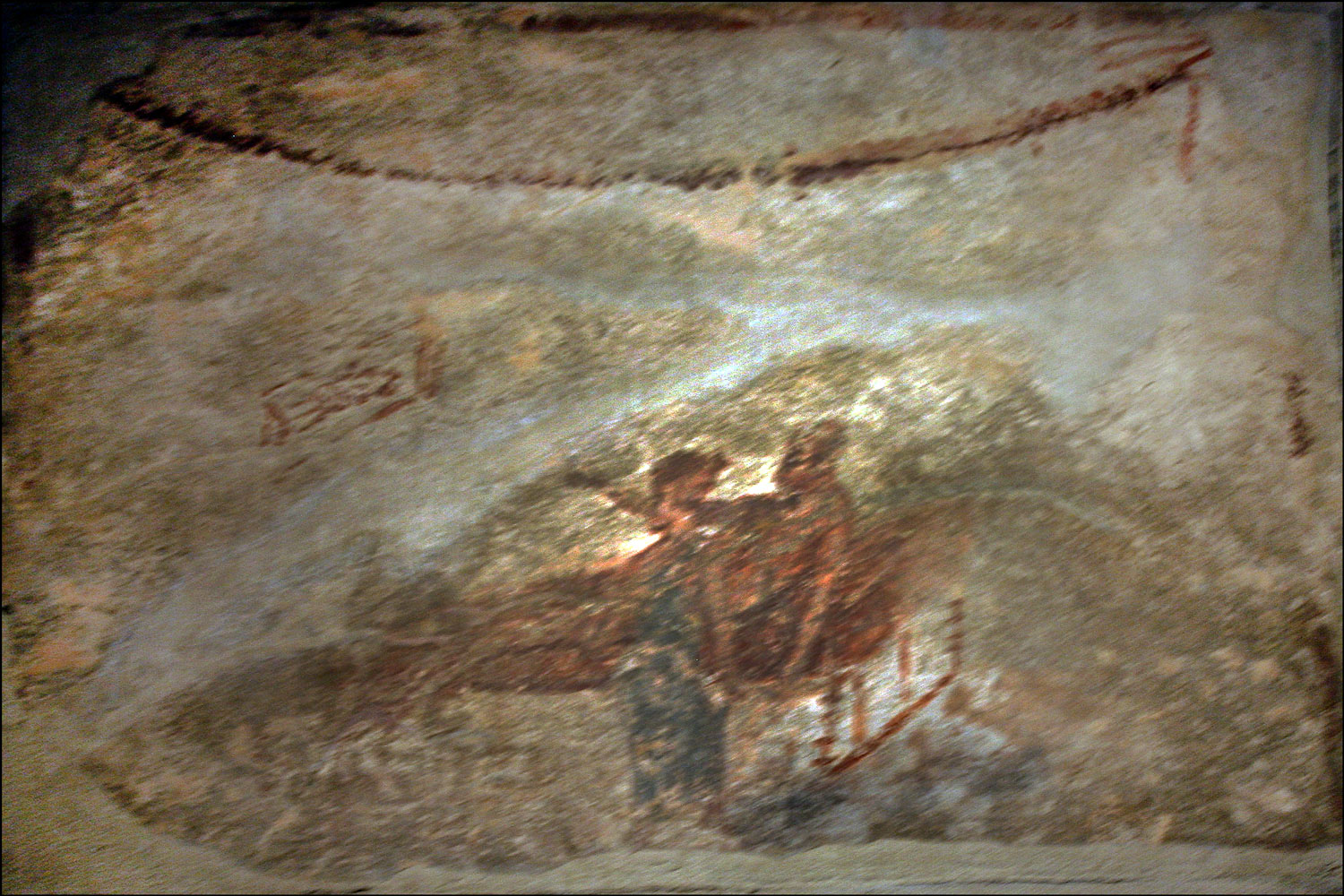
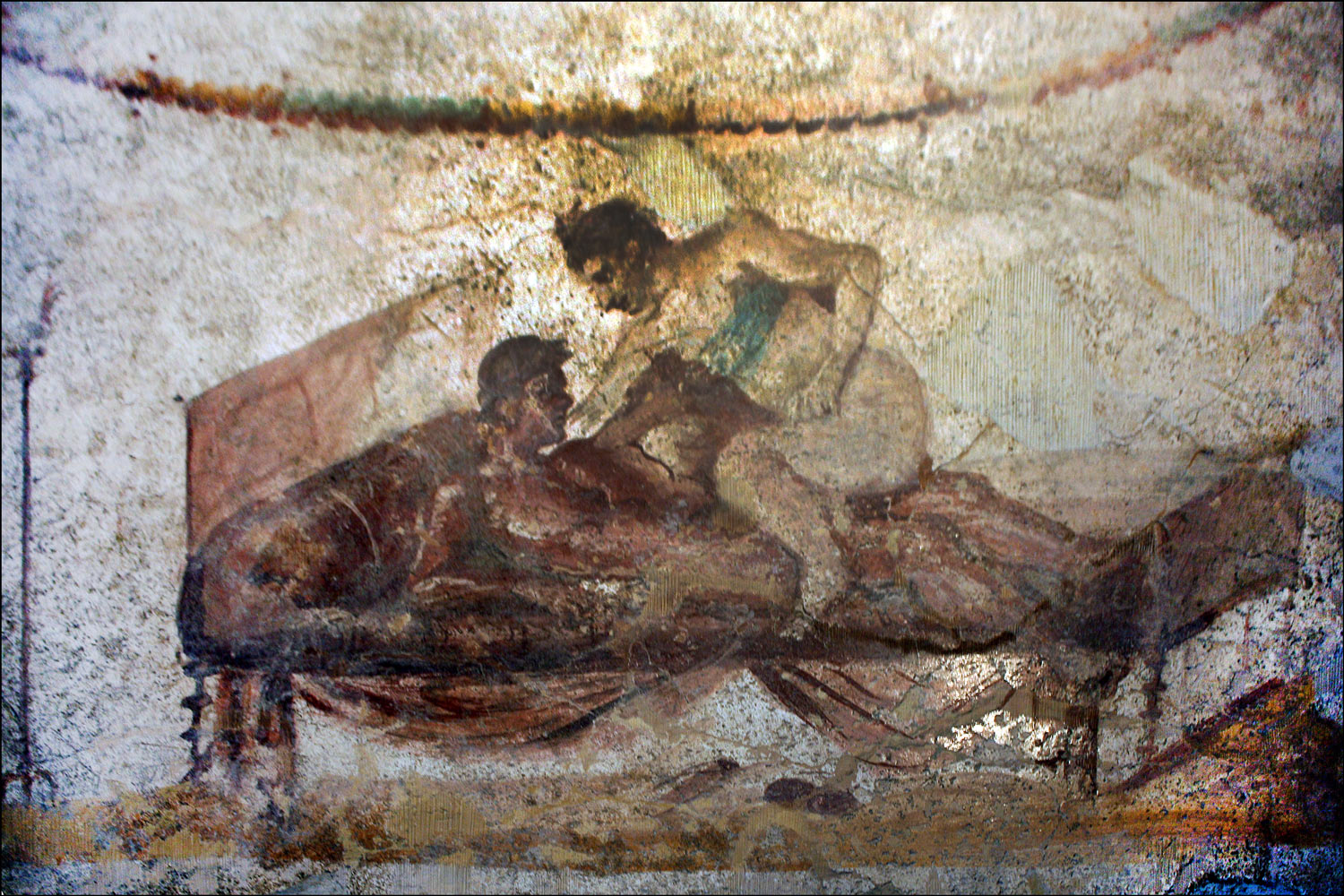
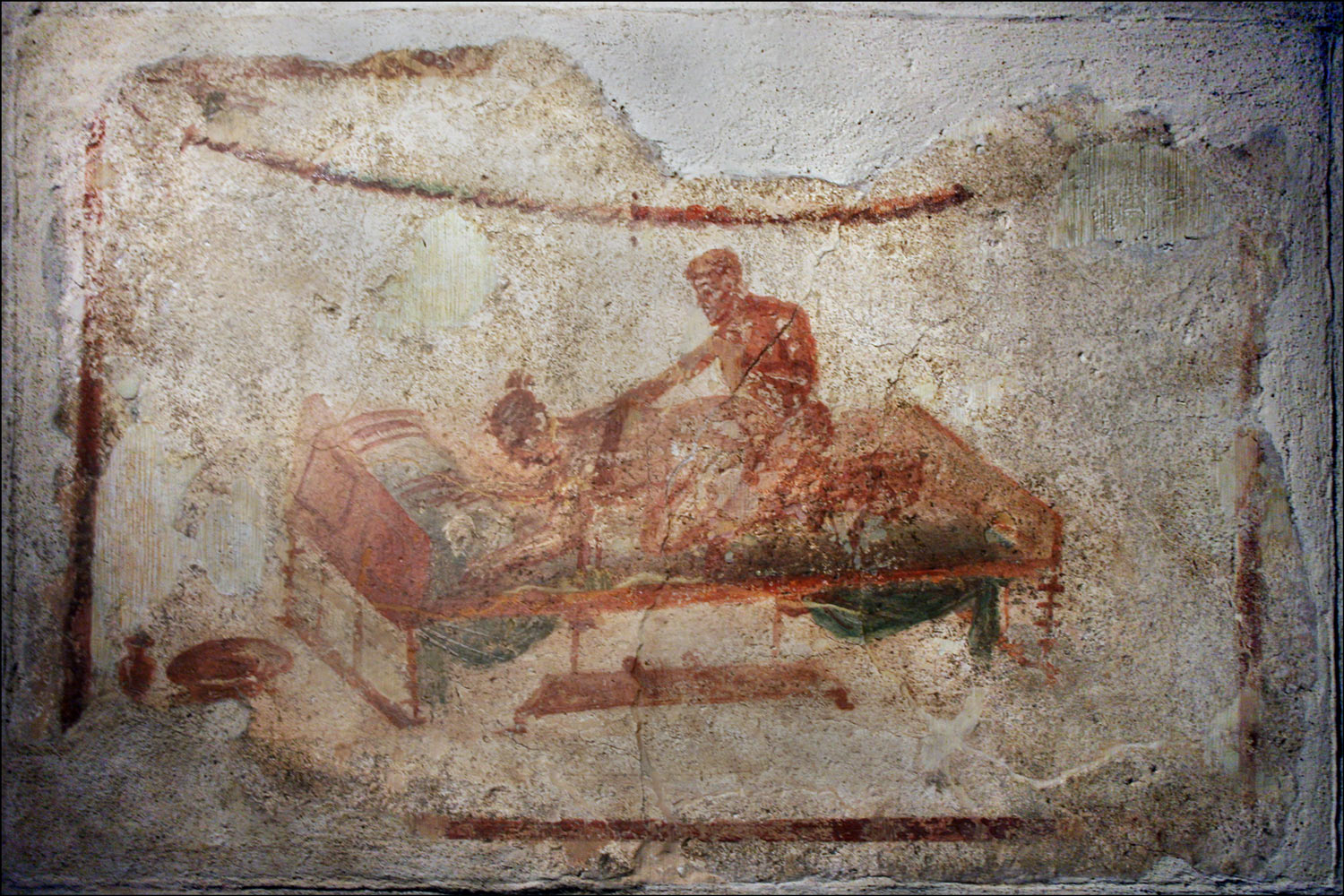
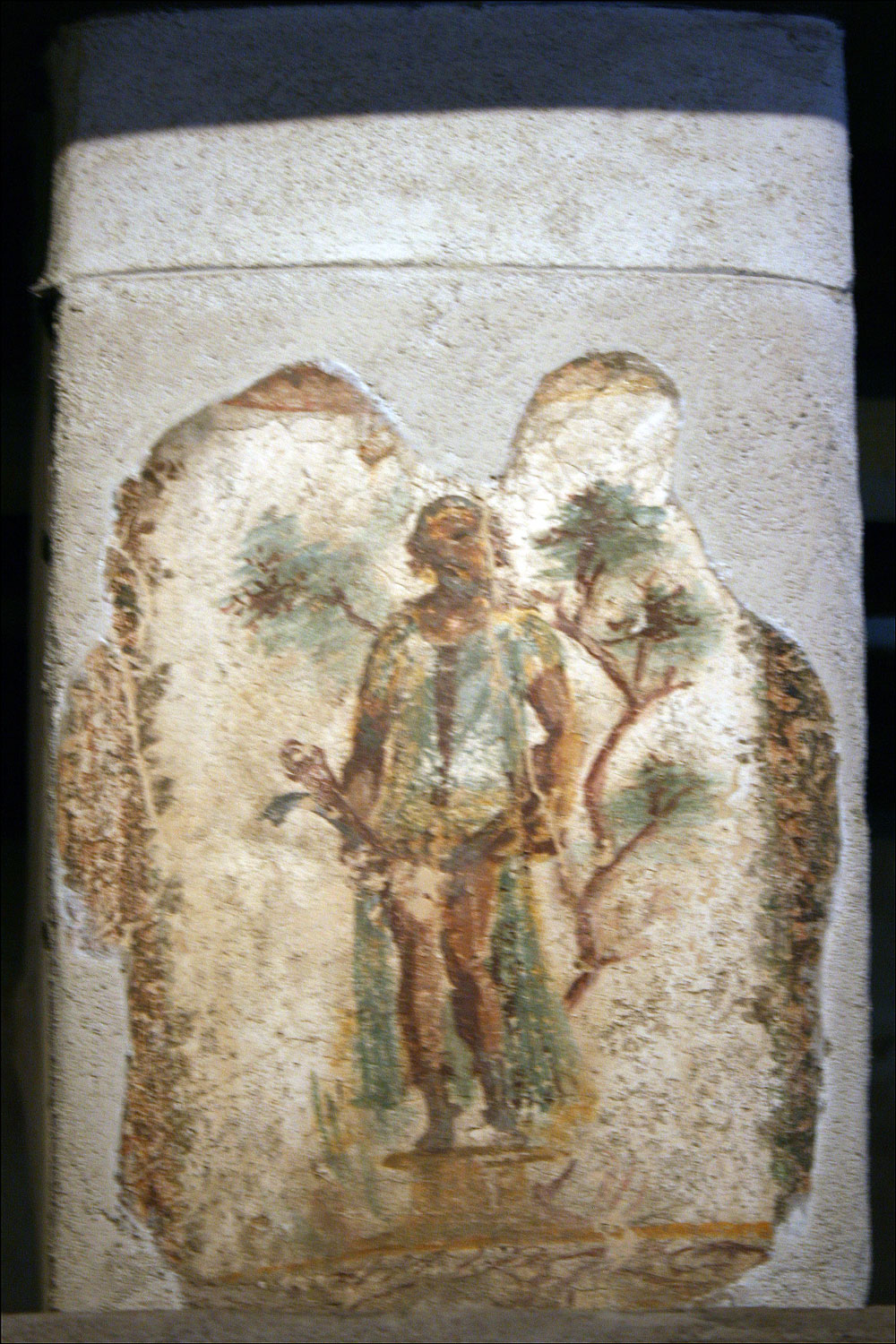
The Lupanare, or Brothel, in Pompeii includes several small rooms with stone beds where the girls entertained their clients. Over the doors are painted erotic scenes on the frieze. In the middle of the north wall is a painting of Priapus, a god of fertility and protector of fruit trees and livestock, standing in front of a fig tree.

Bed in the Lupanare

Bed in the Lupanare

SOURCE:  Bed in the Lupanare (Pompeii, Campania, Italy); photographed by Stephen J. Danko on 08 August 2011.

Lupanare Painting 1

Lupanare Painting 1

SOURCE:  Lupanare Painting 1 (Pompeii, Campania, Italy); photographed by Stephen J. Danko on 08 August 2011.

Lupanare Painting 2

Lupanare Painting 2

SOURCE:  Lupanare Painting 2 (Pompeii, Campania, Italy); photographed by Stephen J. Danko on 08 August 2011.

Lupanare Painting 3

Lupanare Painting 3

SOURCE:  Lupanare Painting 3 (Pompeii, Campania, Italy); photographed by Stephen J. Danko on 08 August 2011.

Priapus

Priapus

SOURCE: Priapus (Pompeii, Campania, Italy); photographed by Stephen J. Danko on 08 August 2011.

Copyright © 2011 by Stephen J. Danko
Posted in Daily Journal | Tagged , , | 1 Comment

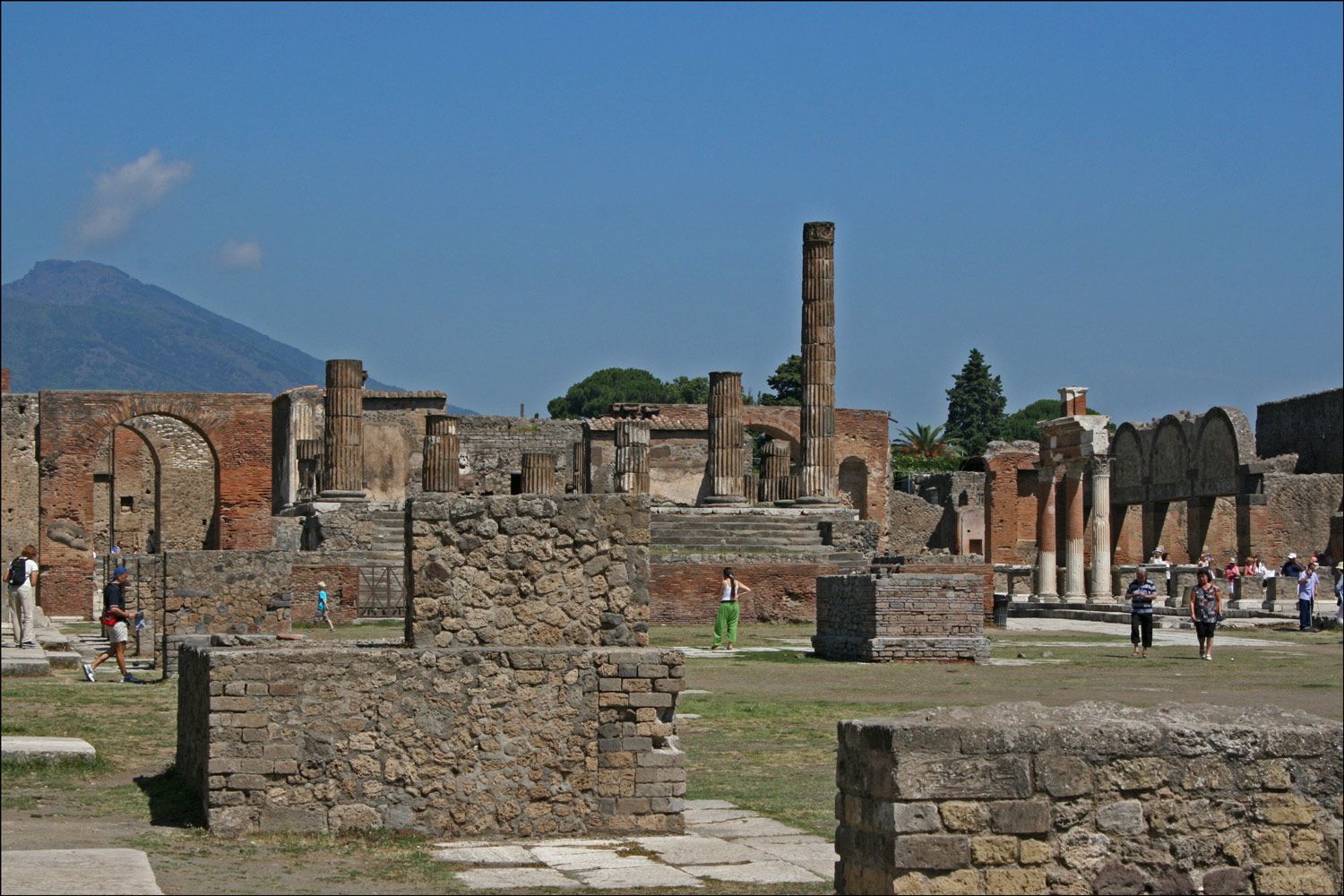
Via dell’ Abbondanza and Vicola della Maschera in Pompeii, Italy

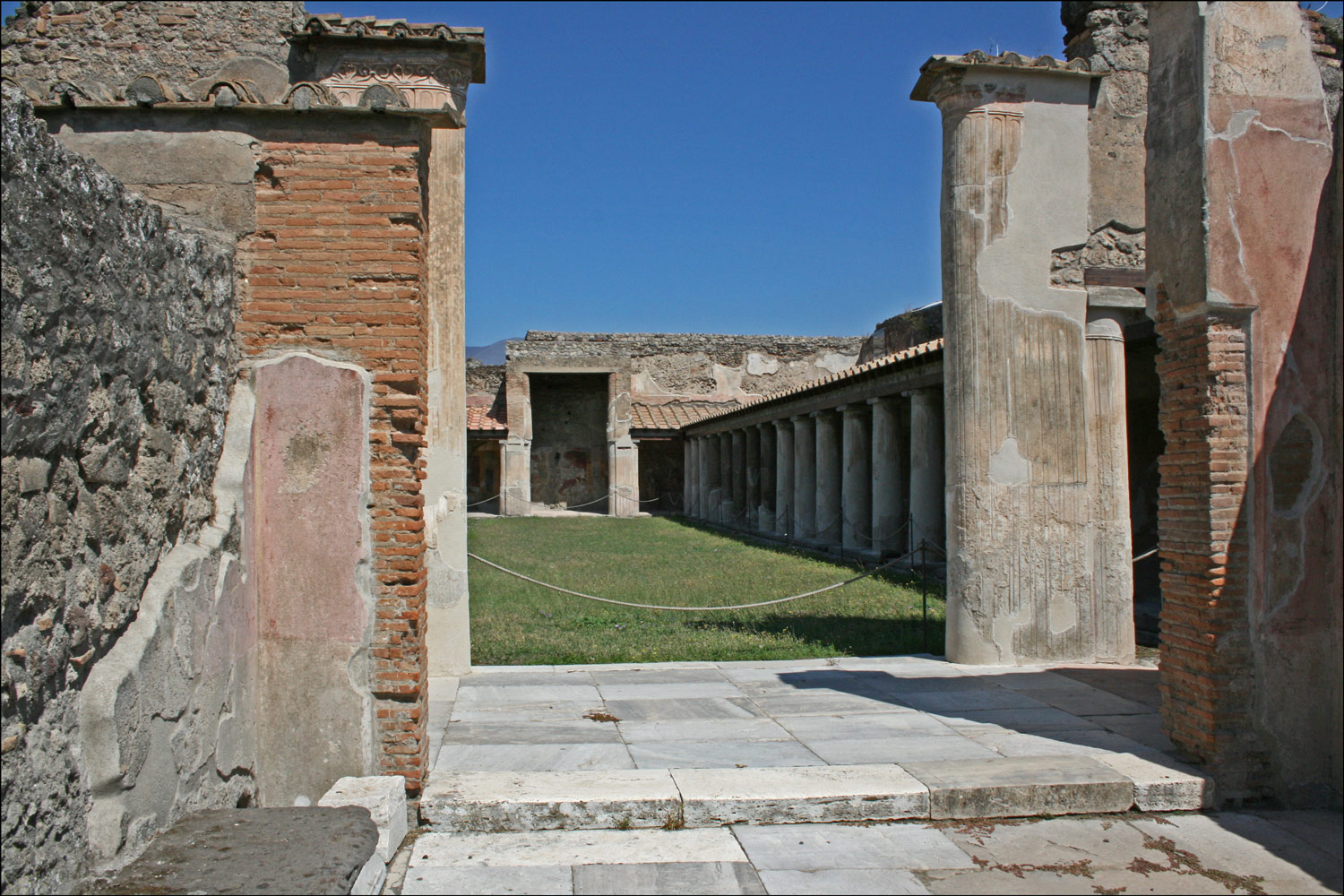
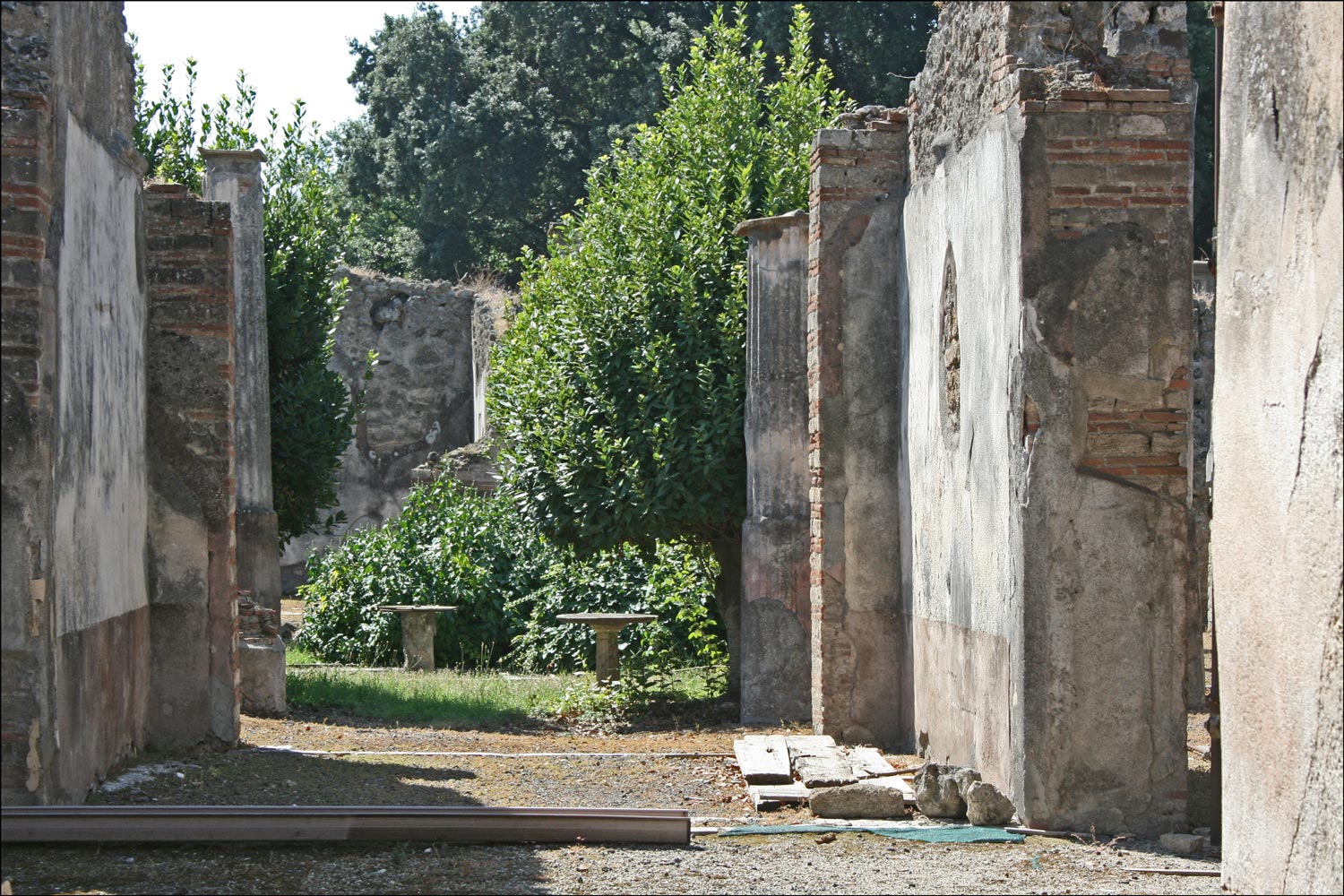
Continuing west on Via dell’ Abbondanza, we pass the entrance to the Stabian Baths on the right (VII.1.8). Looking north from the entrance, we see the gymnasium and the east side of the portico. A litter farther west and on the other side of the street is the house of Holconius Rufus (VIII.4.4). Looking south from the atrium (reception room), through the tablinum (study), we can see the peristyle (the garden).

Turning right onto Vicolo della Maschera, we reach a fountain in front of a woolen mill (VII.11.5). Across the street, on the corner of Vicolo della Maschera and Vicolo del Balcone Pensile, is a shop (VII.10.10).

The Stabian Baths

The Stabian Baths

SOURCE:  The Stabian Baths (Pompeii, Campania, Italy); photographed by Stephen J. Danko on 08 August 2011.

The House of Holconius Rufus

The House of Holconius Rufus

SOURCE:  The House of Holconius Rufus (Pompeii, Campania, Italy); photographed by Stephen J. Danko on 08 August 2011.

Fountain in Front of the Woolen Mill

Fountain in Front of the Woolen Mill

SOURCE:  Fountain in Front of the Woolen Mill (Pompeii, Campania, Italy); photographed by Stephen J. Danko on 08 August 2011.

Shop

Shop

SOURCE: Shop (Pompeii, Campania, Italy); photographed by Stephen J. Danko on 08 August 2011.

Copyright © 2011 by Stephen J. Danko
Posted in Daily Journal | Tagged , , | Comments Off on Via dell’ Abbondanza and Vicola della Maschera in Pompeii, Italy

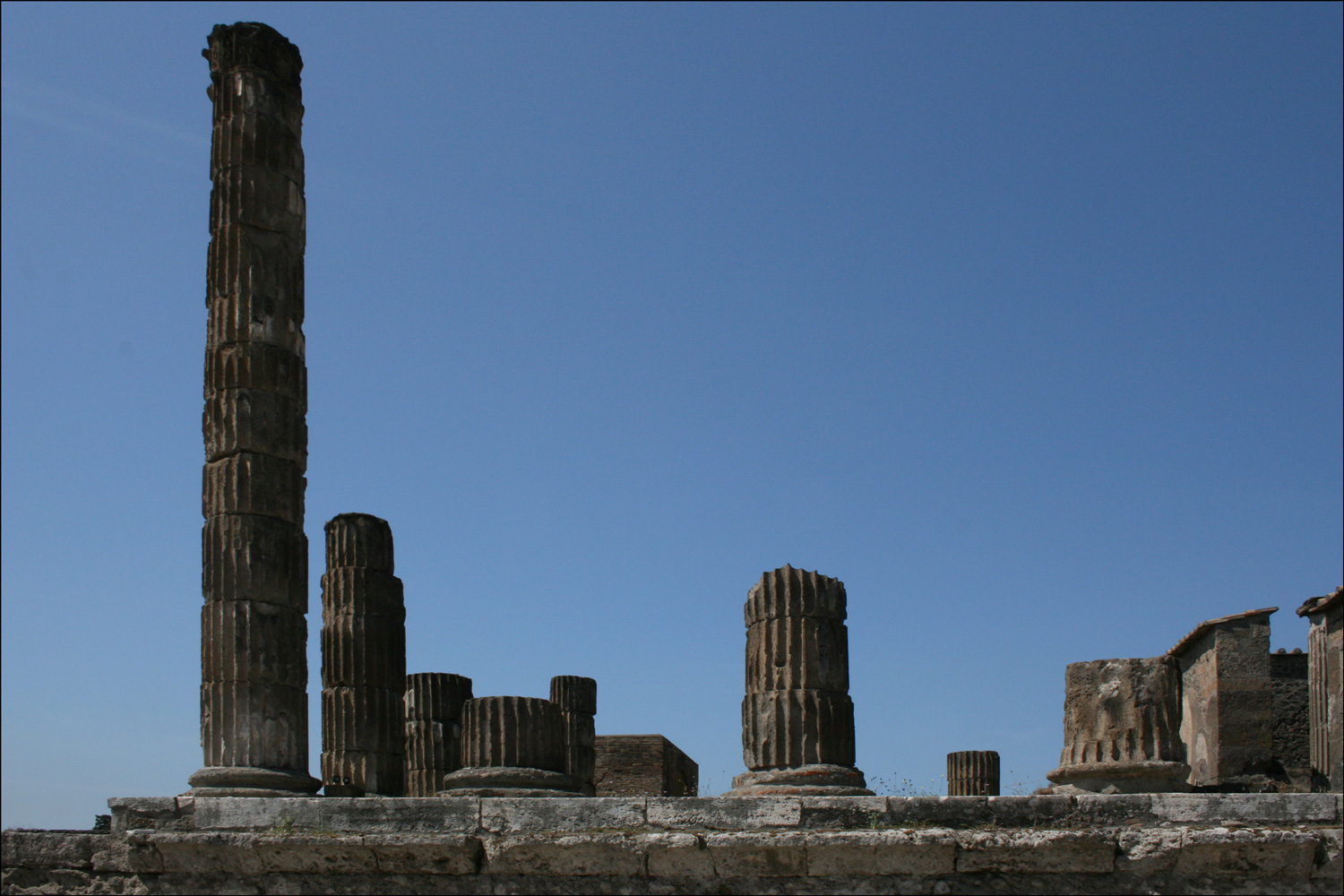
Residences, Bar, and Inn on Via dell’ Abbondanza in Pompeii, Italy

Walking more or less west on Via dell’ Abbondanza in Pompeii, the residence of L. Rapinasi Optati (I.4.25) is seen, looking south across the atrium. Across the street is the residence of Marco Epidio Rufo (IX.1.20). A few doors west, near the intersection of Via dell’ Abbondanza and Via Stabiana (Holconius’ Crossroad) is the Bar and Inn of Primus (IX.1.16). Finally, we reach Via Stabiana itself and look north up the street to view Mount Vesuvius in the background.

Residence of L. Rapinasi Optati

Residence of L. Rapinasi Optati

SOURCE:  Residence of L. Rapinasi Optati (Pompeii, Campania, Italy); photographed by Stephen J. Danko on 08 August 2011.

Residence of Marco Epidio Rufo

Residence of Marco Epidio Rufo

SOURCE:  Residence of Marco Epidio Rufo (Pompeii, Campania, Italy); photographed by Stephen J. Danko on 08 August 2011.

Bar and Inn of Primus

Bar and Inn of Primus

SOURCE:  Bar and Inn of Primus (Pompeii, Campania, Italy); photographed by Stephen J. Danko on 08 August 2011.

Mount Vesuvius from Holconius' Crossroads

Mount Vesuvius from Holconius’ Crossroads

SOURCE:  Mount Vesuvius from Holconius’ Crossroads (Pompeii, Campania, Italy); photographed by Stephen J. Danko on 08 August 2011.

Copyright © 2011 by Stephen J. Danko
Posted in Daily Journal | Tagged , , | Comments Off on Residences, Bar, and Inn on Via dell’ Abbondanza in Pompeii, Italy

The Fullery of Stephanus in Pompeii, Italy

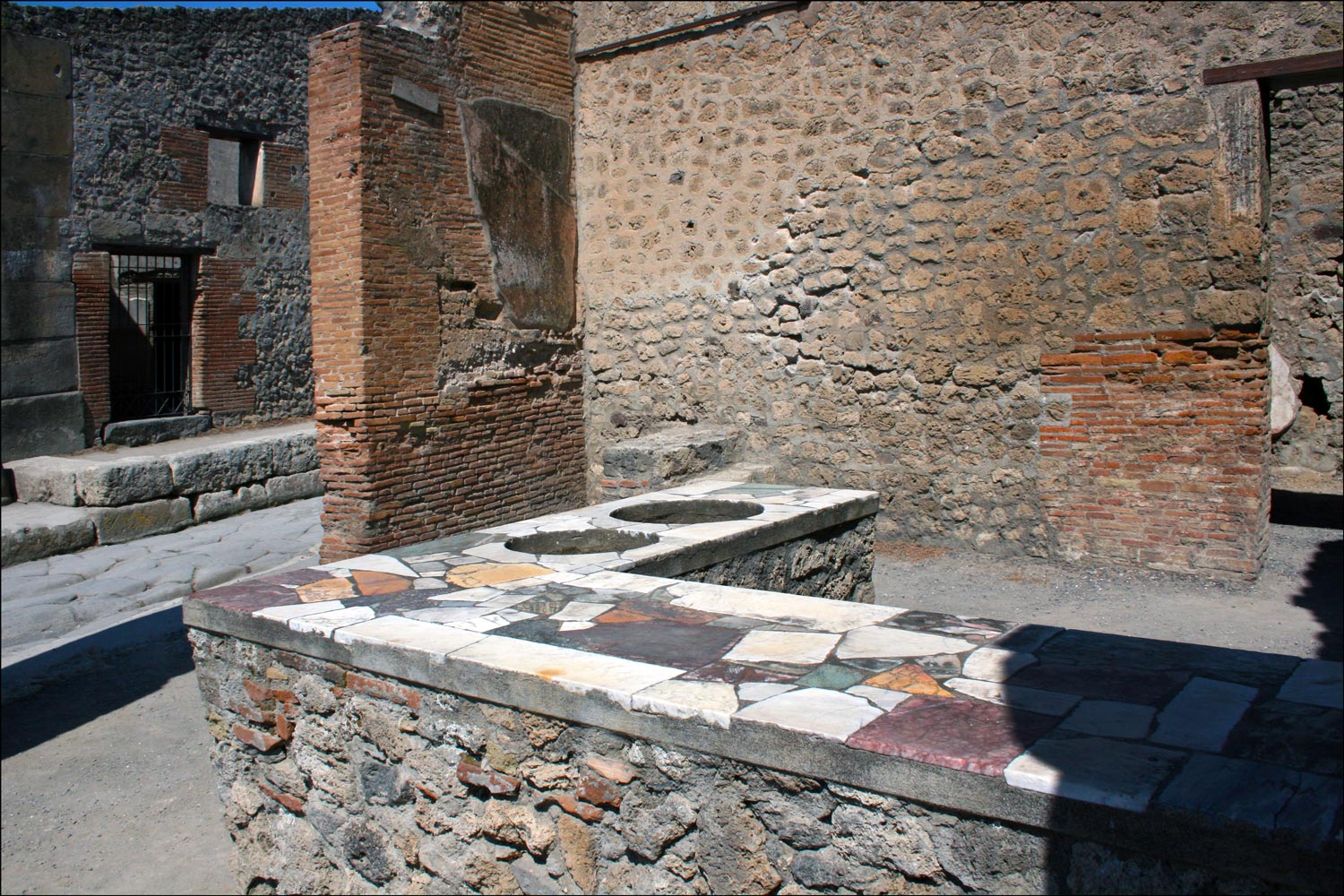
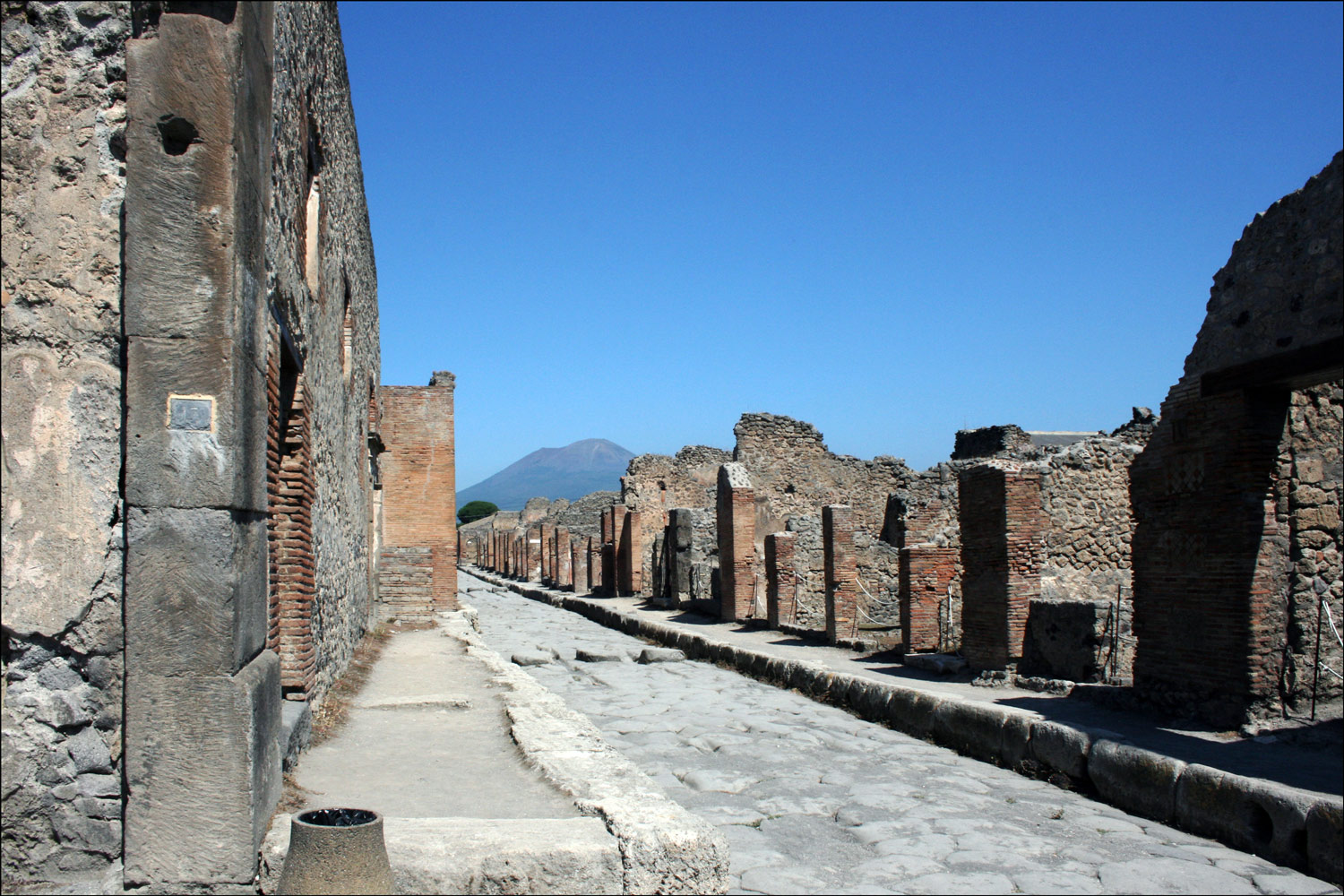
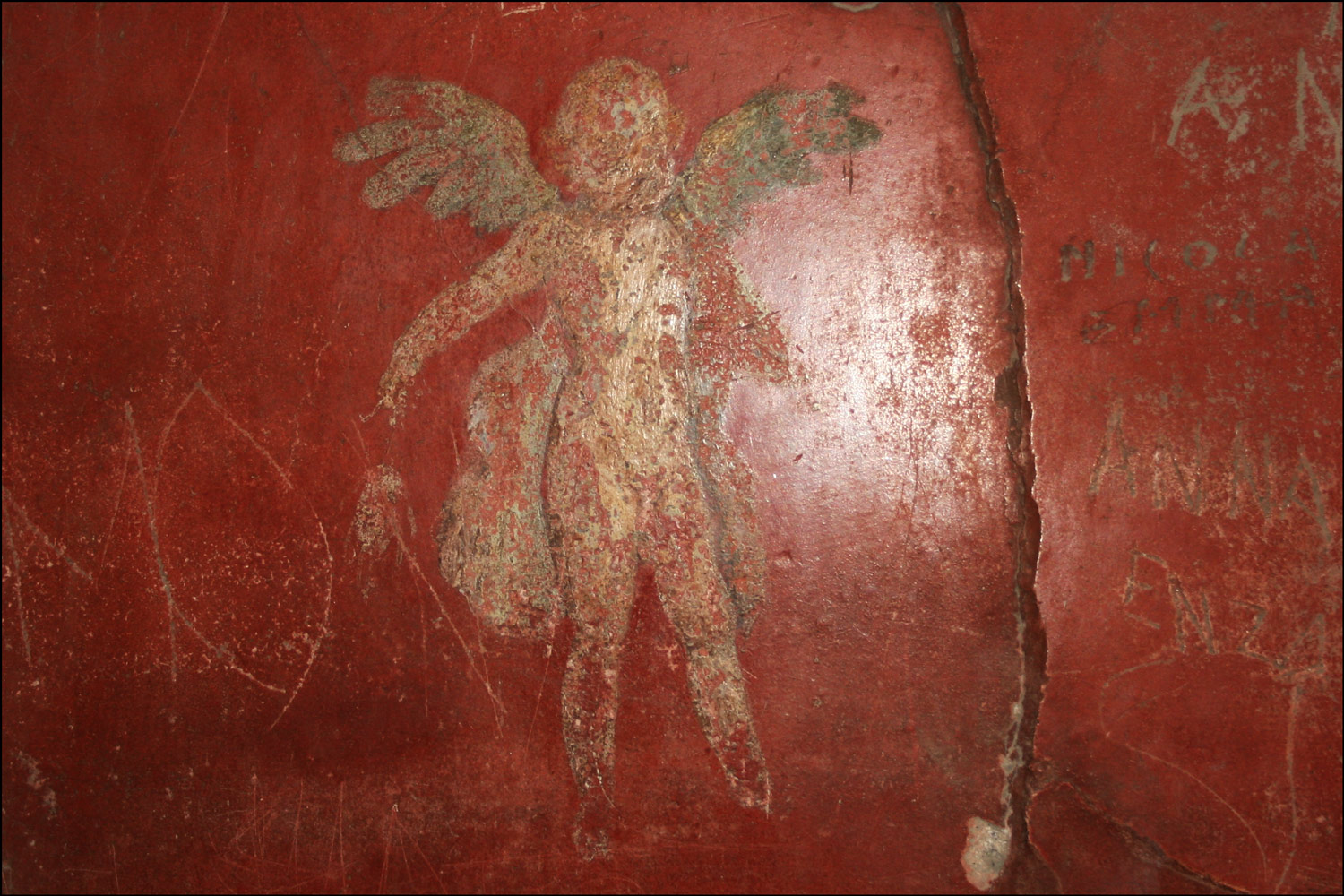
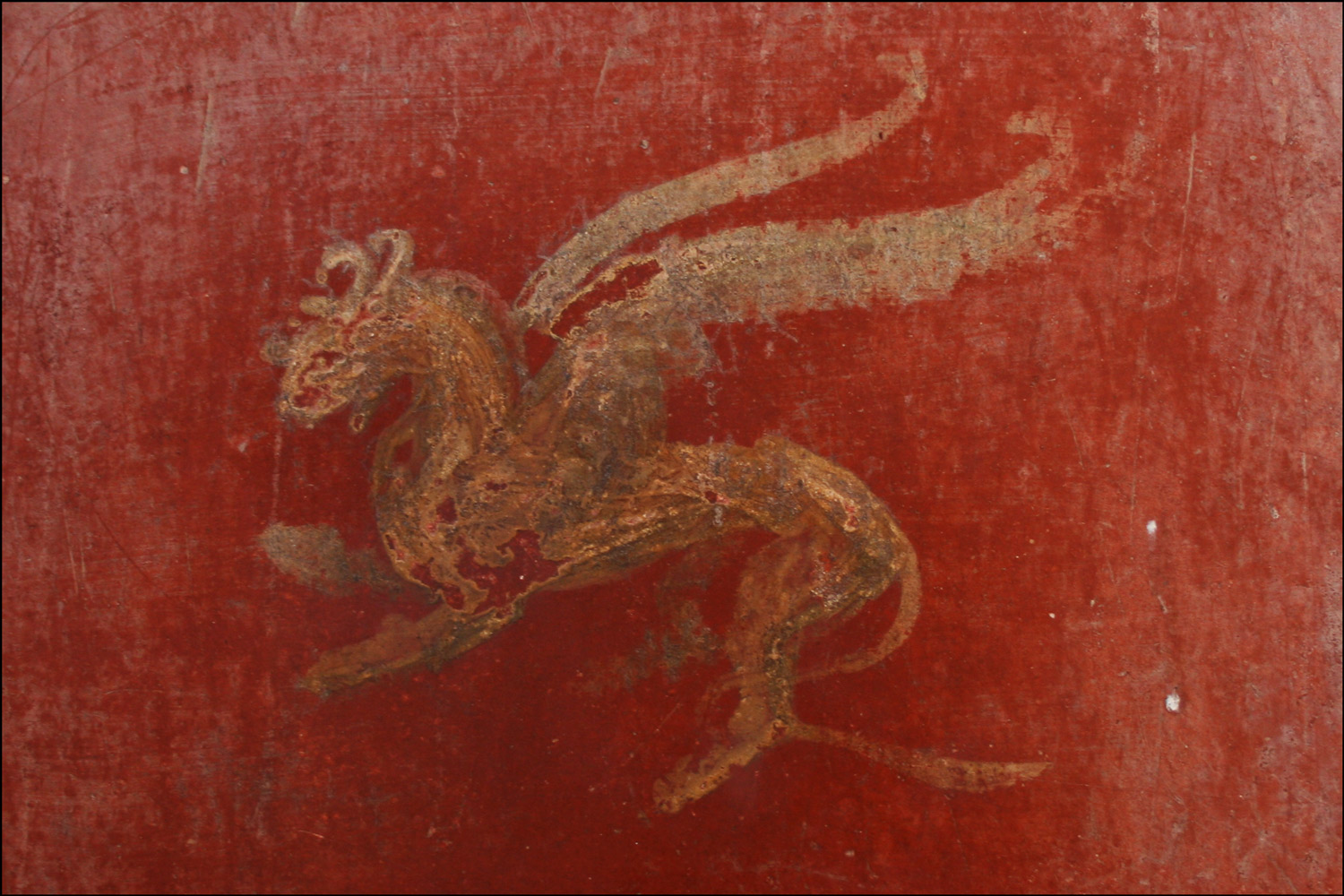
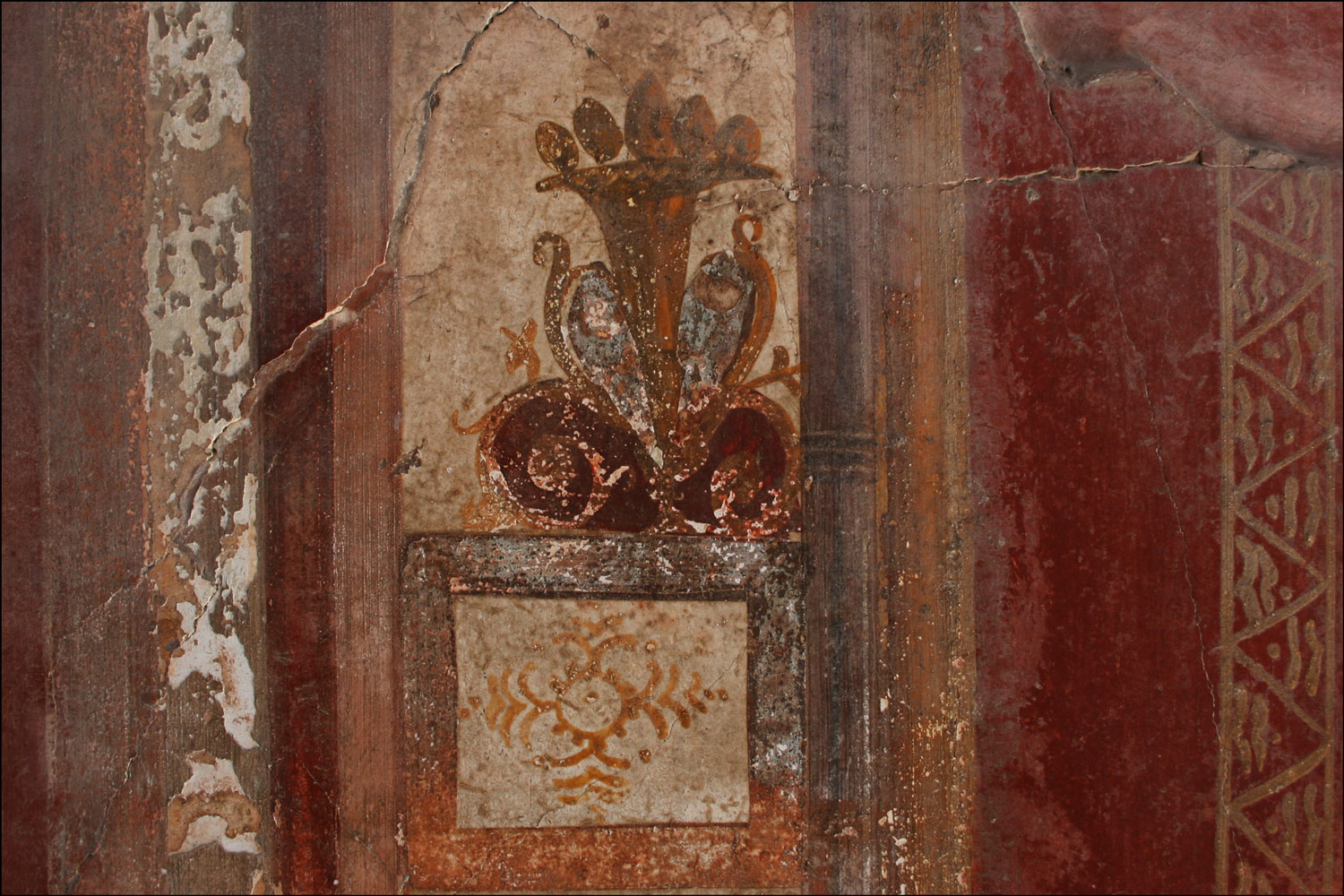
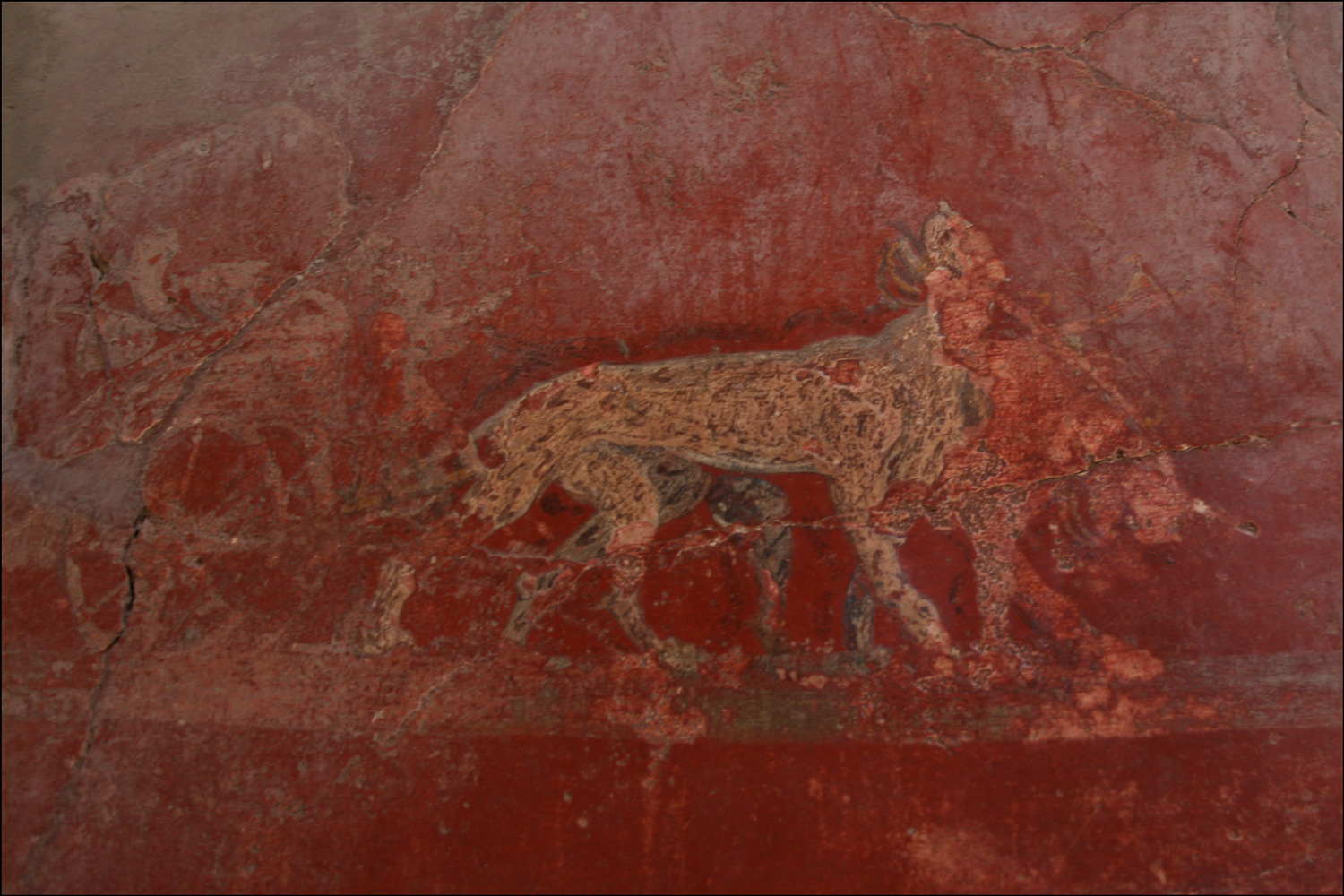
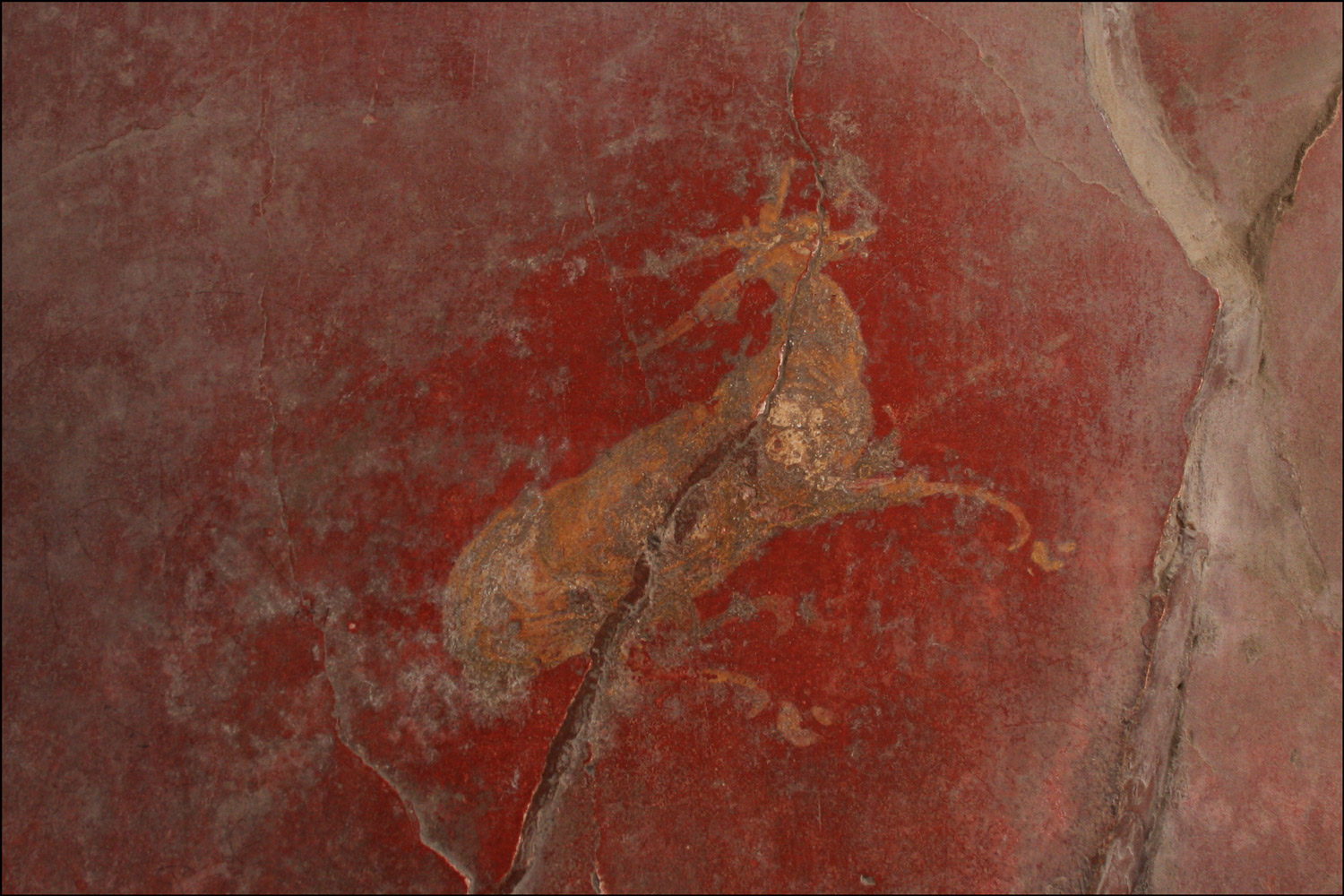
Fulleries were an important business in ancient Pompeii. Fullers processed, dyed, and washed cloth. Washing was accomplished by soaking cloth in solutions of soda and urine. The fullery of Stephanus (I.6.7) also included a private residence and it stood conveniently next door to the workshop of Verecundus, the textile manufacturer. On the walls of the fullery were painted a number of images on a red background.

Angel in the Fullery of Stephanus

Angel in the Fullery of Stephanus

SOURCE:  Angel in the Fullery of Stephanus (Pompeii, Campania, Italy); photographed by Stephen J. Danko on 08 August 2011.

Pegasus in the Fullery of Stephanus

Pegasus in the Fullery of Stephanus

SOURCE:  Pegasus in the Fullery of Stephanus (Pompeii, Campania, Italy); photographed by Stephen J. Danko on 08 August 2011.

Floral Image in the Fullery of Stephanus

Floral Image in the Fullery of Stephanus

SOURCE:  Floral Image in the Fullery of Stephanus (Pompeii, Campania, Italy); photographed by Stephen J. Danko on 08 August 2011.

Lion in the Fullery of Stephanus

Lion in the Fullery of Stephanus

SOURCE:  Lion in the Fullery of Stephanus (Pompeii, Campania, Italy); photographed by Stephen J. Danko on 08 August 2011.

Stag in the Fullery of Stephanus

Stag in the Fullery of Stephanus

SOURCE:  Stag in the Fullery of Stephanus (Pompeii, Campania, Italy); photographed by Stephen J. Danko on 08 August 2011.

Copyright © 2011 by Stephen J. Danko
Posted in Daily Journal | Tagged , , | Comments Off on The Fullery of Stephanus in Pompeii, Italy