The Roman Forum – Part 1

The Forum was the center for public life in ancient Rome. Today, the Forum lies mostly in ruins. At the northwest corner of the forum stands the Arch of Septimius Severus dedicated in 203 AD to commemorate the victories of Septimius Severus and his sons against the Parthians. Near the Arch stands the Column of Phocus dedicated in 608 AD to the Eastern Roman Emperor Phocus. The Church of Santi Luca e Martina, commissioned in 625 AD, is also nearby. Of the Temple of Saturn, the oldest temple in the Forum, only eight columns and the podium remain. Even less of the Temple of Vespasian and Titus has survived. Only three columns remain standing.
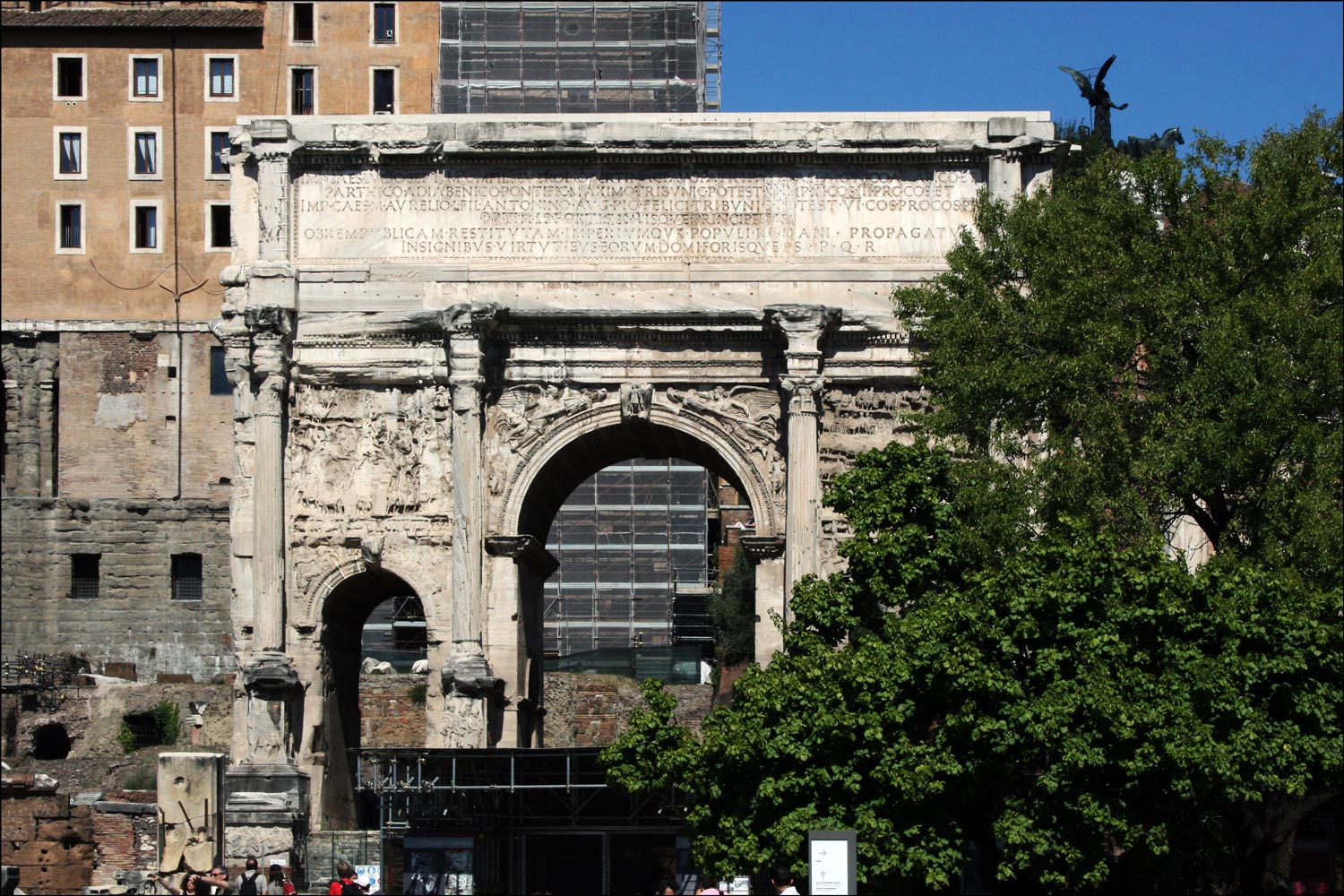
Arch of Septimius Severus

Arch of Septimius Severus

SOURCE:  Arch of Septimius Severus (Rome, Lazio, Italy); photographed by Stephen J. Danko on 13 August 2011.
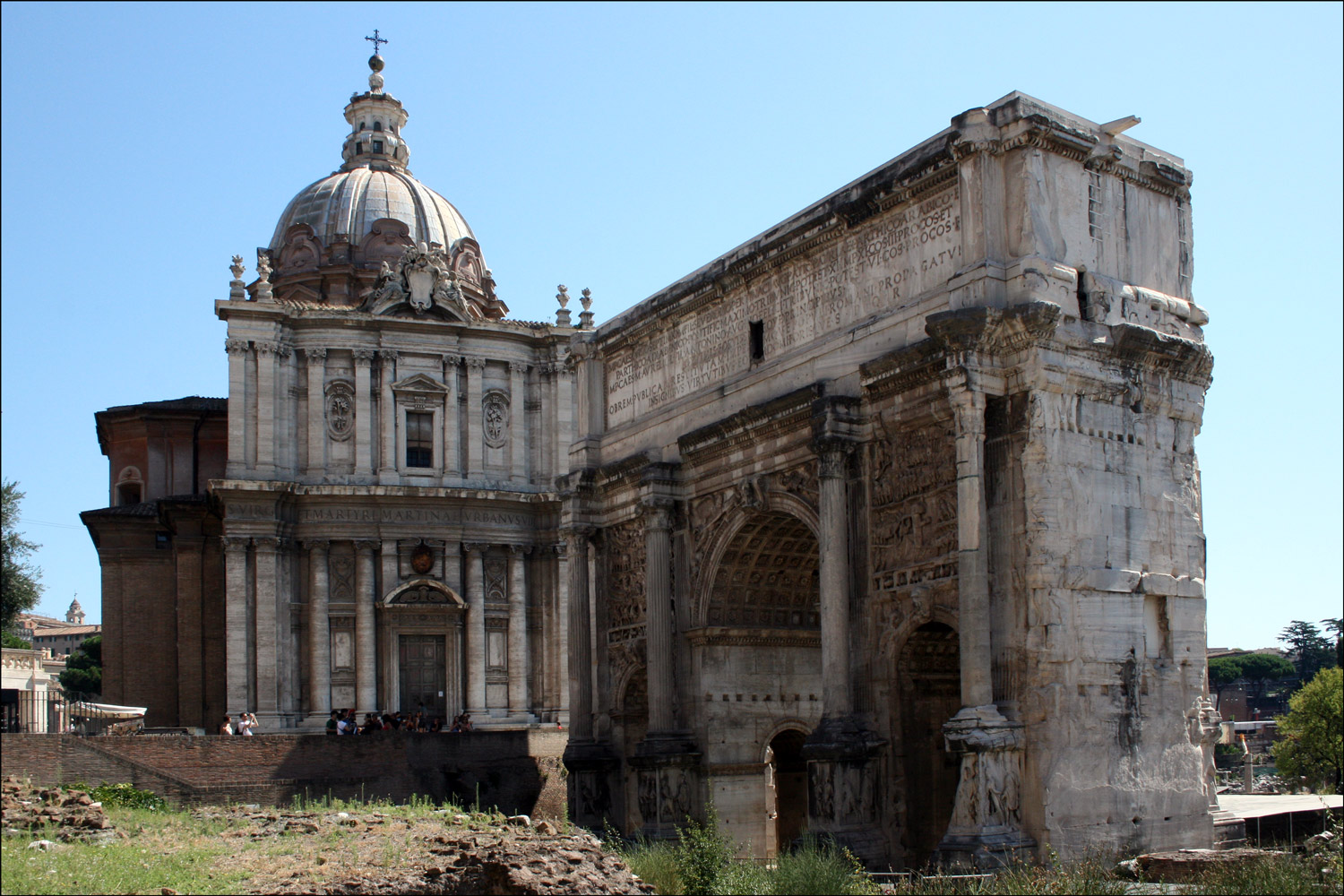
Church of Santi Luca e Martina / Arch of Septimius Severus

Church of Santi Luca e Martina / Arch of Septimius Severus

SOURCE:  Church of Santi Luca e Martina / Arch of Septimius Severus (Rome, Lazio, Italy); photographed by Stephen J. Danko on 13 August 2011.
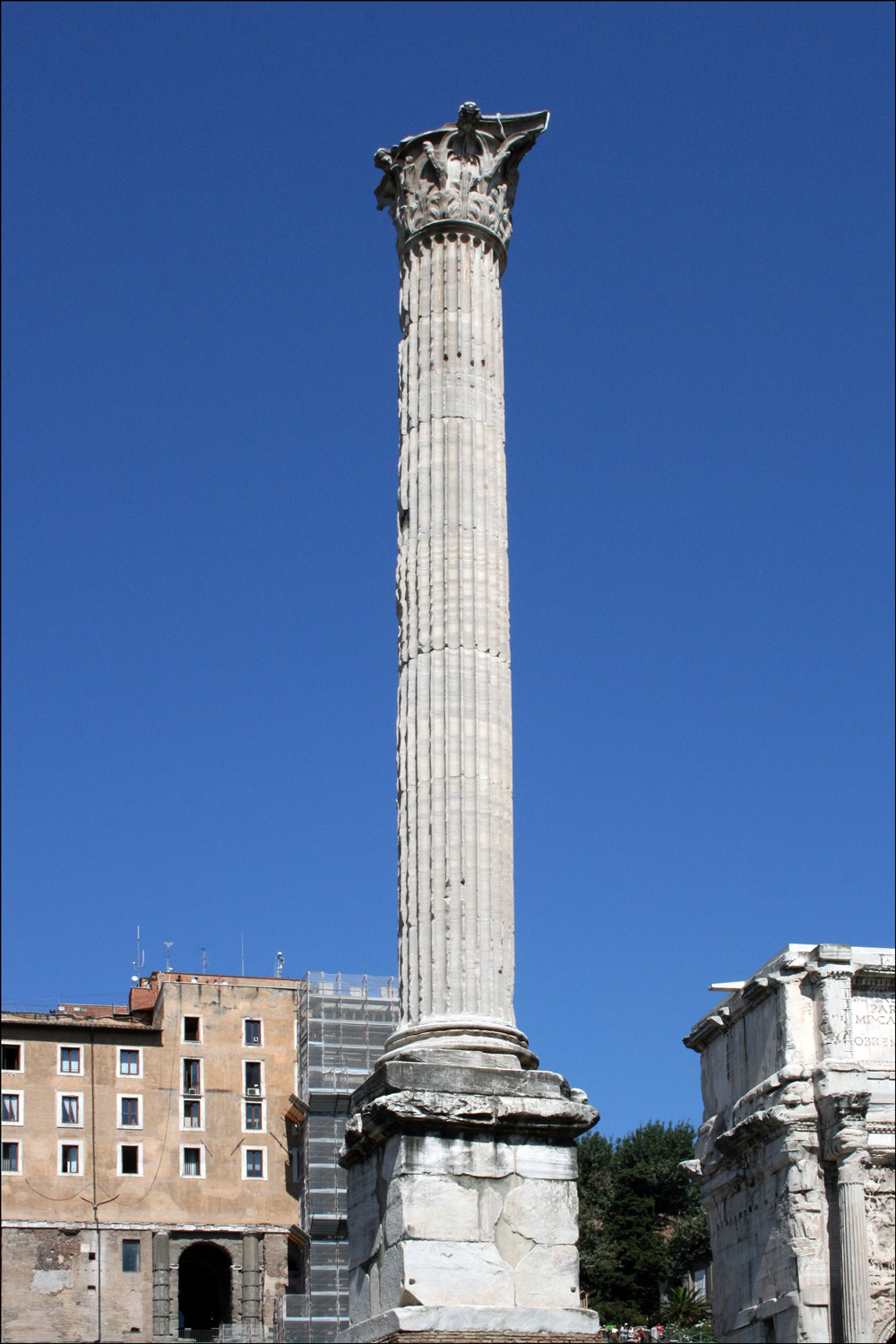
Column of Phocus

Column of Phocus

SOURCE:  Column of Phocus (Rome, Lazio, Italy); photographed by Stephen J. Danko on 13 August 2011.
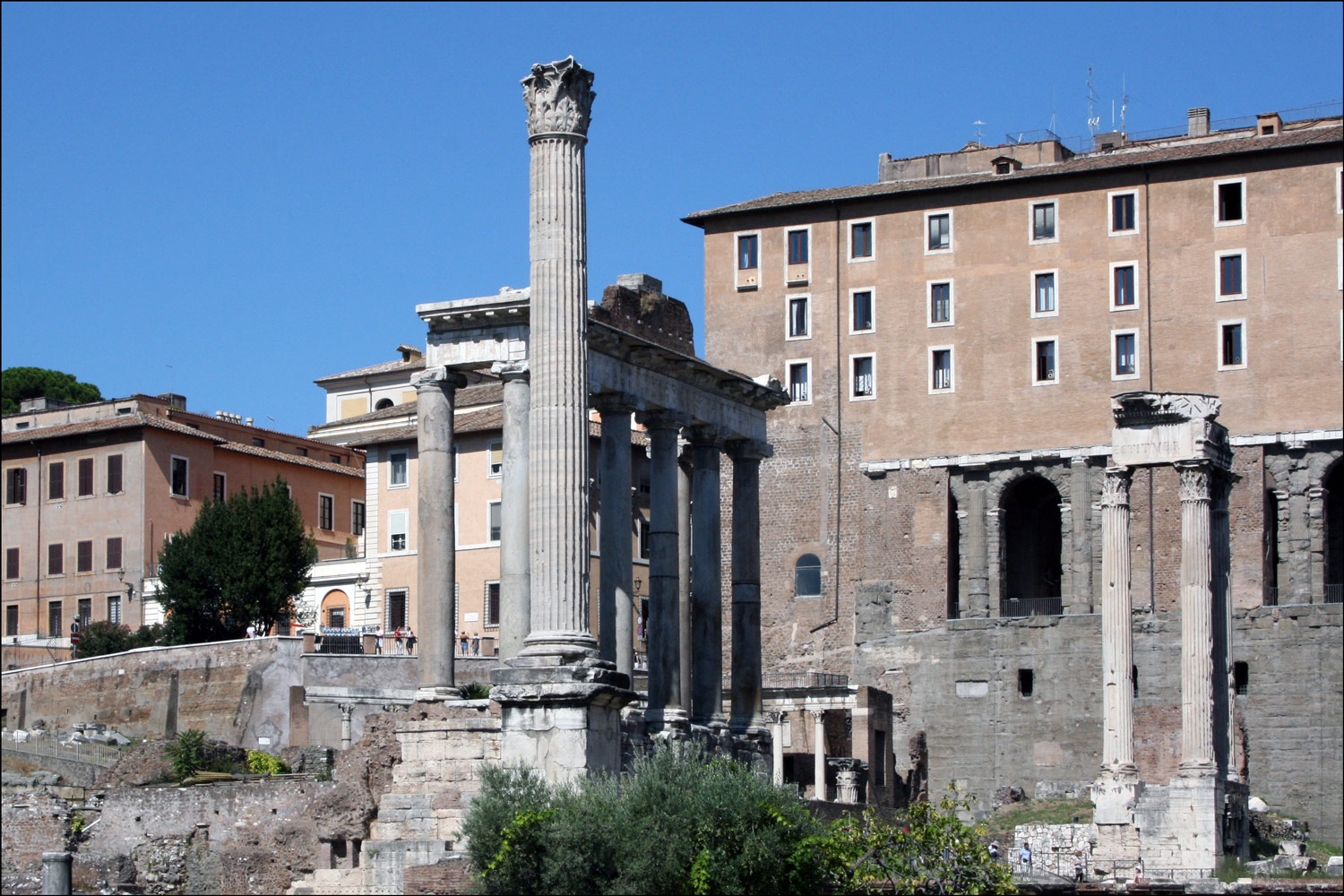
Column of Phocus / Temple of Saturn / Temple of Vespasian and Titus

Column of Phocus / Temple of Saturn / Temple of Vespasian and Titus

SOURCE:  Column of Phocus / Temple of Saturn / Temple of Vespasian and Titus (Rome, Lazio, Italy); photographed by Stephen J. Danko on 13 August 2011.

Copyright © 2011 by Stephen J. Danko
Posted in Daily Journal | Tagged , , | Comments Off on The Roman Forum – Part 1

The Basilica of Saint Peter in Chains, Rome

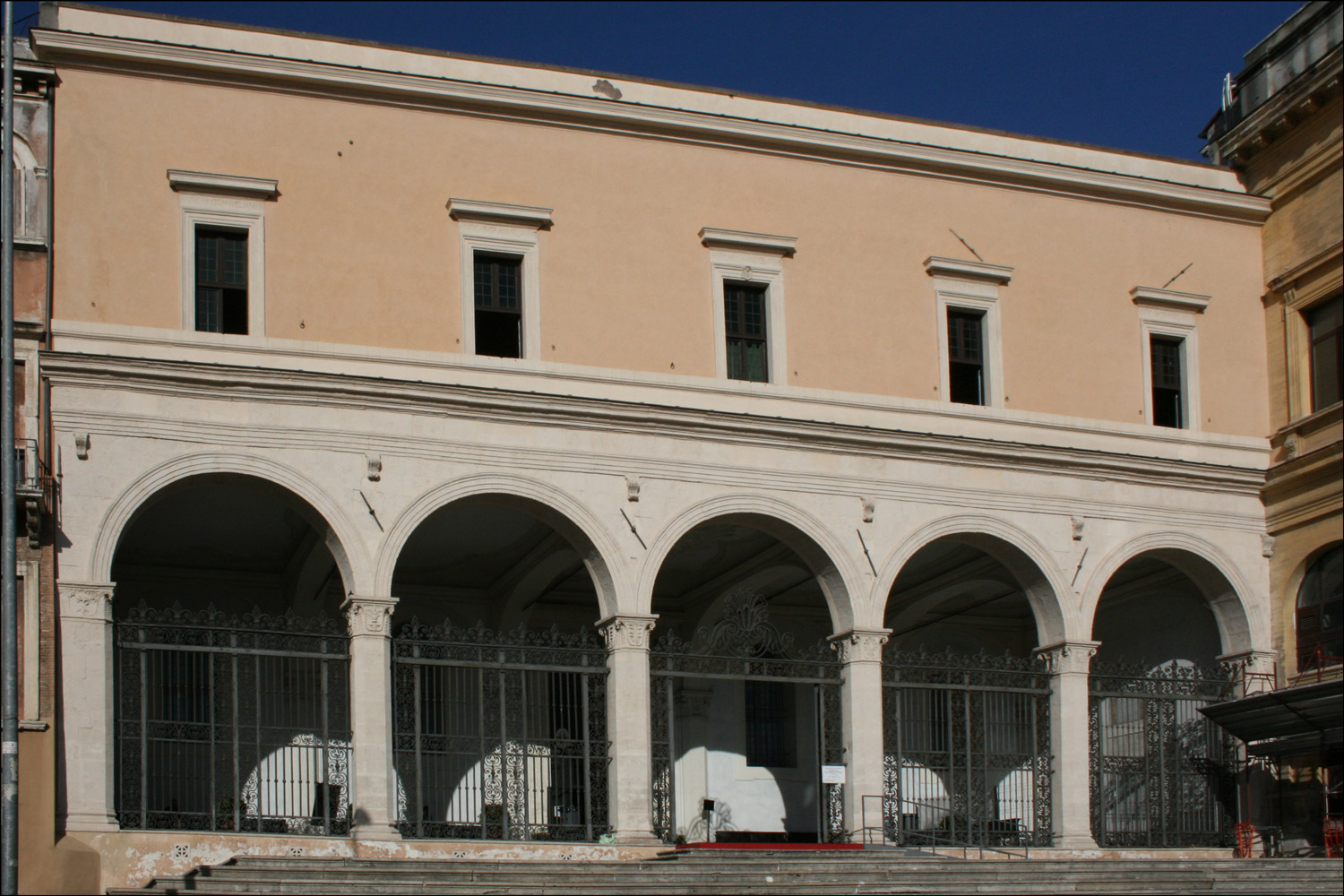
The Basilica of Saint Peter in Chains (San Pietro in Vincoli) is located near the Colosseum in Rome, Italy. Its façade is modest. If one did not know the basilica was there, one might pass by, thinking that the structure was an office building or a residence.

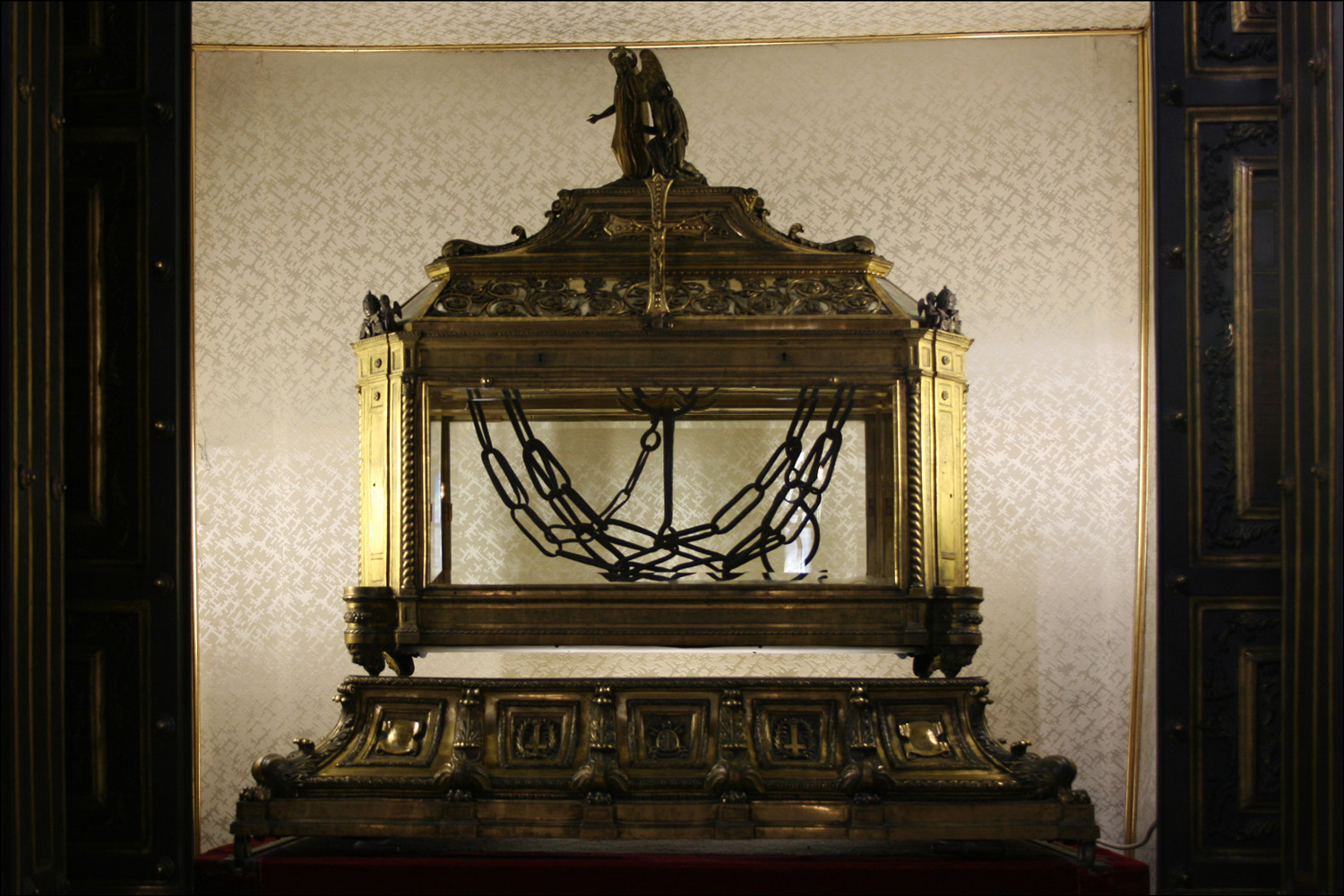
The most amazing possession of the basilica are the chains on display, thought to be the chains that held Saint Peter while he was imprisoned in Jerusalem and in the Mamertine Prison in Rome.

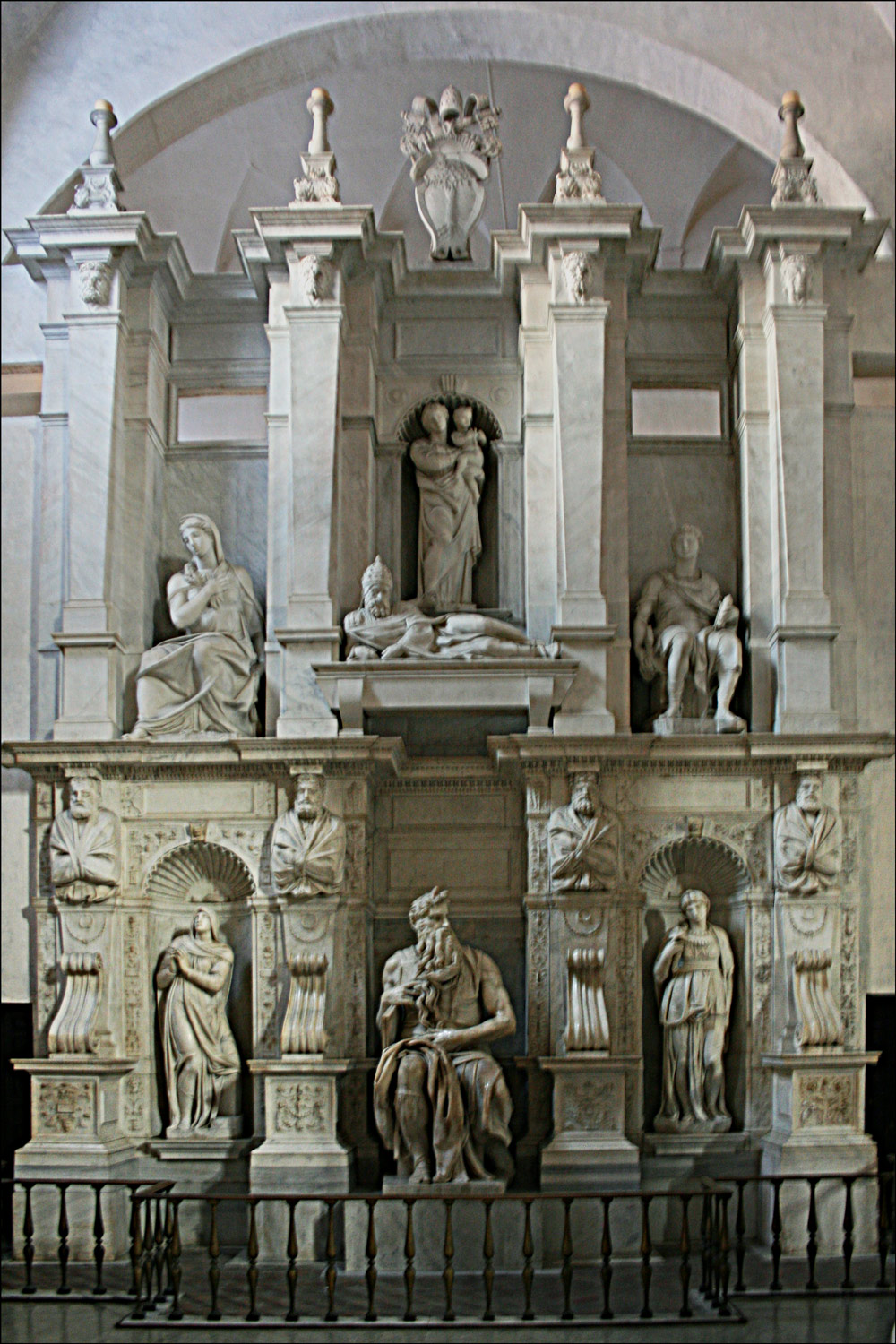
The basilica is also famous for a monument to Pope Julius II which includes Michelangelo’s sculpture of Moses. Original texts describing Moses as he descended Mount Sinai describe Moses face as “radiant”, although Jerome, who translated the Old Testament into Latin, described Moses as “horned” rather than “radiant”. In any case, Michelangelo sculpted Moses with horns. While the monument to Pope Julius II is located in San Pietro in Vincoli, his tomb is located in Saint Peter’s.

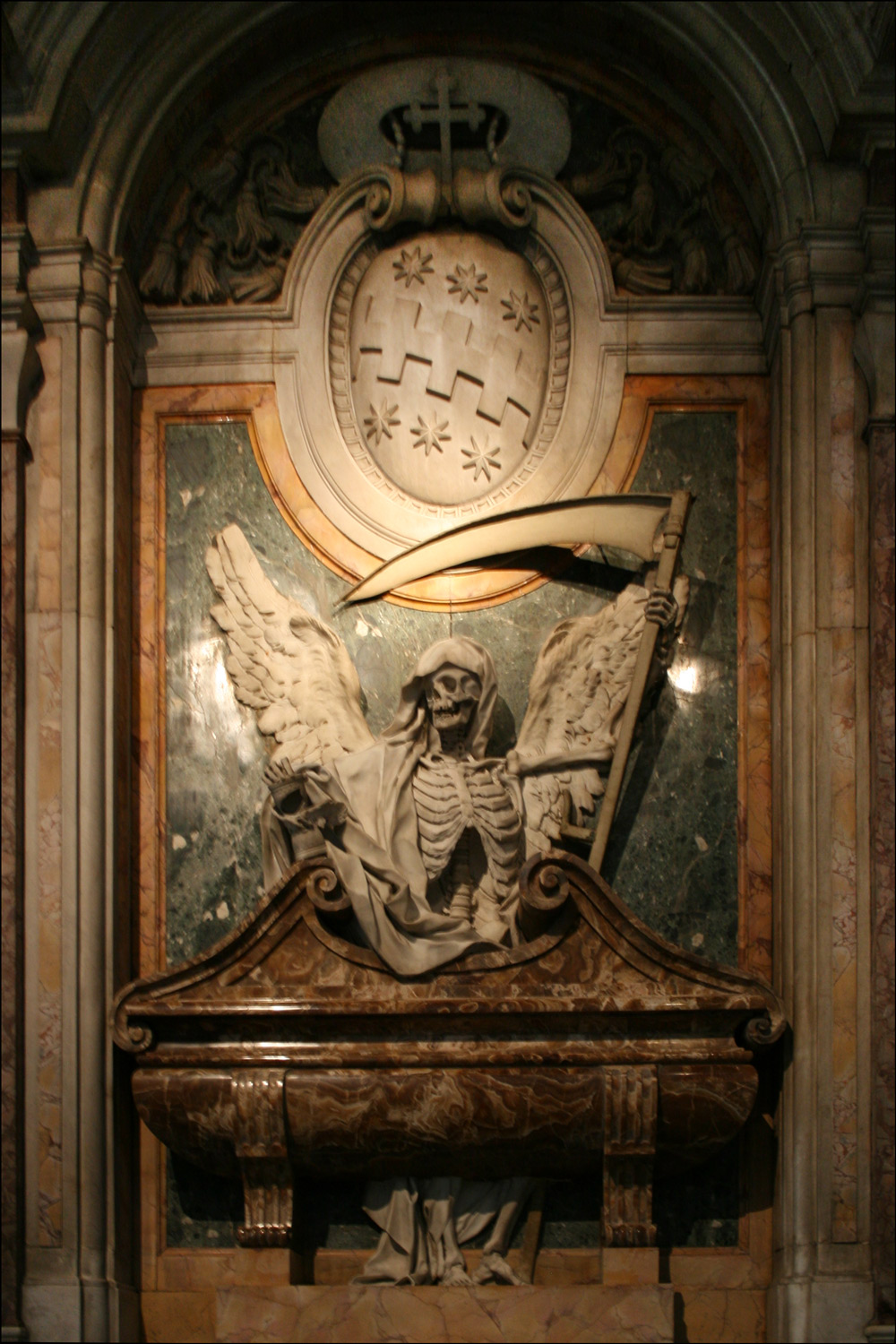
Another striking feature of the basilica is the tomb of Cinzio Aldobrandini, the nephew of Pope Clement VIII. Aldobrandini was a cardinal in the Roman Catholic Church and lived much of his life in service to the Vatican. His tomb is decorated with an impressive sculpture of Death.

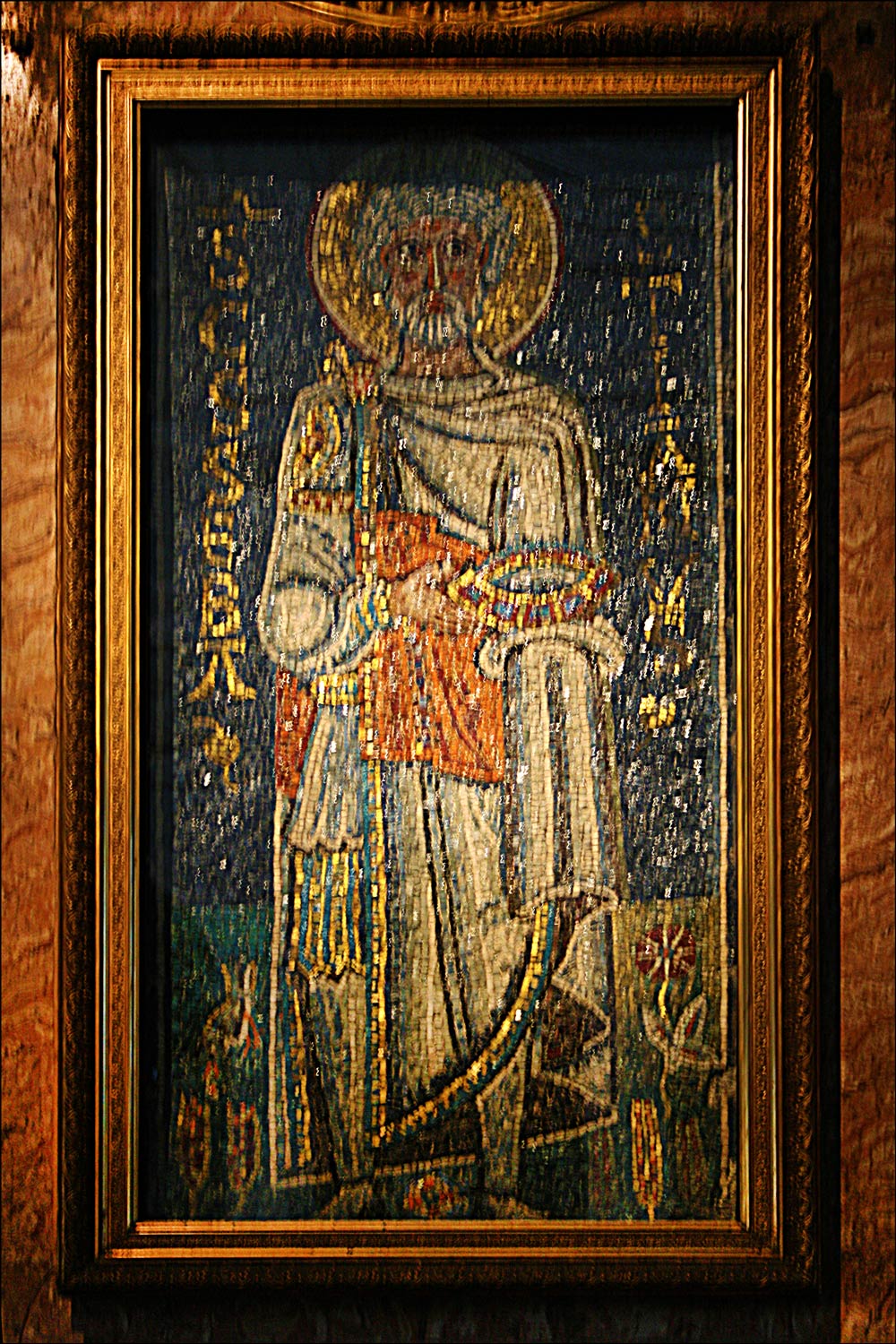
The altar of Saint Sebastian is related to an outbreak of Plague in Pavia that could only be abated if an altar to Saint Sebastian was constructed in the Church of San Pietro in Vincoli in Pavia. Presumably, this story was told in Rome and an altar to Saint Sebastian was also constructed in San Pietro in Vincoli in Rome. A mosaic of Saint Sebastian hangs over the altar.

The Basilica of Saint Peter in Chains

The Basilica of Saint Peter in Chains

SOURCE:  The Basilica of Saint Peter in Chains (Rome, Lazio, Italy); photographed by Stephen J. Danko on 12 August 2011.

The Chains of Saint Peter

The Chains of Saint Peter

SOURCE:  The Chains of Saint Peter (Rome, Lazio, Italy); photographed by Stephen J. Danko on 12 August 2011.

Monument to Pope Julius II

Monument to Pope Julius II

SOURCE:  Monument to Pope Julius II (Rome, Lazio, Italy); photographed by Stephen J. Danko on 12 August 2011.

Tomb of Cardinal Cinzio Aldobrandini

Tomb of Cardinal Cinzio Aldobrandini

SOURCE:  Tomb of Cardinal Cinzio Aldobrandini (Rome, Lazio, Italy); photographed by Stephen J. Danko on 12 August 2011.

Mosaic of Saint Sebastian

Mosaic of Saint Sebastian

SOURCE:  Mosaic of Saint Sebastian (Rome, Lazio, Italy); photographed by Stephen J. Danko on 12 August 2011.

Copyright © 2011 by Stephen J. Danko
Posted in Daily Journal | Tagged , , | 1 Comment

A Walk Along the Tiber River in Rome

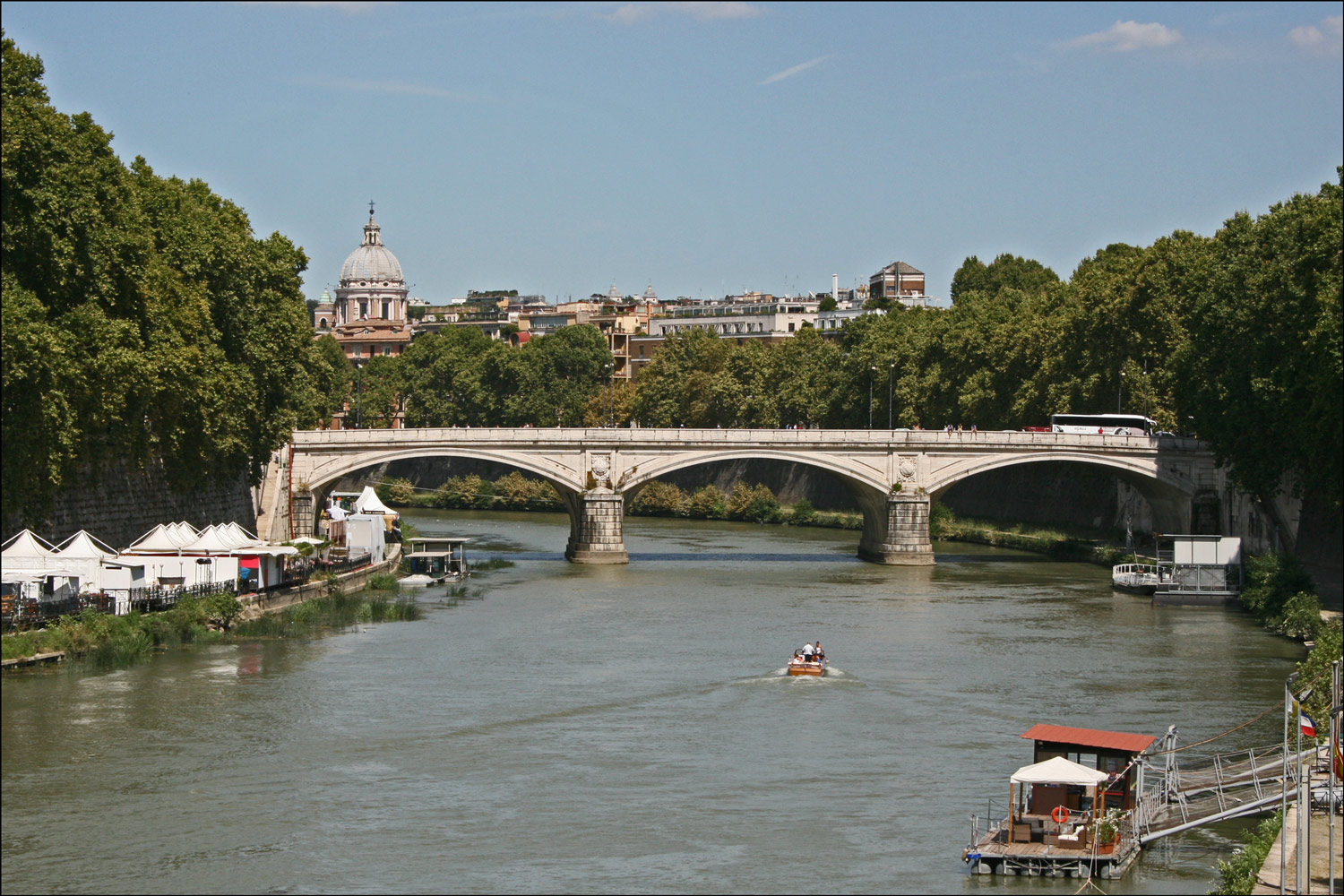
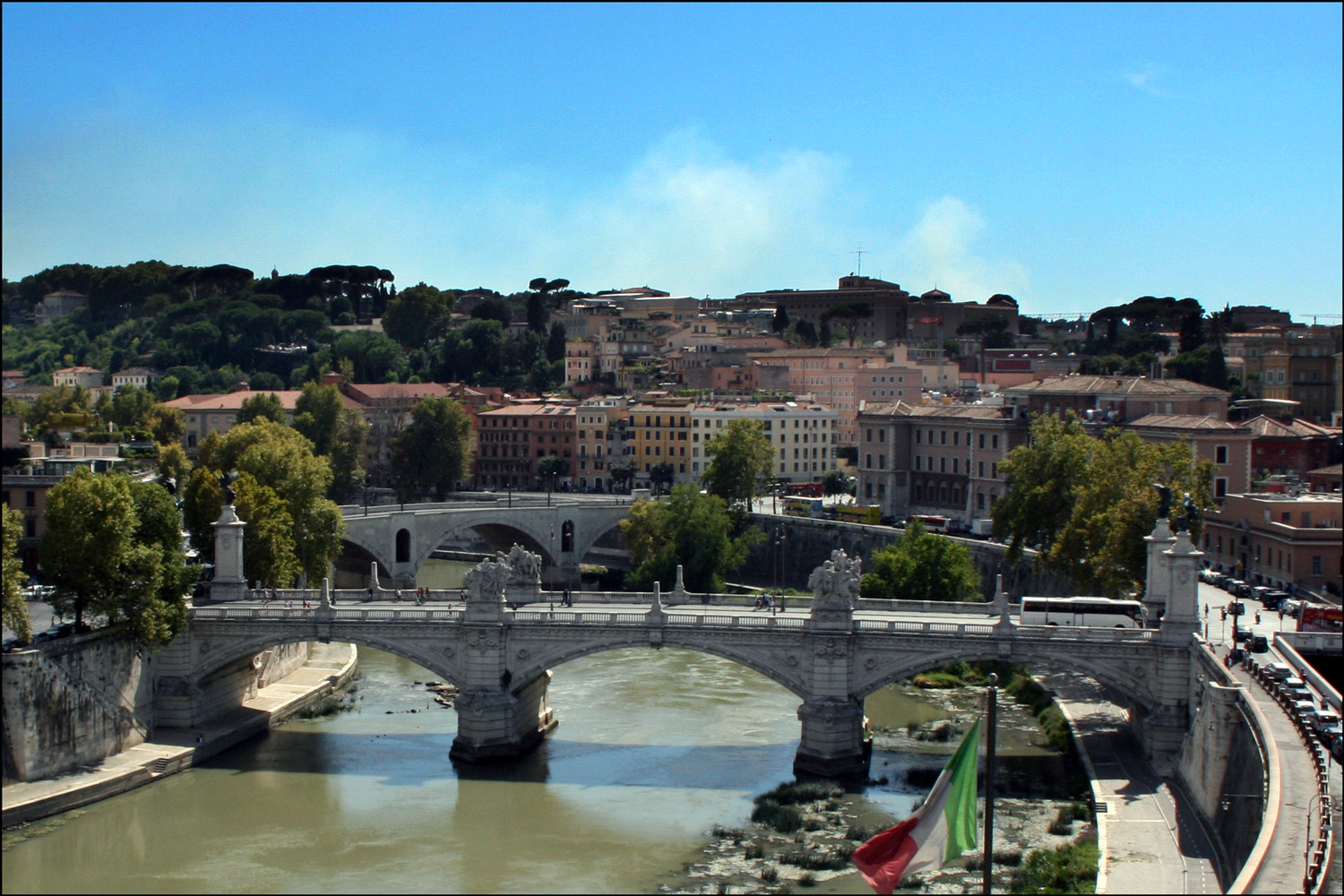
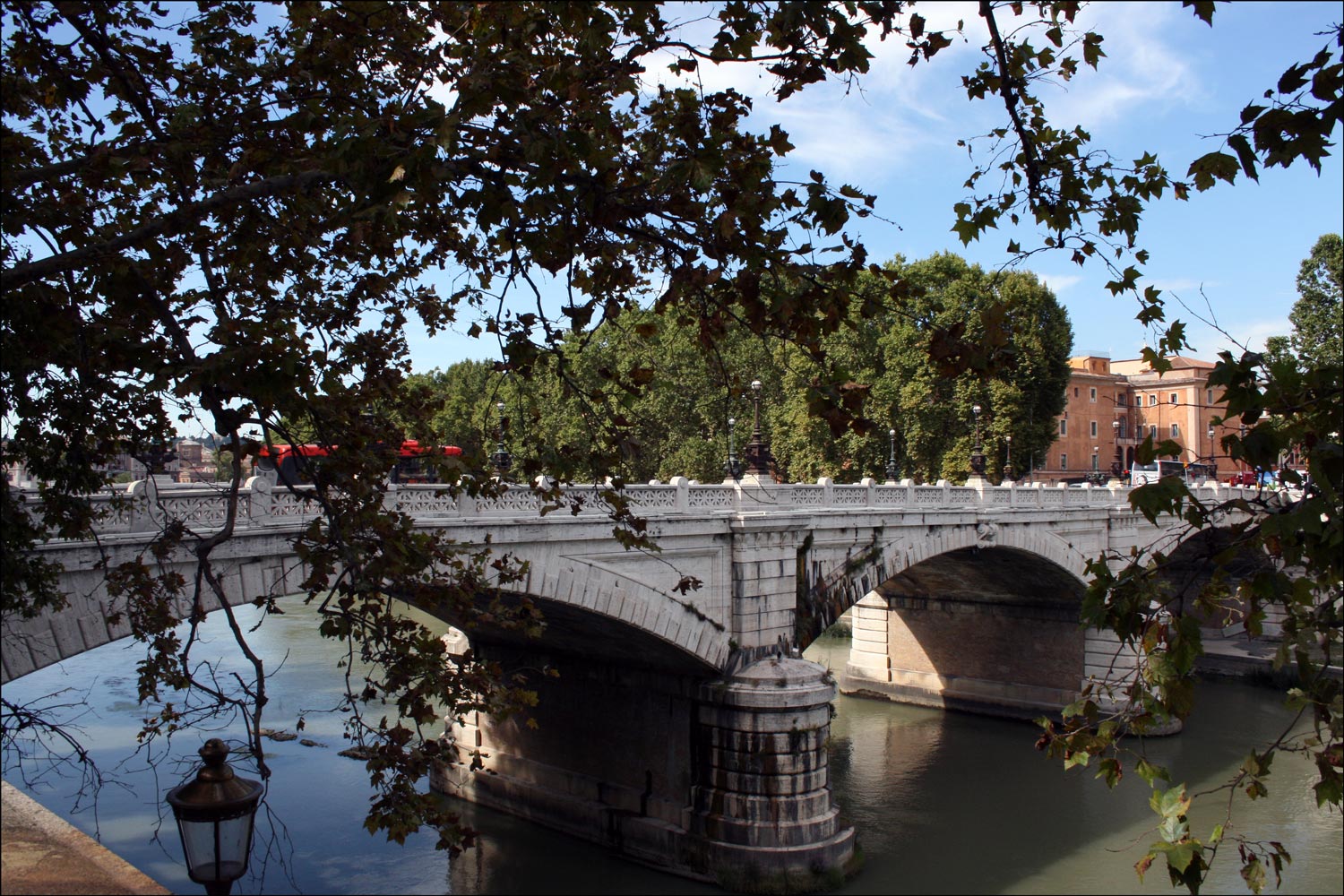
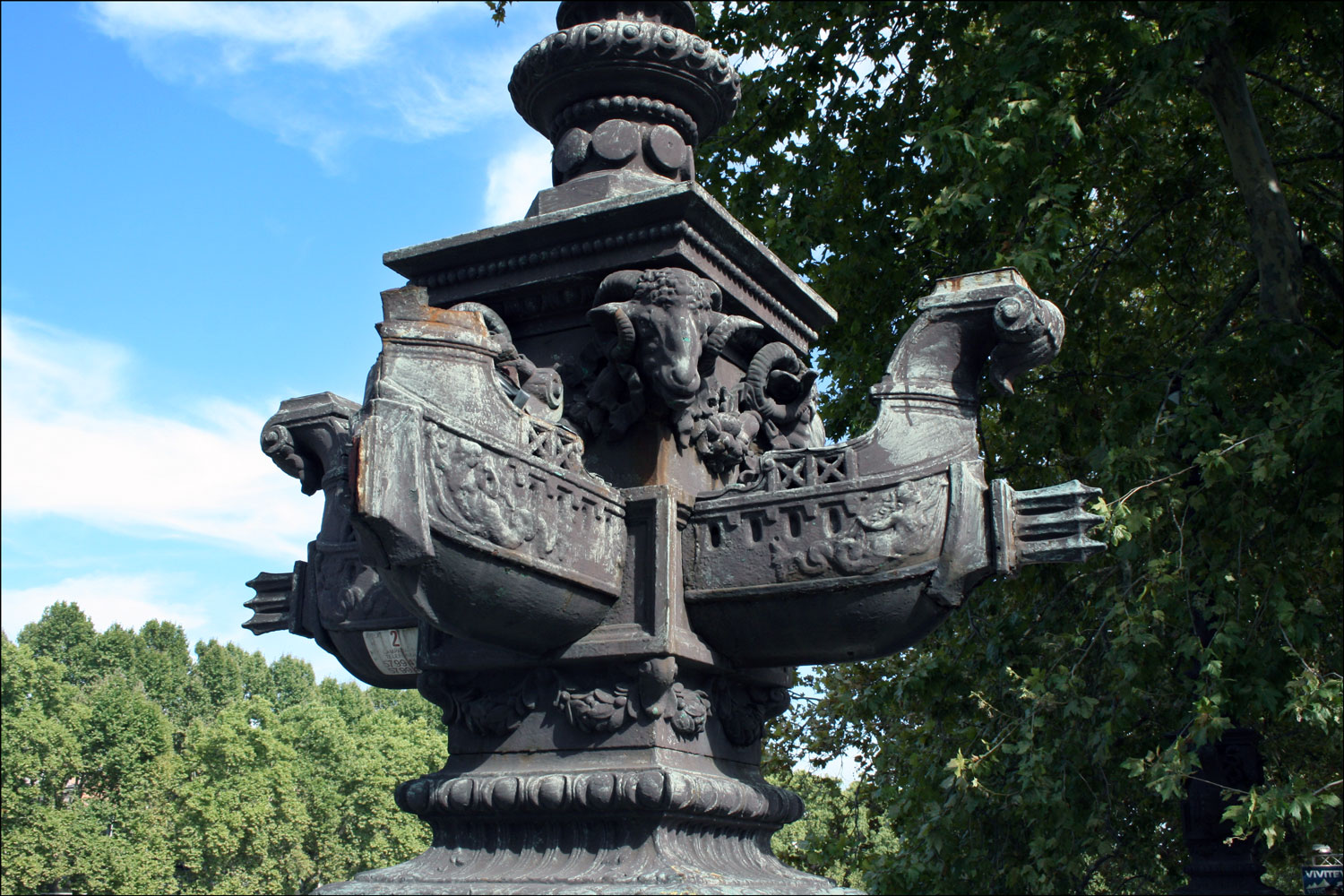
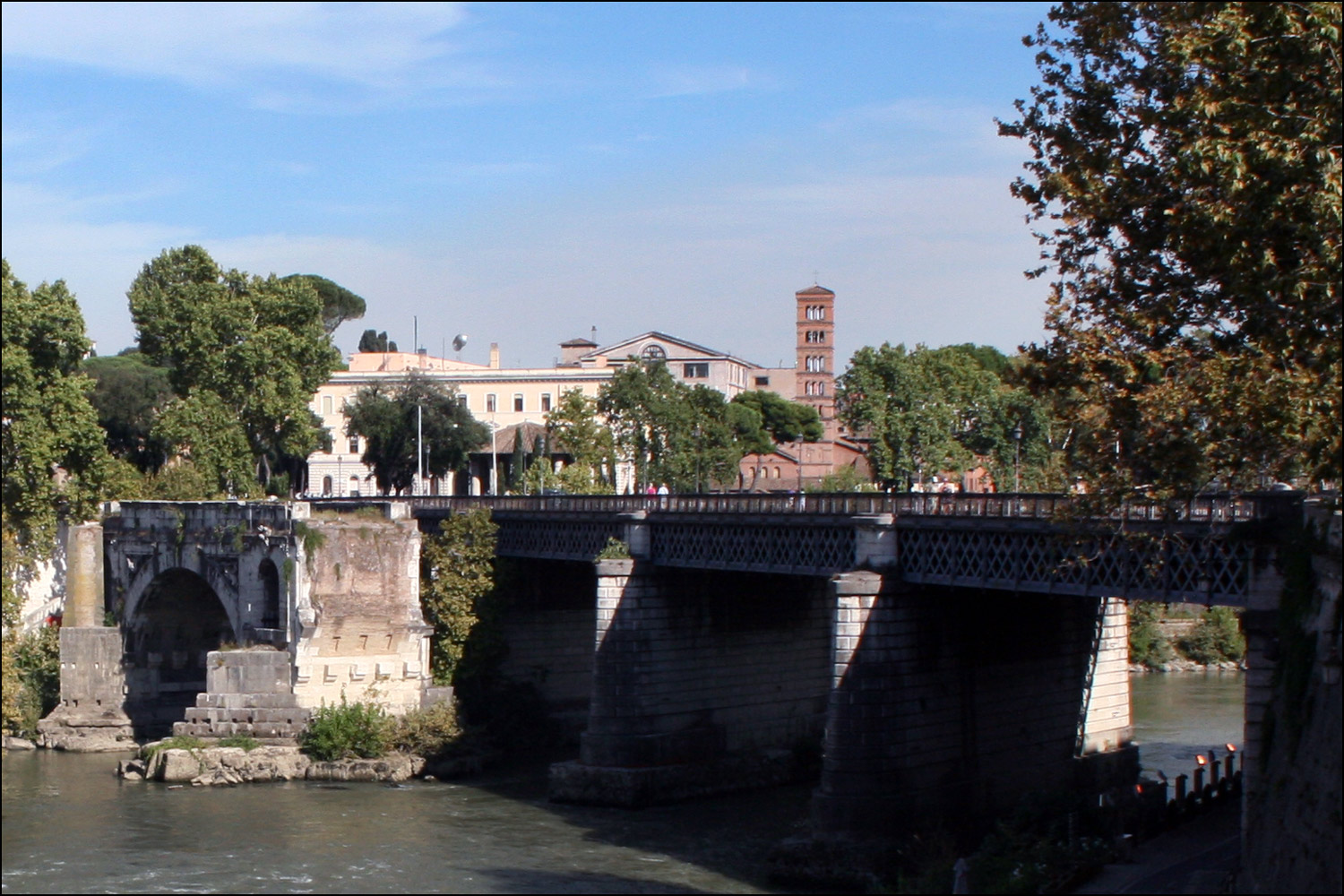
As the Tiber River winds through Rome, Italy, pedestrians can stroll along at the level of the river itself or on the streets above the walls that protect Rome from flooding. From the north, one passes a number of bridges including the Umberto I Bridge (Ponte Umberto I)that leads to the Palace of Justice, the Sant’Angelo Bridge (ponte Sant’Angelo) leading to Castel Sant’Angelo, the Victor Emmanuel II Bridge (Ponte Vittorio Emanuele II)Â and the Prince Amedeo Bridge (Ponte Principe Amedeo) just below Castel Sant’Angelo, the Giuseppe Mazzini Bridge (Ponte Mazzini) with its fascinating lamps, and the Palatino Bridge (Ponto Palatino) and the ruins of the Rotto Bridge (Ponte Rotto), just below the rapids.

Victor Emmanuel II Bridge and Prince Amedeo Bridge

Victor Emmanuel II Bridge and Prince Amedeo Bridge

SOURCE:  Victor Emmanuel II Bridge and Prince Amedeo Bridge (Rome, Lazio, Italy); photographed by Stephen J. Danko on 12 August 2011.

Giuseppe Mazzi Bridge

Giuseppe Mazzi Bridge

SOURCE:  Giuseppe Mazzini Bridge (Rome, Lazio, Italy); photographed by Stephen J. Danko on 12 August 2011.

Base of Lamp on the Giuseppe Mazzini Bridge

Base of Lamp on the Giuseppe Mazzini Bridge

SOURCE:  Base of Lamp on the Giuseppe Mazzini Bridge (Rome, Lazio, Italy); photographed by Stephen J. Danko on 12 August 2011.

Palatino Bridge and Ruins of the Rotto Bridge

Palatino Bridge and Ruins of the Rotto Bridge

SOURCE:  Palatino Bridge and Ruins of the Rotto Bridge (Rome, Lazio, Italy); photographed by Stephen J. Danko on 12 August 2011.

Copyright © 2011 by Stephen J. Danko
Posted in Daily Journal | Tagged , , | Comments Off on A Walk Along the Tiber River in Rome

The Palace of Justice and the Ponte Umberto I in Rome

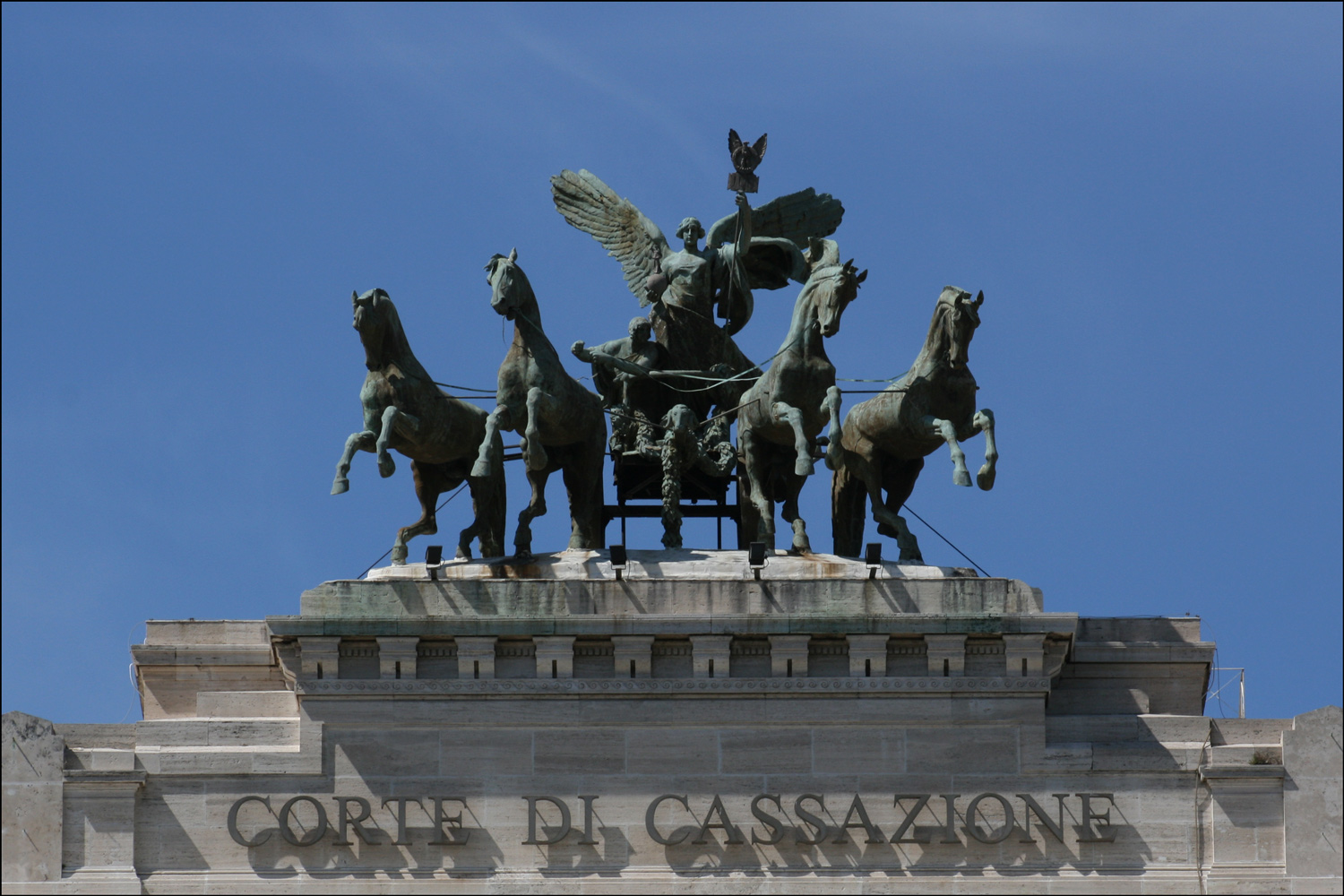
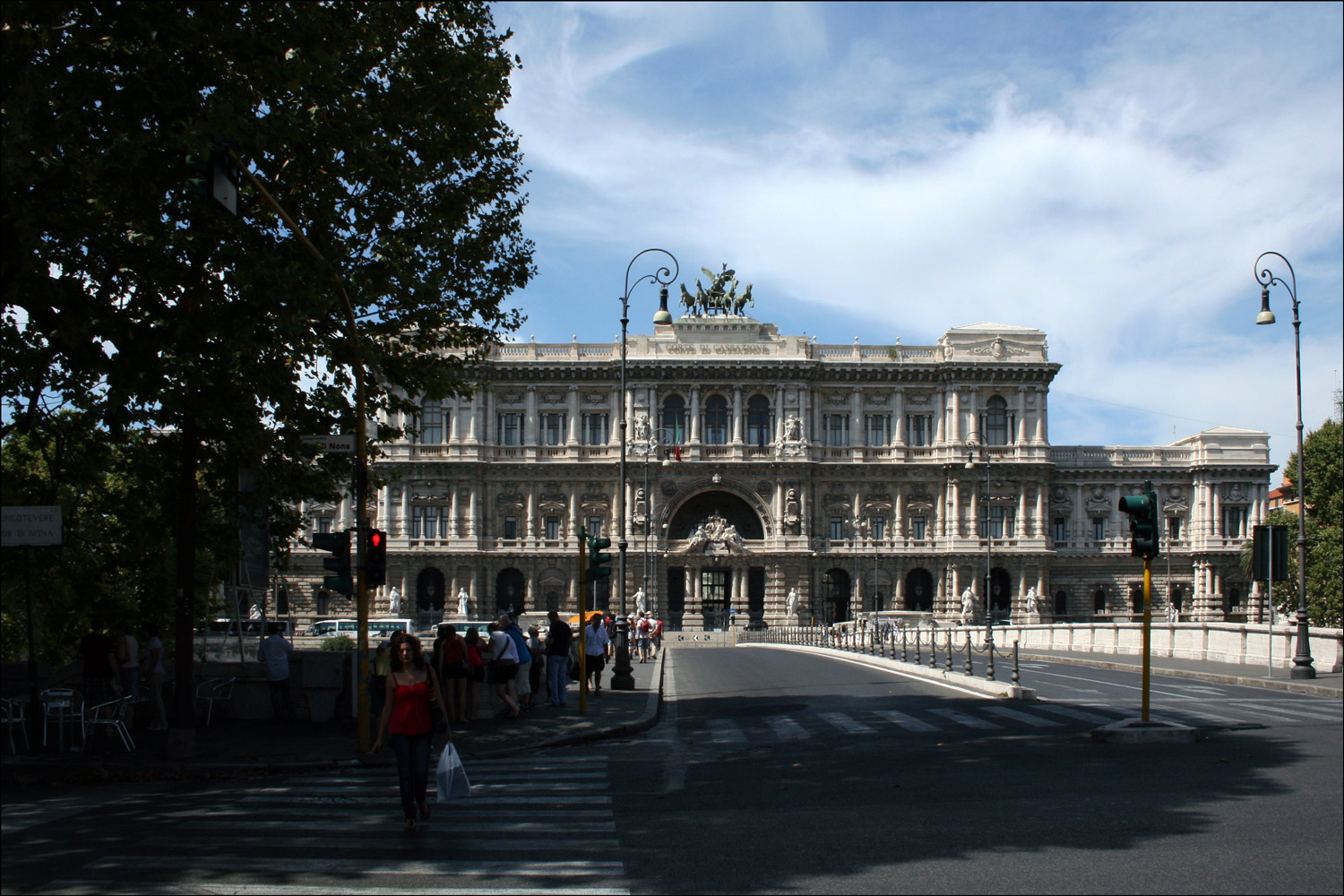
The Palace of Justice is located along the right bank of the Tiber River in Rome. Over the front door is a sculpture of Justice flanked by Law and Strength. In front of the building are statues of Cicero, Papiniano, De Luca, and Vito. Atop the structure is a sculpture of Winged Victory.

The Palace of Justice is approached by the Ponte Umberto I, a bridge honoring the second king of a unified Italy.

The Palace of Justice

The Palace of Justice

SOURCE:  The Palace of Justice (Rome, Lazio, Italy); photographed by Stephen J. Danko on 12 August 2011.

Winged Victory

Winged Victory

SOURCE:  Winged Victory (Rome, Lazio, Italy); photographed by Stephen J. Danko on 12 August 2011.

Ponte Umberto I

Ponte Umberto I

SOURCE:  Ponte Umberto I (Rome, Lazio, Italy); photographed by Stephen J. Danko on 12 August 2011.

Copyright © 2011 by Stephen J. Danko
Posted in Daily Journal | Tagged , , | Comments Off on The Palace of Justice and the Ponte Umberto I in Rome

Atop Castel Sant’Angelo in Rome

Castel Sant’Angelo in Rome, Italy is in remarkably good repair considering that it is over 1800 years old .  The fact that the structure has been in nearly constant use since it was built undoubtedly has contributed to its preservation.

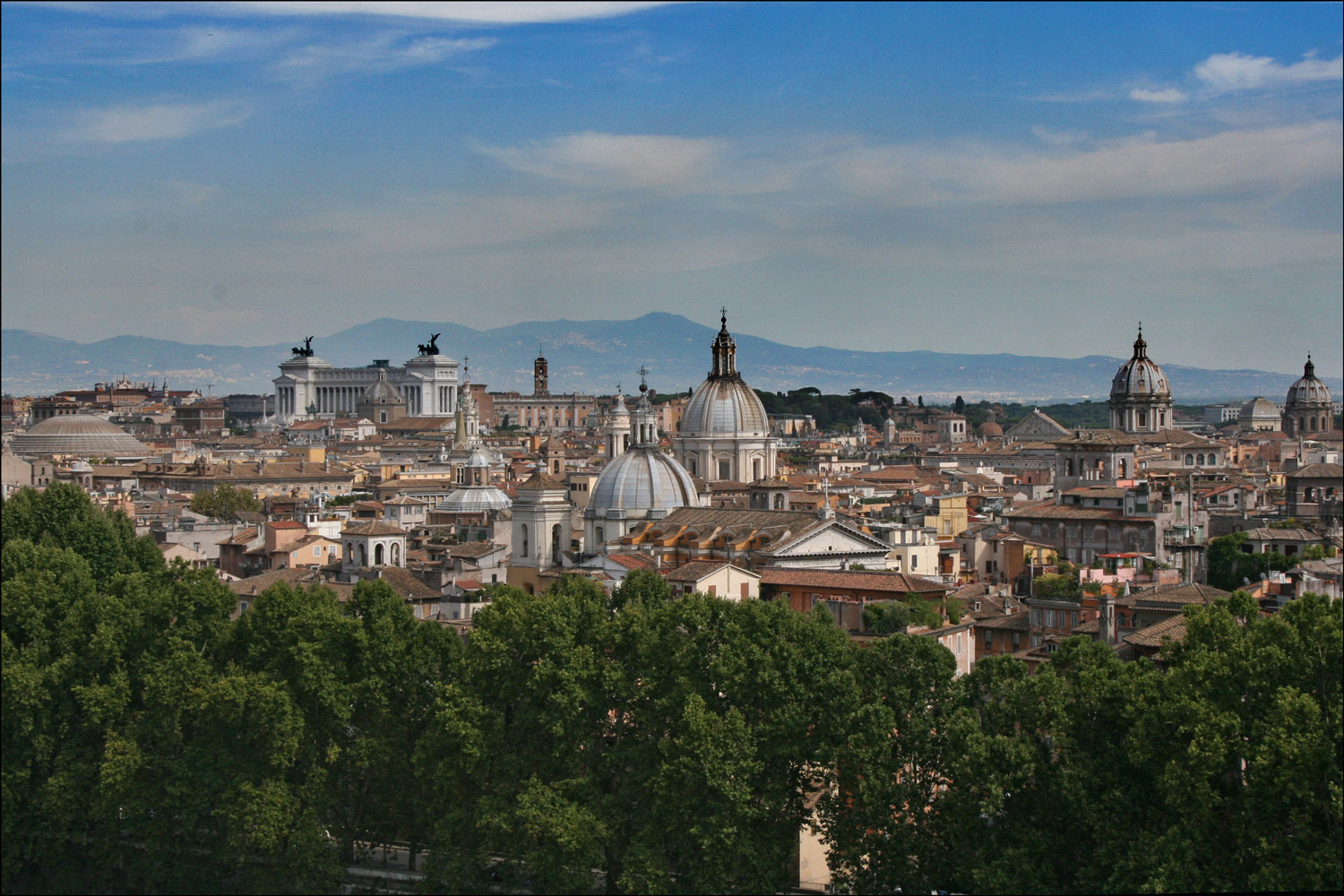
From the upper battlements, visitors to Castel Sant’Angelo enjoy a panoramic view of the Eternal City. Looking southeast, one can see the broad dome of the Pantheon, the National Monument to Victor Emmanuel II, and the domes of several Roman churches. Among those domes is the somewhat octagonal dome of Chiesa del Gesù, directly in front of the Victor Emmanuel Monument. Also seen are the domes of San Salvatore in Lauro just to the left of the dome of Sant’Agnese in Agone in the Piazza Navona. Further to the right are the domes of Santa’Andrea della Valle and San Carlo ai Catinari.

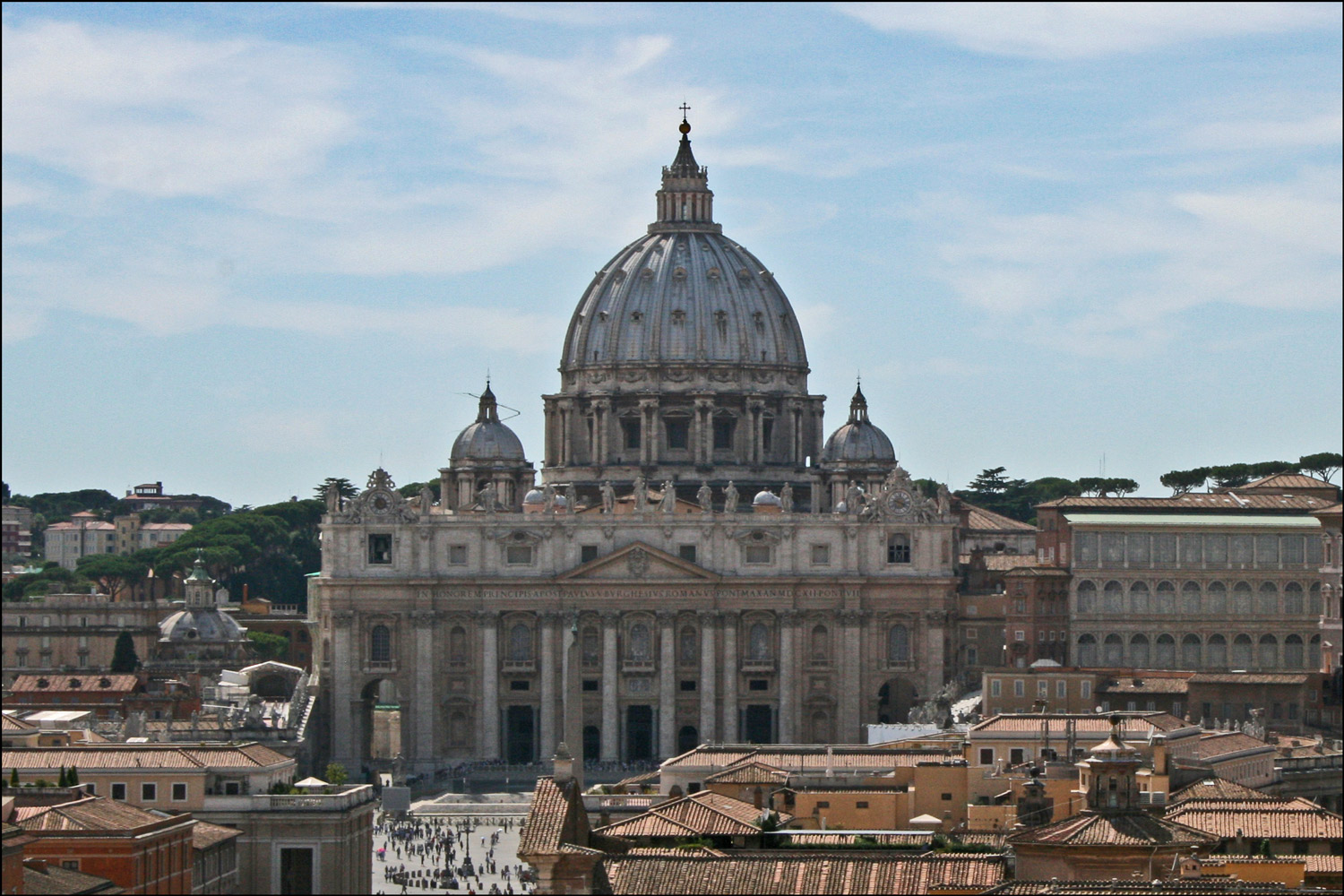
Directly west of Castel Sant’Angelo stands Saint Peter’s Basilica in the State of the Vatican City.

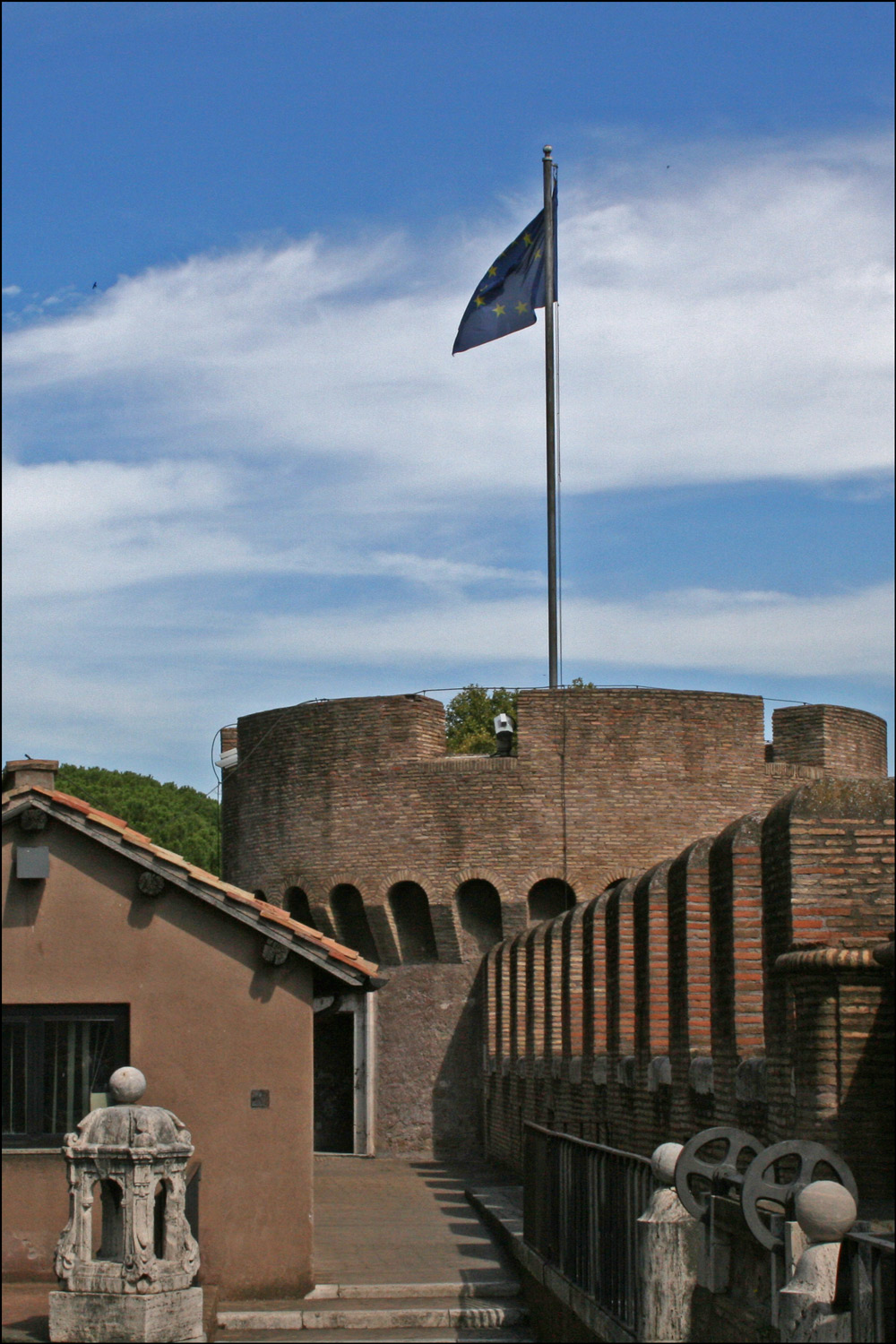
Tower of Castel Sant'Angelo

Tower of Castel Sant’Angelo

SOURCE:  Tower of Castel Sant’Angelo (Rome, Lazio, Italy); photographed by Stephen J. Danko on 12 August 2011.

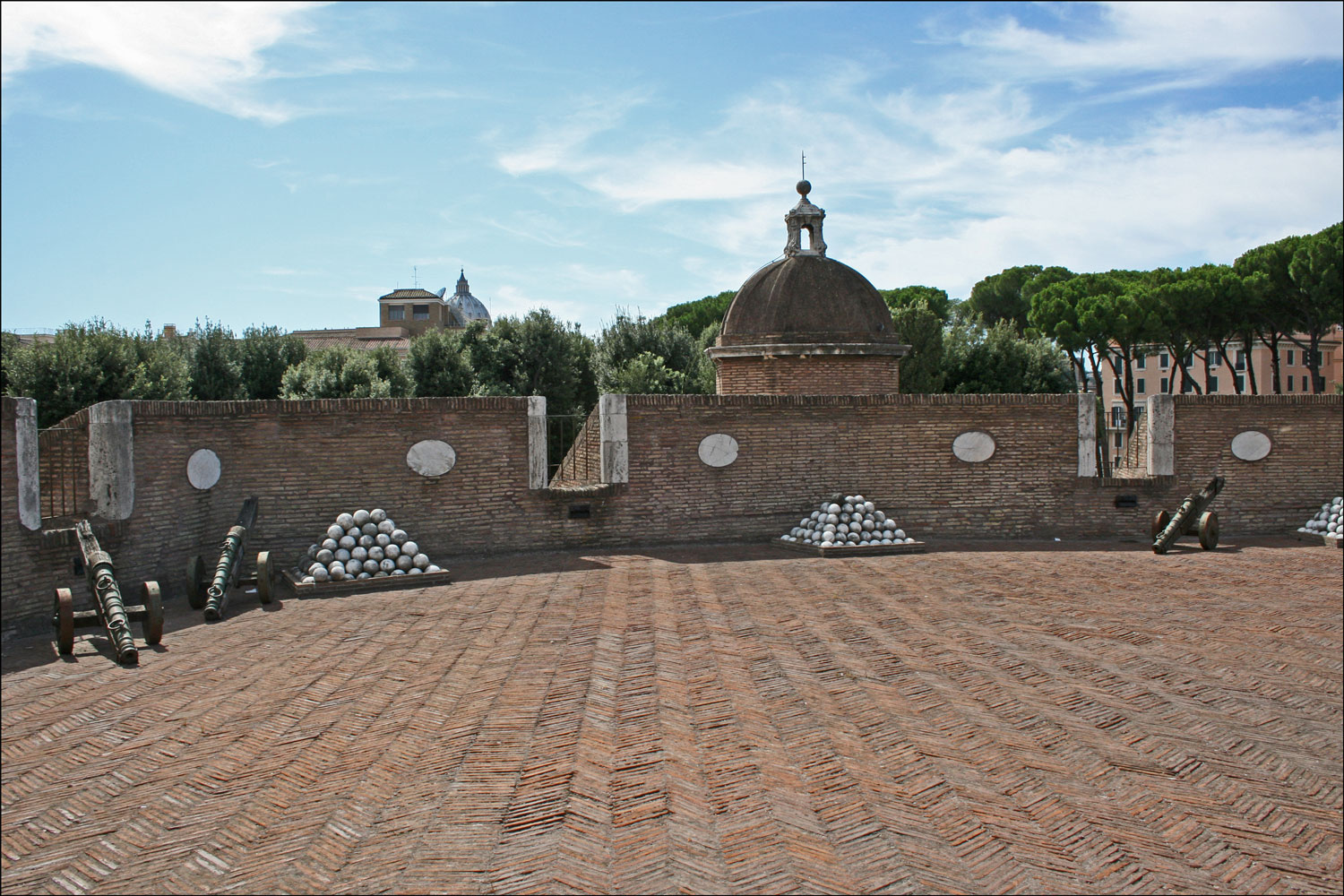
Atop Castel Sant'Angelo

Atop Castel Sant’Angelo

SOURCE:  Atop Castel Sant’Angelo (Rome, Lazio, Italy); photographed by Stephen J. Danko on 12 August 2011.

View to the Southeast of Castel Sant'Angelo

View to the Southeast of Castel Sant’Angelo

SOURCE:  View to the Southeast of Castel Sant’Angelo (Rome, Lazio, Italy); photographed by Stephen J. Danko on 12 August 2011.

View of Saint Peter's Basilica

View of Saint Peter’s Basilica

SOURCE:  View of Saint Peter’s Basilica (Rome, Lazio, Italy); photographed by Stephen J. Danko on 12 August 2011.

Copyright © 2011 by Stephen J. Danko
Posted in Daily Journal | Tagged , , | Comments Off on Atop Castel Sant’Angelo in Rome

Inside Castel Sant’Angelo in Rome

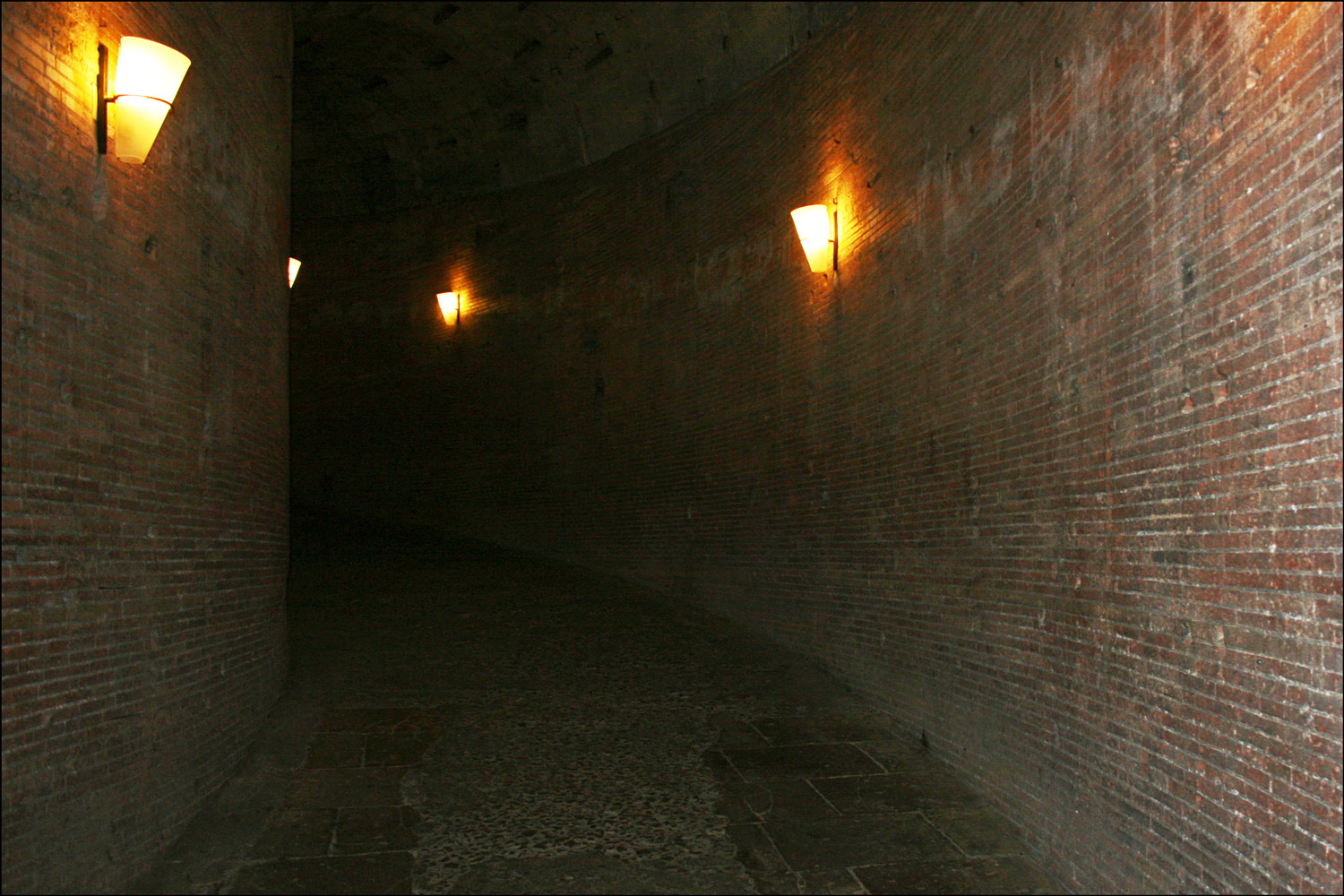
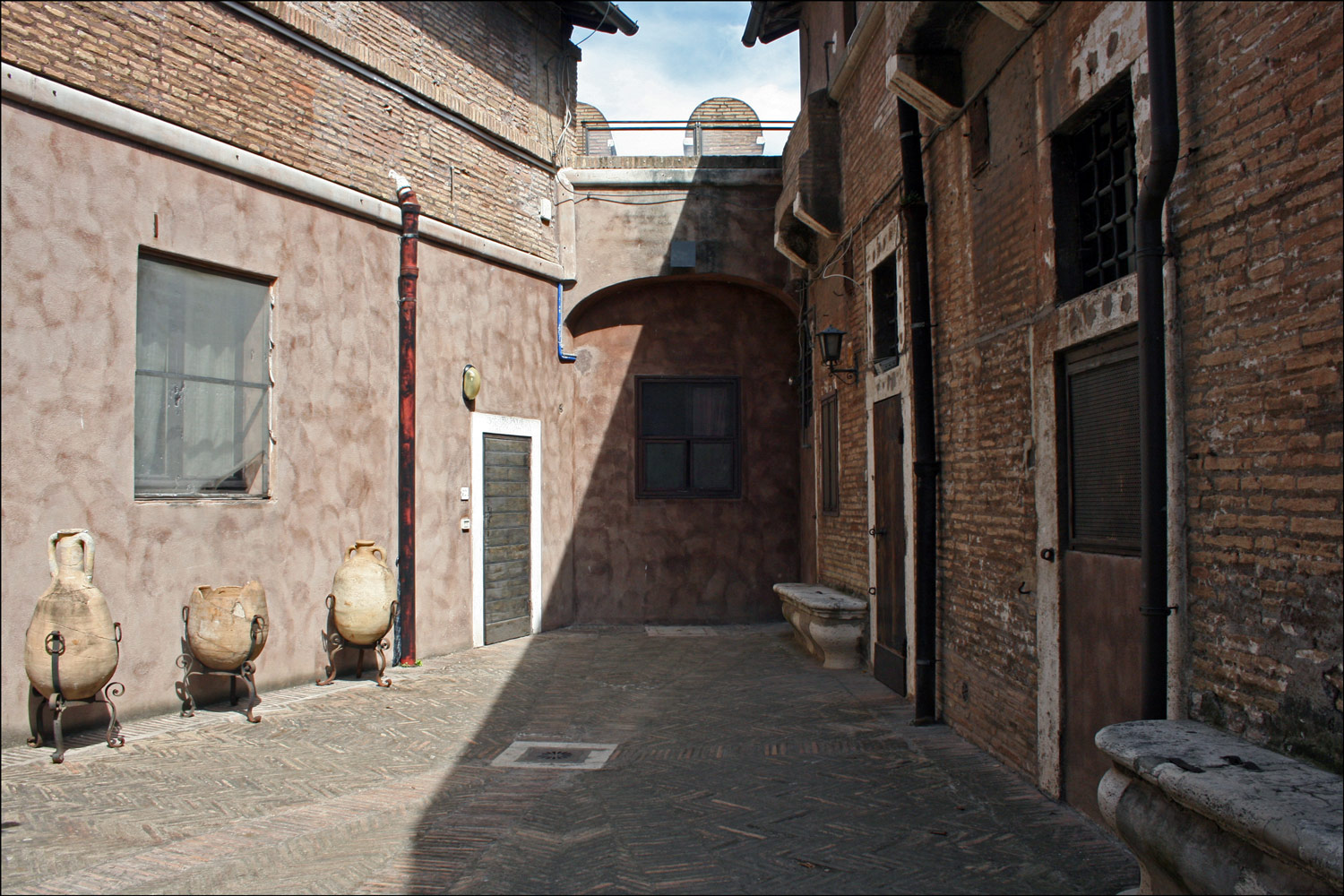
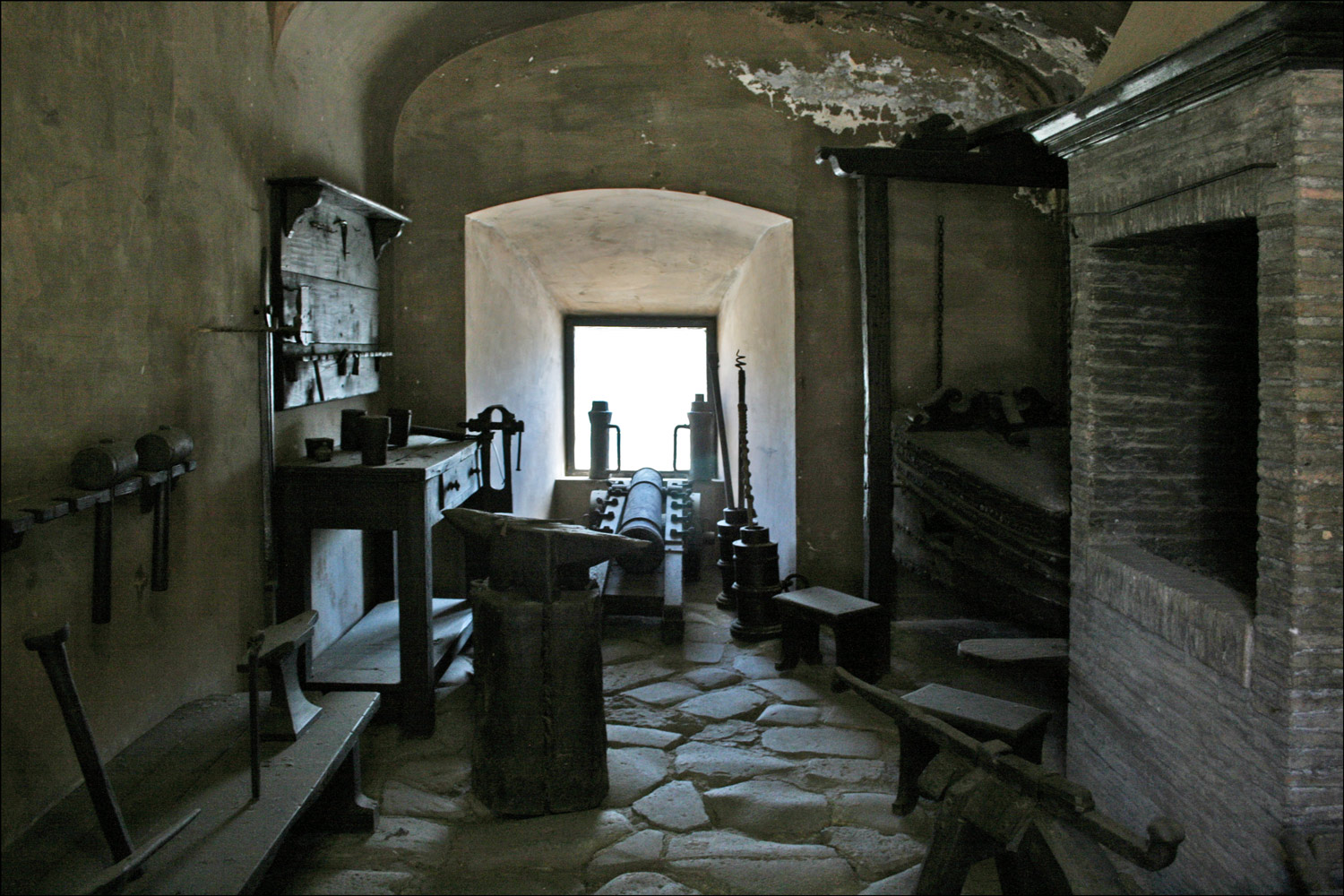
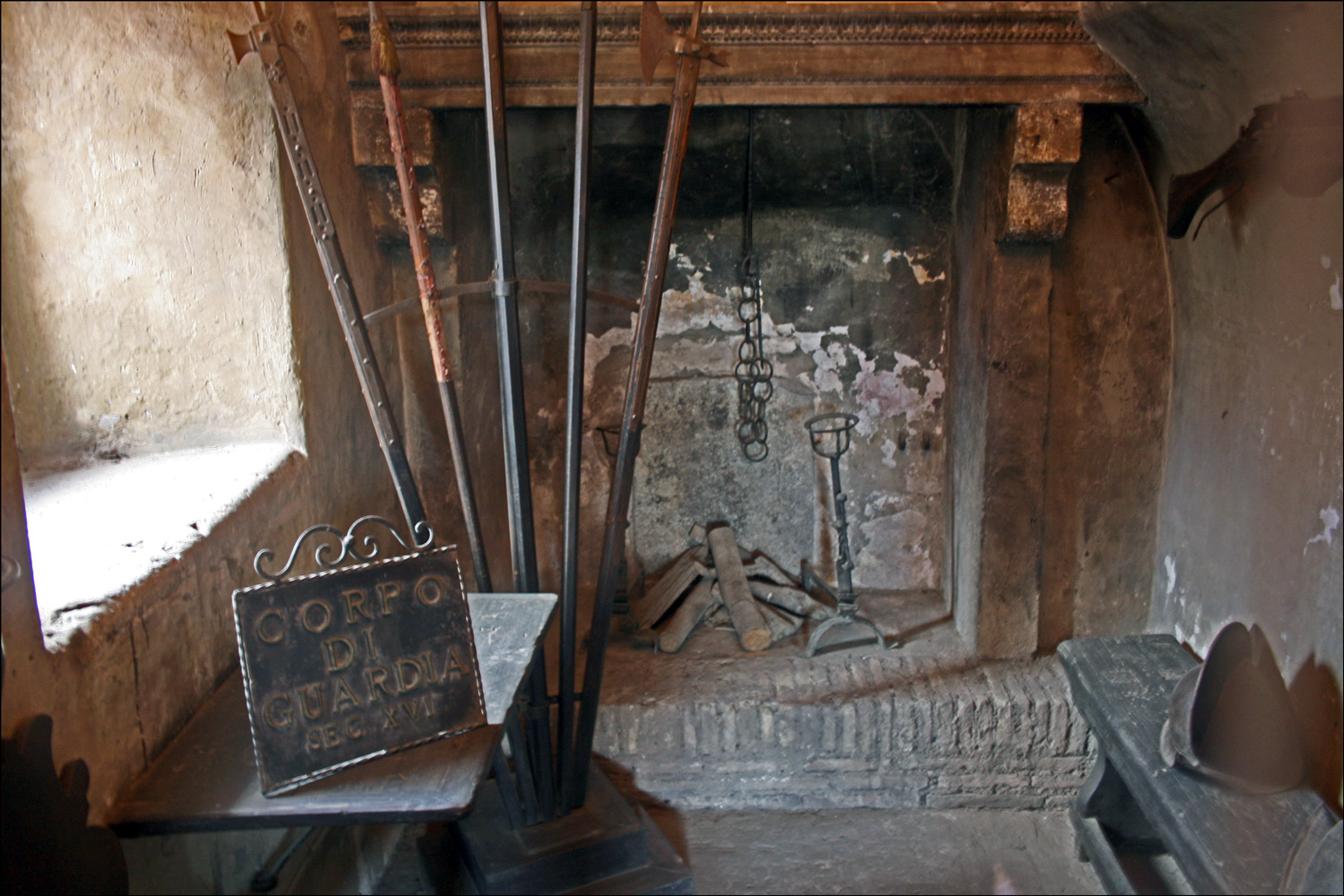
A tour inside Castel Sant’Angelo in Rome, Italy gives visitors the clear understanding that this structure was used as a fortress, a residence, and as a prison. A passageway tall and wide enough to accommodate a horse-drawn wagon spirals from ground level to the top of Castel Sant’Angelo, allowing munitions and supplies to be brought to the upper levels. Some individual cells in the structure lent themselves to defense of Castel Sant’Angelo while other cells were more suited to penal purposes.

Spiral Passageway in Castel Sant'Angelo

Spiral Passageway in Castel Sant’Angelo

SOURCE:  Spiral Passageway in Castel Sant’Angelo (Rome, Lazio, Italy); photographed by Stephen J. Danko on 12 August 2011.

Courtyard in Castel Sant'Angelo

Courtyard in Castel Sant’Angelo

SOURCE:  Courtyard in Castel Sant’Angelo (Rome, Lazio, Italy); photographed by Stephen J. Danko on 12 August 2011.

Munitions and Tools in Castel Sant'Angelo

Munitions and Tools in Castel Sant’Angelo

SOURCE:  Munitions and Tools in Castel Sant’Angelo (Rome, Lazio, Italy); photographed by Stephen J. Danko on 12 August 2011.

Guardhouse in Castel Sant'Angelo

Guardhouse in Castel Sant’Angelo

SOURCE:  Guardhouse in Castel Sant’Angelo (Rome, Lazio, Italy); photographed by Stephen J. Danko on 12 August 2011.

Copyright © 2011 by Stephen J. Danko
Posted in Daily Journal | Tagged , , | Comments Off on Inside Castel Sant’Angelo in Rome

Castel Sant’Angelo in Rome

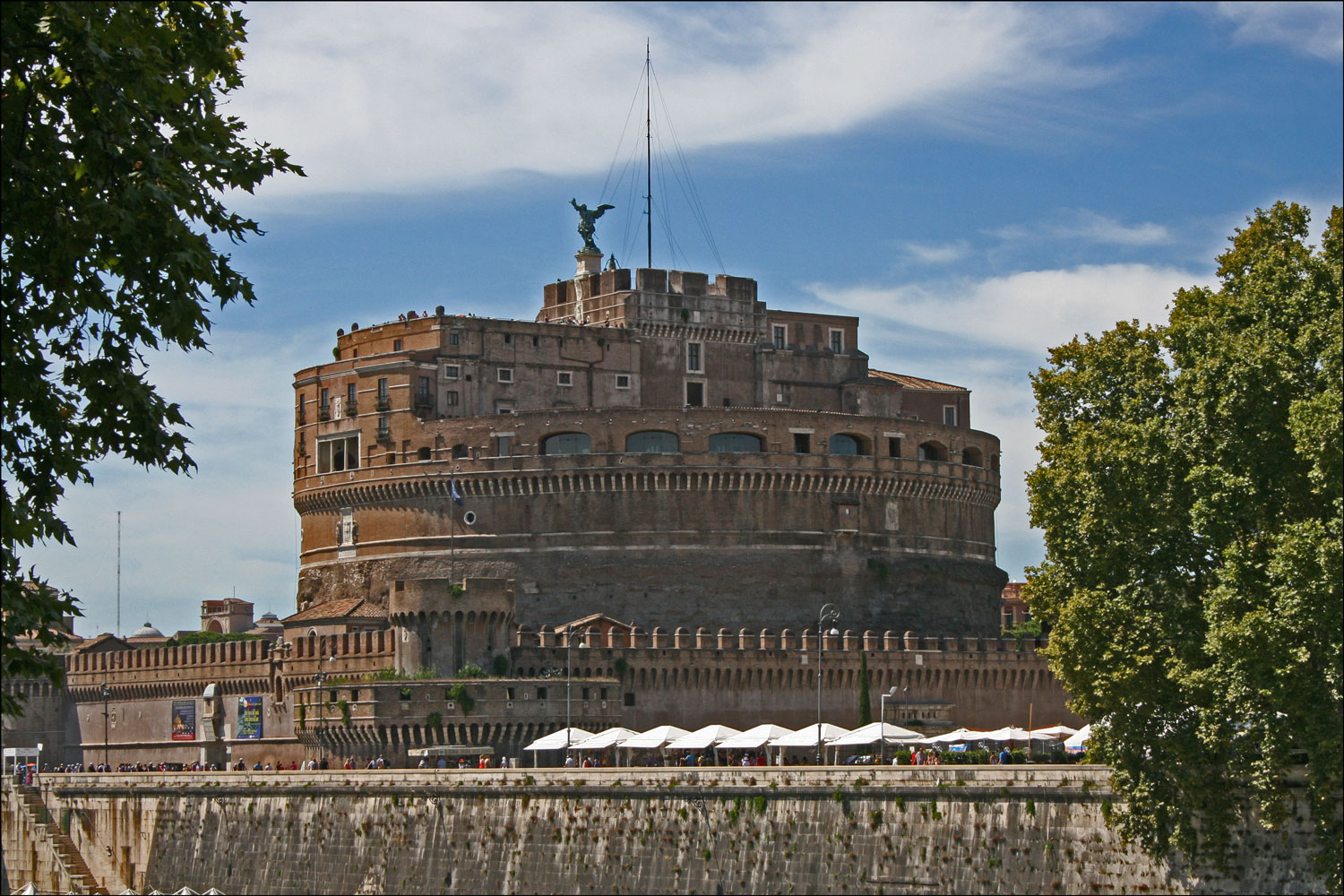
Castel Sant’Angelo began its existence as a mausoleum for the Emperor Hadrian and his family. By the 14th century, Castel Sant’Angelo was conscripted by the popes for use as a fortress and a prison. Today, the structure is used as a museum.

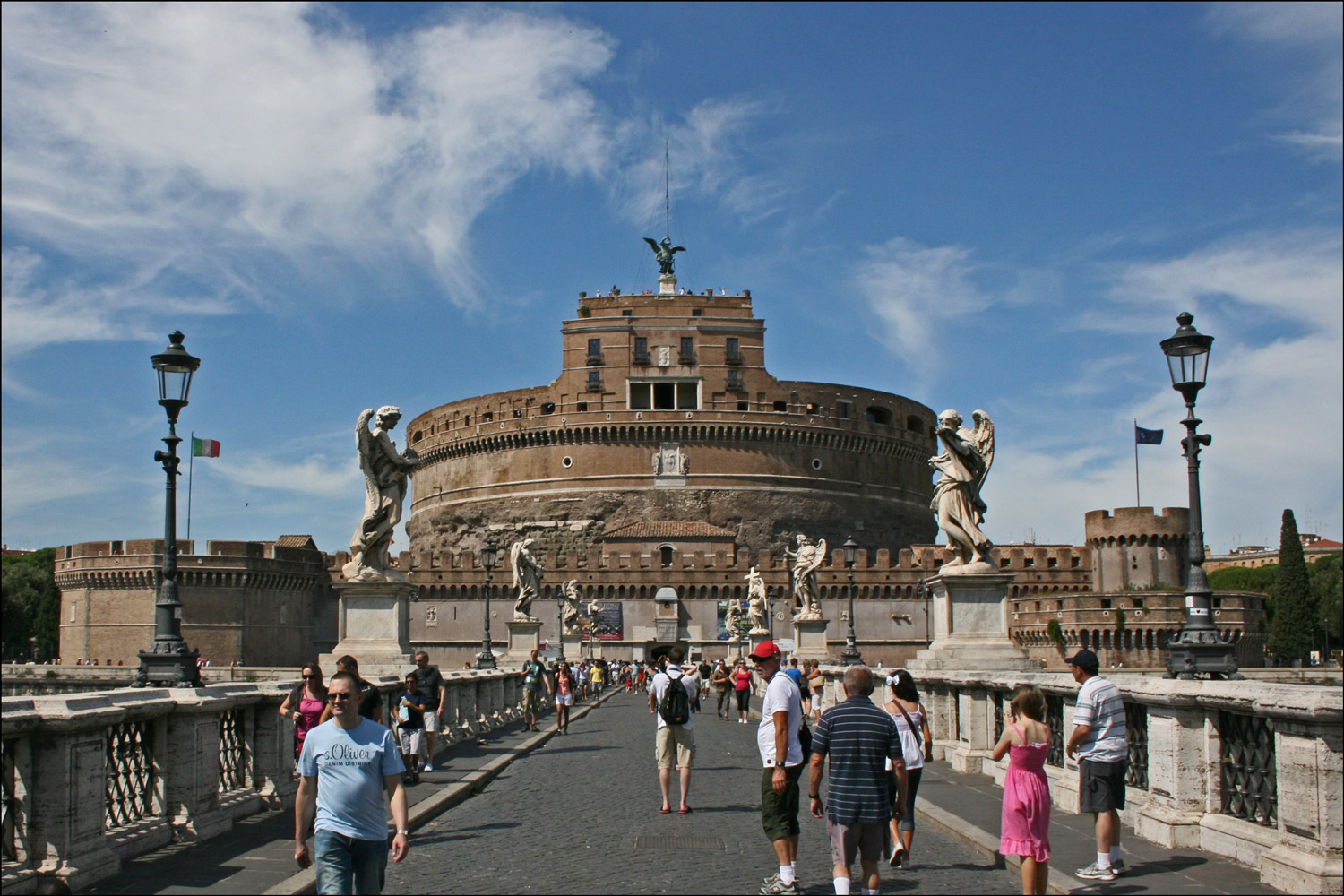
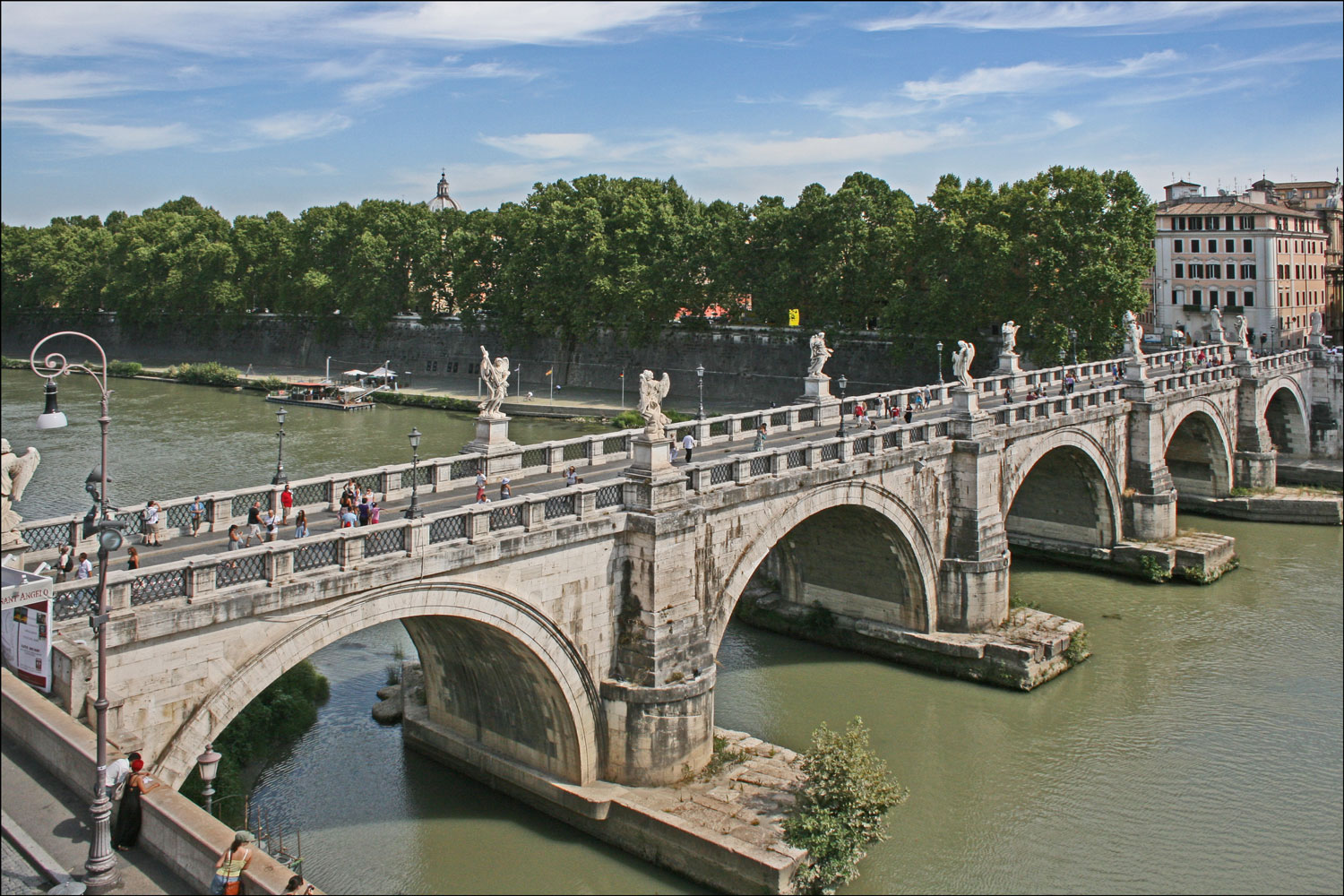
Castel Sant’Angelo can be seen from a distance while walking along the banks of the Tiber. The Ponte Sant’Angelo leads from the left bank of the Tiber to the castle itself. The bridge is adorned with statues of St. Peter, St. Paul, and ten angels each holding one of the instruments of Christ’s passion and death.

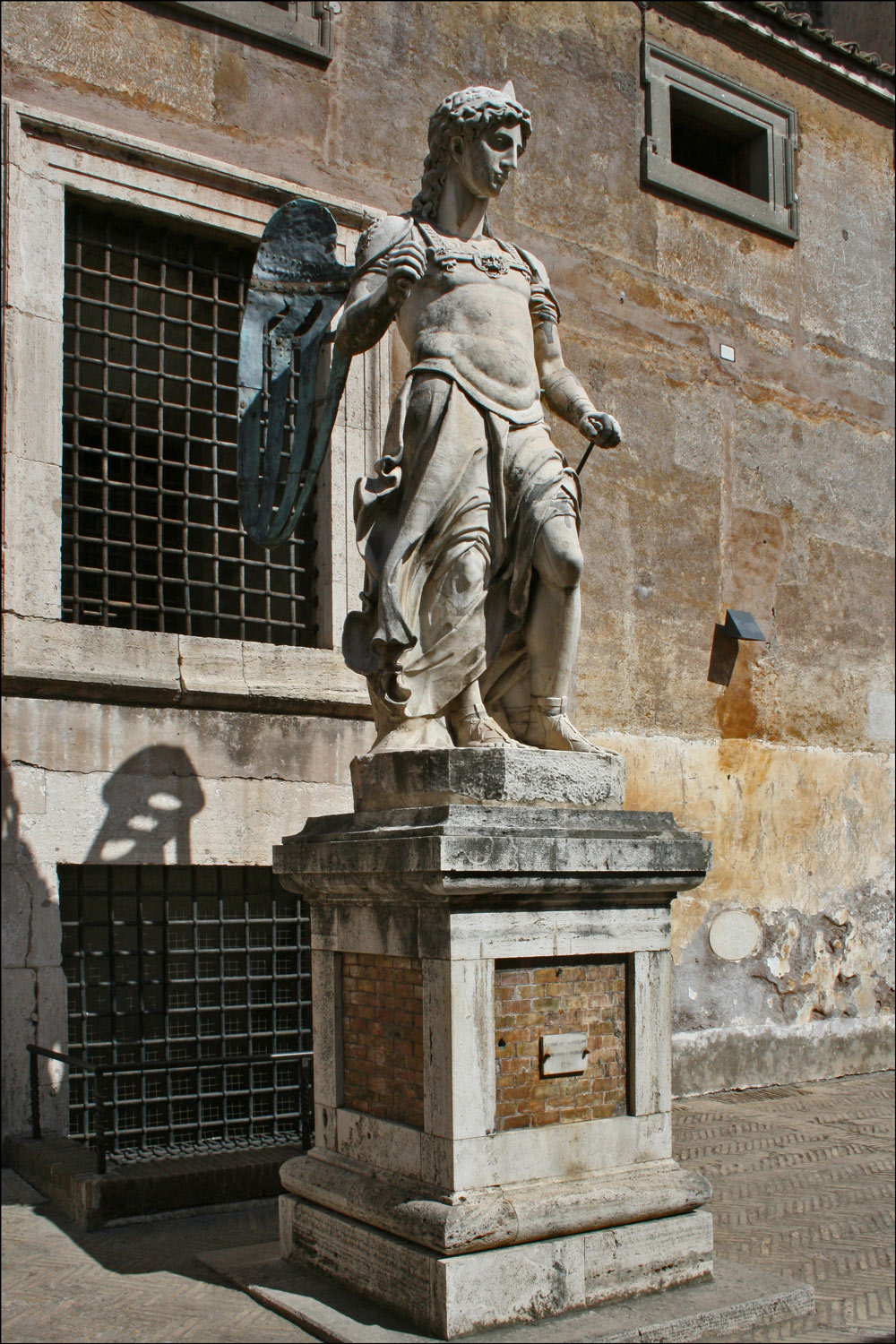
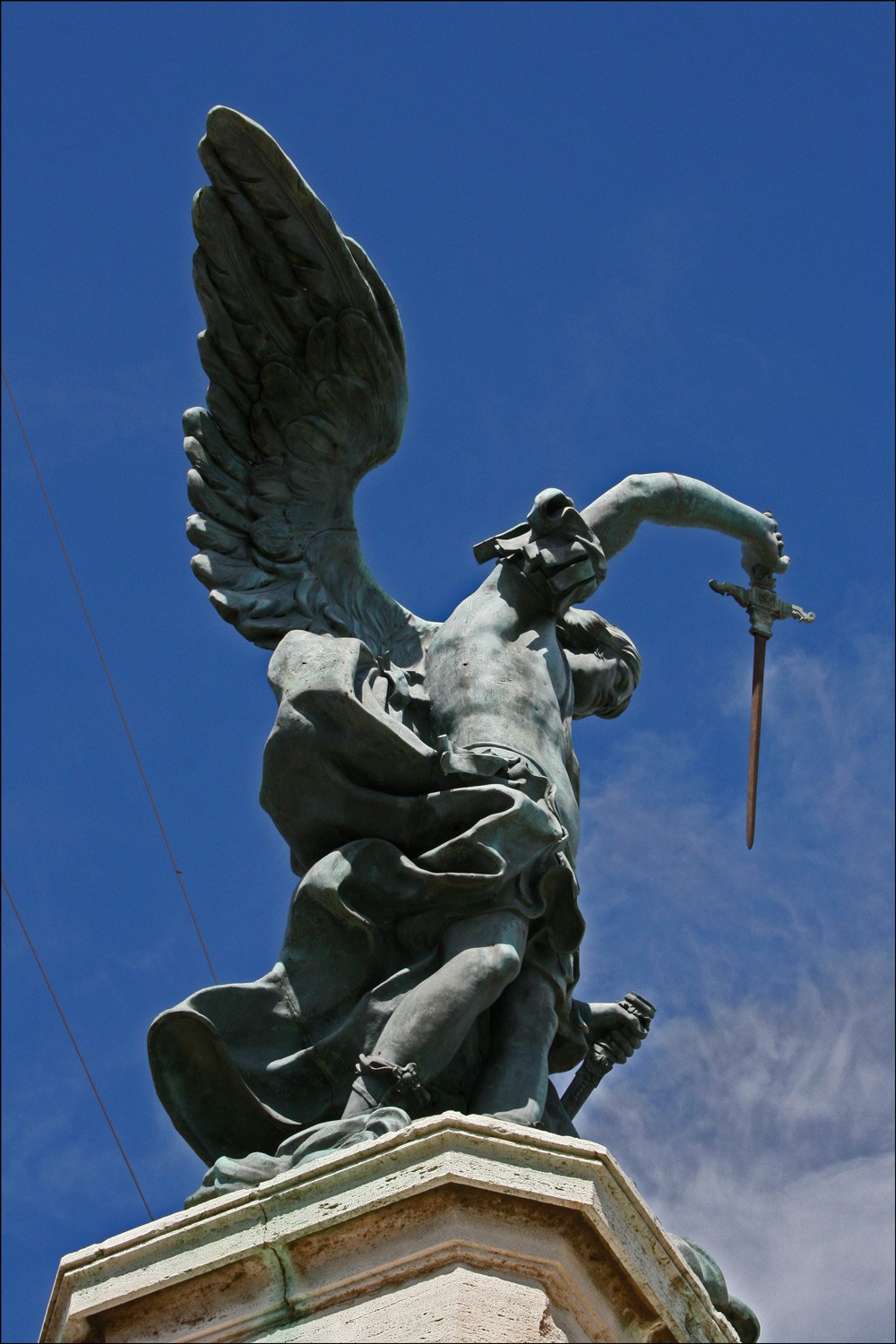
According to legend, the Archangel Michael appeared with a sword on top of the mausoleum, signaling the end of the plague of 590 AD. Since that time, the mausoleum has been known as Castel Sant’Angelo (Castle of the Holy Angel). The statue of the Archangel Michael atop Castel Sant’Angelo has gone through six incarnations. The fifth version, by Italian sculptor Raffaello da Montelupo, is still on display inside the castle. The sixth statue, the one currently atop Castel Sant’Angelo, was created by Flemish sculptor Pieter Van Verschaffelt.

Castel Sant'Angelo from the Left Bank of the Tiber

Castel Sant’Angelo from the Left Bank of the Tiber

SOURCE:  Castel Sant’Angelo from the Left Bank of the Tiber (Rome, Lazio, Italy); photographed by Stephen J. Danko on 12 August 2011.

Castel Sant'Angelo from the Ponte Sant'Angelo

Castel Sant’Angelo from the Ponte Sant’Angelo

SOURCE:  Castel Sant’Angelo from the Ponte Sant’Angelo (Rome, Lazio, Italy); photographed by Stephen J. Danko on 12 August 2011.

Ponte Sant'Angelo

Ponte Sant’Angelo

SOURCE:  Ponte Sant’Angelo (Rome, Lazio, Italy); photographed by Stephen J. Danko on 12 August 2011.

The Archangel Michael by Raffaello da Montelupo

The Archangel Michael by Raffaello da Montelupo

SOURCE:  The Archangel Michael by Raffaello da Montelupo (Rome, Lazio, Italy); photographed by Stephen J. Danko on 12 August 2011.

The Archangel Michael by Pieter Van Verschaffelt

The Archangel Michael by Pieter Van Verschaffelt

SOURCE:  The Archangel Michael by Pieter Van Verschaffelt (Rome, Lazio, Italy); photographed by Stephen J. Danko on 12 August 2011.

Copyright © 2011 by Stephen J. Danko
Posted in Daily Journal | Tagged , , | Comments Off on Castel Sant’Angelo in Rome

The Piazza Navona in Rome

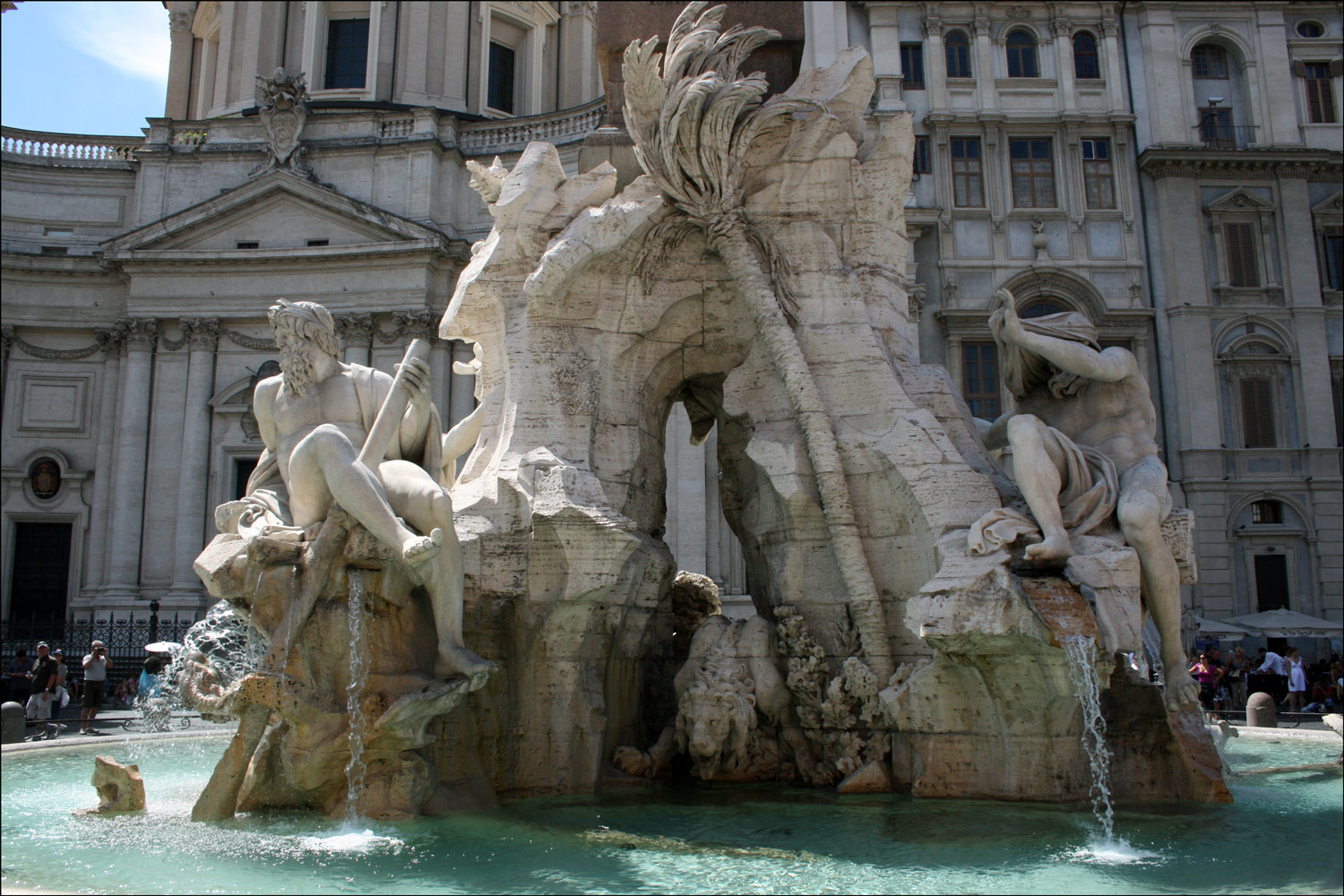
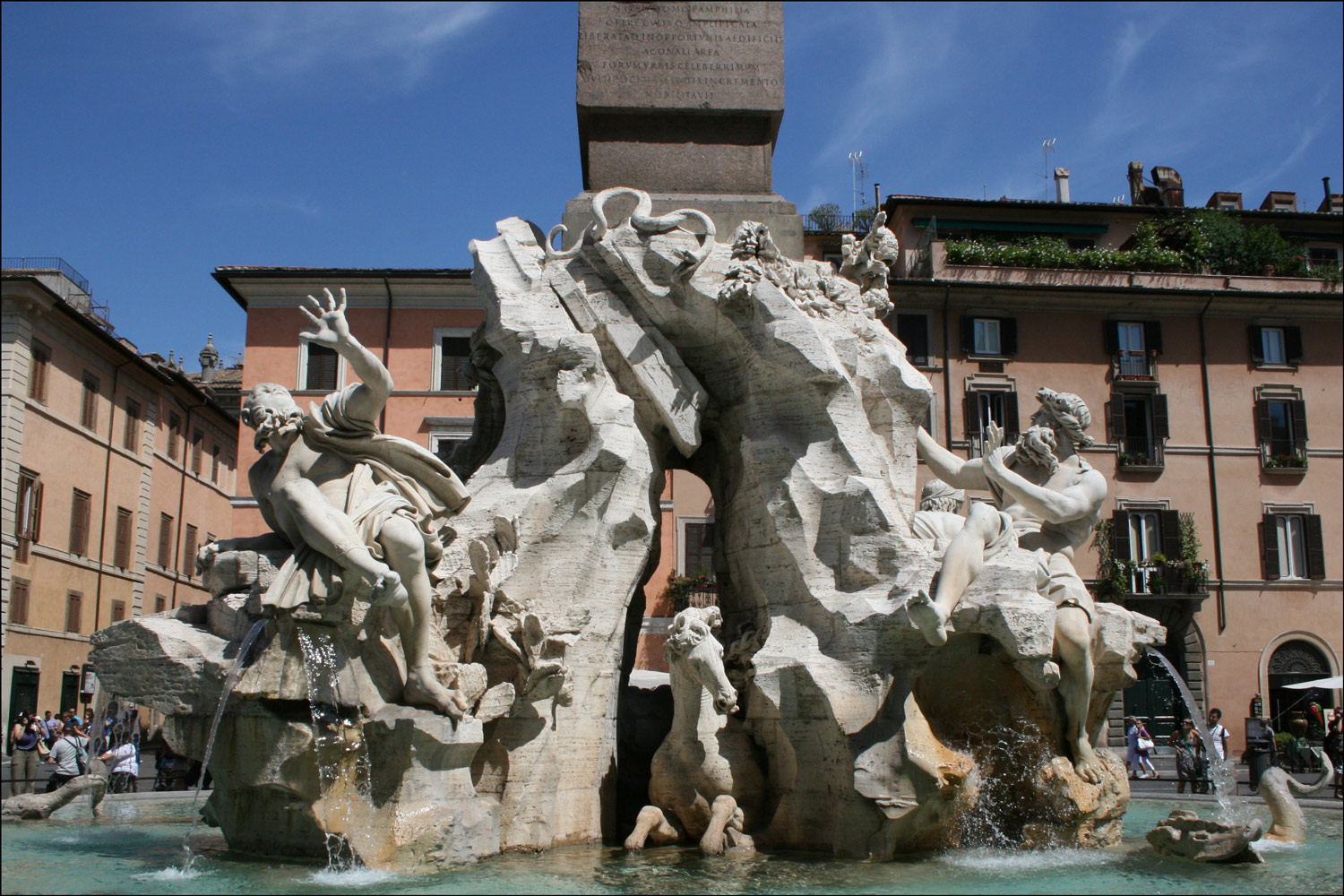
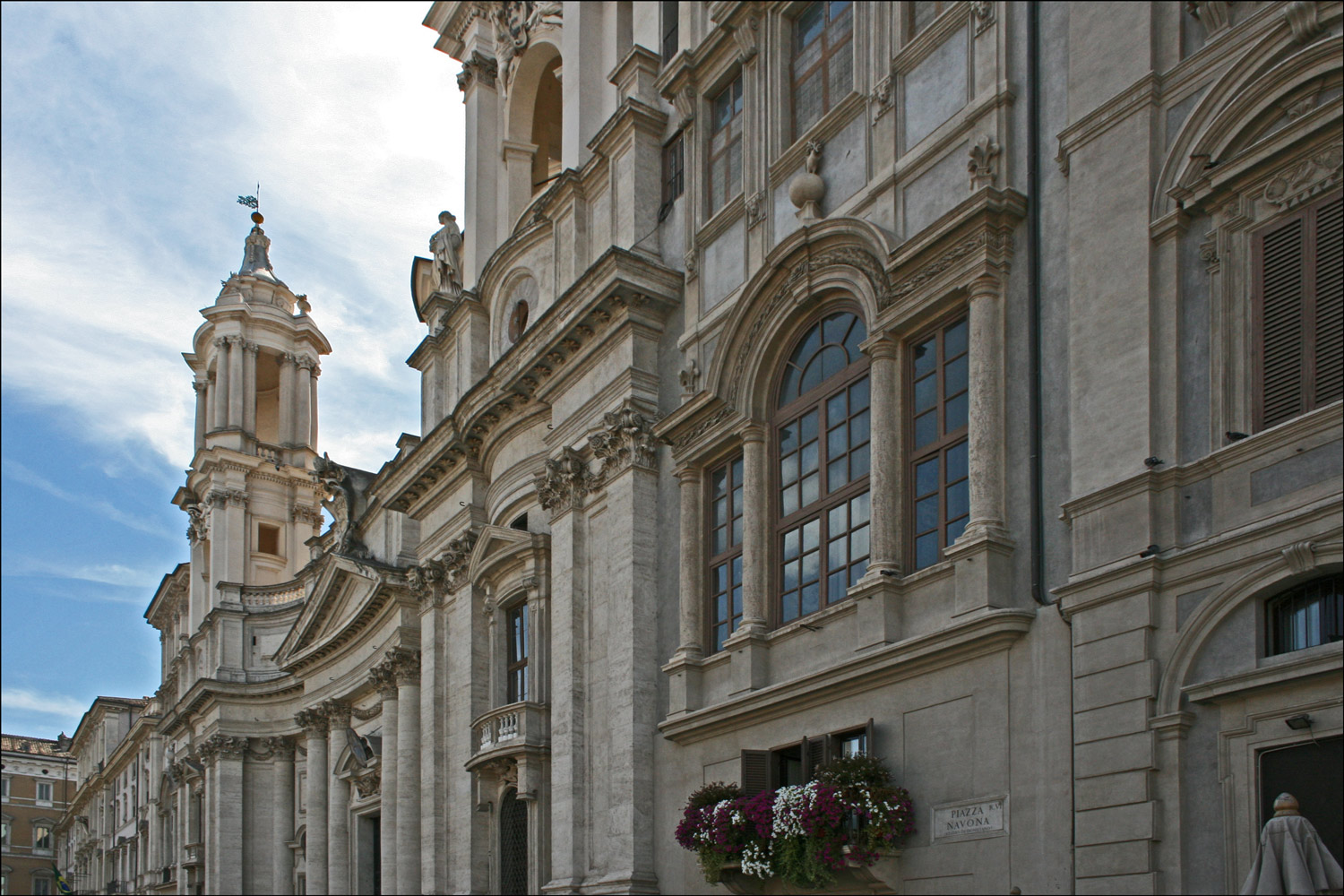
The Piazza Navona is a public plaza located on the site of the former Stadium of Domitian, popularly known as the Circus Agonalis. The centerpiece of the square is the Fountain of the Four Rivers (Fontana dei Quattro Fiumi) by Gian Lorenzo Bernini. The Obelisk of Domitian dominates the center of the fountain. The piazza is dominated by the baroque church of Sant’Agnese in Agone. The epithet “in Agone” refers to the Circus Agonalis, the site where Saint Agnes was martyred.

The four rivers in the name of the fountain refer to great rivers in four continents:  the Nile River in Africa, the Danube River in Europe, the Ganges River in Asia, and the Rio de la Plata in the Americas. The rivers represented by each four figures on the fountain can easily be identified. The head of the figure representing the Nile is covered by a cloth because nobody at the time knew where headwaters of the Nile originated. The figure representing the Danube is touching the Papal Coat of Arms since the Danube is the river closest to Rome. The figure representing the Ganges carries an oar, showing that the Ganges is navigable. Finally, the figure representing the Rio de la Plata (River of Silver) is sitting on a pile of silver coins and cowering in fright from a snake that may want to steal the coins.

The Piazza Navonna

The Piazza Navona

SOURCE:  The Piazza Navona (Rome, Lazio, Italy); photographed by Stephen J. Danko on 12 August 2011.

The Fountain of Four Rivers - East Side

The Fountain of Four Rivers – East Side

SOURCE:  The Fountain of Four Rivers – East Side (Rome, Lazio, Italy); photographed by Stephen J. Danko on 12 August 2011.

The Fountain of Four Rivers - West Side

The Fountain of Four Rivers – West Side

SOURCE:  The Fountain of Four Rivers – West Side (Rome, Lazio, Italy); photographed by Stephen J. Danko on 12 August 2011.

The Church of Sant'Agnese in Agone

The Church of Sant’Agnese in Agone

SOURCE:  The Church of Sant’Agnese in Agone (Rome, Lazio, Italy); photographed by Stephen J. Danko on 12 August 2011.

Copyright © 2011 by Stephen J. Danko
Posted in Daily Journal | Comments Off on The Piazza Navona in Rome

More Art in the Pantheon in Rome

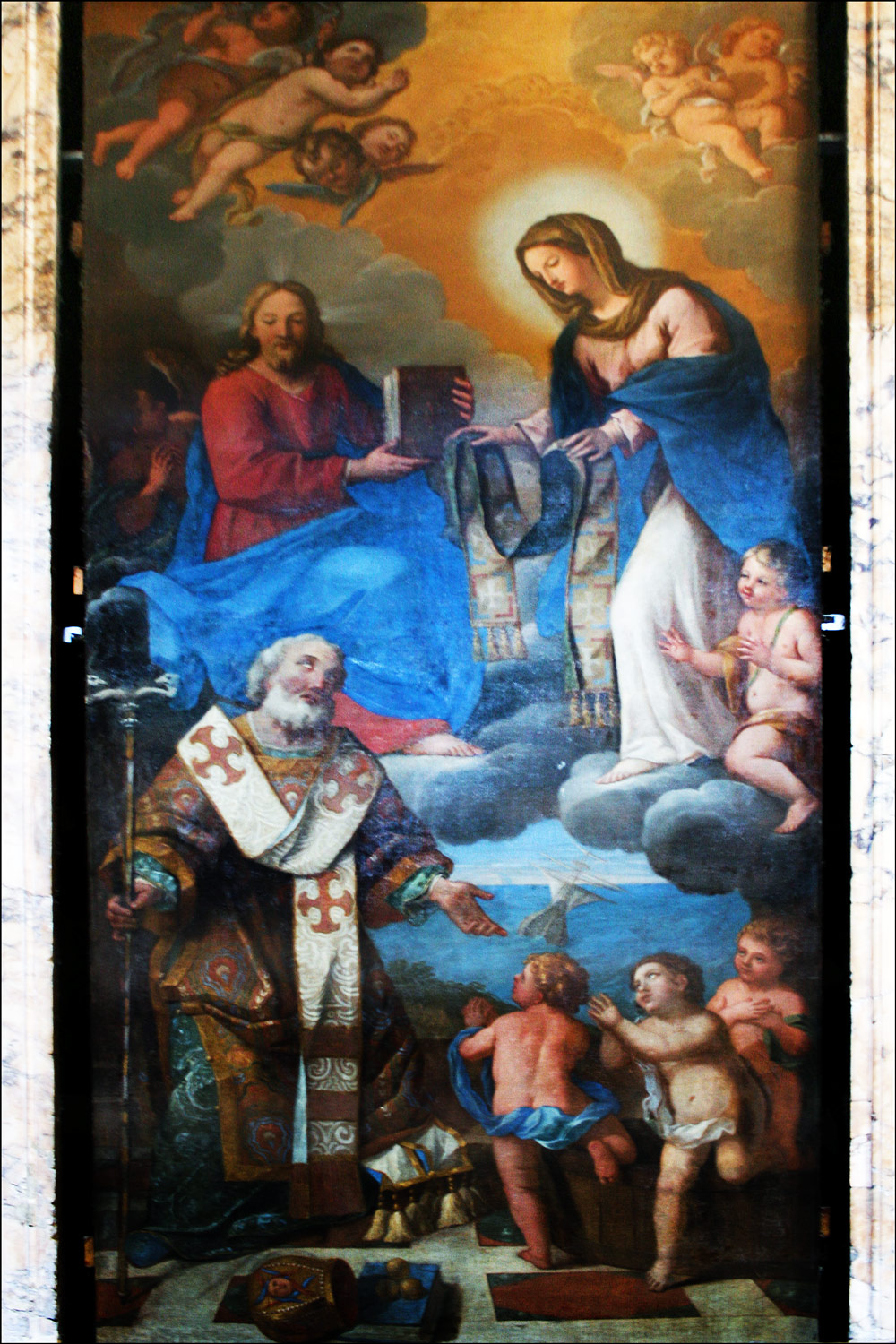
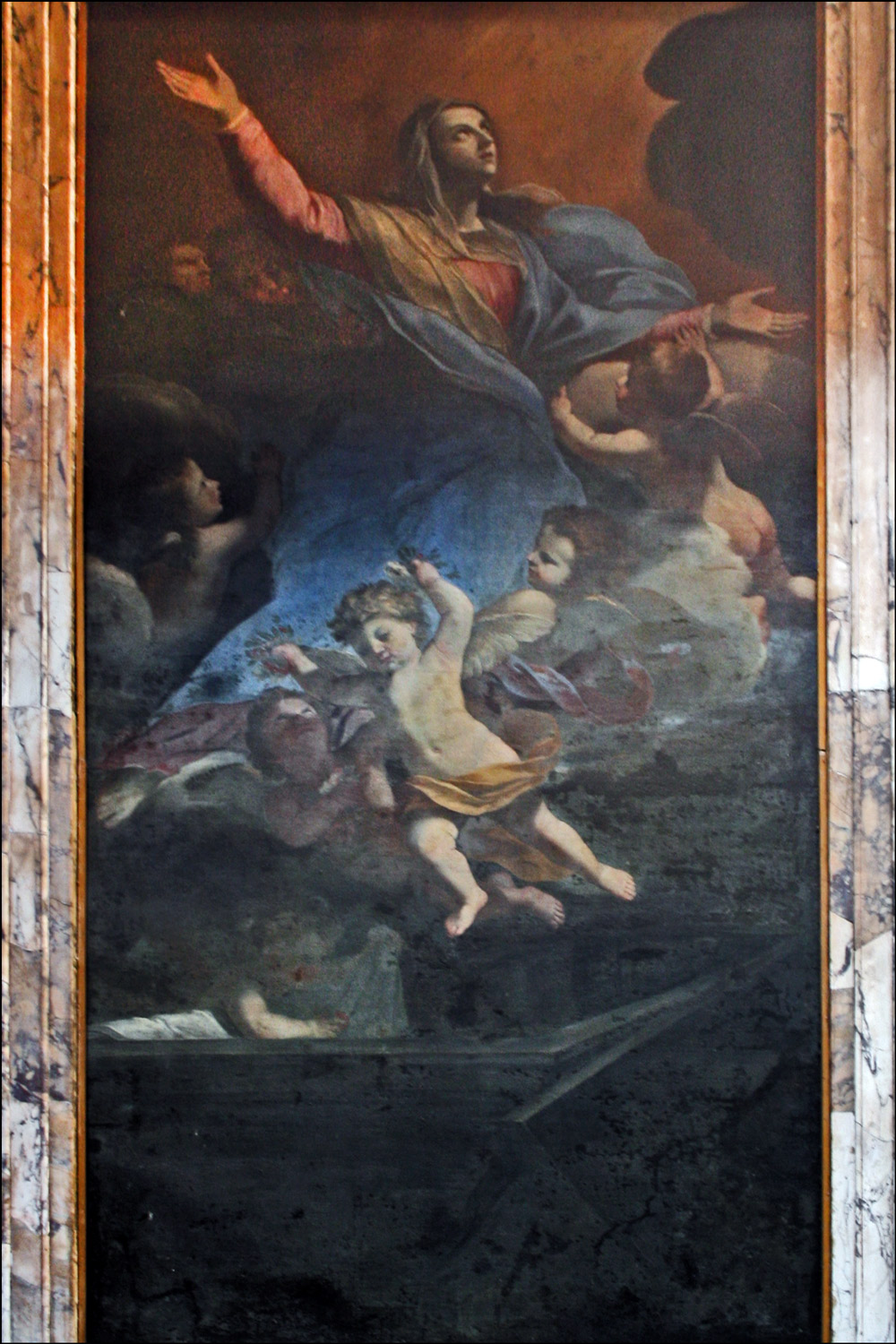
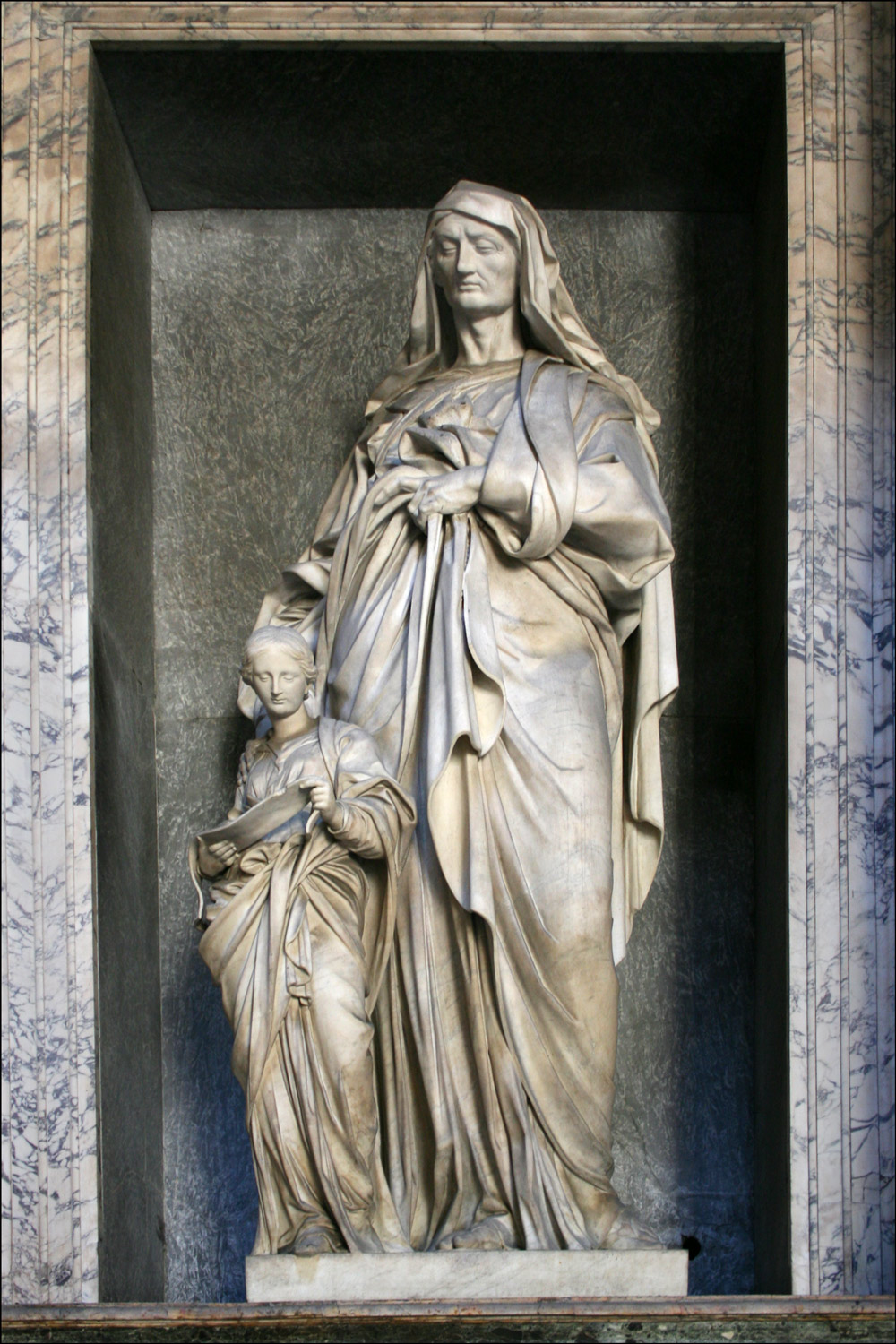
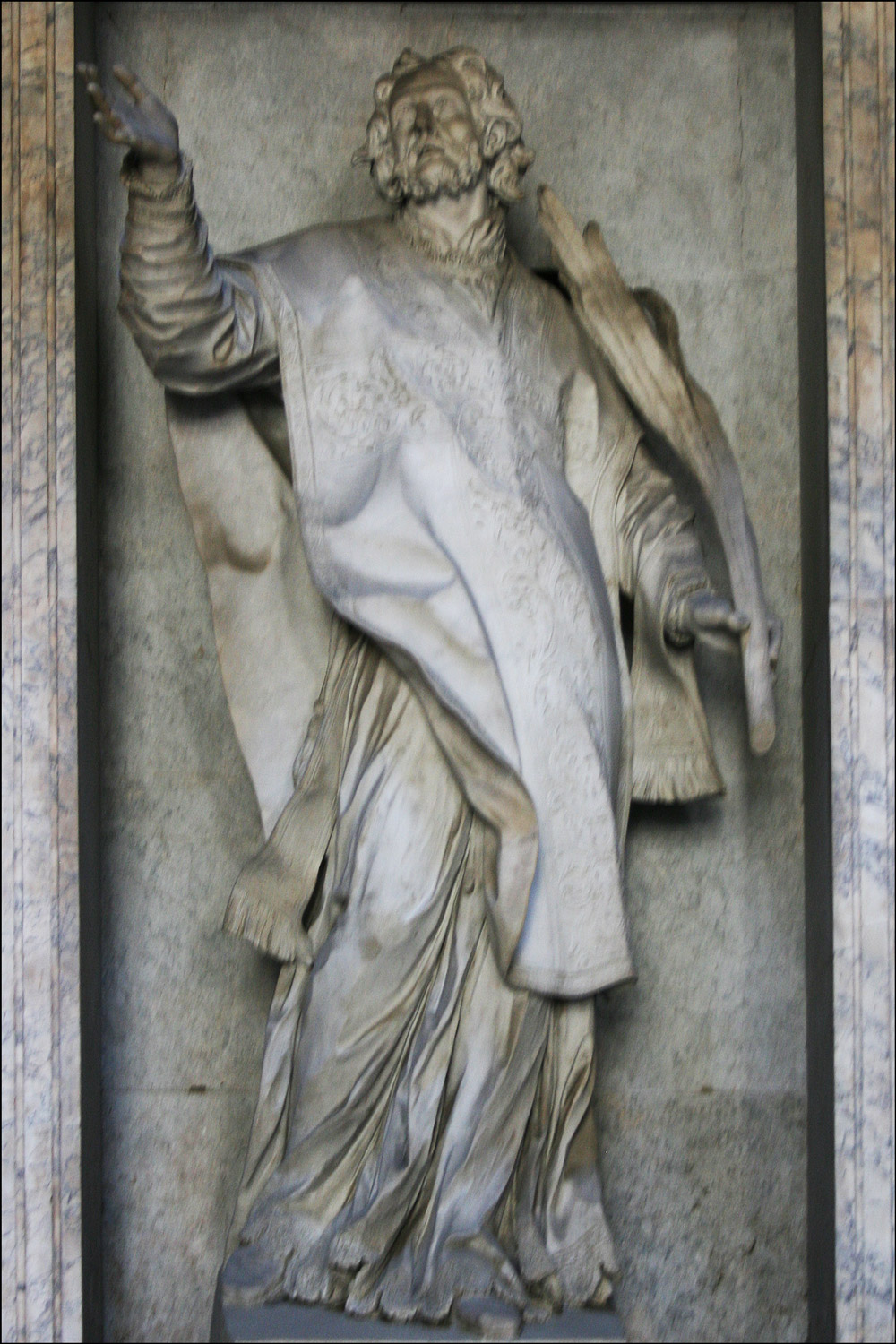
The Pantheon, like other Catholic Churches in Rome, Italy, is home to an impressive collection of art. Close to the entrance of the Pantheon, on the right as one enters, is a 1686 painting of The Madonna of the Girdle and St. Nicholas of Bari by an unknown artist. To the left as one enters the Pantheon is a 1638 painting of The Assumption by Andrea Camasse. In niches in the interior are sculptures of St. Anne and the Blessed Virgin by Il Lorenzone and St. Anastasio by Bernardino Cametti.

The Madonna of the Girdle and St. Nicholas of Bari

The Madonna of the Girdle and St. Nicholas of Bari

SOURCE:  The Madonna of the Girdle and St. Nicholas of Bari (Rome, Lazio, Italy); photographed by Stephen J. Danko on 12 August 2011.

The Assumption

The Assumption

SOURCE:  The Assumption (Rome, Lazio, Italy); photographed by Stephen J. Danko on 12 August 2011.

St. Anne and the Blessed Virgin

St. Anne and the Blessed Virgin

SOURCE:  St. Anne and the Blessed Virgin (Rome, Lazio, Italy); photographed by Stephen J. Danko on 12 August 2011.

St. Anastasio

St. Anastasio

SOURCE:  St. Anastasio (Rome, Lazio, Italy); photographed by Stephen J. Danko on 12 August 2011.

Copyright © 2011 by Stephen J. Danko
Posted in Daily Journal | Tagged , , | 1 Comment

Altars, Chapels, and Art in the Pantheon in Rome

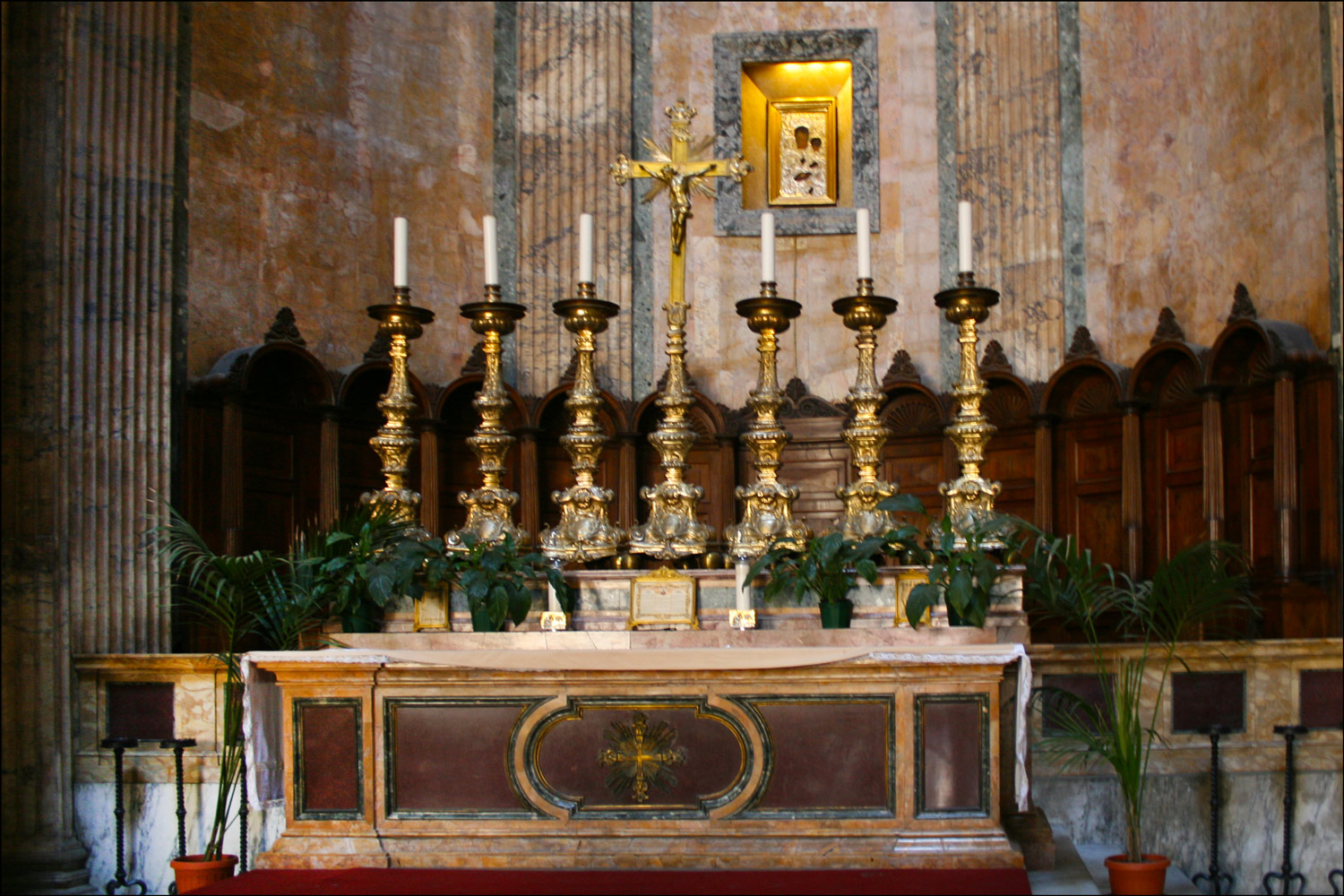
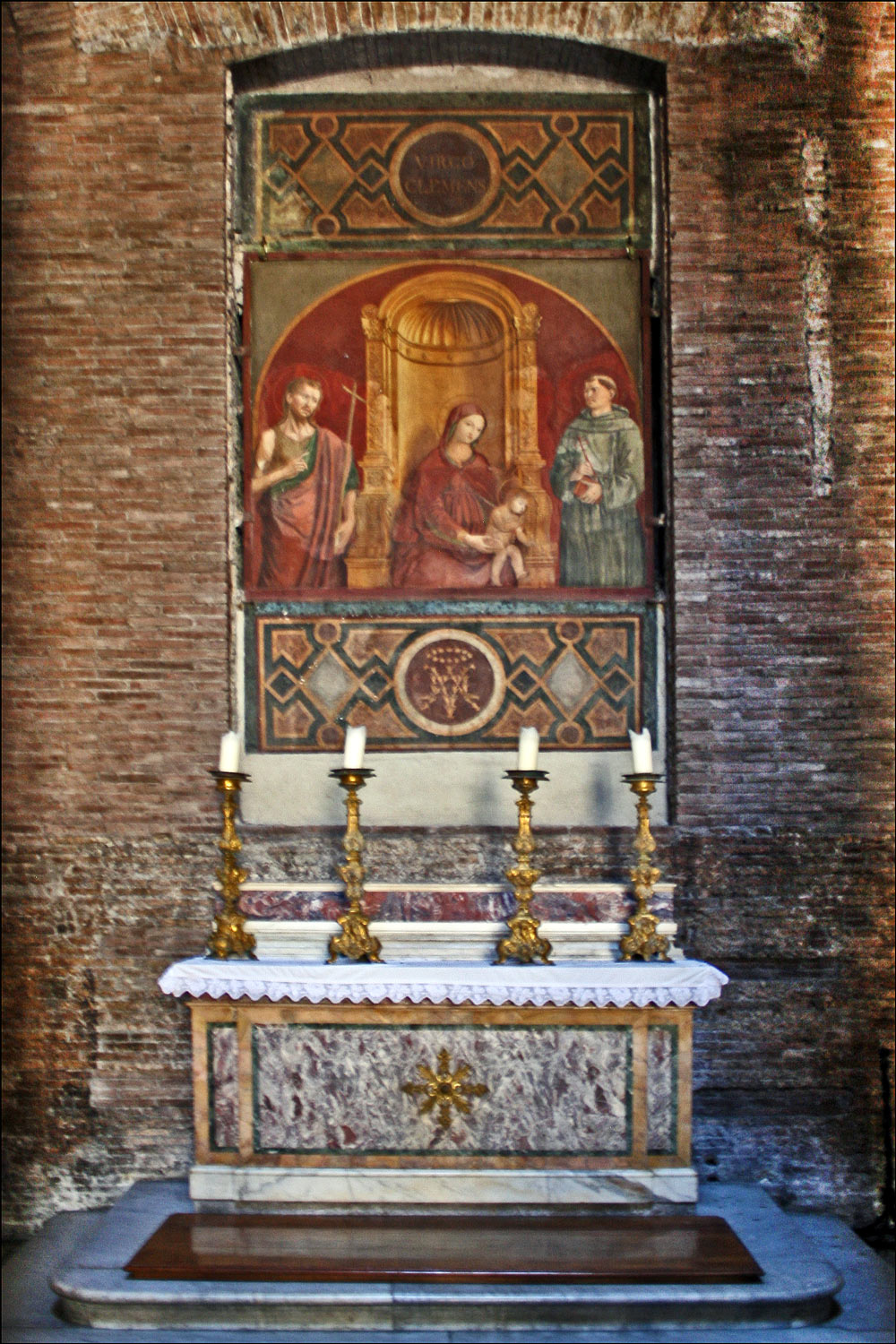
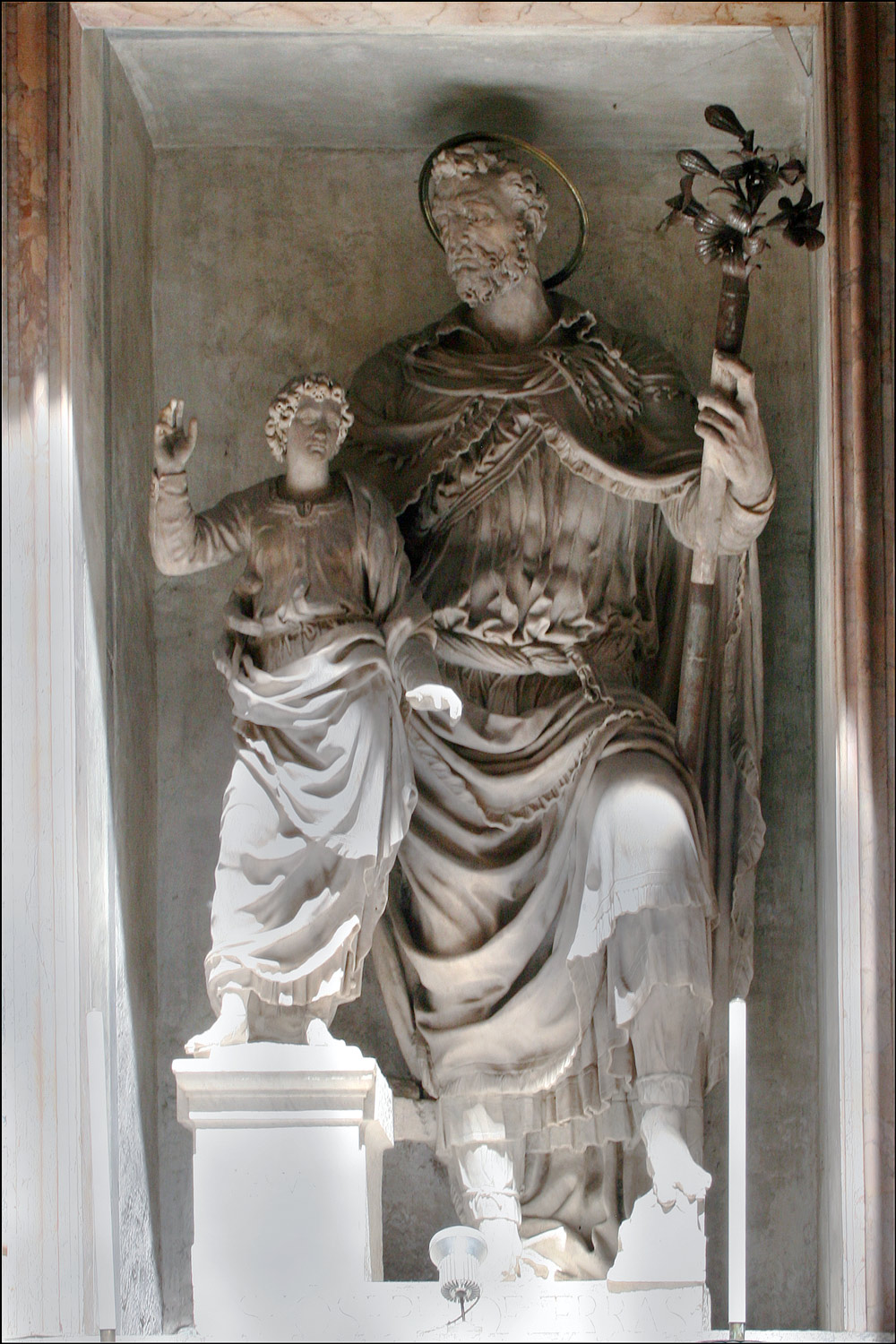
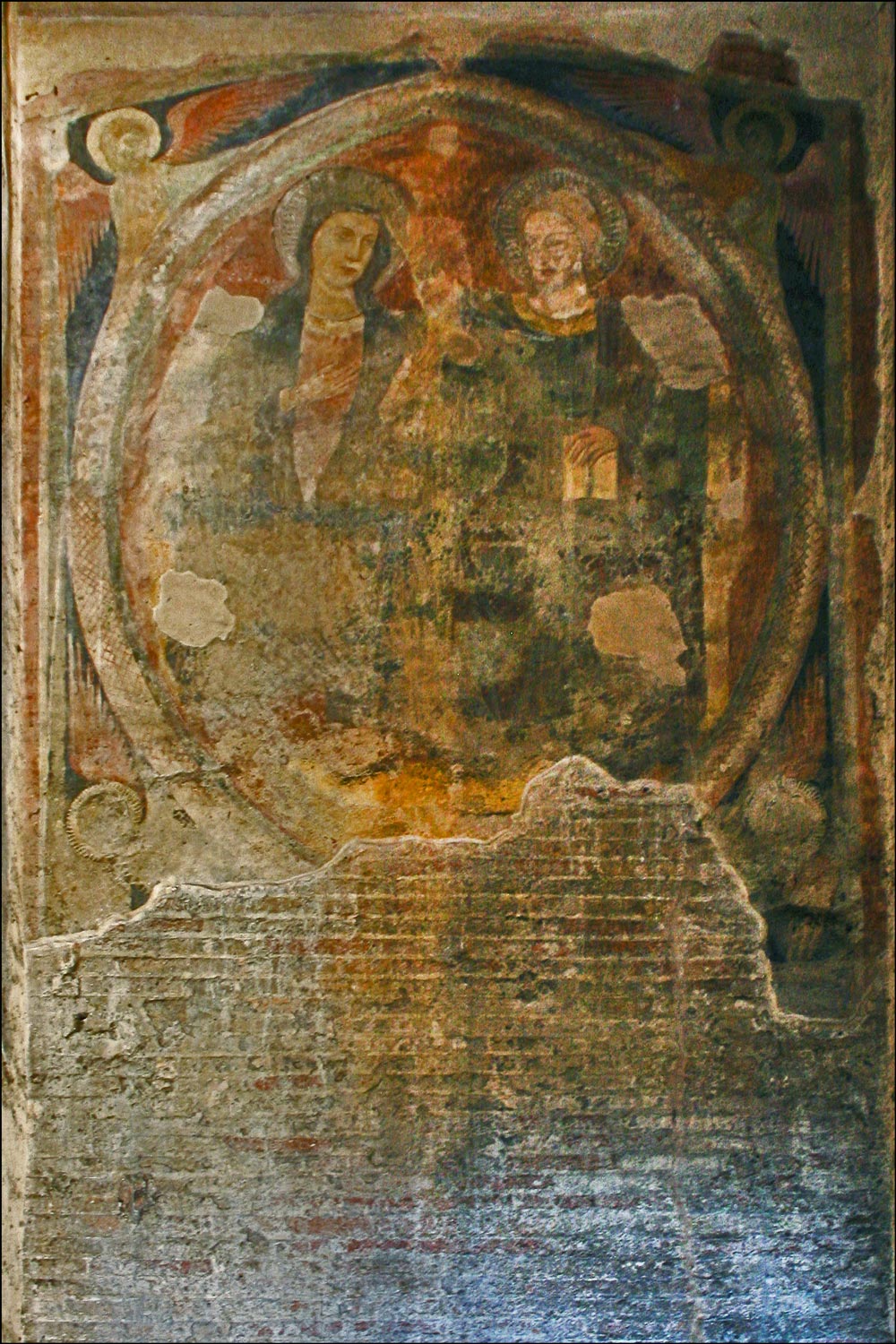
The Pantheon in Rome, Italy houses several altars and a number of paintings. Behind the high altar there is a copy of a 13th century icon of the Madonna. The altarpiece in the Chapel of the Madonna of Mercy is a 15th century painting of The Madonna of Mercy between St. Francis and St. John the Baptist. Still another chapel holds a sculpture of St. Joseph and the Holy Child by Vincenzo de Rossi. In one of the niches between the chapels, is a crumbling 15th century fresco of the Coronation of the Virgin.

The High Altar in the Pantheon

The High Altar in the Pantheon

SOURCE:  The High Altar in the Pantheon (Rome, Lazio, Italy); photographed by Stephen J. Danko on 12 August 2011.

The Chapel of the Madonna of Mercy

The Chapel of the Madonna of Mercy

SOURCE:  The Chapel of the Madonna of Mercy (Rome, Lazio, Italy); photographed by Stephen J. Danko on 12 August 2011.

St. Joseph and the Holy Child

St. Joseph and the Holy Child

SOURCE:  St. Joseph and the Holy Child (Rome, Lazio, Italy); photographed by Stephen J. Danko on 12 August 2011.

Coronation of the Virgin

Coronation of the Virgin

SOURCE:  Coronation of the Virgin (Rome, Lazio, Italy); photographed by Stephen J. Danko on 12 August 2011.

Copyright © 2011 by Stephen J. Danko
Posted in Daily Journal | Tagged , , | Comments Off on Altars, Chapels, and Art in the Pantheon in Rome