Halosenniemi – The Home of Pekka Halonen in Tuusula, Finland

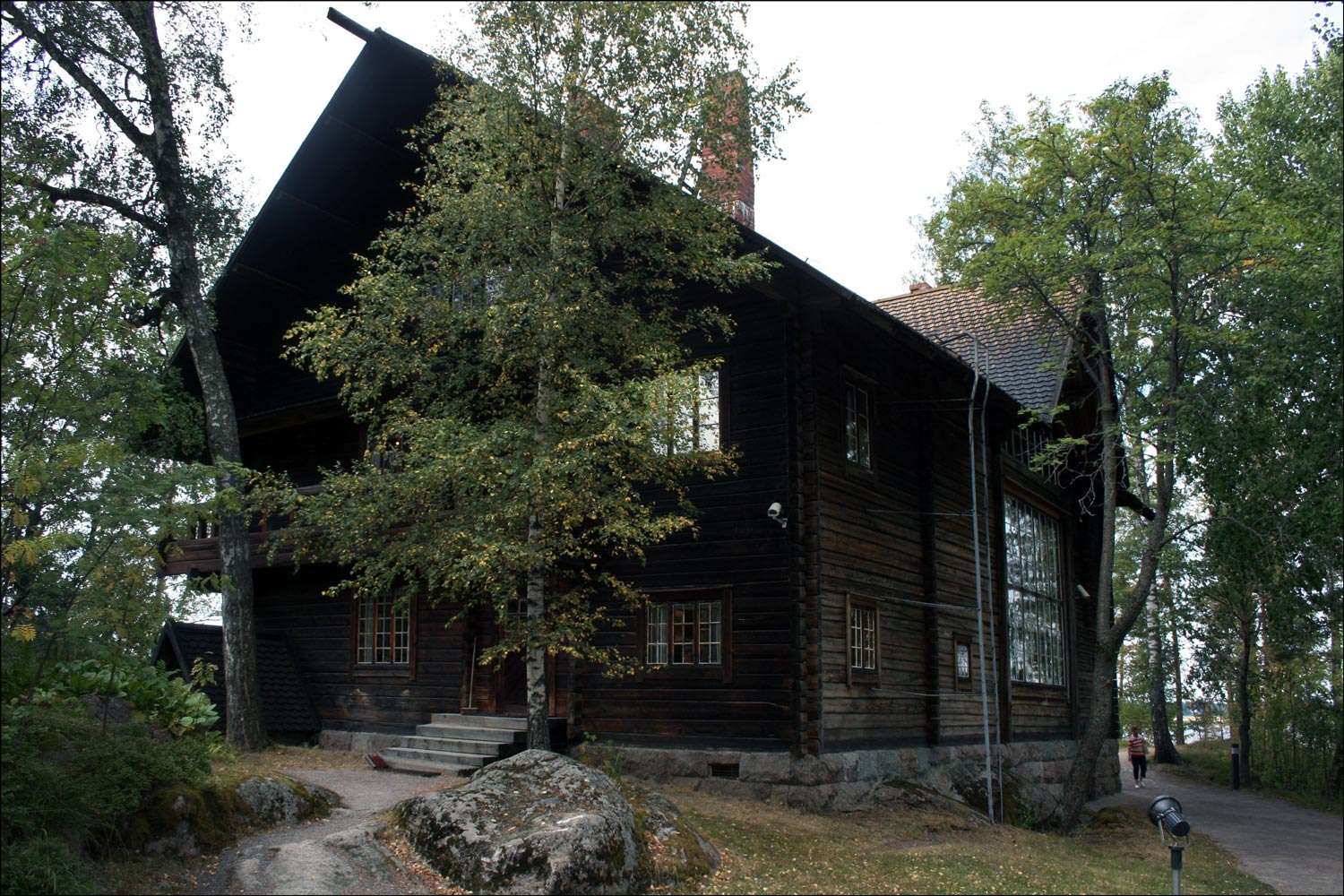
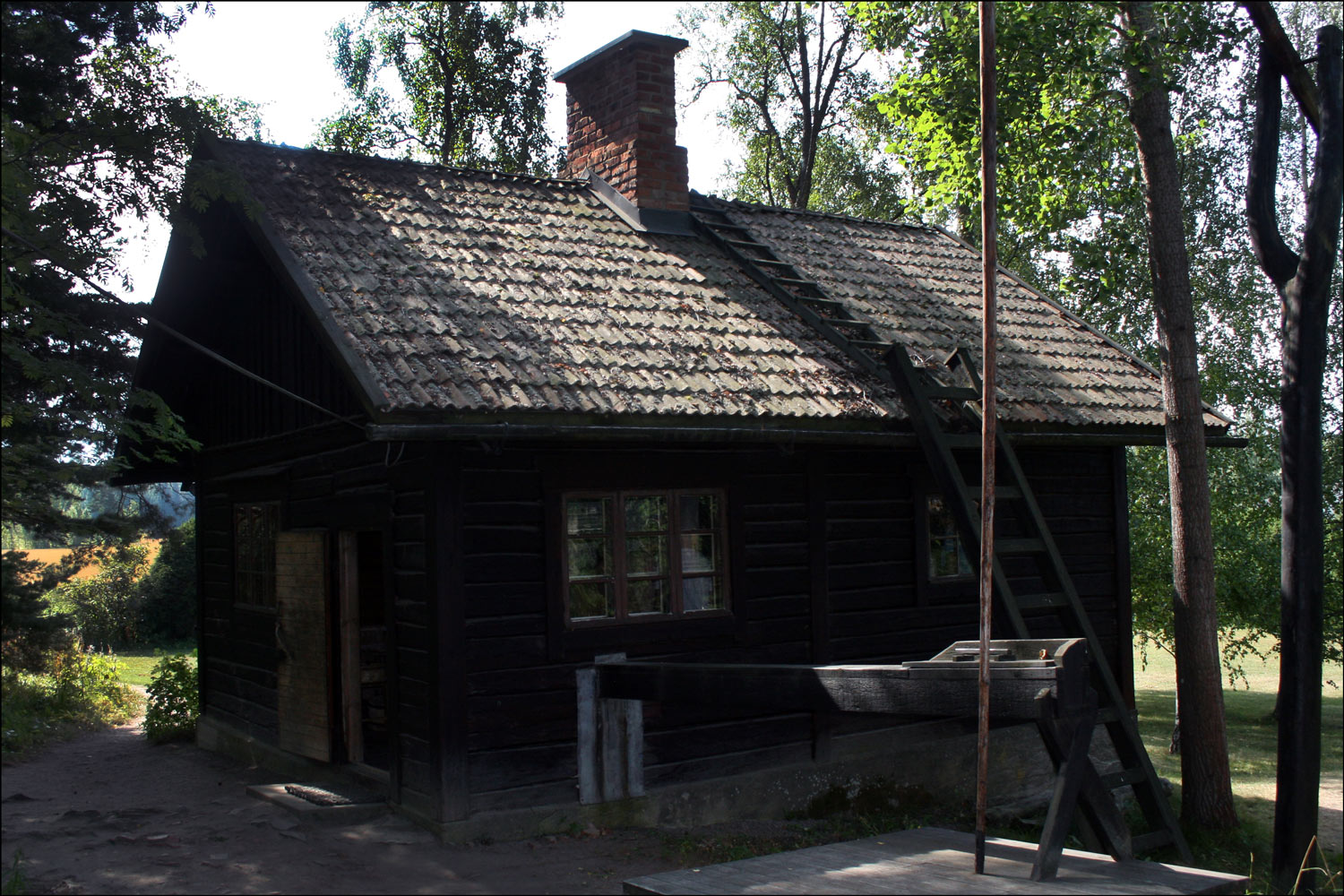
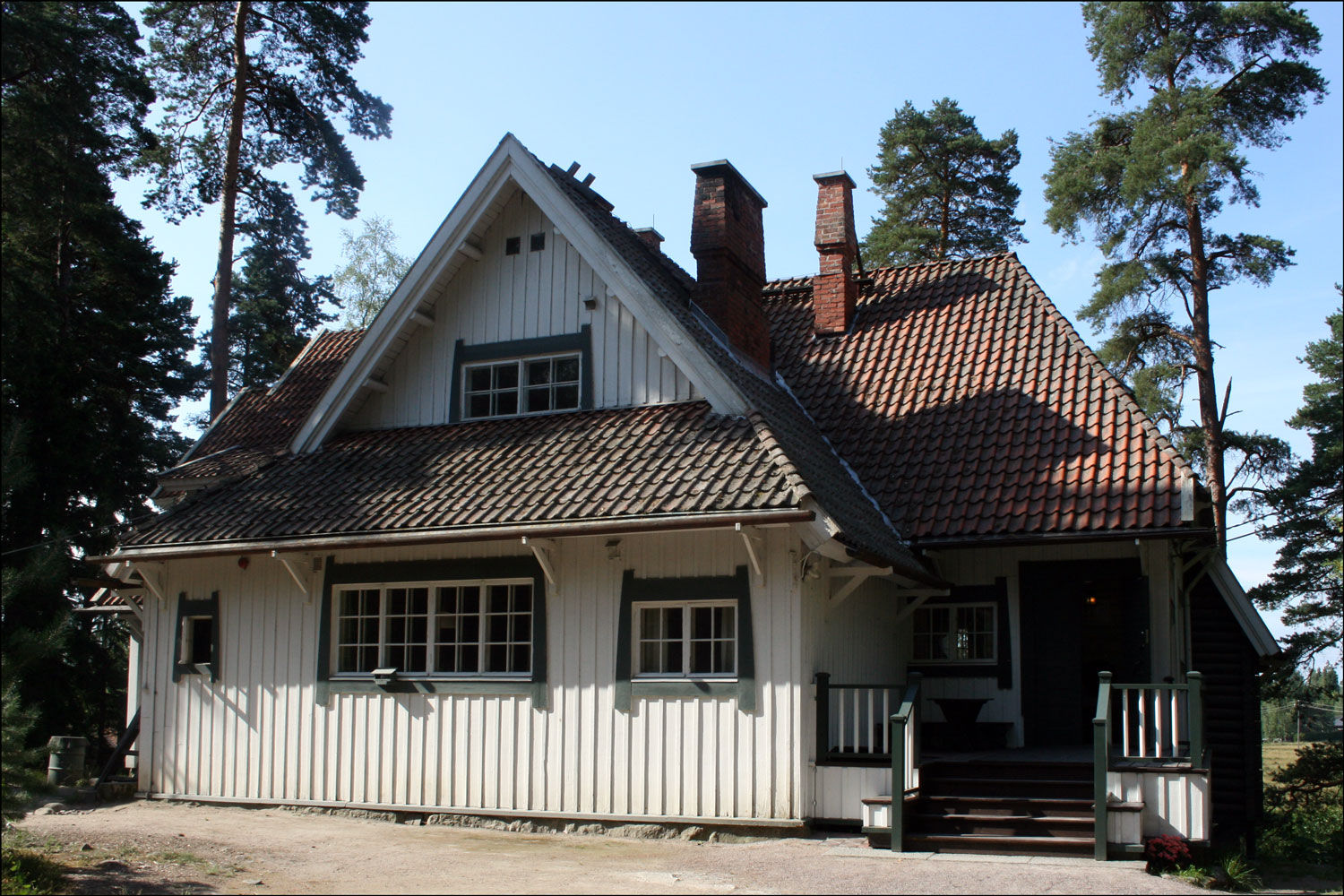
Pekka Halonen (September 23, 1865 – December 1, 1933) was a painter of Finnish landscapes and people. He lived with his family in a home and studio on Lake Tuusula in Tuusula, Finland that he, himself, designed and named Halosenniemi. The beautiful and serene building is now a museum that includes original furnishings and Halonen’s own art on the walls. There, on the shores of Lake Tuusula where Pekka Halonen resided, an artists’ community developed and flourished, helping to develop a sense of Finnish national identity. Halosenniemi was designed with the two story studios of Paris in mind with high ceilings and tall windows in the studio and second floor living quarters accessible by a set of stairs and a balcony that overlooked the studio. Adjacent to the house, Halonen built a sauna and, in typical Finnish tradition, the sauna also served as a laundry . Halonen stated that he never painted for anyone but himself. He felt that “Art should not jar the nerves like sandpaper – it should produce a feeling of peace.”
Halosenniemi

Halosenniemi

SOURCE: Halosenniemi (Tuusula, Finland), photographed by Stephen J. Danko on 03 Aug 2010.
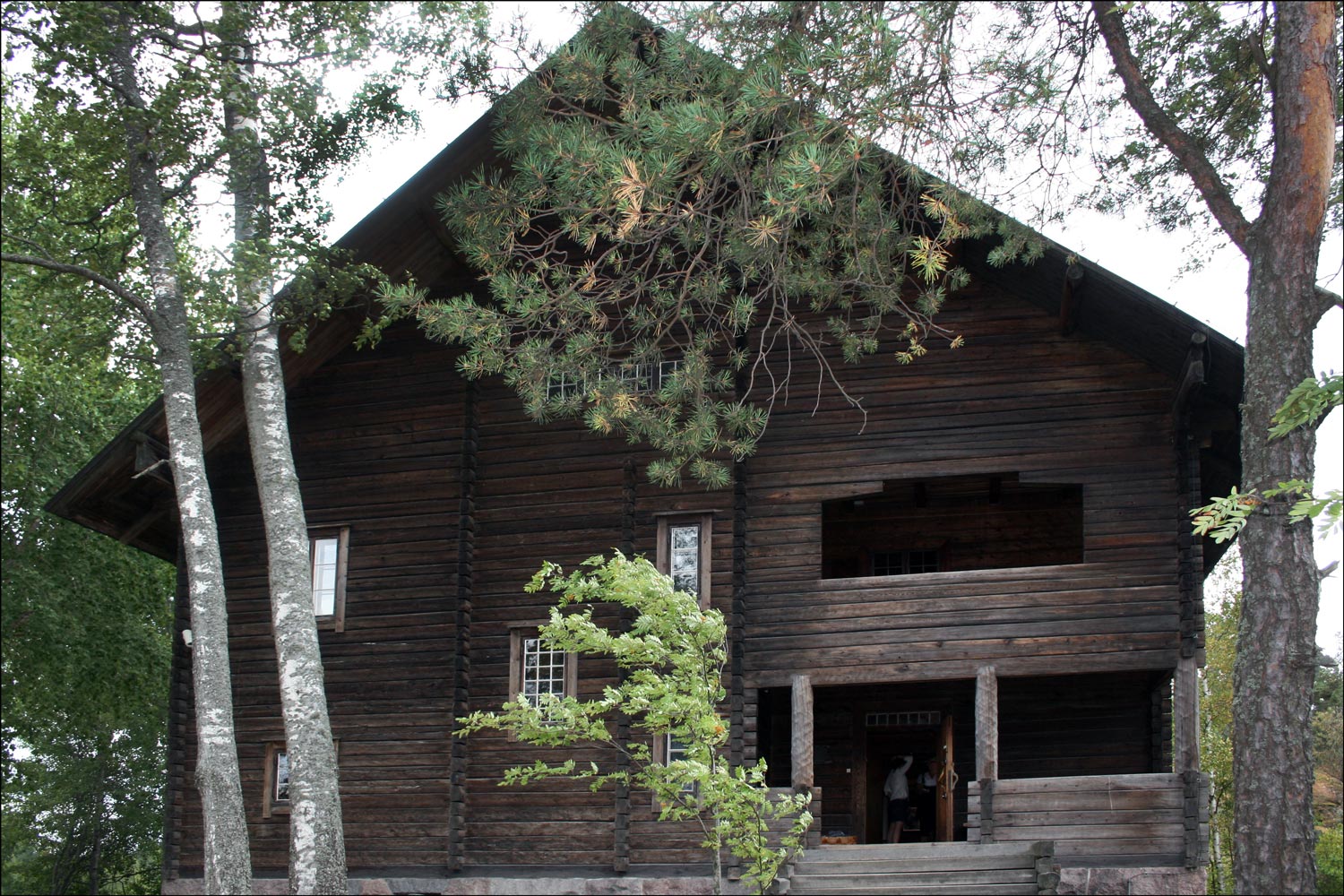
Entrance to Halosenniemi

Entrance to Halosenniemi

SOURCE: Entrance to Halosenniemi (Tuusula, Finland), photographed by Stephen J. Danko on 03 Aug 2010.
Sauna

Sauna

SOURCE: Sauna (Tuusula, Finland), photographed by Stephen J. Danko on 03 Aug 2010.
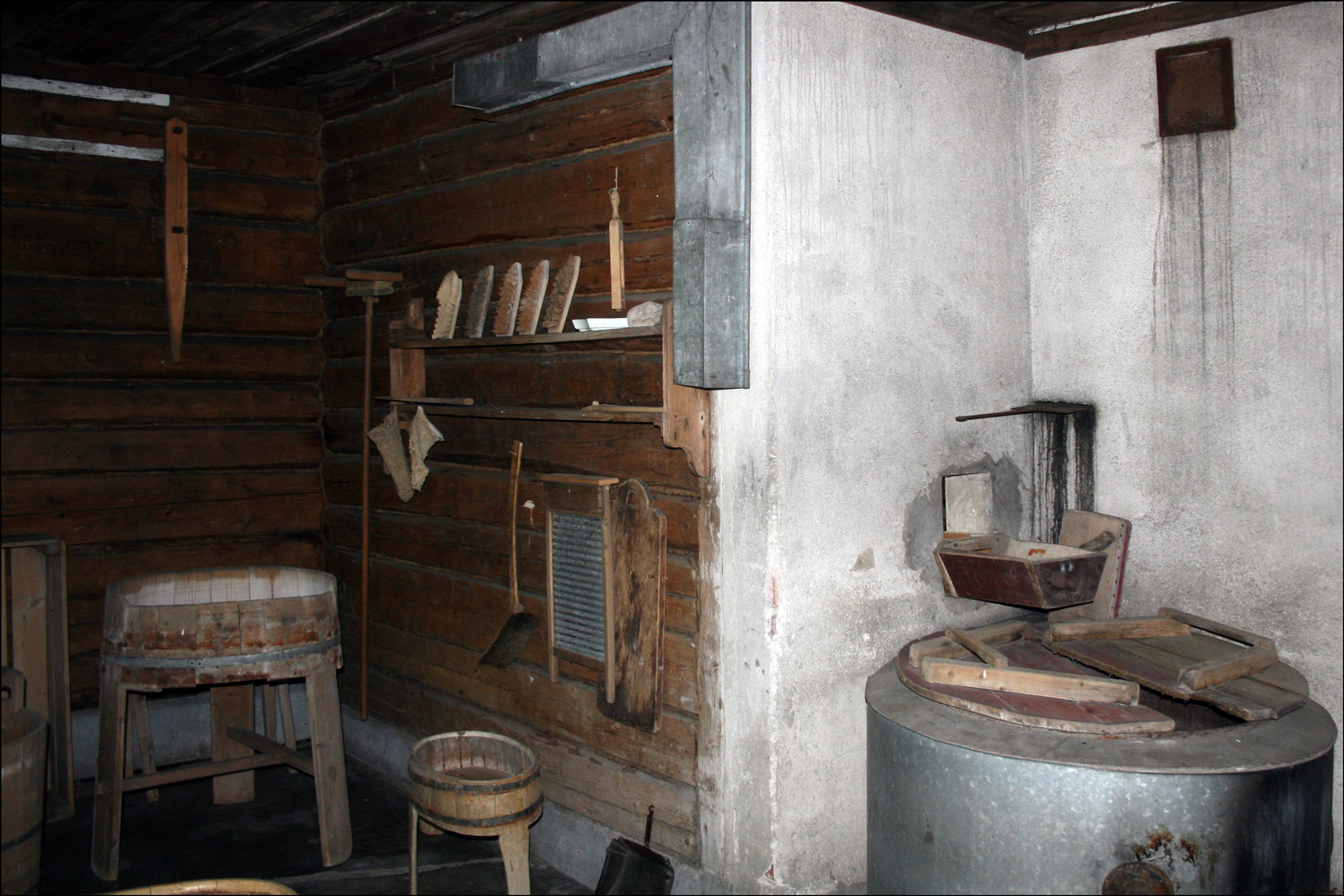
Laundry Room in Sauna

Laundry Room in Sauna

SOURCE: Laundry Room in Sauna (Tuusula, Finland), photographed by Stephen J. Danko on 03 Aug 2010.

Copyright © 2010 by Stephen J. Danko
Posted in Daily Journal | Tagged , | 2 Comments

Ainola – The Home of Jean Sibelius in Jí¤rvenpí¤í¤, Finland

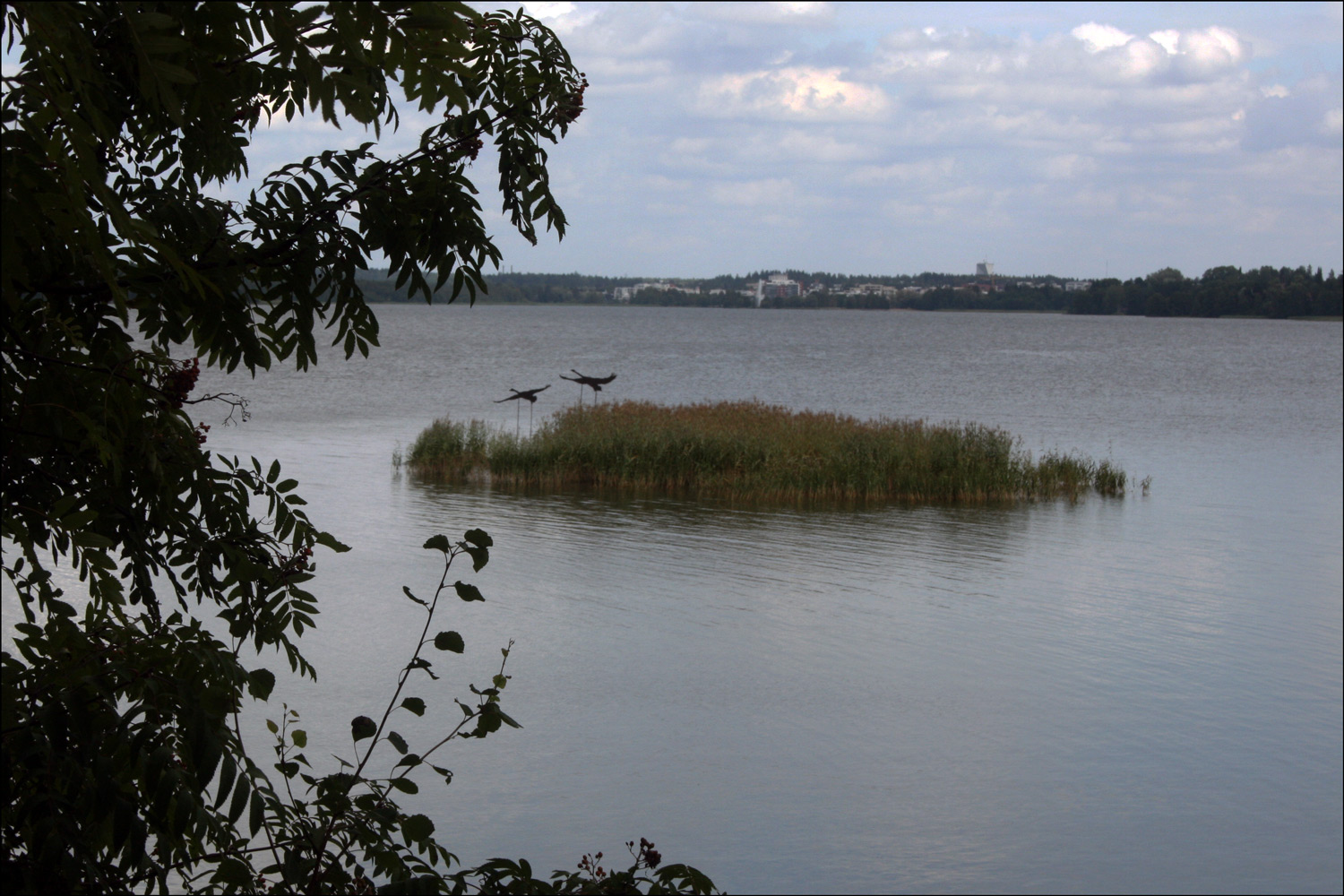
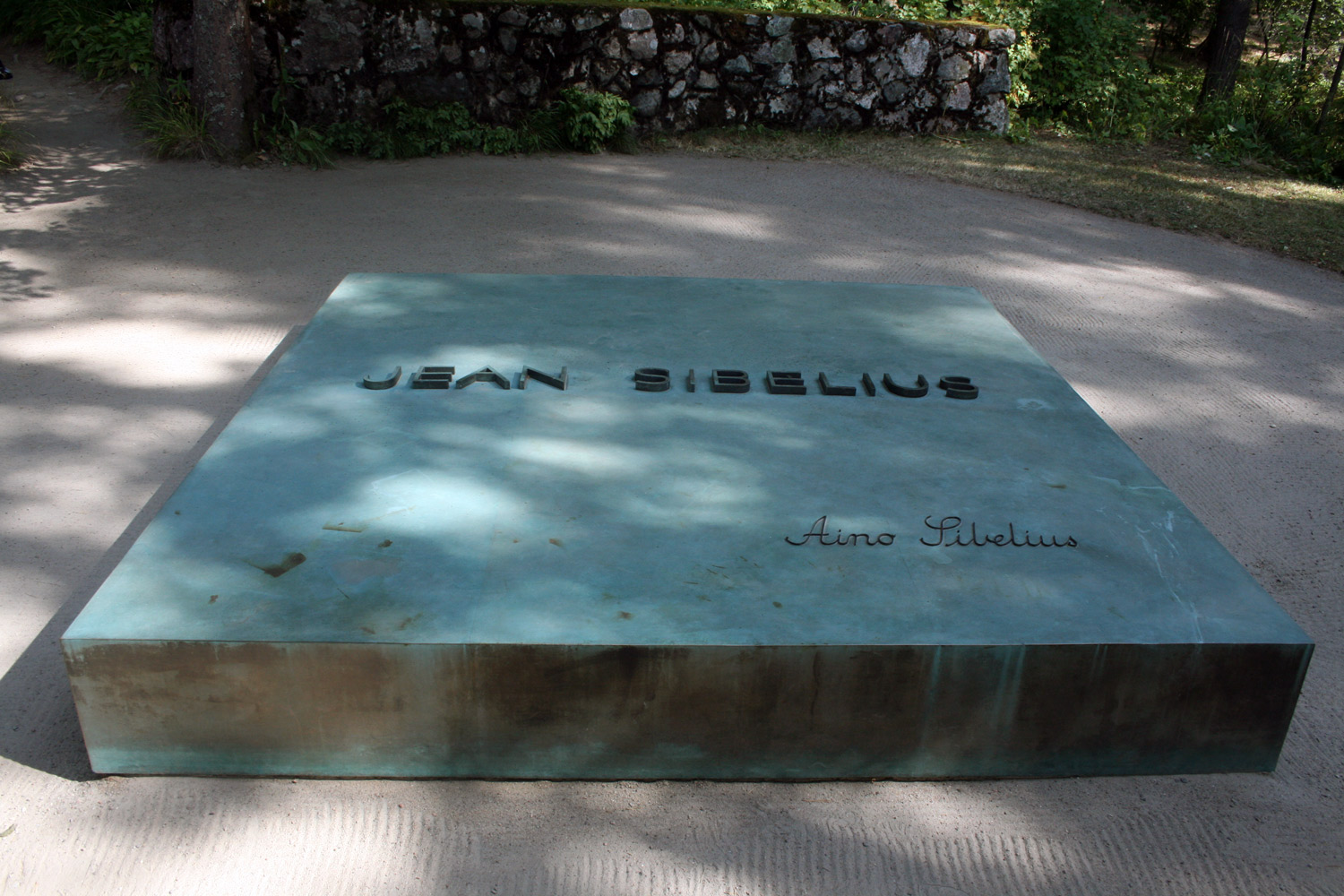
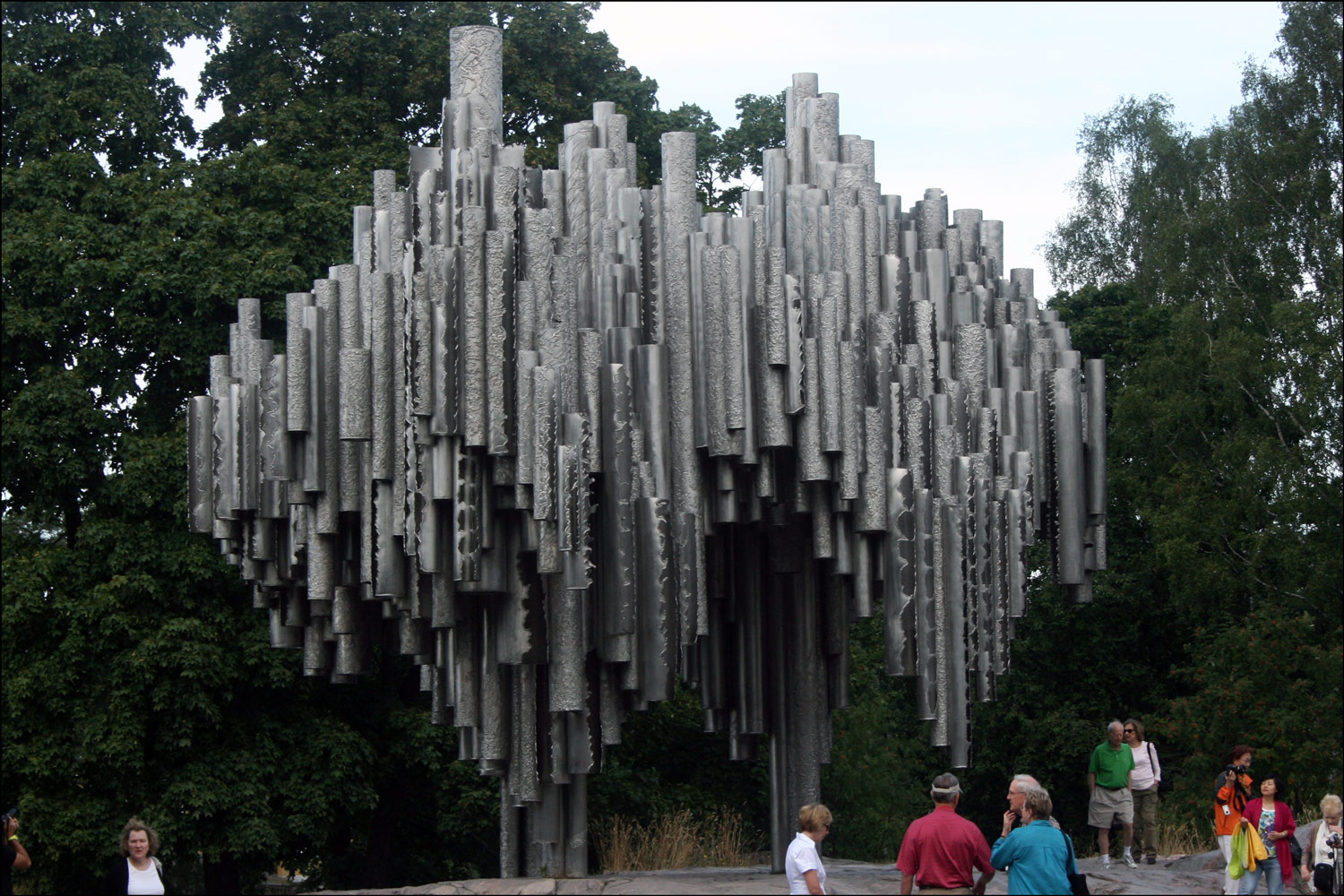
In Finland, a short drive from Helsinki lies Ainola, the home of the noted Finnish composer Jean Sibelius in Jí¤rvenpí¤í¤ on Lake Tuusula . Sibelius and his family moved into the house in 1904. During construction of Ainola, Sibelius had two requests: that his study should have a green fireplace and a view of Lake Tuusula. Sibelius’s works are widely admired and are considered to have contributed to the development of the Finnish national identity. Sibelius usually composed his works in his head, writing them down only after he had thoroughly developed them. On his 50th birthday, he received the gift of a grand piano, which he accepted with some reluctance since he did not use a piano to compose. He preferred to work in silence and so, when his five daughters were at play, they were sure to stay far enough away from the house so that their father could not hear them. Sibelius was born on 8 December 1865 and died on 20 September 1957. He and his wife Aino are buried in the garden of Ainola. In 1967, a monument to Sibelius was unveiled in Helsinki. The artist, Eila Hiltunen, created an abstract sculpture of 600 hollow steel pipes welded together. Although the objective of the artist was to capture the essence of Sibelius’s music, the sculpture was so controversial that Hiltunen was asked to create an additional sculpture of the likeness of Sibelius which was installed close to the original abstract monument.

Ainola

Ainola

SOURCE: Ainola (Jí¤rvenpí¤í¤, Finland), photographed by Stephen J. Danko on 03 Aug 2010.

Lake Tuusula

Lake Tuusula

SOURCE: Lake Tuusula (Jí¤rvenpí¤í¤, Finland), photographed by Stephen J. Danko on 03 Aug 2010.

Sibelius Grave

Sibelius Grave

SOURCE: Sibelius Grave (Jí¤rvenpí¤í¤, Finland), photographed by Stephen J. Danko on 03 Aug 2010.

Sibelius Monument

Sibelius Monument

SOURCE: Sibelius Monument (Helsinki, Finland), photographed by Stephen J. Danko on 03 Aug 2010.

Copyright © 2010 by Stephen J. Danko
Posted in Daily Journal | Tagged , , | Comments Off on Ainola – The Home of Jean Sibelius in Jí¤rvenpí¤í¤, Finland

Around the Monplaisir Palace at Peterhof

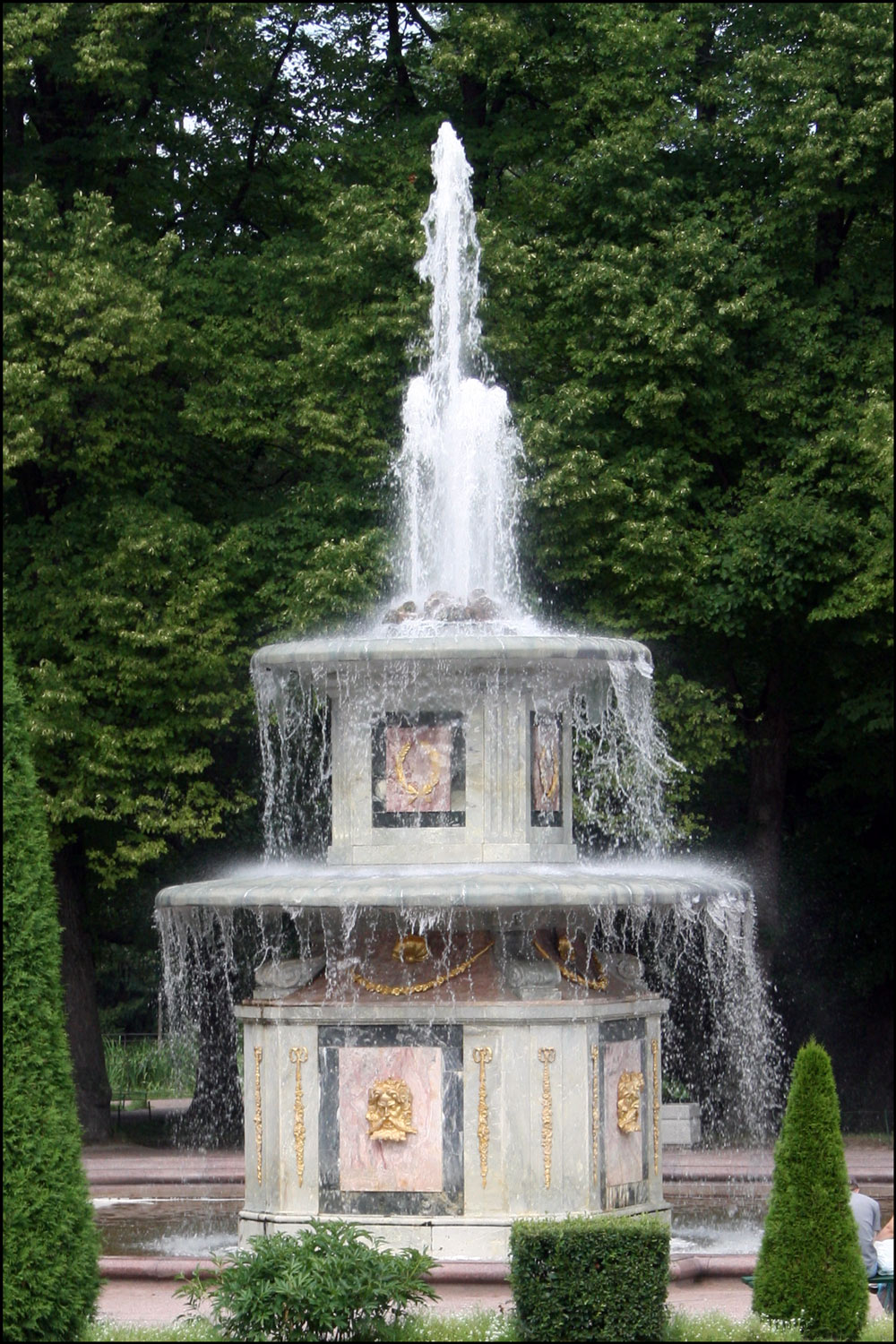
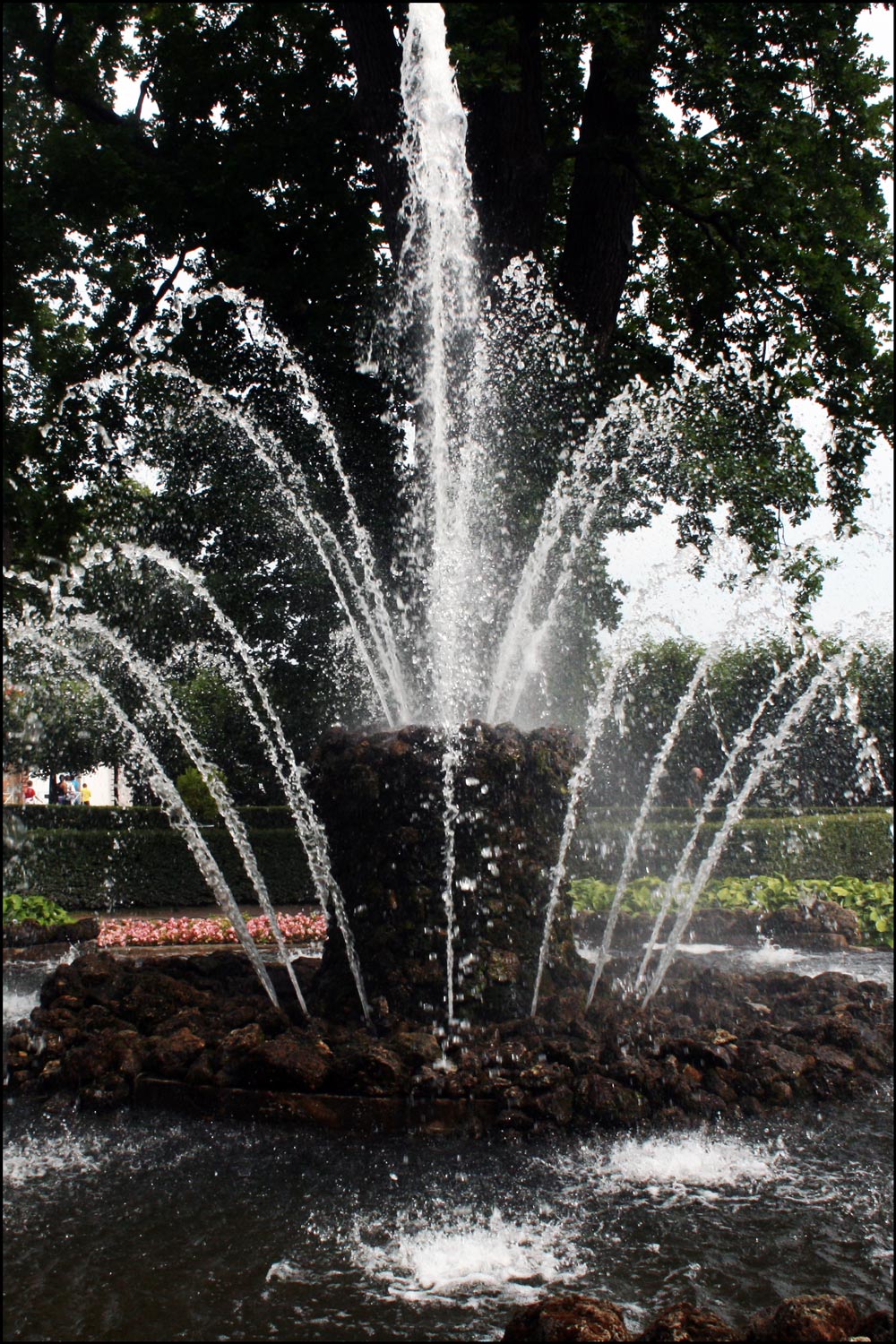
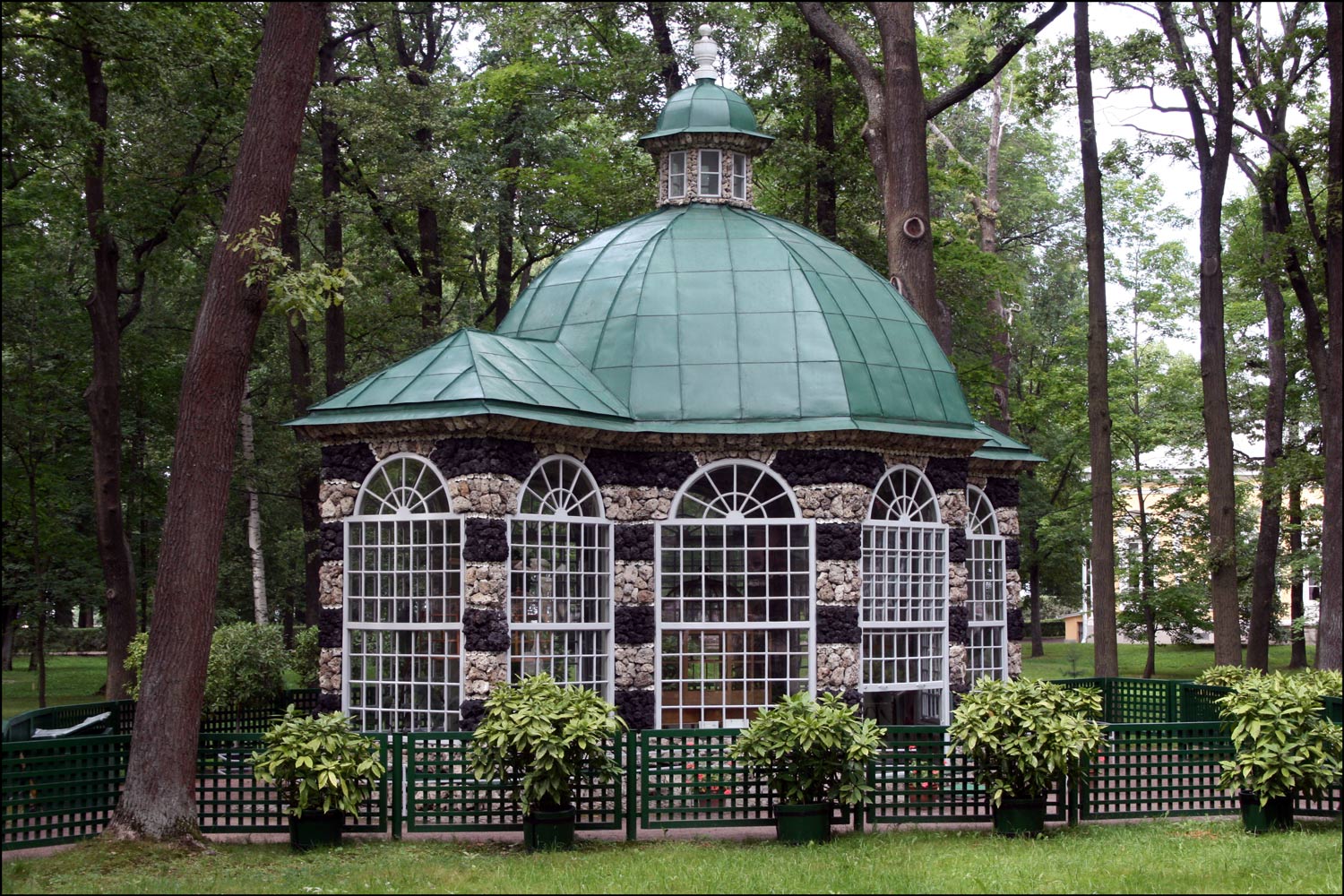
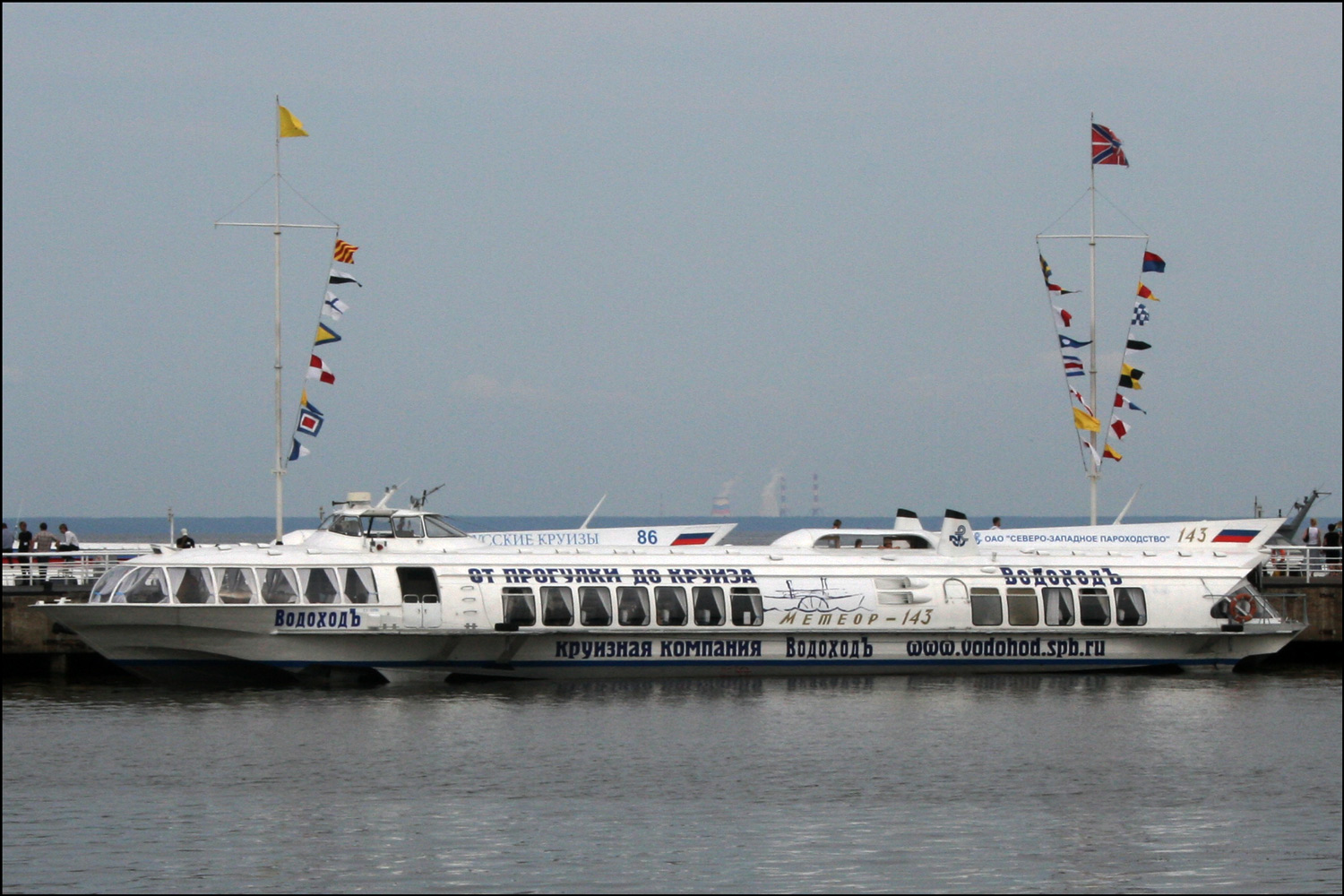
I didn’t take any photos of the Monplaisir Palace at Peterhof, but I did take some photos in the area around Monplaisir. As with the rest of Peterhof, fountains abounded, but the grounds were dotted with interesting buildings including the gazebo shown below. The quickest way back from Peterhof to the center of St. Peterburg turned out to be by hydrofoil which, I was told, operates something like an airplane wing. As the boat gains speed, the hydrofoil generates lift which raises the boat out of the water, reducing drag, and increasing speed.

Fountain at Peterhof

Fountain at Peterhof

SOURCE: Fountain at Peterhof (St. Petersburg, Russia), photographed by Stephen J. Danko on 02 Aug 2010.

Stone Fountain near Monplaisir

Stone Fountain near Monplaisir

SOURCE: Stone Fountain near Monplaisir (St. Petersburg, Russia), photographed by Stephen J. Danko on 02 Aug 2010.

Gazebo near Monplaisir

Gazebo near Monplaisir

SOURCE: Gazebo near Monplaisir (St. Petersburg, Russia), photographed by Stephen J. Danko on 02 Aug 2010.

Hydrofoil

Hydrofoil

SOURCE: Hydrofoil (St. Petersburg, Russia), photographed by Stephen J. Danko on 02 Aug 2010.

Copyright © 2010 by Stephen J. Danko
Posted in Daily Journal | Tagged , | Comments Off on Around the Monplaisir Palace at Peterhof

The Lower Gardens at Peterhof

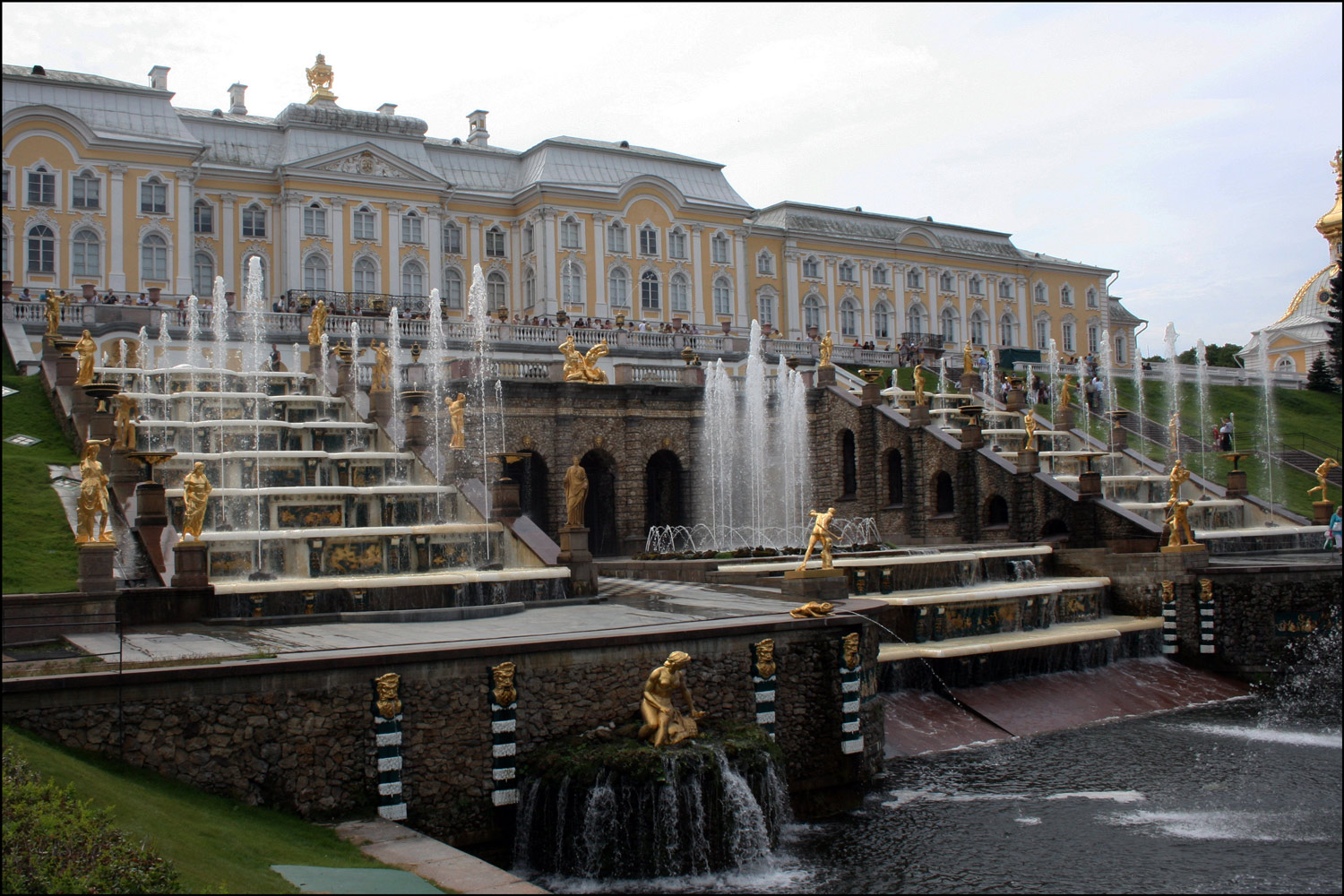
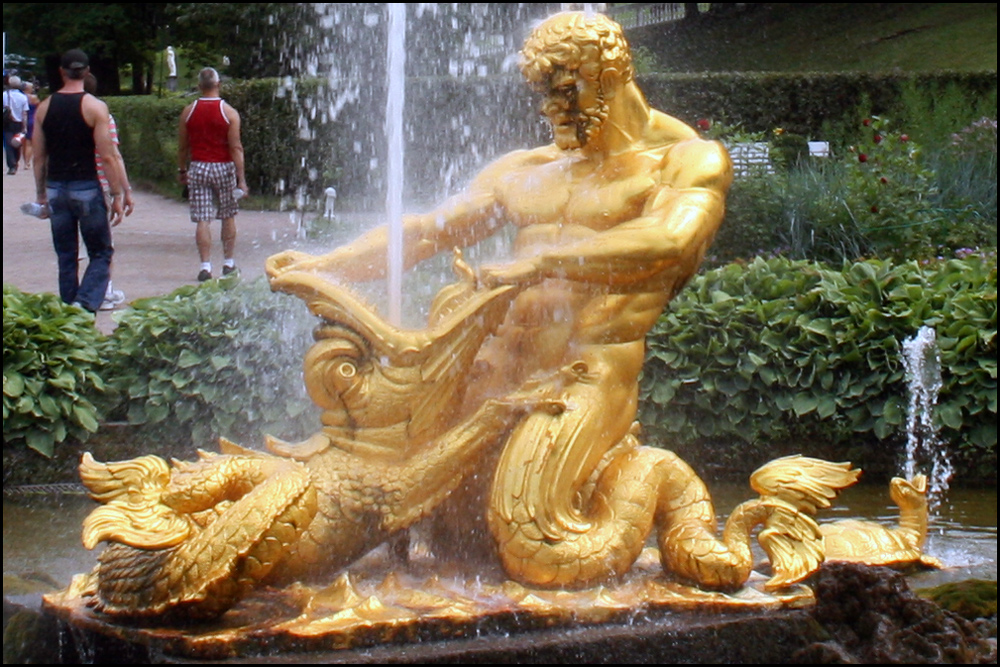
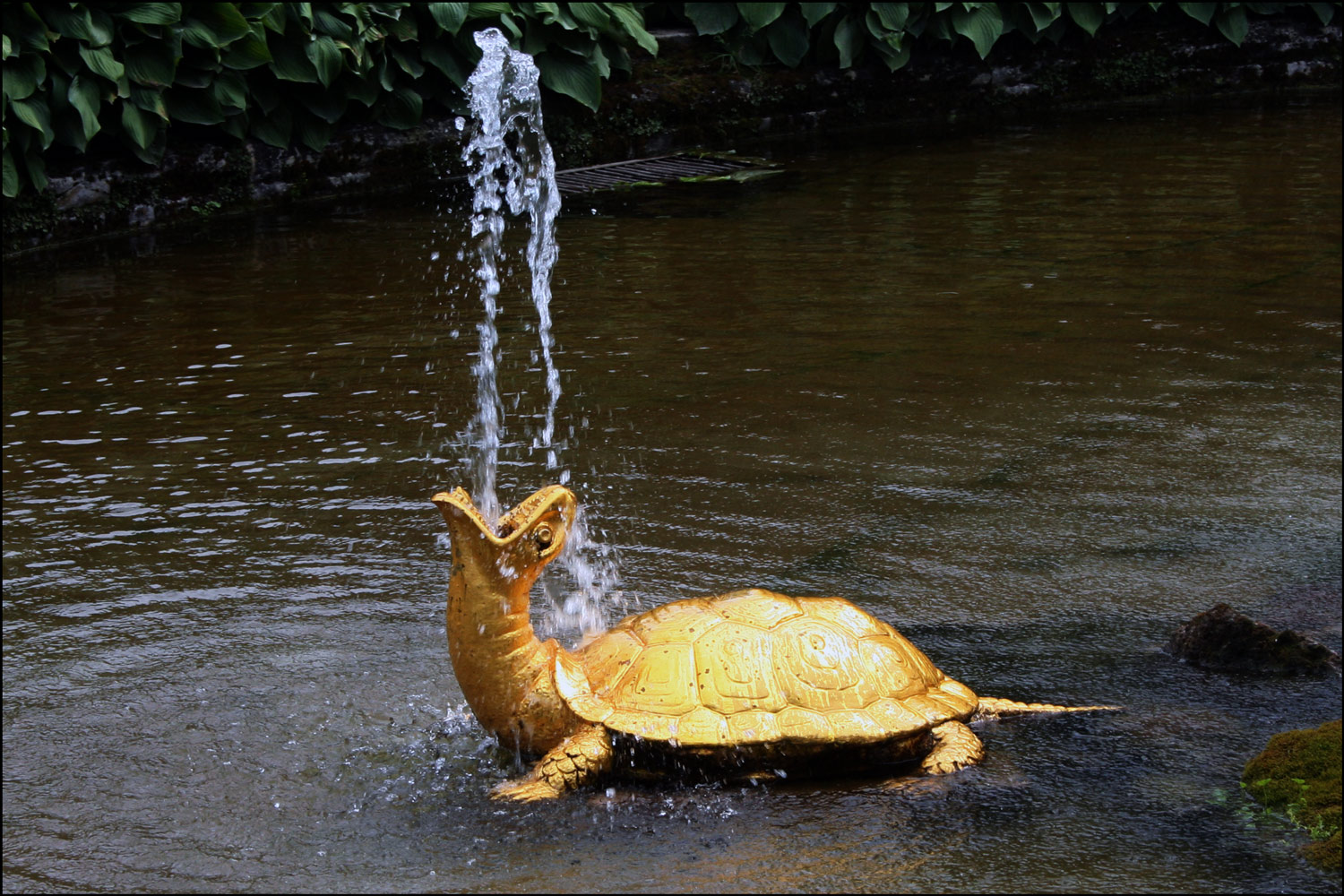
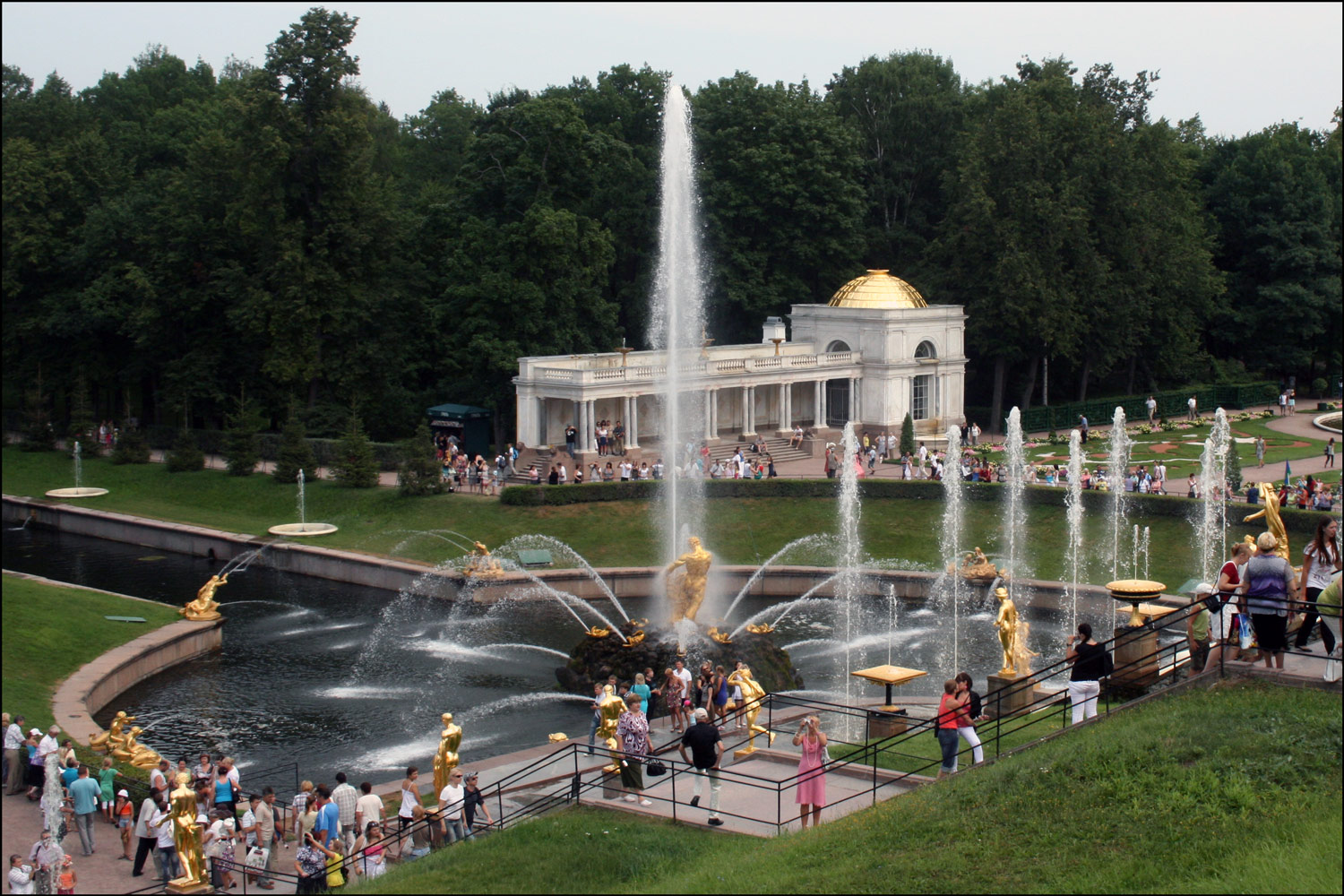
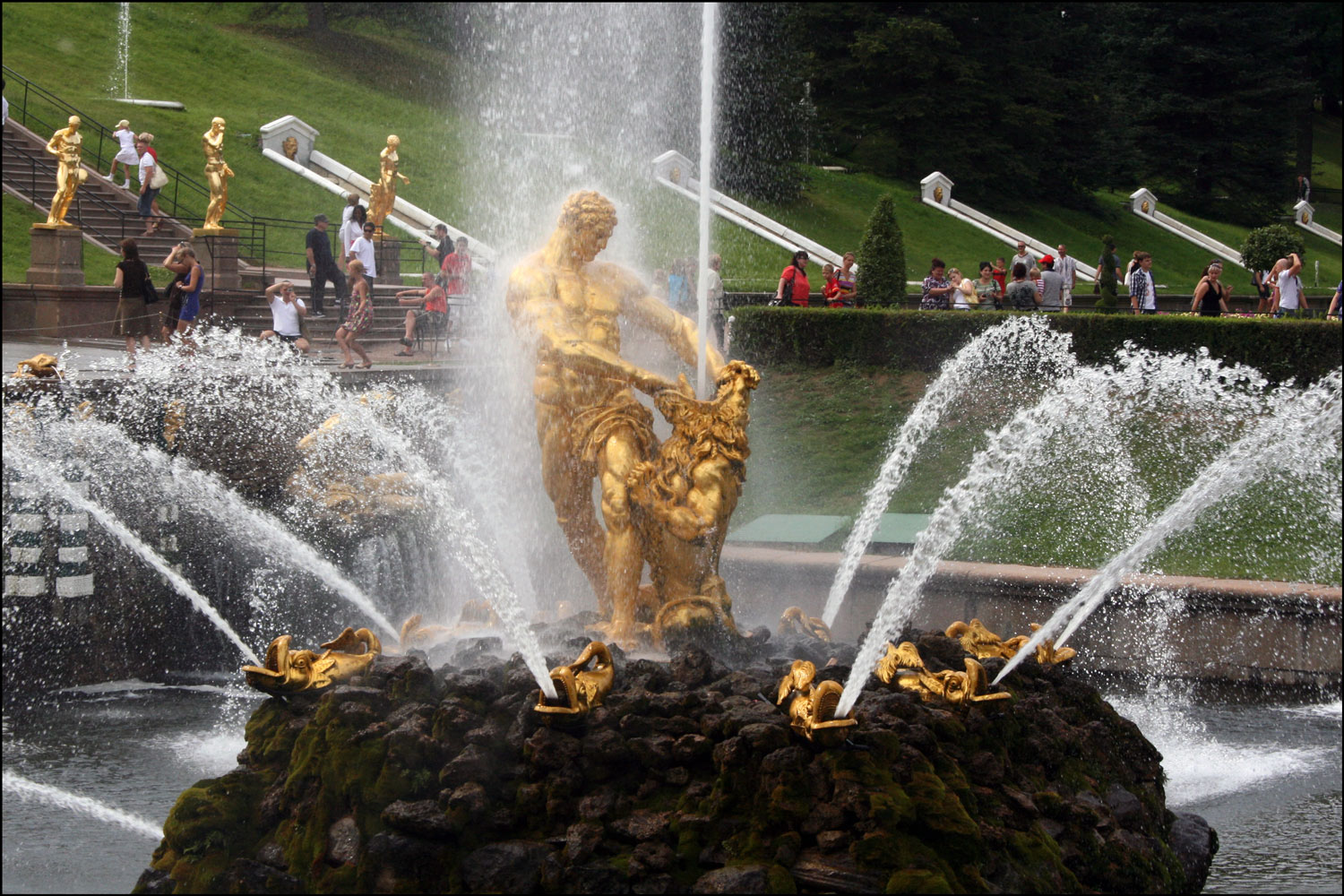
As impressive as the Upper Gardens are, the Lower Gardens at Peterhof are simply breathtaking. Fountains abound, with golden figures as their focal points. From the grand palace above, water plows down the grand cascade to a fountain depicting Samson and the Lion. From there the water flows through a channel to the Gulf of Finland. Elsewhere in the Lower Gardens is a fountain showing a Triton Fighting a Sea Monster, surrounded by small turtle fountains. A remarkable feature of Peterhof is that the individual fountains are not powered by pumps. The fountains are powered by hydrostatic pressure – the difference in height between the ponds that hold the water for the fountains and the fountains themselves.

Overview of the Samson Fountain

Overview of the Samson Fountain

SOURCE: Overview of the Samson Fountain (St. Petersburg, Russia), photographed by Stephen J. Danko on 02 Aug 2010.

Samson and the Lion

Samson and the Lion

SOURCE: Samson and the Lion (St. Petersburg, Russia), photographed by Stephen J. Danko on 02 Aug 2010.

The Grand Cascade

The Grand Cascade

SOURCE: The Grand Cascade (St. Petersburg, Russia), photographed by Stephen J. Danko on 02 Aug 2010.


The Triton Fountain

SOURCE: The Triton Fountain (St. Petersburg, Russia), photographed by Stephen J. Danko on 02 Aug 2010.

Turtle Fountain

Turtle Fountain

SOURCE: Turtle Fountain (St. Petersburg, Russia), photographed by Stephen J. Danko on 02 Aug 2010.

Copyright © 2010 by Stephen J. Danko
Posted in Daily Journal | Tagged , | 3 Comments

The Upper Gardens at Peterhof

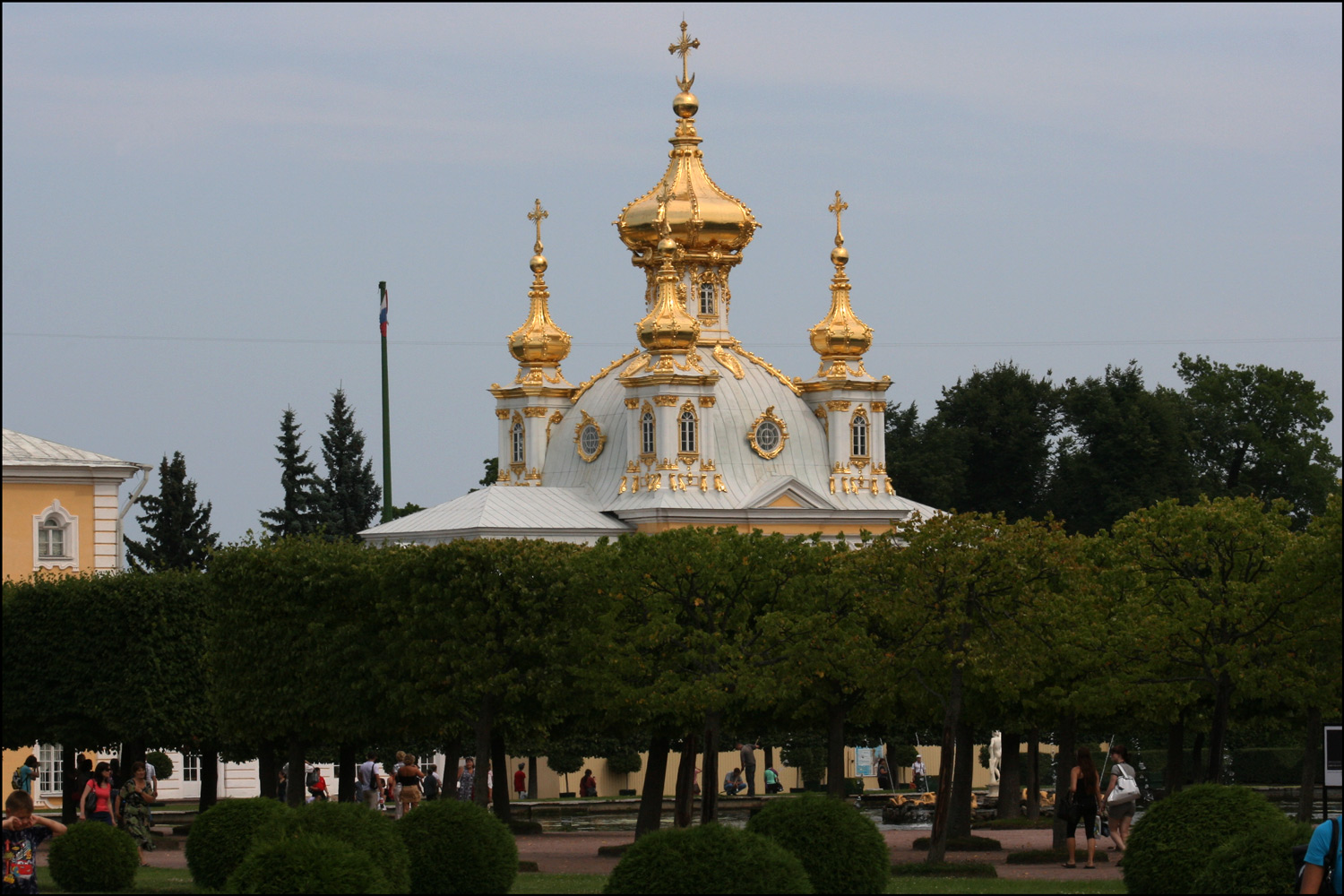
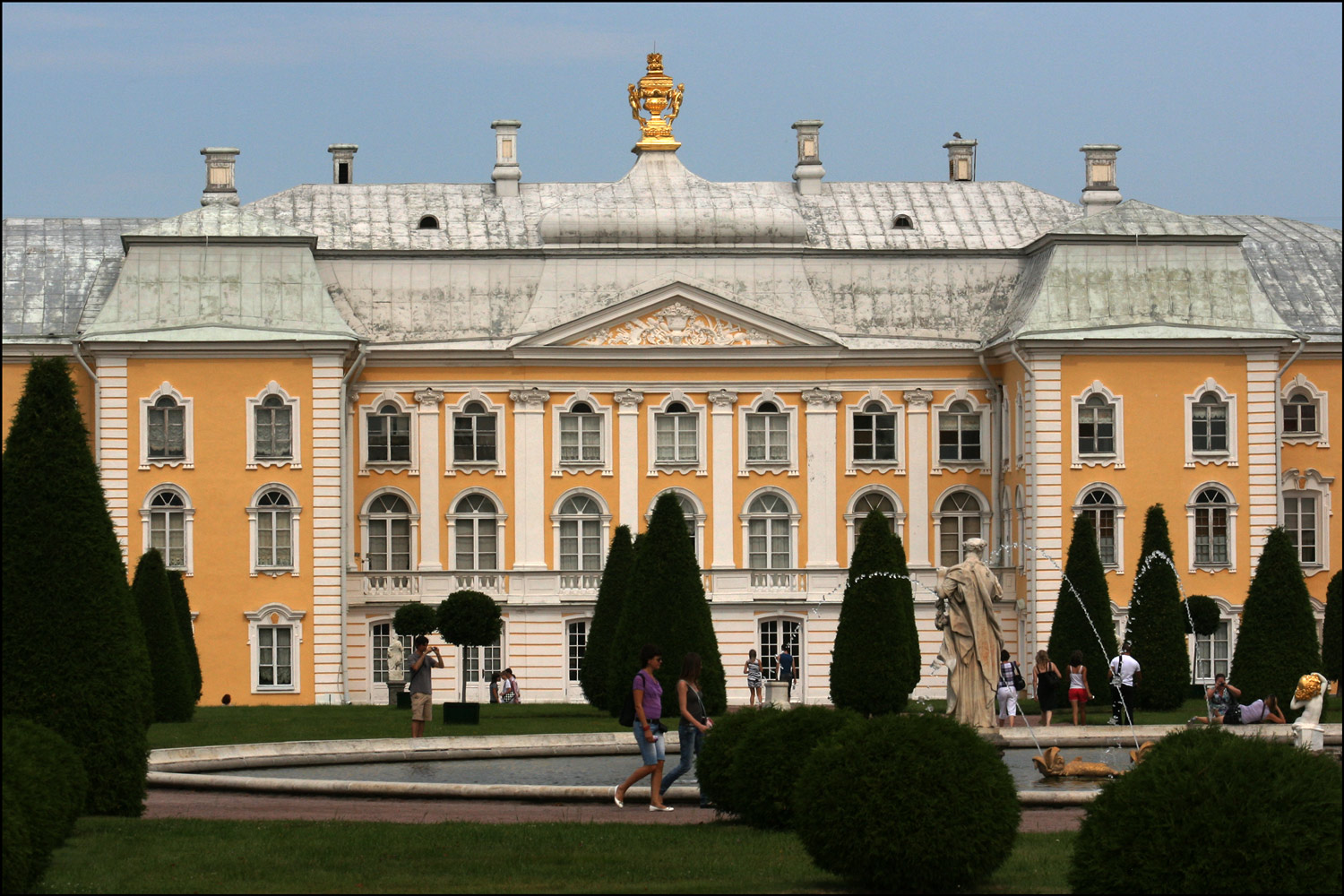
Peterhof, sometimes called the Russian Versailles, was Peter the Great’s palace in the suburbs of St. Petersburg, Russia. Although construction of Peterhof began under Peter the Great, the grand palace was completed by his daughter Elizabeth. It is a popular Russian tourist attraction, primarily because of the spectacular fountains on the grounds, although the upper gardens consist mainly of formal plantings of trees, shrubs, and flowers.


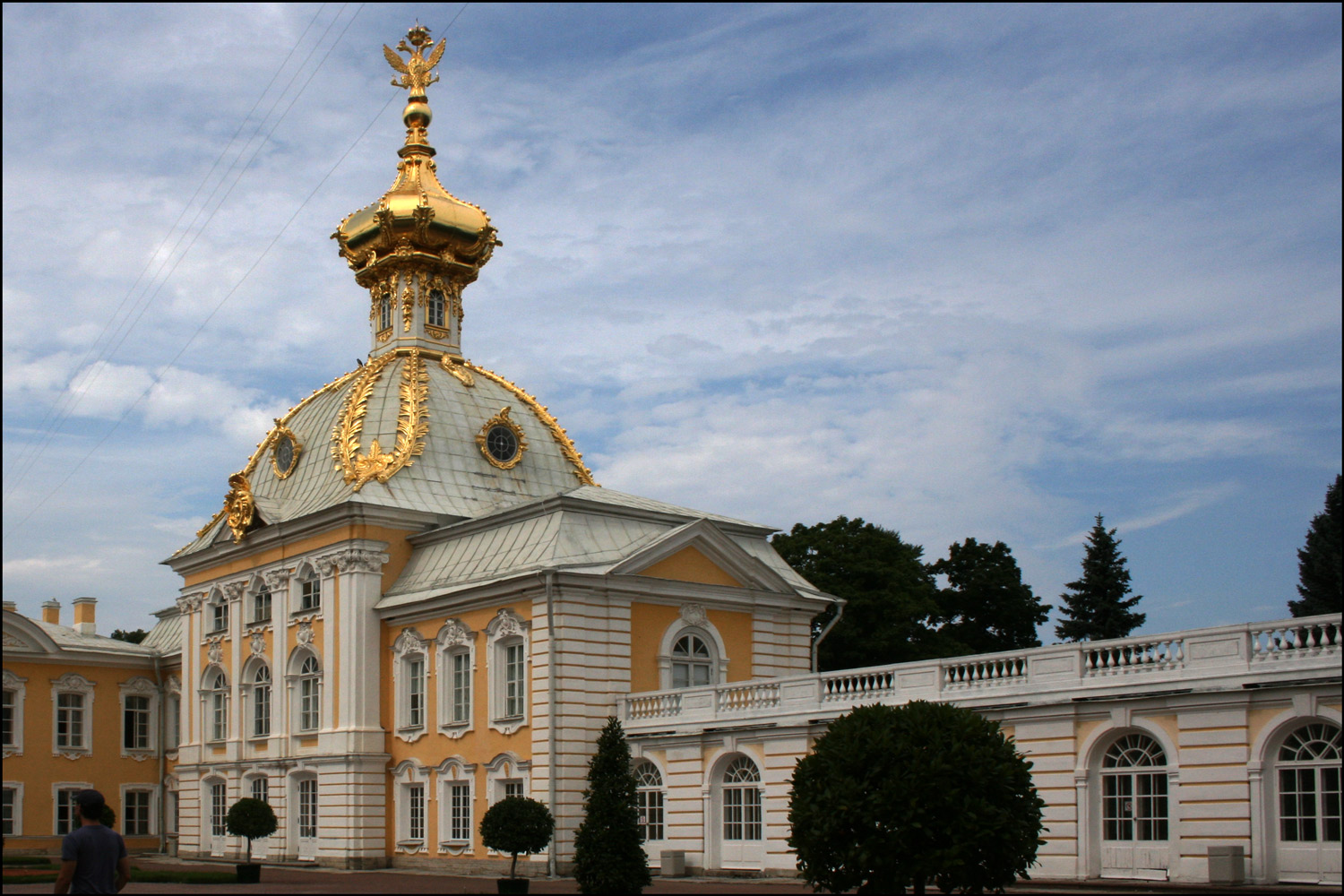
Peterhof Chapel

Peterhof Chapel

SOURCE: Peterhof Chapel (St. Petersburg, Russia), photographed by Stephen J. Danko on 02 Aug 2010.

Peterhof Grand Palace

Peterhof Grand Palace

SOURCE: Peterhof Grand Palace (St. Petersburg, Russia), photographed by Stephen J. Danko on 02 Aug 2010.

Peterhof Pavilion

Peterhof Pavilion

SOURCE: Peterhof Pavilion (St. Petersburg, Russia), photographed by Stephen J. Danko on 02 Aug 2010.

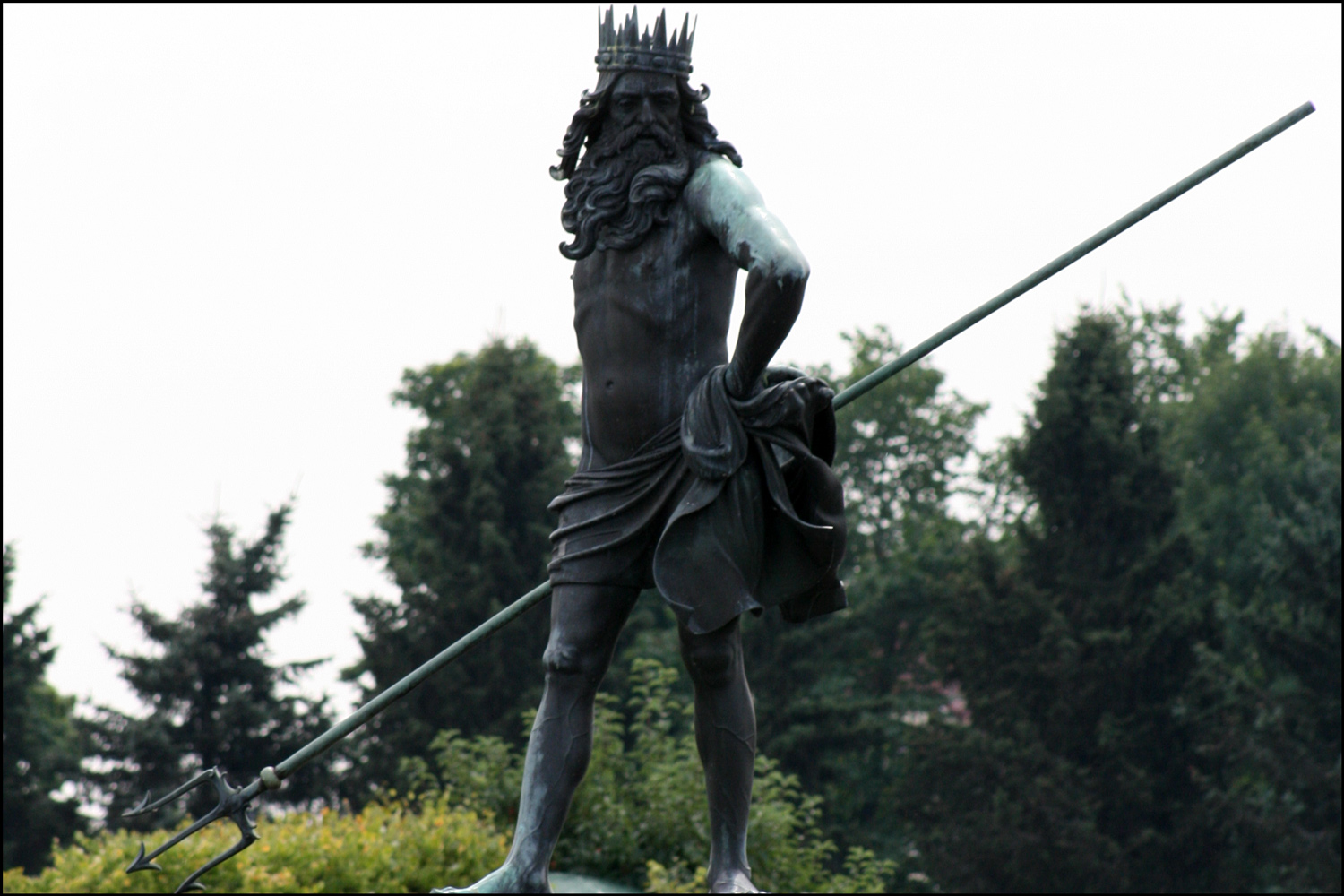
Neptune Fountain

Neptune Fountain

SOURCE: Neptune Fountain (St. Petersburg, Russia), photographed by Stephen J. Danko on 02 Aug 2010.

Copyright © 2010 by Stephen J. Danko
Posted in Daily Journal | Tagged , | 1 Comment

The St. Petersburg Hermitage as Art Itself

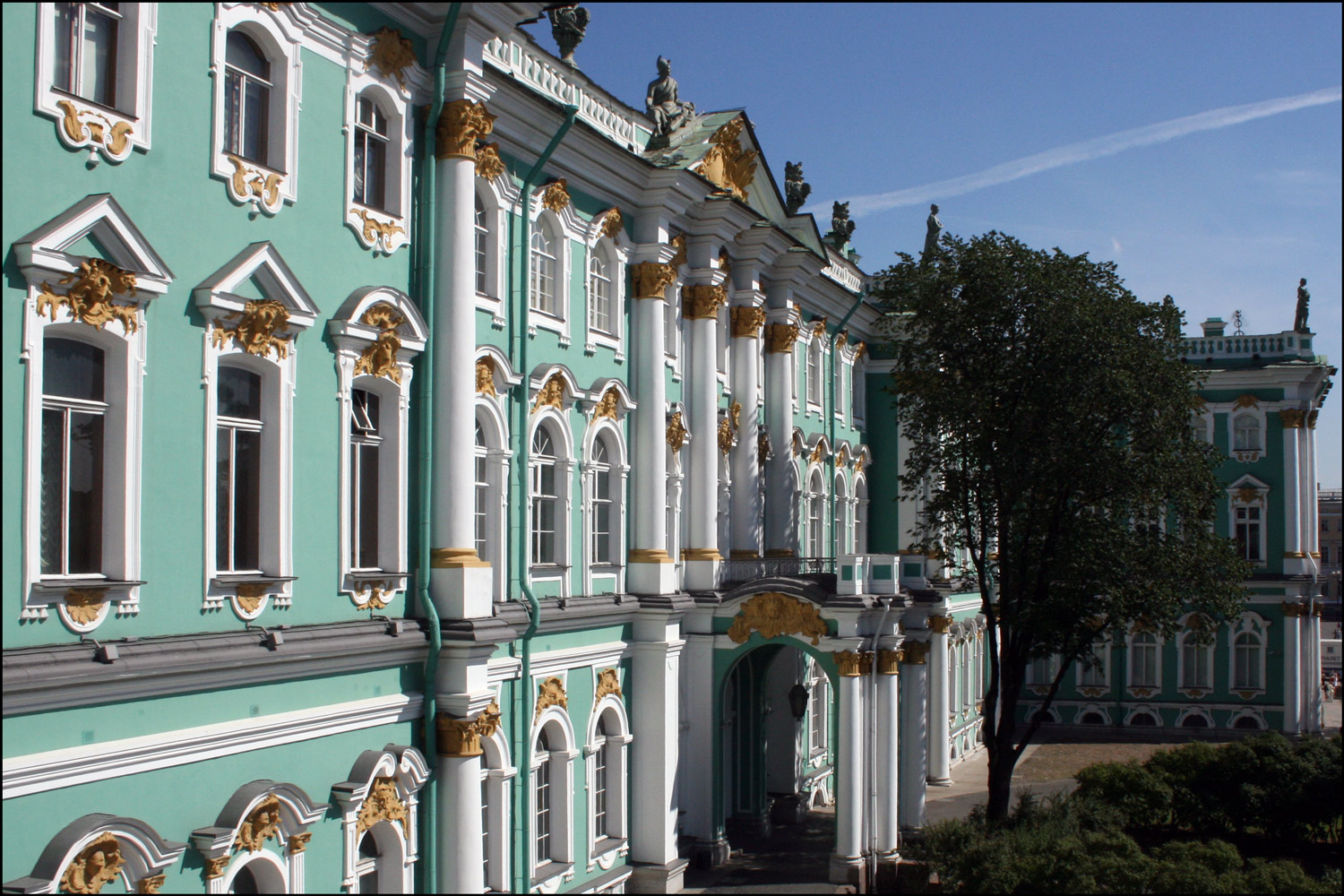
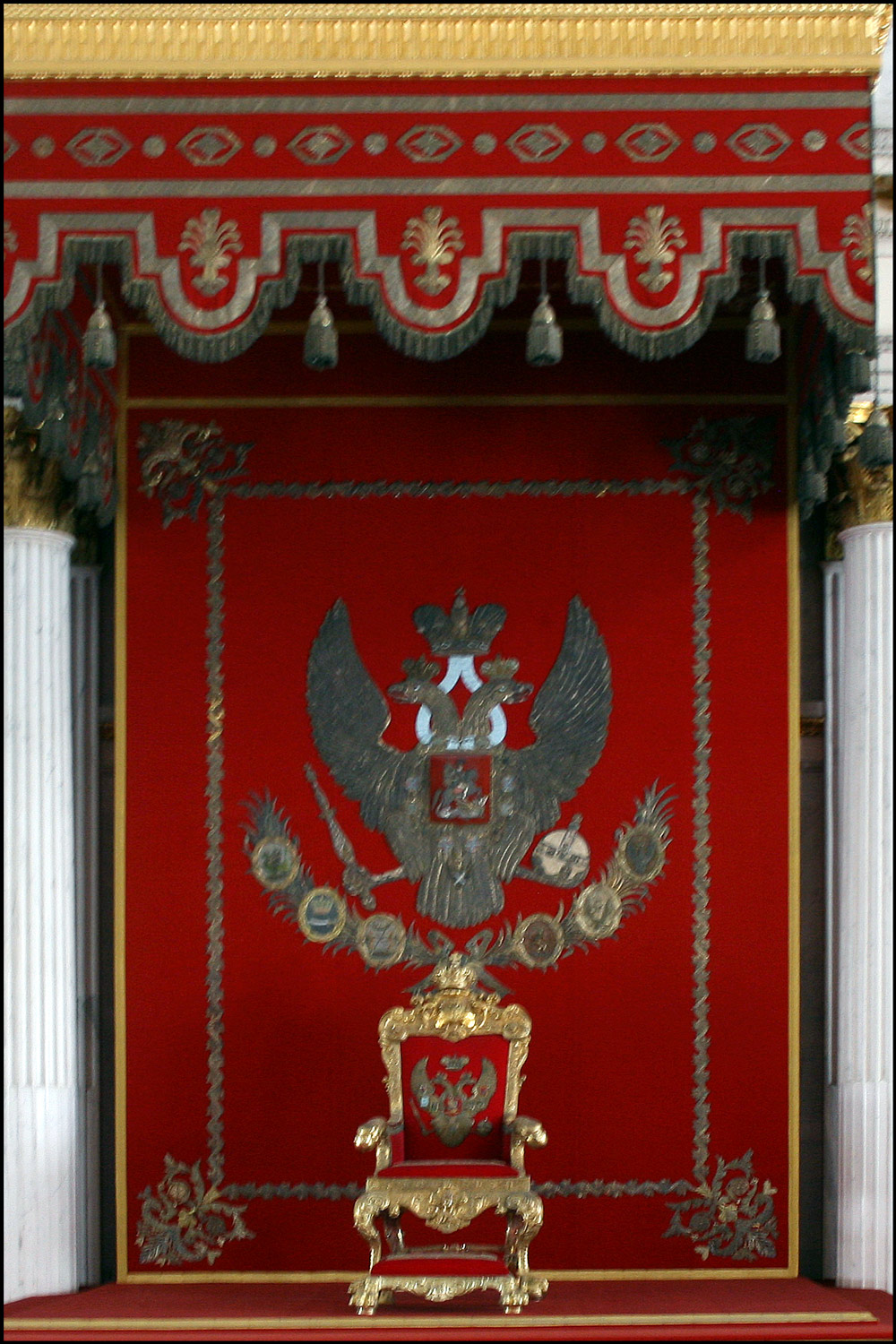
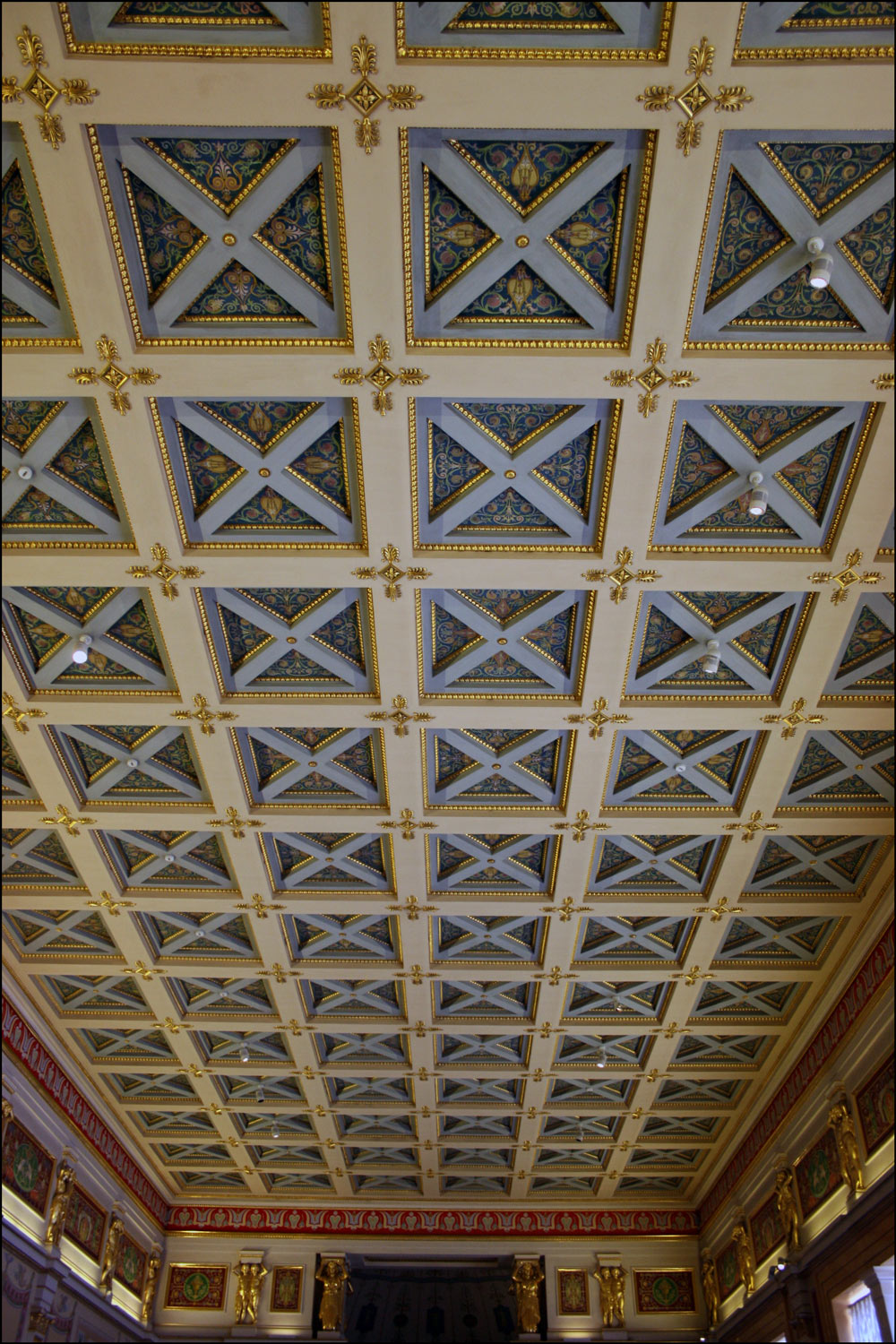
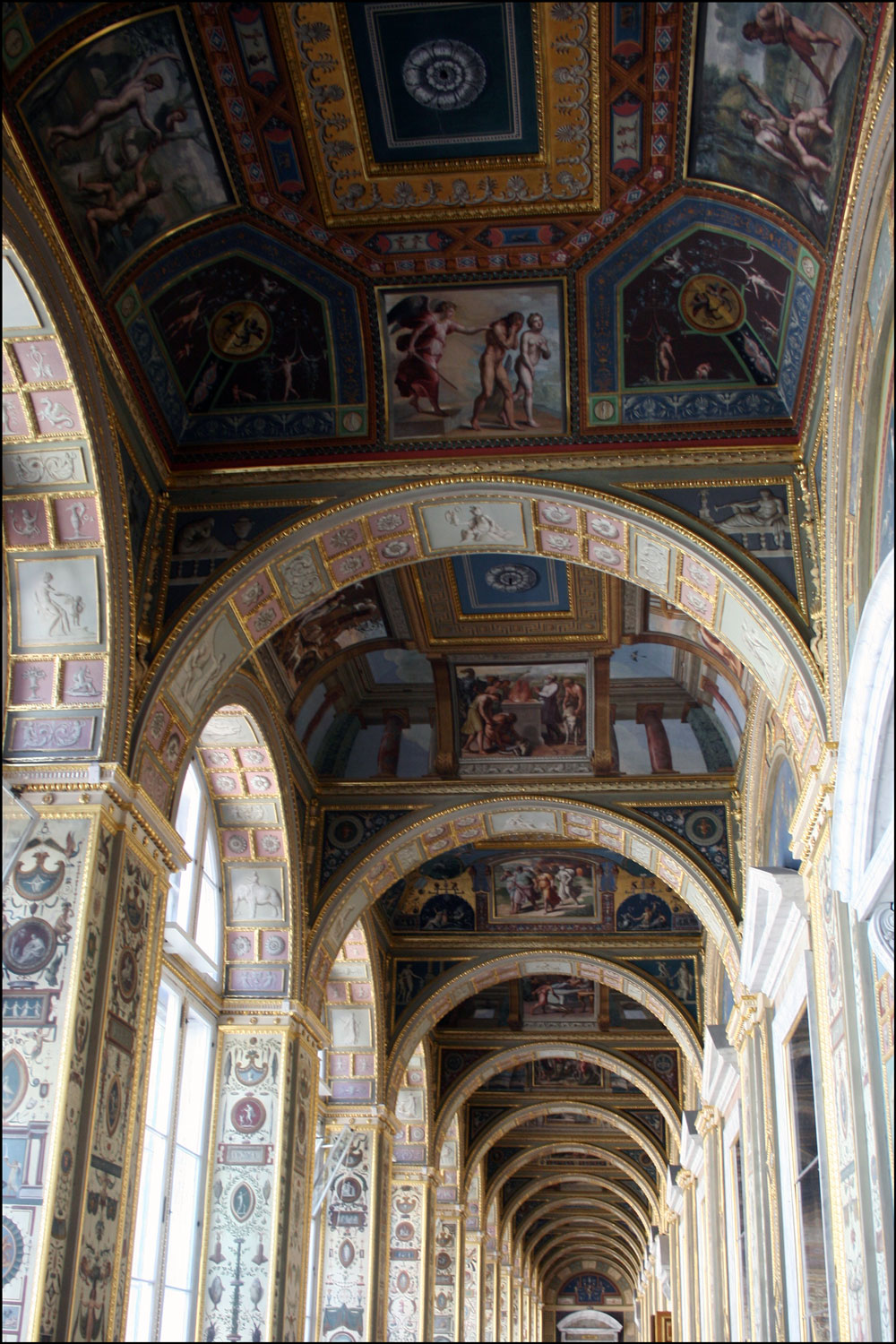
The main museum facilities of the Hermitage in St. Petersburg, Russia is a complex of six buildings, the greatest of which is the Winter Palace. The Winter Palace was the residence of the Russian Monarchs from 1762 to February 1917 and, as such, the details in the floors, ceilings, and walls are all artworks in themselves. The building of the New Hermitage, connected to the Winter Palace, includes the Raphael Loggias, which were copied from a gallery in the Vatican Palace.

The Eastern Facade of the Winter Palace

The Eastern Facade of the Winter Palace

SOURCE: The Eastern Facade of the Winter Palace (The Hermitage, St. Petersburg, Russia), photographed by Stephen J. Danko on 01 Aug 2010.

The Throne of St. George's Hall

The Throne of St. George’s Hall

SOURCE: The Throne of St. George’s Hall (The Hermitage, St. Petersburg, Russia), photographed by Stephen J. Danko on 01 Aug 2010.

Ceilings in the Hermitage

Ceilings in the Hermitage

SOURCE: Ceilings in the Hermitage (The Hermitage, St. Petersburg, Russia), photographed by Stephen J. Danko on 01 Aug 2010.

The Raphael Loggias

The Raphael Loggias

SOURCE: The Raphael Loggias (The Hermitage, St. Petersburg, Russia), photographed by Stephen J. Danko on 01 Aug 2010.

Copyright © 2010 by Stephen J. Danko
Posted in Daily Journal | Tagged , | 3 Comments

Sculptures in the St. Petersburg, Russia Hermitage

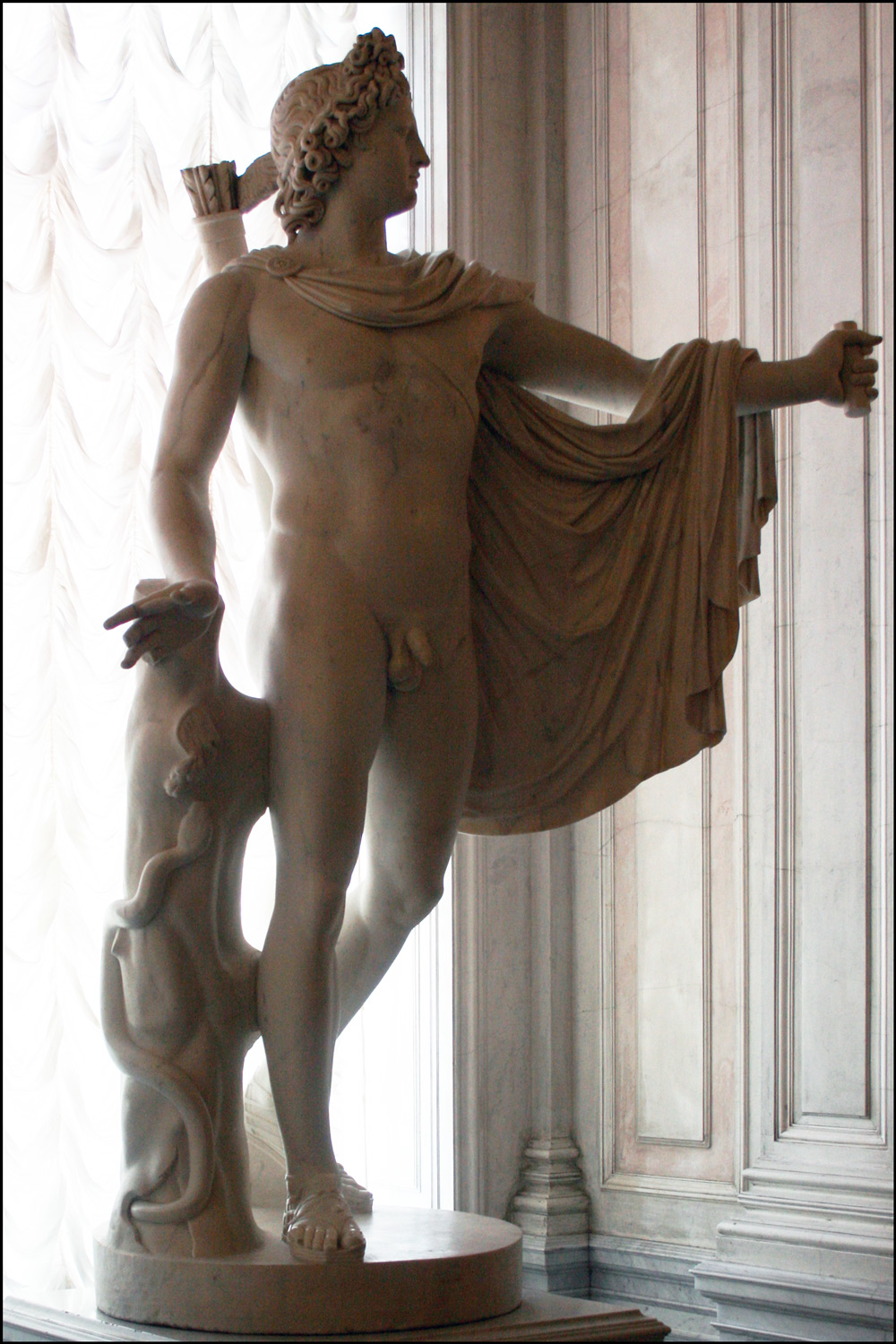
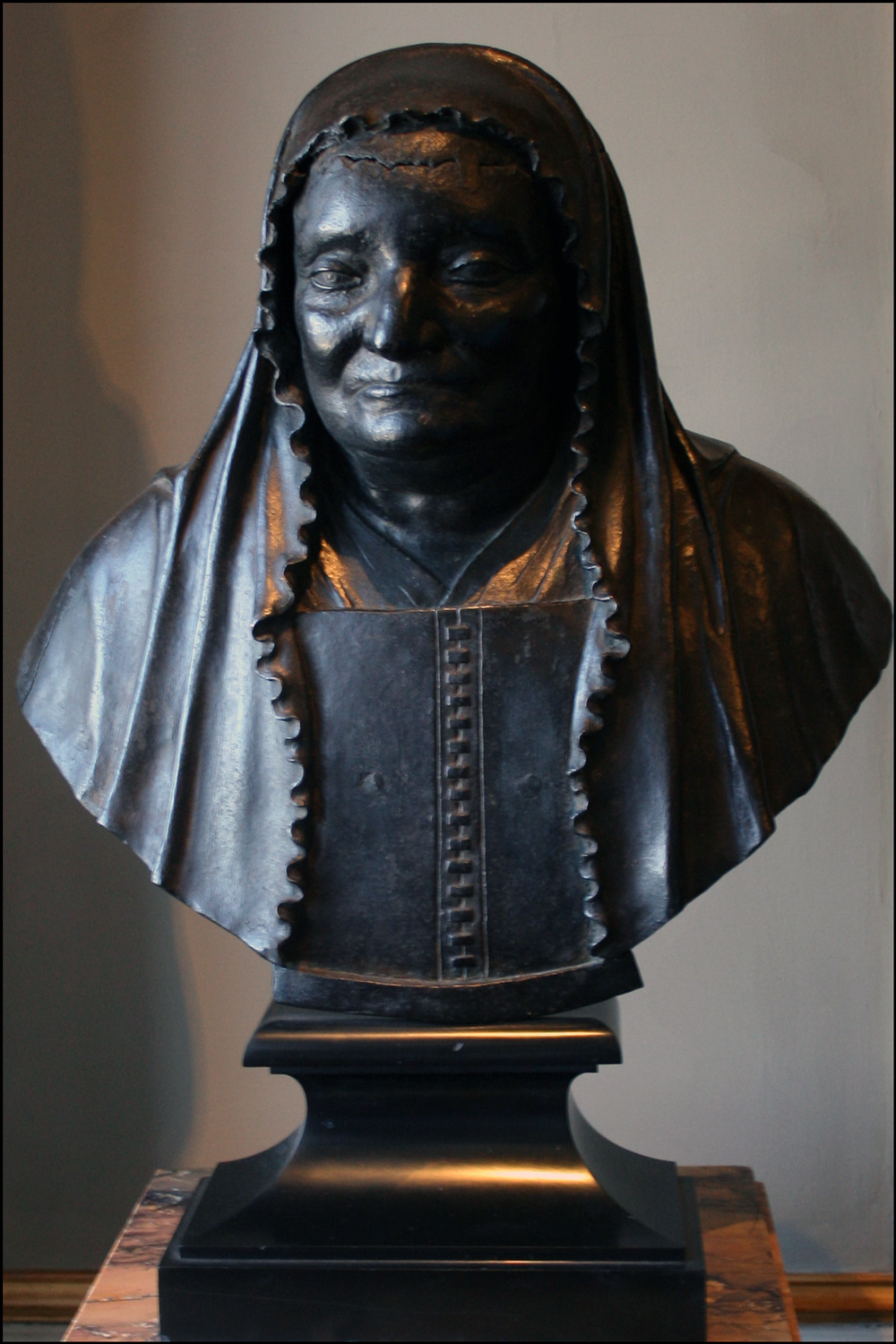
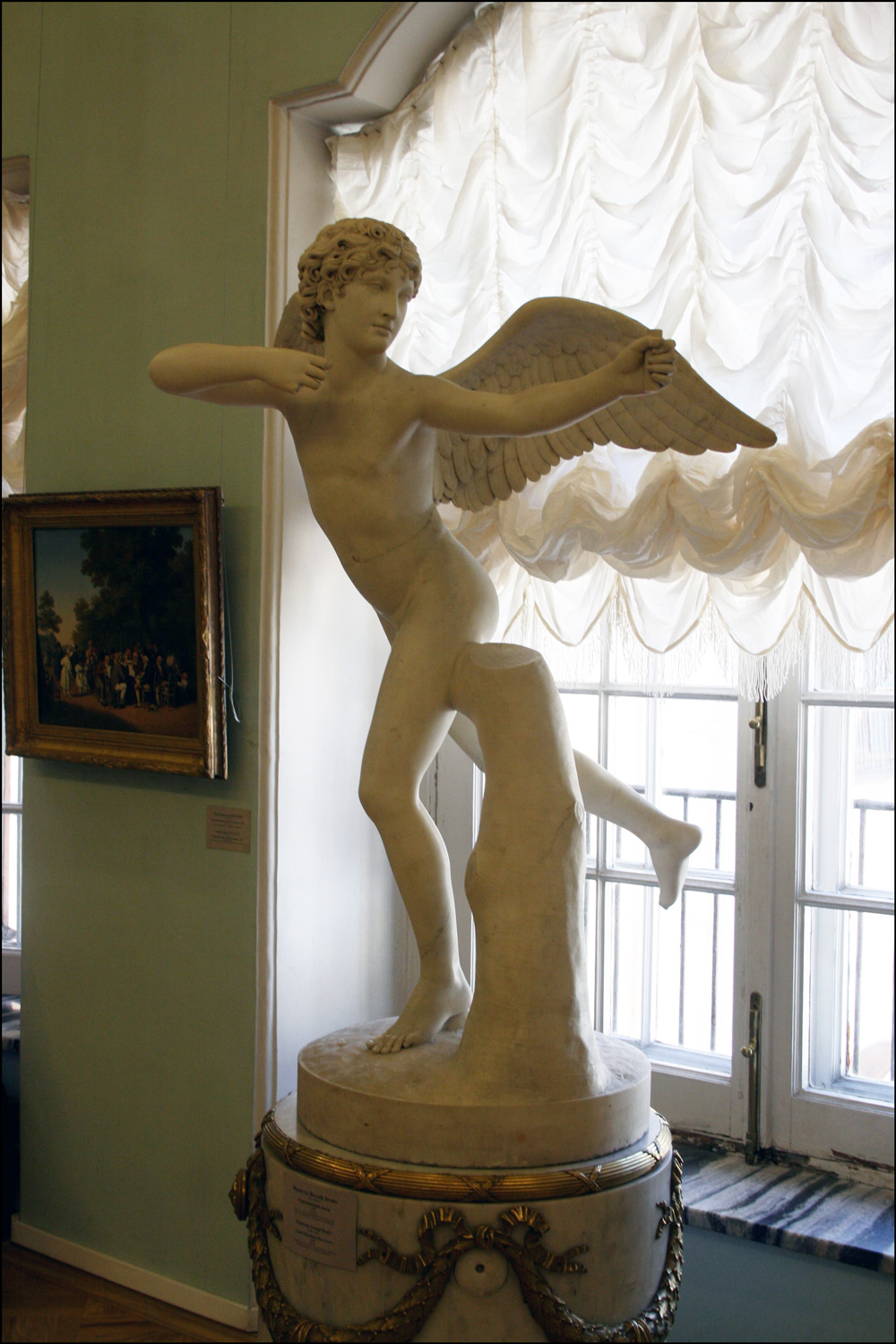
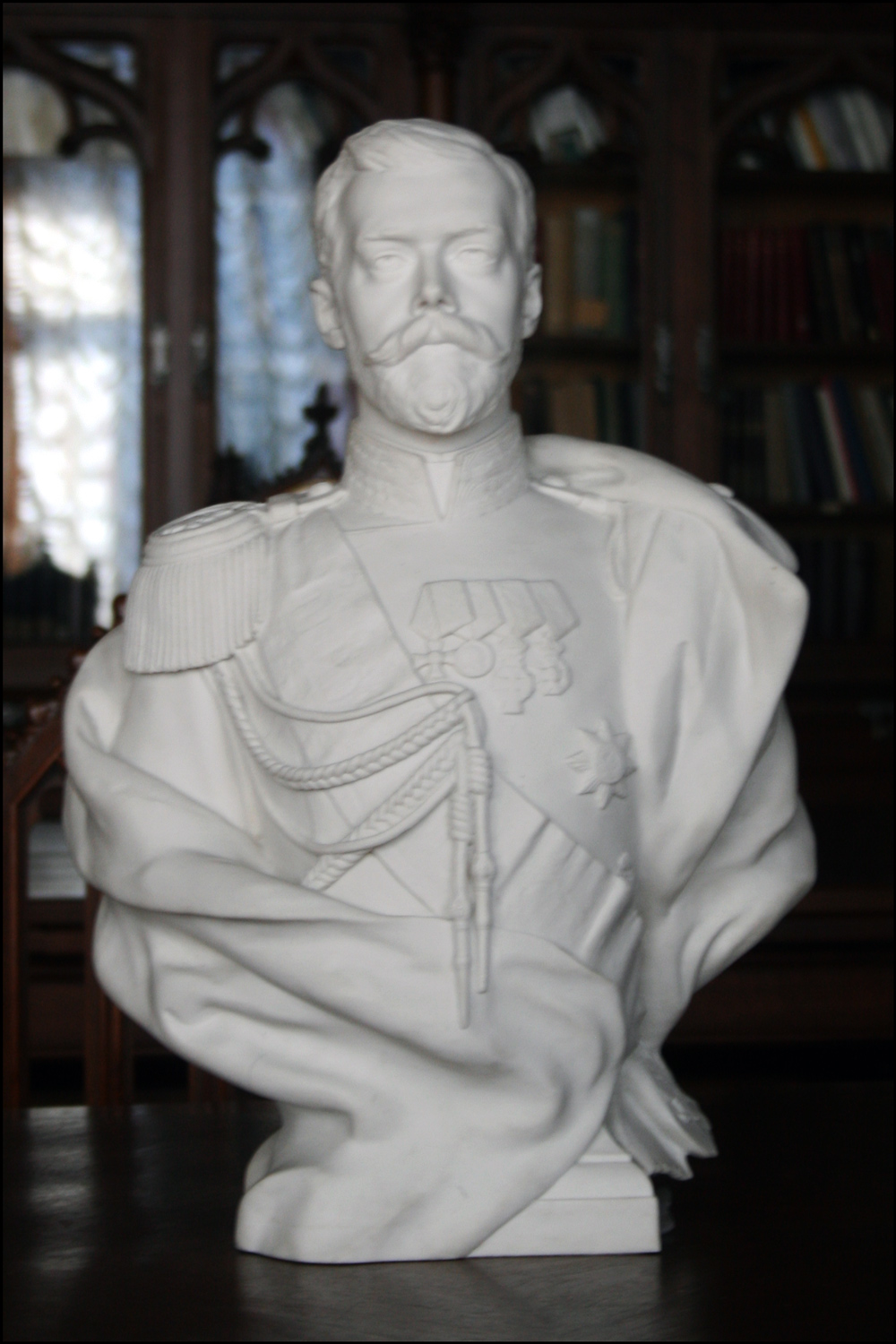
While the Hermitage in St. Petersburg, Russia holds many sculptures, I photographed few of them because either the lighting was unsuitable or it was difficult to obtain a photograph because there were too many people milling about. Nonetheless, here are four of the sculptures from the Hermitage.

 Roman Sculpture

Roman Sculpture

SOURCE: Roman Sculpture (The Hermitage, St. Petersburg, Russia). Photographed by Stephen J. Danko on 01 Aug 2010.

Portrait of a Lady -Agnesina Badoer Giustiniani - 16th Century 

Portrait of a Lady -Agnesina Badoer Giustiniani – 16th Century

SOURCE: Portrait of a Lady -Agnesina Badoer Giustiniani – 16th Century (The Hermitage, St. Petersburg, Russia). Photographed by Stephen J. Danko on 01 Aug 2010.

 Francois Joseph Bozio - Cupid Shooting His Arrow - 1808

Francois Joseph Bozio – Cupid Shooting His Arrow – 1808

SOURCE: Francois Joseph Bozio – Cupid Shooting His Arrow – 1808 (The Hermitage, St. Petersburg, Russia). Photographed by Stephen J. Danko on 01 Aug 2010.

 Leopold Adolfovich Bernstamm - Tsar Nicholas II - 1891

Leopold Adolfovich Bernstamm – Tsar Nicholas II – 1891

SOURCE: Leopold Adolfovich Bernstamm – Tsar Nicholas II – 1891 (The Hermitage, St. Petersburg, Russia). Photographed by Stephen J. Danko on 01 Aug 2010.

Copyright © 2010 by Stephen J. Danko
Posted in Daily Journal | Tagged , | 1 Comment

Art in the St. Petersburg Hermitage #2

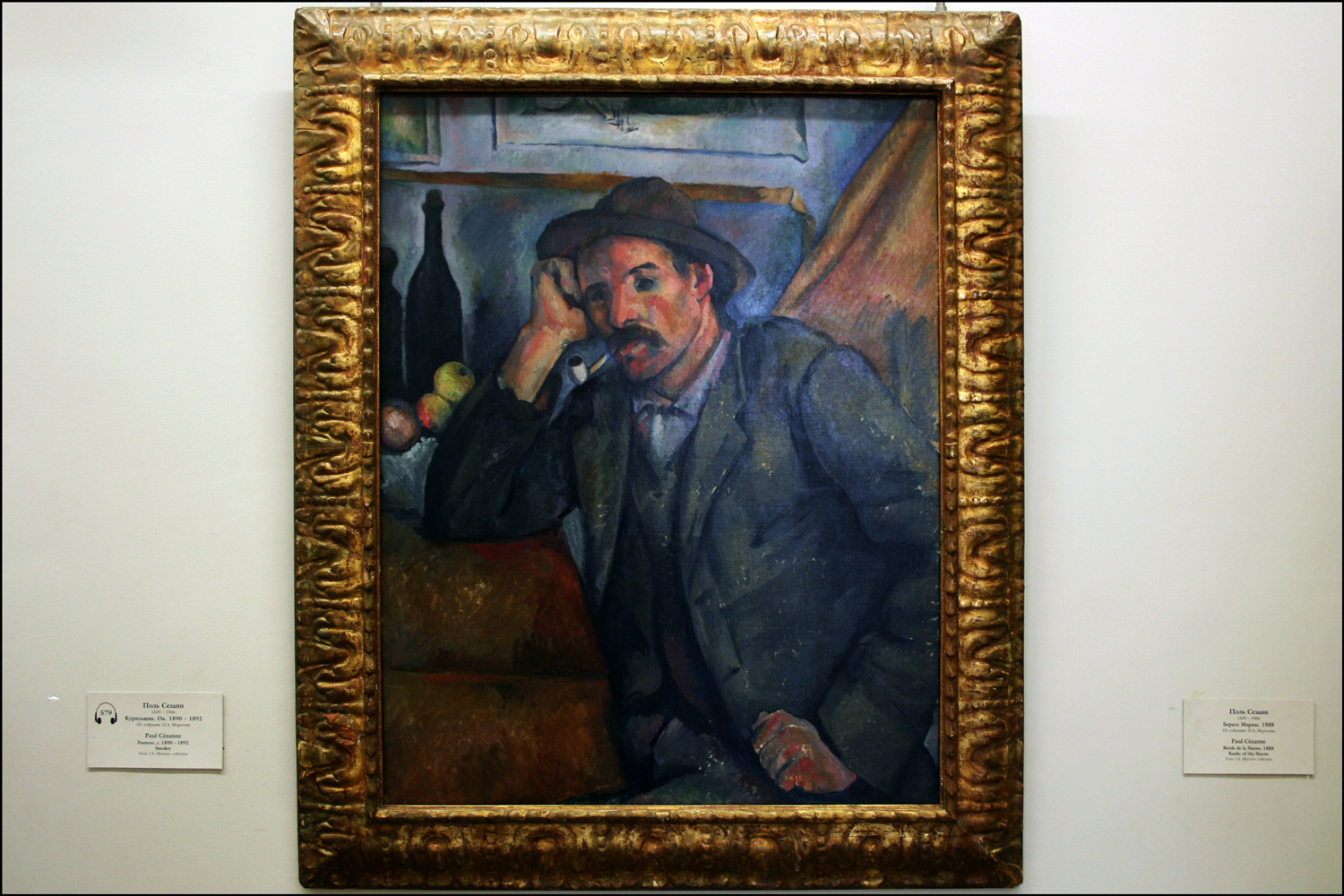
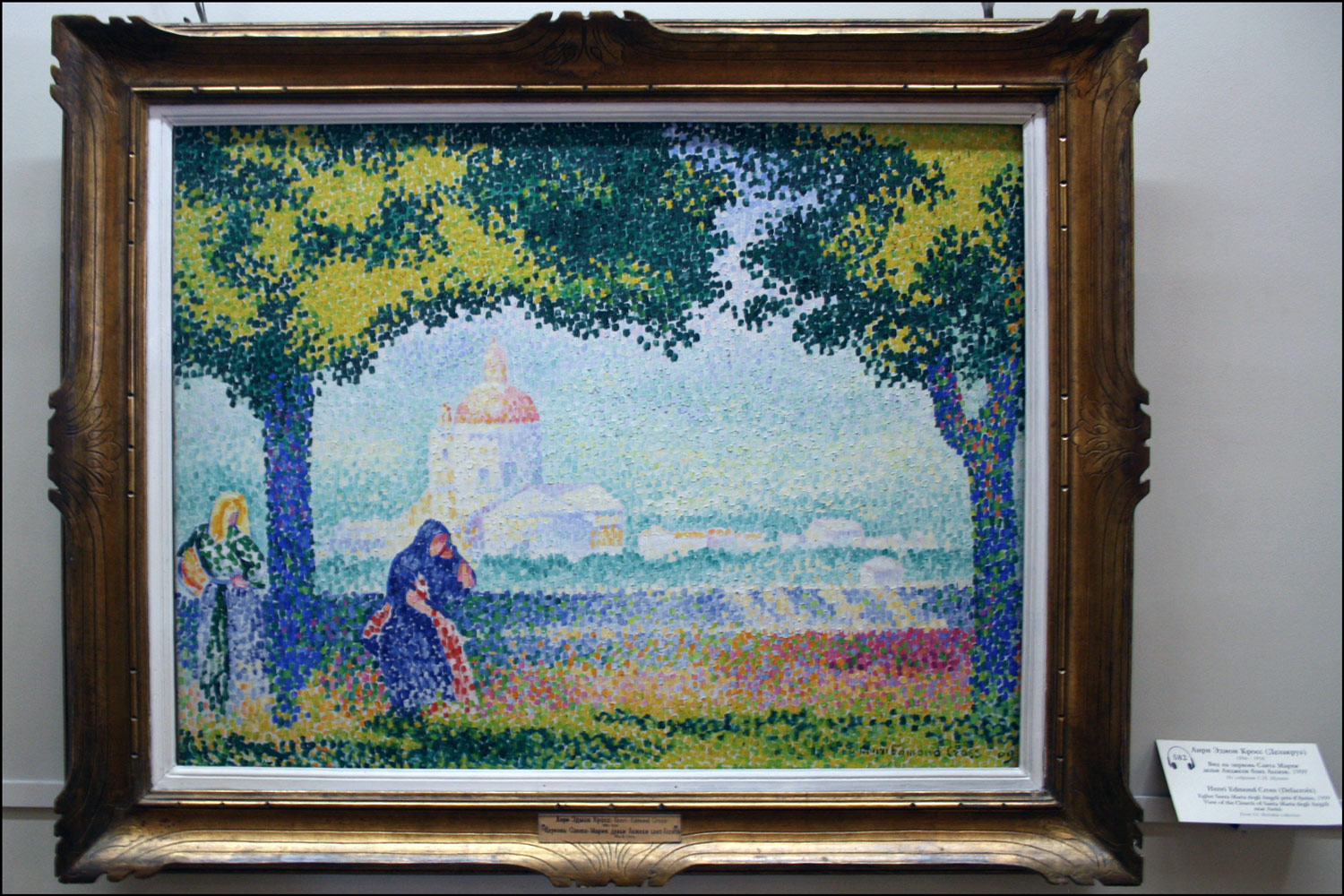
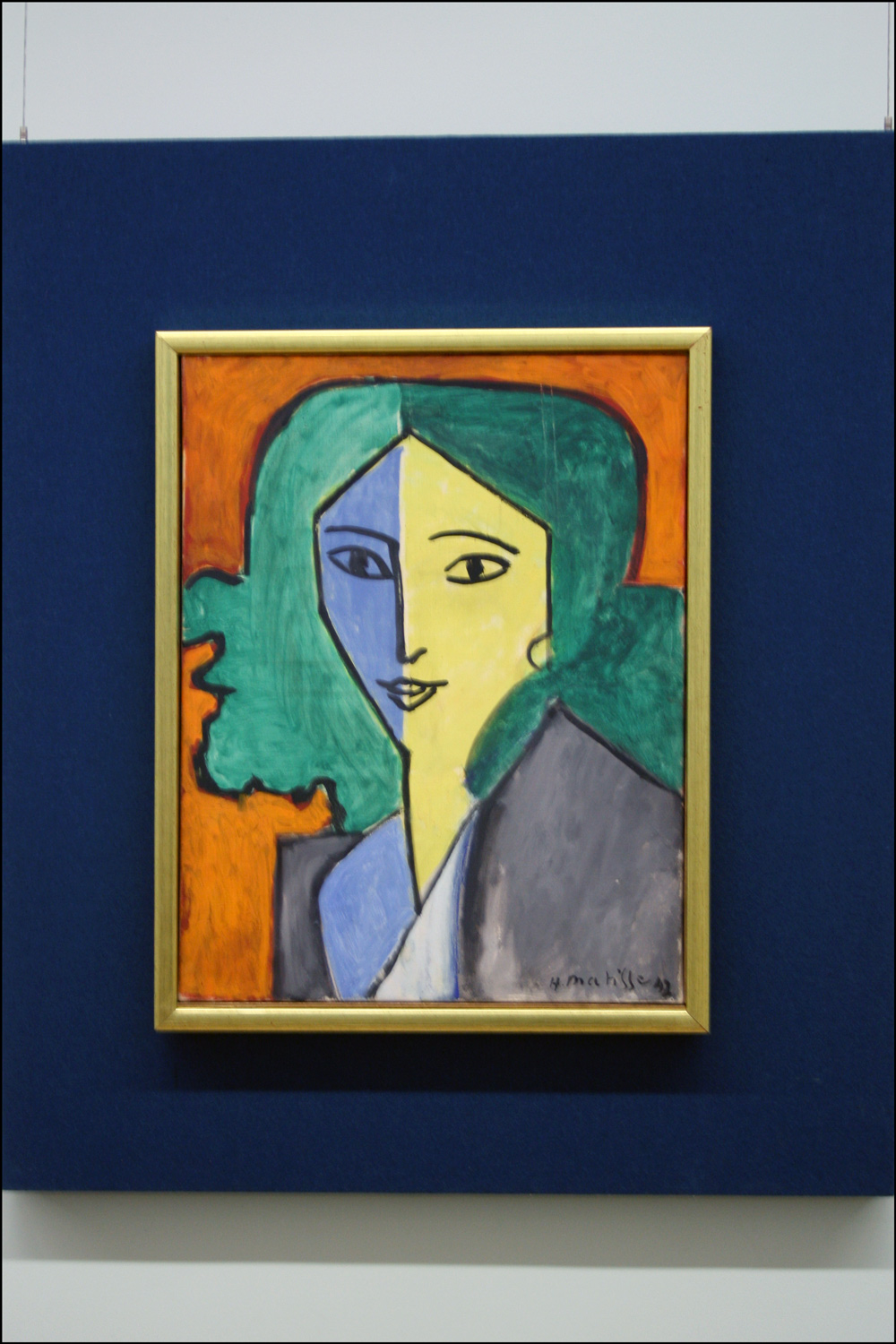
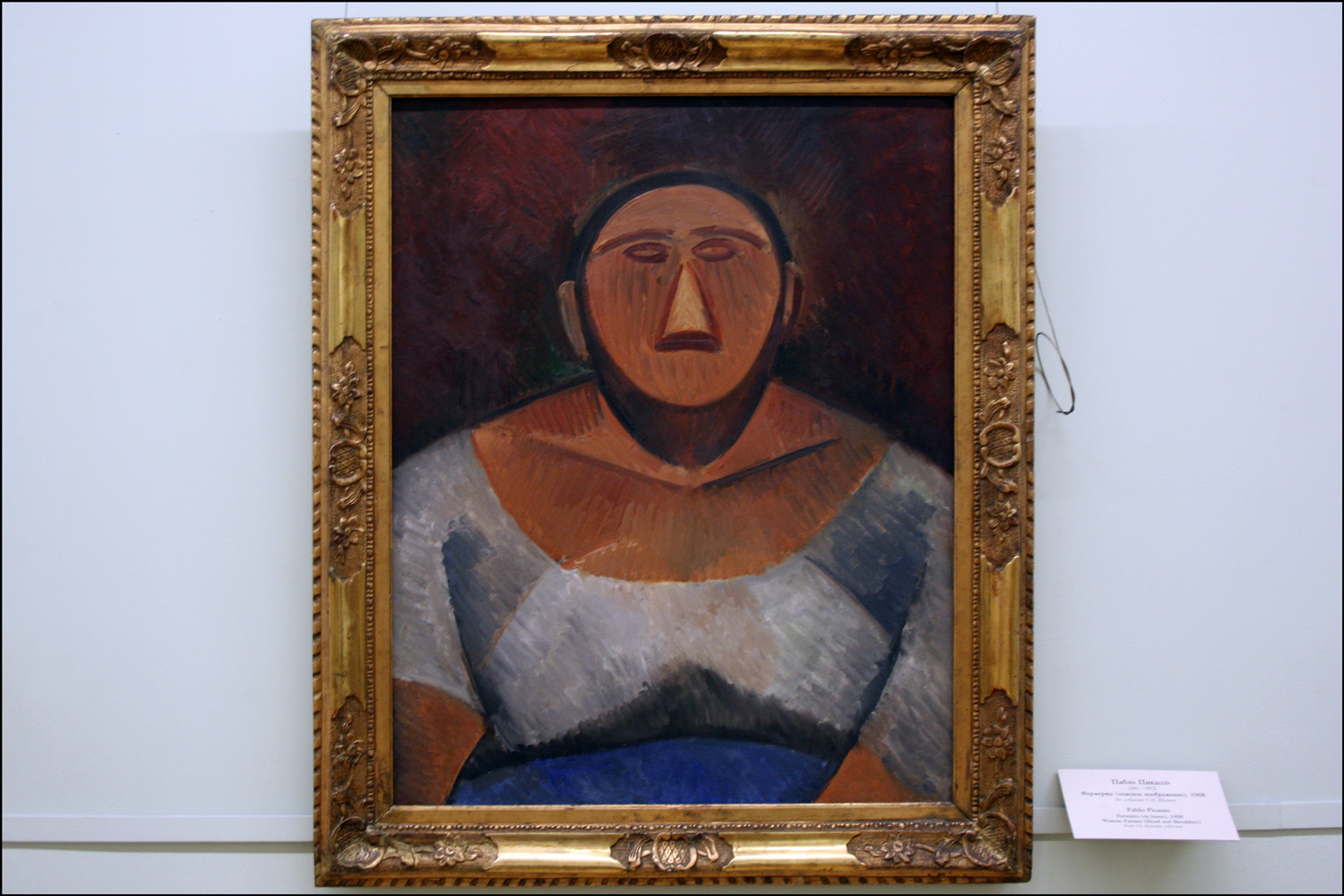
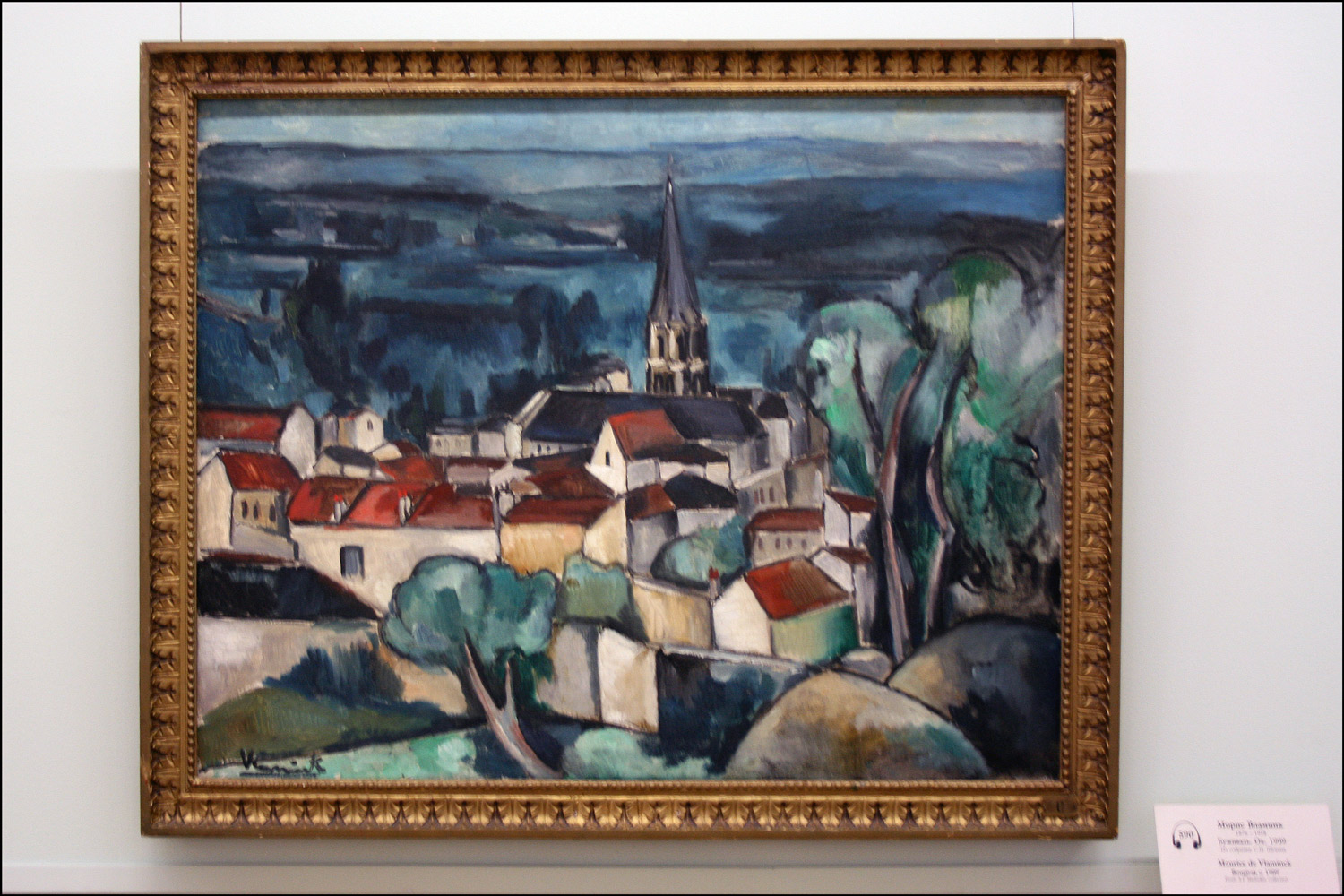
Continuing on through the Hermitage, I encountered artworks by Paul Cezanne, Henri Edmond Cross, Henri Matisse, Pablo Picasso, and Maurice de Vlaminck. Their works show a wide range of styles from post-impressionism, pointillism, fauvism, and cubism.

Paul Cezanne - Smoker - abt 1890-1892

Paul Cezanne – Smoker – abt 1890-1892

SOURCE: Paul Cezanne – Smoker – abt 1890-1892 (The Hermitage, St. Petersburg, Russia). Photographed by Stephen J. Danko on 01 Aug 2010.

Henri Edmond Cross - View of the Church of Santa Maria degli Angeli near Assisi

Henri Edmond Cross – View of the Church of
Santa Maria degli Angeli near Assisi – 1909

SOURCE: Henri Edmond Cross – View of the Church of Santa Maria degli Angeli near Assisi – 1909 (The Hermitage, St. Petersburg, Russia). Photographed by Stephen J. Danko on 01 Aug 2010.

Henri Matisse - Portrait of Lydia Delectorskaya - 1947

Henri Matisse – Portrait of Lydia Delectorskaya – 1947

SOURCE: Henri Matisse – Portrait of Lydia Delectorskaya – 1947 (The Hermitage, St. Petersburg, Russia). Photographed by Stephen J. Danko on 01 Aug 2010.

Pablo Picasse - Woman-Farmer (Head and Shoulders) - 1908

Pablo Picasso – Woman-Farmer (Head and Shoulders) – 1908

SOURCE: Pablo Picasso – Woman-Farmer (Head and Shoulders) – 1908 (The Hermitage, St. Petersburg, Russia). Photographed by Stephen J. Danko on 01 Aug 2010.

Maurice de Vlaminck - Bougival - abt 1908

Maurice de Vlaminck – Bougival – abt 1908

SOURCE: Maurice de Vlaminck – Bougival – abt 1908 (The Hermitage, St. Petersburg, Russia). Photographed by Stephen J. Danko on 01 Aug 2010.

Copyright © 2010 by Stephen J. Danko
Posted in Daily Journal | Tagged , | Comments Off on Art in the St. Petersburg Hermitage #2

Art in the St. Petersburg Hermitage #1

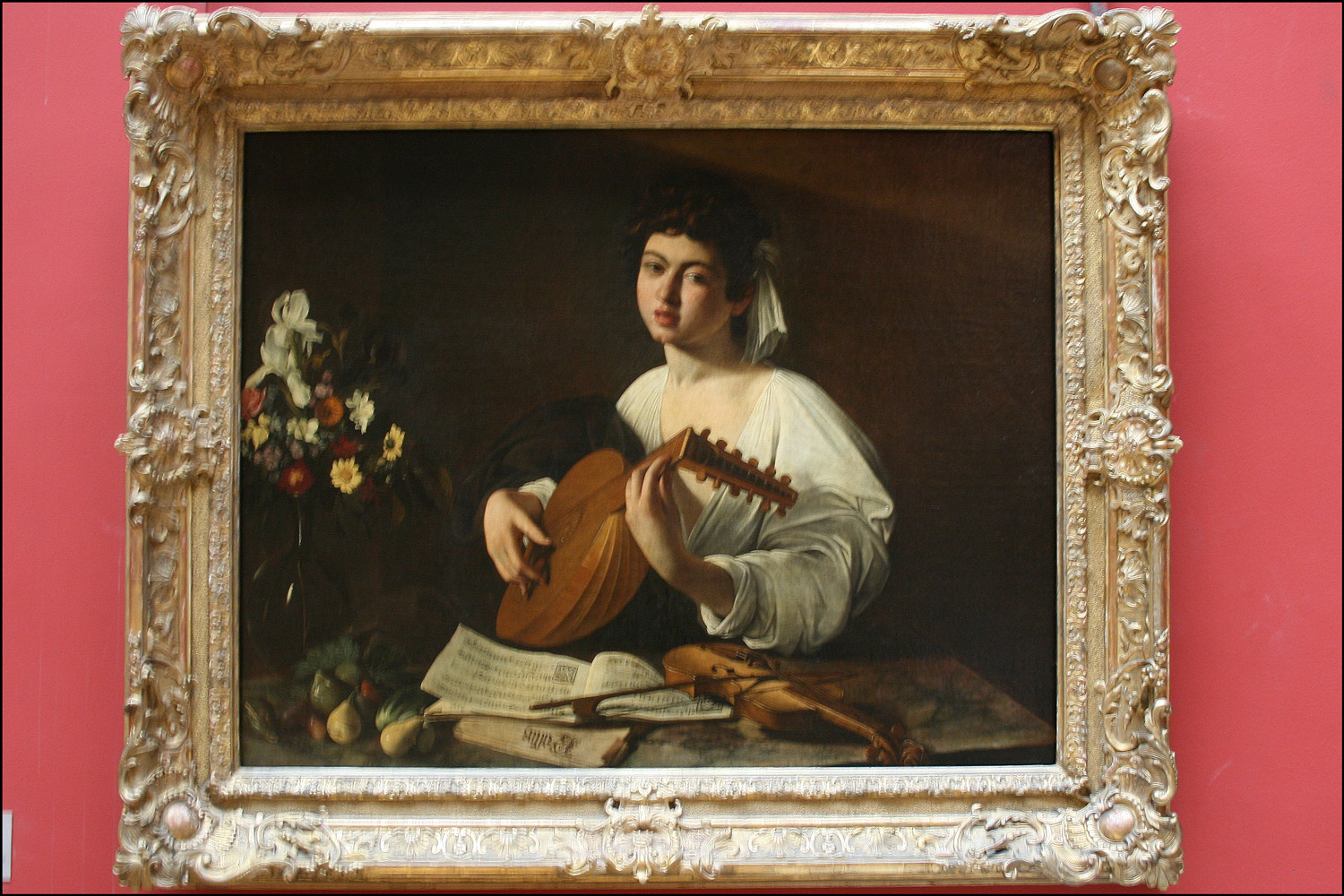
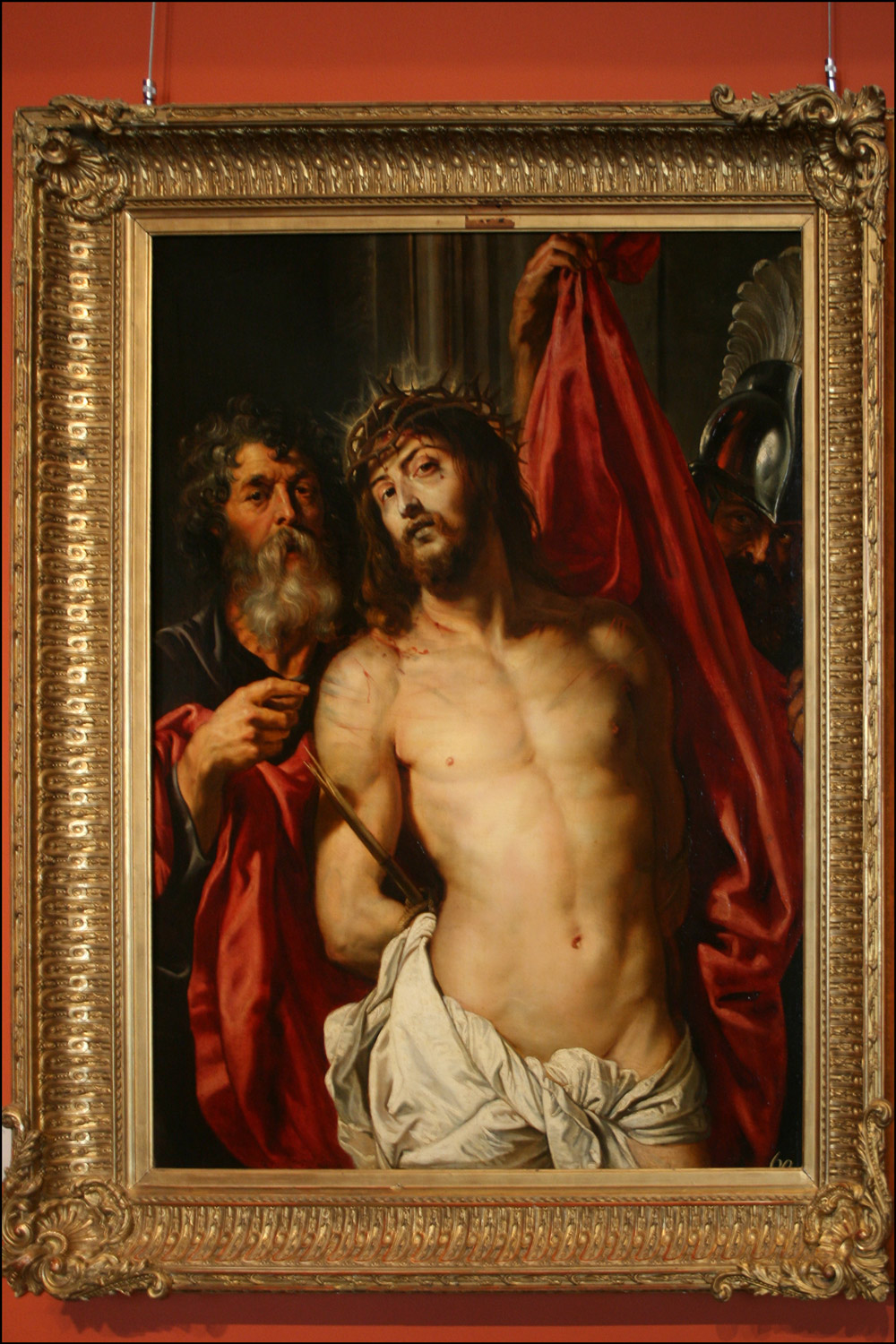
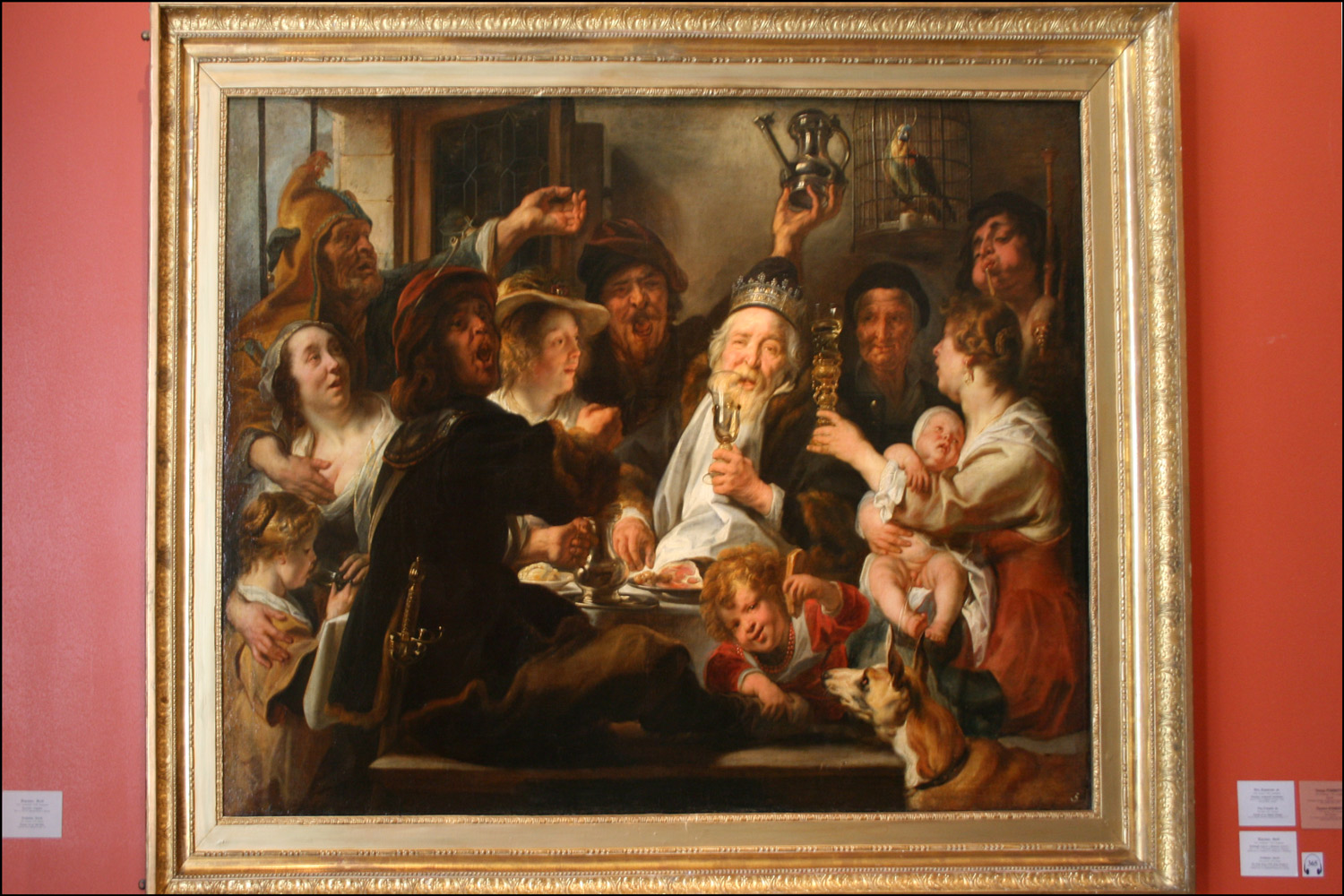
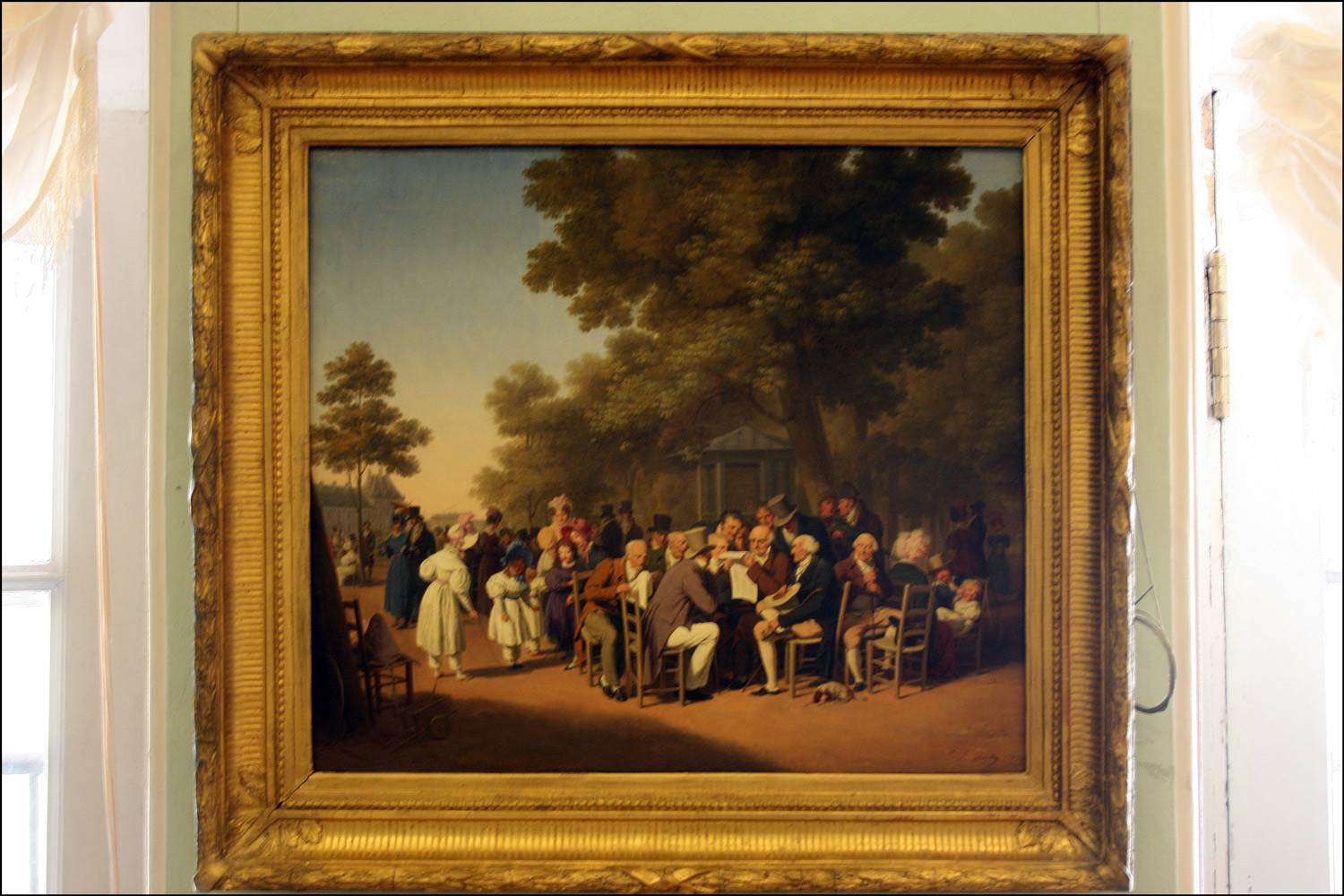
I visited the Hermitage in St. Petersburg, Russia and was surprised to learn that non-flash photography of the artwork was permitted. Unfortunately, I discovered that most of the photos I took in the Hermitage were unusable due to camera movement during the long exposures needed to capture an image. In addition, because of reflections, I had to take most of the photos at an angle and, while I was able to compensate for the oblique shots somewhat by editing the images in Photoshop, the resulting images are not exact representations of the art itself. Nonetheless, I was pleased with the fact that I was able to obtain any photos at all.

Caravaggio - The Lute Player - 1595

Michelangelo Merisi da Caravaggio – The Lute Player – 1595

SOURCE: Michelangelo Merisi da Caravaggio – The Lute Player – 1595 (The Hermitage, St. Petersburg, Russia). Photographed by Stephen J. Danko on 01 Aug 2010.

Peter Paul Rubens - Christ Crowned with Thorns "Ecce Homo"

Peter Paul Rubens – Christ Crowned with Thorns “Ecce Homo” – abt 1610

SOURCE: Peter Paul Rubens – Christ Crowned with Thorns “Ecce Homo” – abt 1610 (The Hermitage, St. Petersburg, Russia). Photographed by Stephen J. Danko on 01 Aug 2010.

Jacob Jordaens - The Bean King - abt 1638

Jacob Jordaens – The Bean King – abt 1638

SOURCE: Jacob Jordaens - The Bean King – abt 1638 (The Hermitage, St. Petersburg, Russia). Photographed by Stephen J. Danko on 01 Aug 2010.

Louis Leopold Boilly - Politicians in the Tuileries Gardens - 1832

Louis Leopold Boilly – Politicians in the Tuileries Gardens – 1832

SOURCE: Louis Leopold Boilly – Politicians in the Tuileries Gardens – 1832 (The Hermitage, St. Petersburg, Russia). Photographed by Stephen J. Danko on 01 Aug 2010.

Copyright © 2010 by Stephen J. Danko
Posted in Daily Journal | Tagged , | 3 Comments

The Church on Spilt Blood

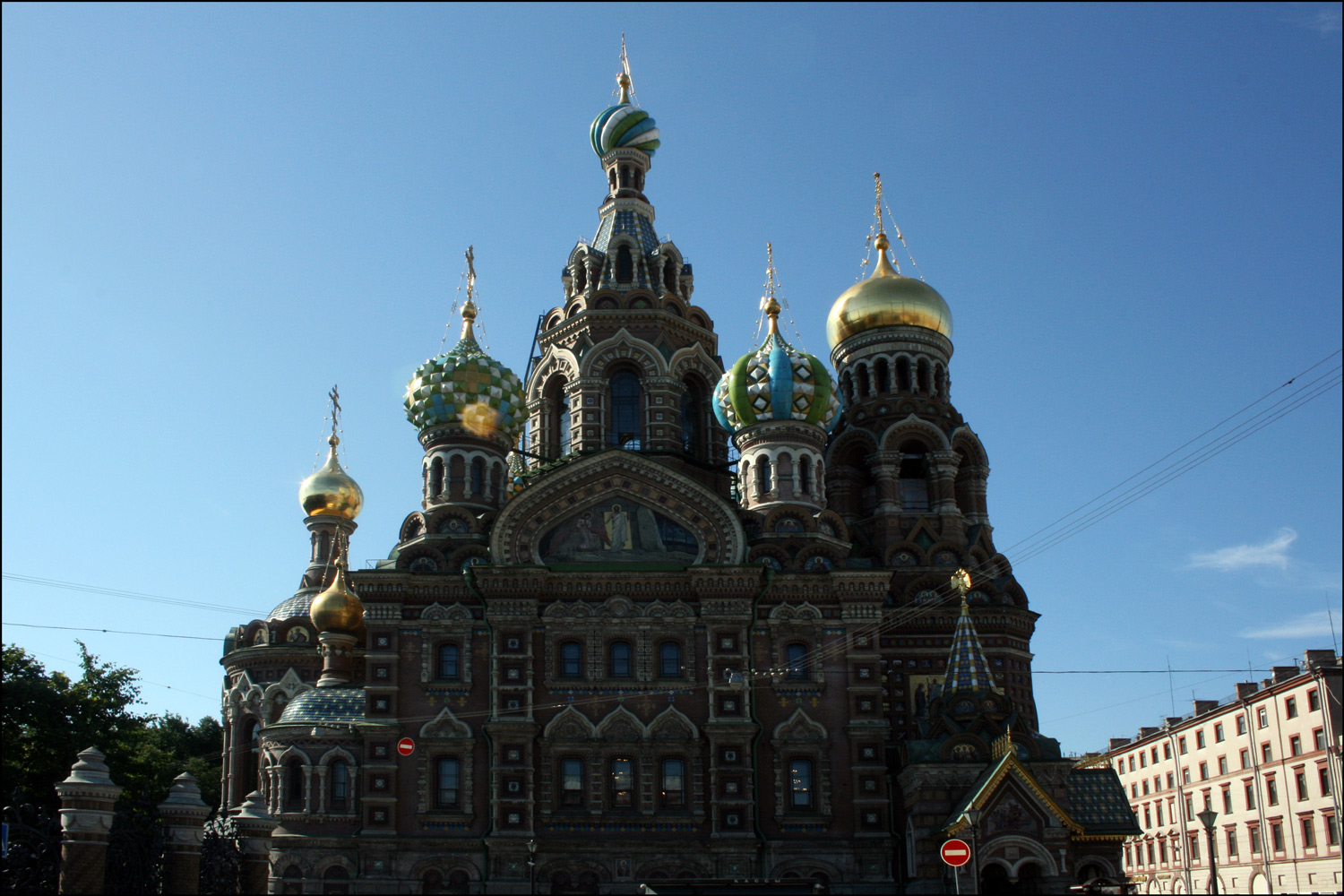
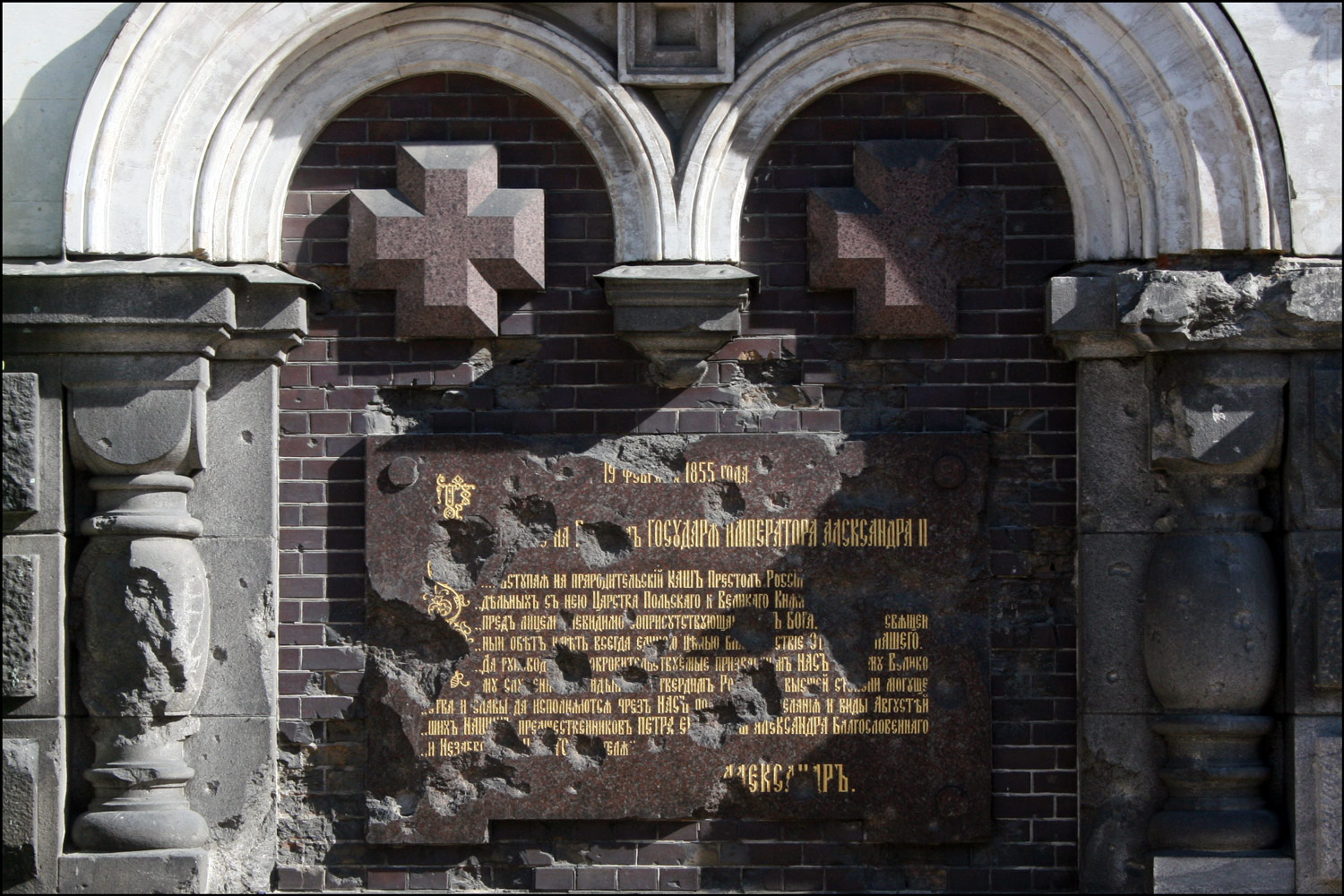
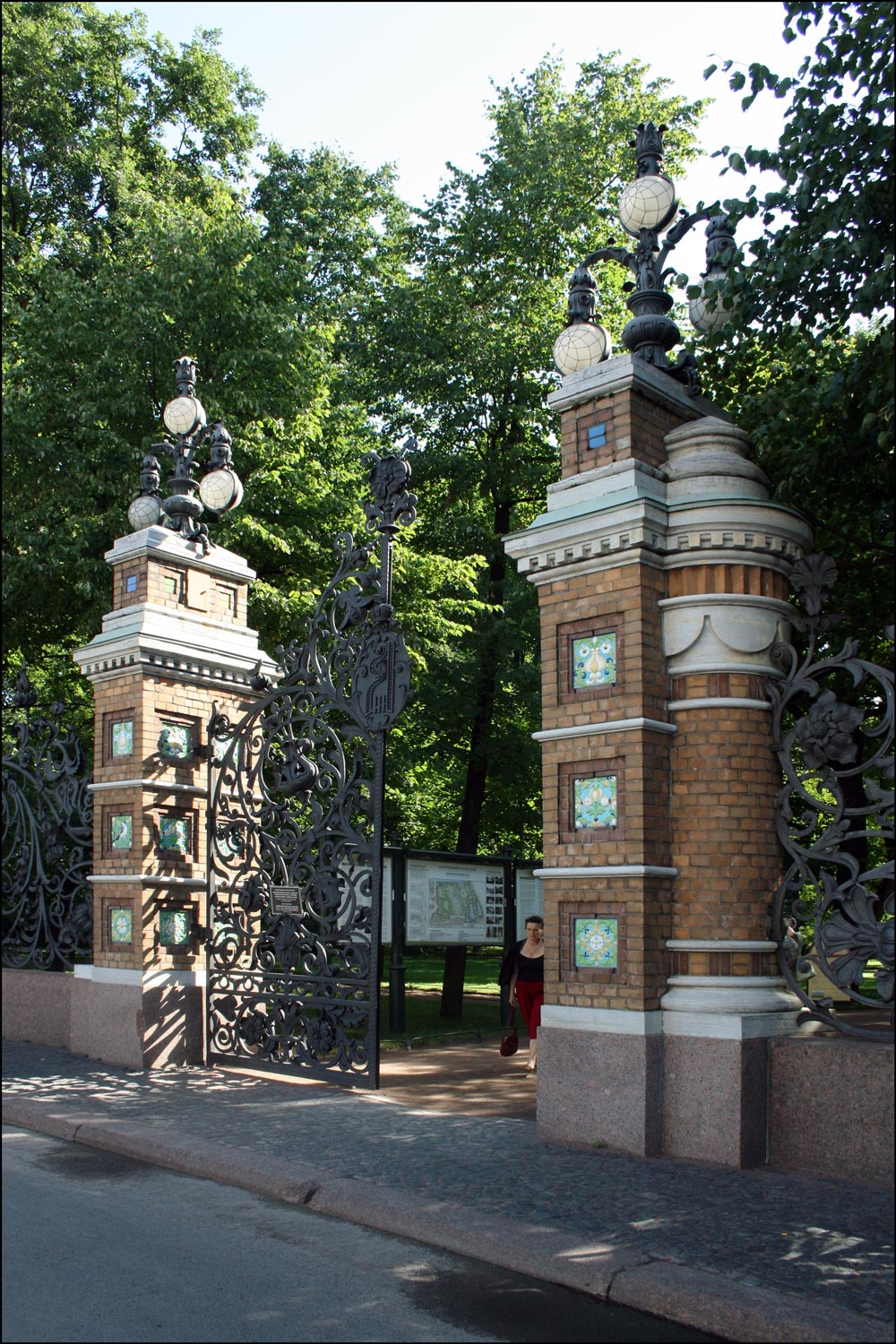
The Church on Spilt Blood in St. Petersburg, Russia is an amazing structure inside and out, although on my trip I did not visit the interior. The church was constructed to commemorate the death of Czar Alexander II who was assassinated on this spot on 13 Mar 1881. Construction began in 1883 under Alexander III and was completed in 1907 during the reign of Nicholas II. The church suffered significant damage during World War II; some of the damage can still be seen. The church has been deconsecrated and is used as a museum. The Mikhalovskiy garden is adjacent to the church.

The Church on Spilt Blood

The Church on Spilt Blood

SOURCE: The Church on Spilt Blood (St. Petersburg, Russia). Photographed by Stephen J. Danko on 01 Aug 2010.

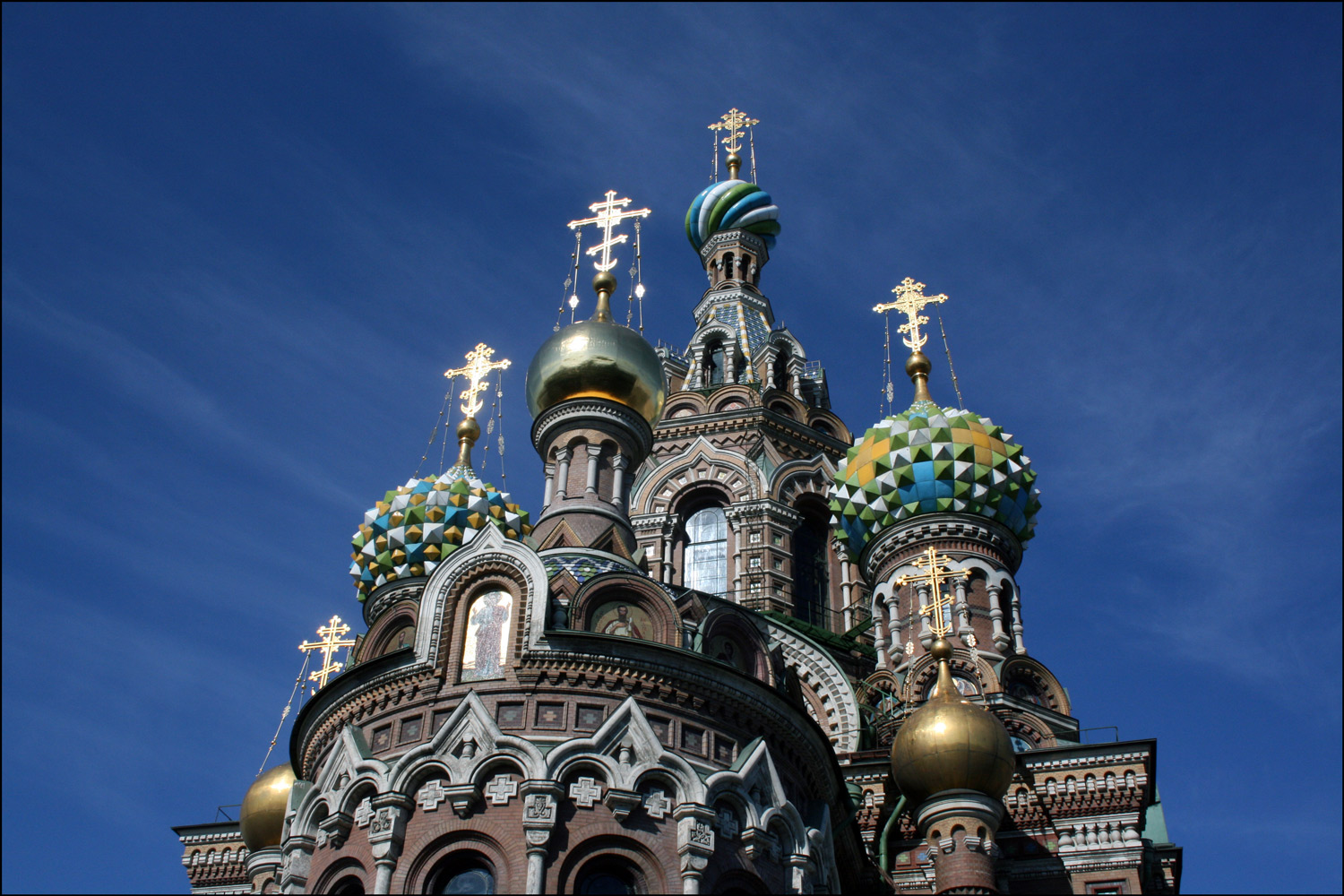
The Domes of the Church on Spilt Blood

The Domes of the Church on Spilt Blood

SOURCE: The Domes of the Church on Spilt Blood (St. Petersburg, Russia). Photographed by Stephen J. Danko on 01 Aug 2010.

Mortar Damage to the Church on Spilt Blood

Mortar Damage to the Church on Spilt Blood

SOURCE: Mortar Damage to the Church on Spilt Blood (St. Petersburg, Russia). Photographed by Stephen J. Danko on 01 Aug 2010.

The Gates to the Mikhalovskiy Garden

SOURCE: The Gates to the Mikhalovskiy Garden (St. Petersburg, Russia). Photographed by Stephen J. Danko on 01 Aug 2010.

Copyright © 2010 by Stephen J. Danko
Posted in Daily Journal | Tagged , | Comments Off on The Church on Spilt Blood