Kostanty Files His Declaration of Intention

In 1917, my maternal grandfather, Kostanty Niedzialkowski, filed his Declaration of Intention to become a citizen of the United States.

The Declaration of Intention was the first document an alien had to file in order to become a citizen . Â For that reason, the Declaration of Intention is sometimes referred to as “First Papers”, and it states that the signer renounces forever his or her allegiance to any foreign power and that he or she intends to become a citizen of permanently reside in the United States of America.

At the time Kostanty arrived, and at the time he filed his first papers, the following regulations were in effect:

  • Applicants could file a Declaration of Intention after residing in the United States for two years
  • Applicants had to be at least 18 years of age to file a Declaration of Intention
  • Applicants had to wait for three years after filing a Declaration of Intention before filing a Petition for Naturalization
  • Applicants were required to complete the naturalization process within seven years of filing a Declaration of Intention
  • Applicants must have arrived in the United States legally and this fact was generally acknowledged with a Certificate of Arrival

Konstanty filed his Declaration of Intention in the Superior Court of Massachusetts .  Three copies of the Declaration of Intention were prepared .  The Original was filed with the naturalization court records, the duplicate was filed with the INS Naturalization Certificate Files (C Files), and the triplicate was provided to the applicant .  I have copies of the original copy and the triplicate copy of the Declaration of Intention for Kostanty .  I obtained the original copy of Kostanty’s Declaration of Intention from the microfilm records at the Family History Library, and I obtained the triplicate copy from my cousin Susan, who has access to some of my grandfather’s original papers .  I can obtain the duplicate copy as part of the Certificate File from the U.S. Citizenship and Immigration Services under the Freedom of Information Act.

The information Kostanty provided in his declaration included:

  • He was 24 years old and unmarried when he filed on June 2, 1917
  • He was working as a machinist and the first three fingers of his right hand were injured
  • He was white, light complexioned, 5 feet 9 inches tall, 175 pounds, with light hair and blue eyes
  • He was born in Pomawski, Poland, Russia on October 28, 1892 and his last residence was Pomawski, Russia
  • At the time of filling, he was living at 39 Seymour Street in Worcester, Massachusetts
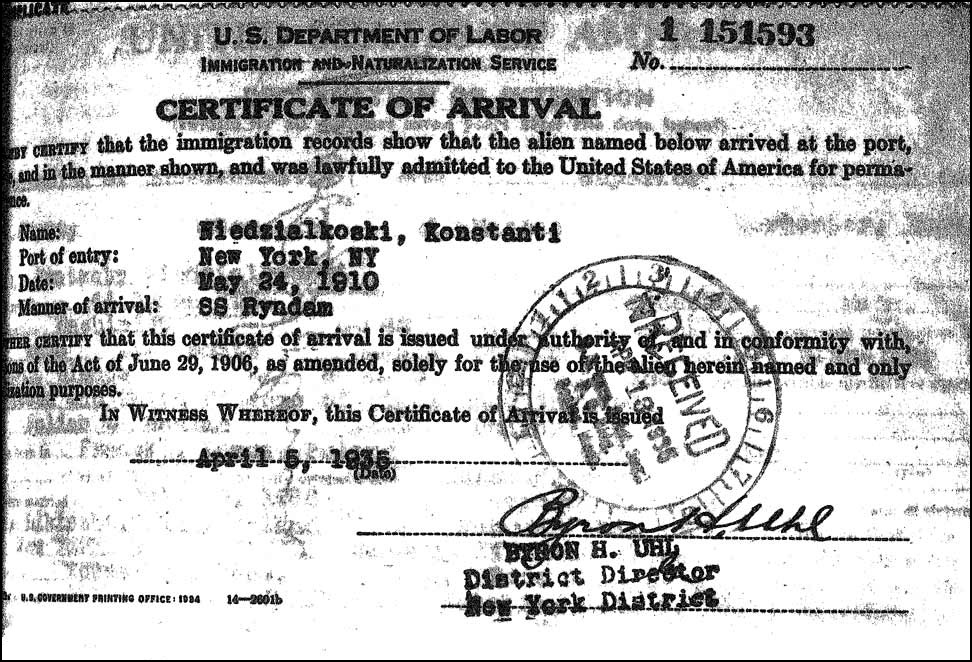
  • He emigrated from Rotterdam, Holland on the vessel The Ryndam and arrived at the port of New York on May 24, 1910
  • He renounced allegiance and fidelity to the present government of Russia

Information of immigration and naturalization can also be found in U.S. Federal Census Records .  The 1890 United States Federal Census was the first census to ask about the naturalization status of the respondents .  If an individual was born in the United States, no entry was made .  If the individual was an alien, the letters “AL” were entered .  If the person had filed a Declaration of Intention, the letters “PA” (papers) were entered .  Finally, if the person had completed the naturalization process, the letters “NA” were entered .  The 1890 Federal Census was mostly destroyed by fire, but the 1900, 1910, 1920, and 1930 Federal Census records all provide information about the naturalization status of an immigrant.

Tomorrow:  Konstanty obtains a Certificate of Arrival and files a second Declaration of Intention

Copyright © 2006 by Stephen J. Danko

Posted in Niedziałkowski | Tagged | Comments Off on Kostanty Files His Declaration of Intention

Konstanti Arrives at Ellis Island

My maternal grandfather, Konstanti Niedziałkoski (who later in life spelled his name Kostanty Niedzialkowski) left his home in the Russian Partition of Poland and set off for a new life in America .  From what I have learned about the process, agents for the shipping companies actively recruited potential emigrants throughout Europe, arranging most of the details for their passage to America .  These details included transportation to a port of departure in Europe, passage on a ship to America, and transportation in America to their final destination .  They may also have arranged for their lodging for them at the port of departure, since the emigrant may have had to stay in the port for a time while waiting for the ship to sail.

S.S. Ryndam

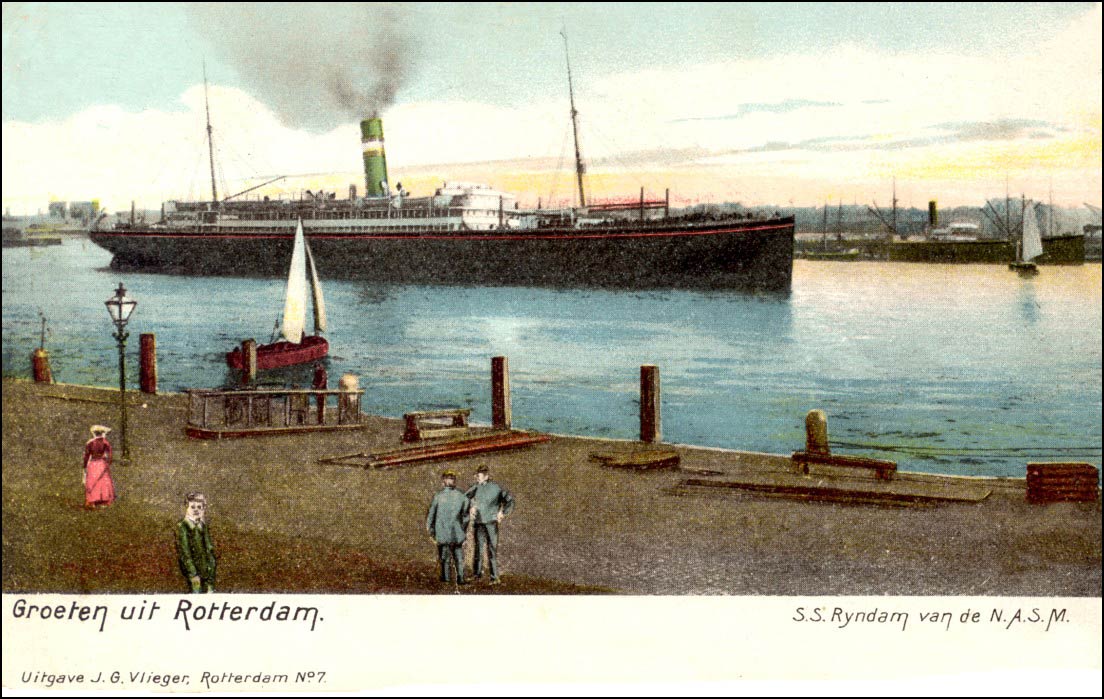
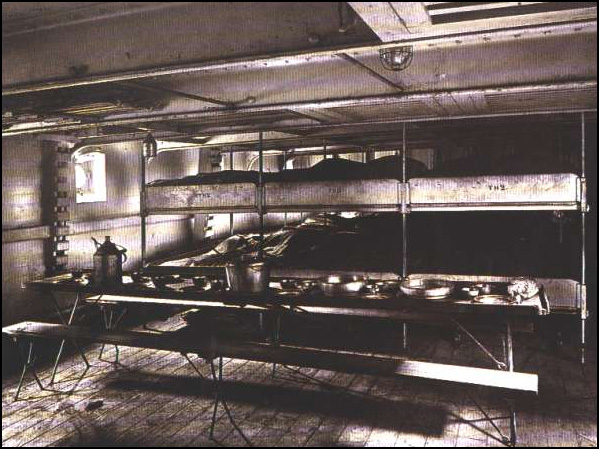
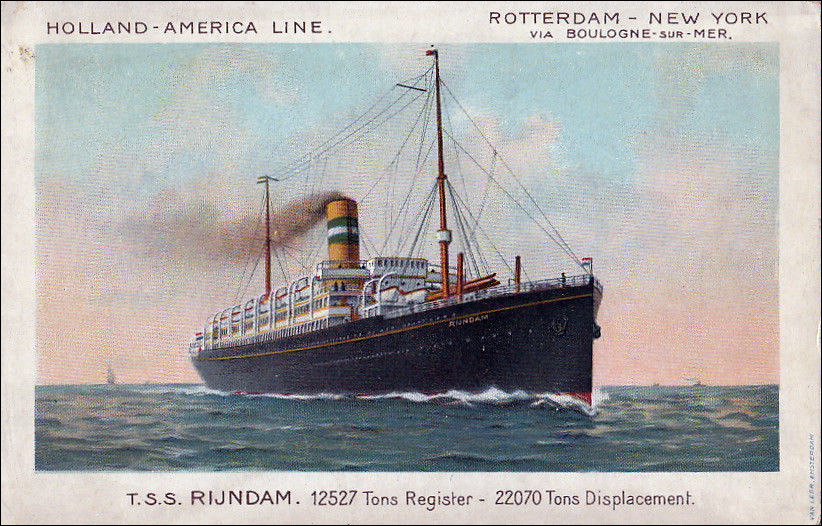
Konstanti obtained a passport from the Russian government, traveled from his home to the port of Rotterdam and registered for passage on the S.S. Ryndam, a ship operated by the Holland-America Line .  He purchased a third class, or steerage accommodation on the ship, which amounted to a bunk deep in the ship’s hull, with relatively little opportunity for privacy .  Food was poor, sanitation was something to be desired, and the opportunity to visit the upper deck for fresh air was limited.

Steerage

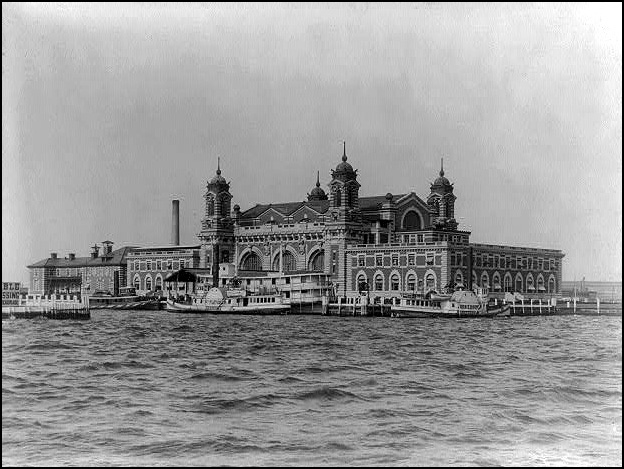
The S.S. Ryndam was a 12,340 gross ton ship, built in 1901 .  The ship provided accommodations for 286 First Class passengers, 196 Second Class passengers, and 1800 Third Class (Steerage) passengers .  The ship was able to achieve a speed of 15 knots and made the journey from Rotterdam to New York in ten days .  Konstanti left Rotterdam on May 14, 1910 and arrived in New York on May 24, 1910, where he was processed through Ellis Island .  The Passenger Arrival manifest of Konstanti Niedzialkoski lists him on line 8 .  It shows that:

  • He was 18 years old and single at the time he immigrated
  • His occupation was farm laborer
  • He was able to read and write
  • His nationality was Russian, but his “race or people” was Polish
  • His last permanent residence was Omaszki, Lomza in Russia
  • His father was Teofil Niedzialkoski, living in Omaszki, Lomza
  • His final destination was Worcester, Massachusetts and he already had a ticket to his final destination
  • His passage was paid by his uncle and he had $9 with him
  • He was going to stay with his uncle, Franciszek Niedzialkowsky at 18 Huntington Avenue in Worcester, Massachusetts
  • He was 5 feet, 3 inches tall, of fair complexion, with blond hair and blue eyes
  • He was born in Omaszki, Russia
Ellis Island

Konstanti had arrived .  He was examined, processed, and sent on his way to lead his new life in America .  Next, Konstanti files his Declaration of Intention to become a citizen of the United States.

Copyright © 2006 by Stephen J. Danko
Posted in Niedziałkowski | Tagged | Comments Off on Konstanti Arrives at Ellis Island

Passenger Departure Records

The ancestors of most Americans were immigrants, and many immigrated in the late 19th or early 20th century through Ellis Island .  Since the publication of Passenger Manifests on the Ellis Island website, many Americans have found the Immigration Records of their ancestors.

However, the Passenger Manifests that document arrival in the United States are not the only records that document the immigration process .  For my grandfather, Kostanty Niedzialkowski, I was able to find his:

  • Passenger Departure Manifest
  • Passenger Arrival Manifest
  • Certificate of Arrival
  • Declaration of Intention (First Papers)
  • Petition for Naturalization and Oath of Allegiance
  • Certificate of Naturalization

Passenger Departure Lists are available from a number of different sources .  Perhaps the best known are the Hamburg Departure Lists, but others, such as the Holland-America Line Passenger Lists also provide important information about our ancestors.

The Passenger Lists of the Holland-America Line cover the years 1900-1940 and consist of two parts .  The Indexes are listed at the Family History Library (FHL) as the Passagiersregister .  According to the FHL online catalog, they list:

the passenger’s name, contract number, and departure with ship name and date.

Also according to the FHL online catalog, the Passenger Manifests themselves show:

the ship contract and agent contract number, passenger’s name, number of fares divided between full, half, and none, the price arrangement between different shipping companies, city where passage was booked and the destination, whether rail passage was booked, with booking number, number of tickets, class and price, company agent and place of agency where passage was booked, adult fare price, commissions paid to agents and place, net amount of prepaid fares, number and amount, reservation fee, subsequent payments in foreign adn/or Dutch currency, sea and rail passage agents, Dutch currency, totals for sea, European and American rail passage, and remarks.

The Departure Manifests of Konstanti Niedzialkoski have been uploaded so you can see them .  Unfortunately, much of the document is difficult to read .  I have indicated where Kostanti Niedzialkoski’s name appears with an arrow to the left of the document .  I can’t quite read the city where he booked passage .  It looks to me like “Gllowo” or “Zllowo” .  A number of passengers on this voyage booked their passage there .  One thing that I can read is that he was traveling to Worcester, Massachusetts .  He sailed in third class (steerage) on the S.S. Ryndam, departing Rotterdam on 14 May 1910 .  Tomorrow – Konstanti arrives in New York.

TSS Rijndam

TSS Rijndam

Copyright © 2006 by Stephen J. Danko
Posted in Daily Journal | Tagged | 2 Comments

Old Letters

Genealogists love family heirlooms .  Whether it’s the trunk that grandmother brought over from the old country, a quilt that’s been handed down for generations, or an old photo album, most genealogists dream of documenting and preserving these mementos of our family history .  While we may not have the space to store everything that our ancestors accumulated throughout their lifetimes, there certainly are some items that we would like to preserve, document, and pass on to further generations .  Sometimes family bibles, photos, and heirlooms end up in antique stores and flea markets, where they may be salvaged by people like Megan Smolenyak Smolenyak (yes, that’s two Smolenyaks there!) who try to reunite these orphan heirlooms with their families.

Last night I spoke with a friend of mine whom I hadn’t seen in a while and we spent some time catching up on each other’s lives .  He told me that a friend of his, an elderly woman, had died and he was helping her daughter clean out the house .  One of the first places they started to clean out was the woman’s desk, and when they opened the first drawer, they found a treasure trove of love letters between the woman and her future husband .  They read some of the letters, smiled and reminisced about the pair .  Then they opened the second drawer and found the drawer full of letters the woman had received from servicemen stationed overseas during World War II .  Apparently the woman was an avid letter writer and took it upon herself to make the boys overseas a little less lonely by writing to as many as she could .  Again, my friend and the woman’s daughter read a few of the letters.

Then came the decision – what to do with all these letters describing the love between two people and all these letters documenting the daily lives and personal feelings of servicemen in World War II?  The woman’s daughter didn’t want them, and there were no other descendants .  So they shredded the letters.

I was aghast!  These letters were important documents that should be preserved!  Even if the daughter felt that the love letters were too personal to be shared with others, the letters from World War II servicemen have significant historical value and could have been donated to a historical society or library!

This morning, I dug out one of the shoe boxes of old letters I have and started looking through them .  I was actually a little surprised at how “old” the letters smelled, but the odor was, nevertheless, somehow comforting .  I thought I’d transcribe a few here .  These aren’t necessarily the most interesting or most genealogically valuable letters in the box; they’re just the first ones I pulled out.

The first is a letter from Bishop Edward J. Maginn, the auxiliary bishop of Albany, New York who wrote to me from the Vatican II Conference .  The letter is written on thin paper with a Cavalieri Hilton Roma letterhead.

October 13, 1965

Dear Stephen,

I was very happy to receive your kind letter and I thank you for writing .  It gets pretty lonesome here, so far from home.

We are working very hard, especially on our homework, which, as you know, is harder than class-work.

Keep praying for us and asking the Holy Spirit to help us.

With a blessing.

Sincerely,

+ Bishop Maginn

The second letter is from a friend of mine I’ve known almost since birth .  She wrote the letter shortly after starting her sophomore year at Dartmouth College .  The letter is written on both sides of stationary with pictures of colorful butterflies on the lower half.

10/7/74

Dear Steve,

Sounds like your courses are unusually stimulating (Z Z Z z z z …)

Well, I’m taking History of the American West, which is not difficult but a lot of reading; Comp Lit-Modern Novel I, which is Kafka, Mann, Zorba the Greek, etc., & Ulysses by Joyce – forget it!  I have 500 pages to read in it this week – 500 more I don’t understand .  Then, Music Theory; and Music II – private voice lessons, for the year, for credit & free (the most important) .  Out of 20 kids who auditioned, 5 were taken; whether because of lack of ability or because of already silver-throated voices to be developed I really don’t know, but I prefer to fool myself into believing the latter.

I just (1/2 hr. ago) got a call from the Hanover Town Board of Recreation asking me to teach a dance class(es) at the H.S. for wages which I may select!  When you’re infamous you don’t have to look for anybody – they all come to you!

I’m singing in a trio, Andrews Sisters style, and we have our 1st appearance in a concert next Wed. with another group .  We still haven’t decided on a name, & after coming up with such winners as “The Hotcha Sisters”, the “Boogie Woogies”, and “The Sleaze Sisters”, the closest we could come to a possibility worth considering for more than 2 seconds, was “Daddy’s Daughters.”  No?  Guess it doesn’t quite make it either .  Hopefully, we’ll be performing at the big Glee Club concert in Nov., opening the 2nd half of the show, all depending on how we do on Wed.

Socially, things aren’t overly stimulating, if you know what I mean, but I’m very satisfied & secure right now, in knowing that I have a lot of good friends up here – it’s taken me a long time to realize, but it was worth the wait.

Well, hope things are better than O.K .  Write soon . Â Â Â  Love, Karen

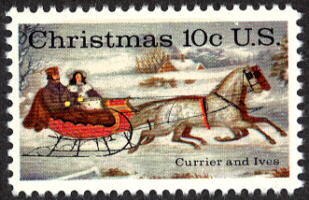
The third letter is from my mother, written five years before she died .  She wrote this letter to me when I was attending the State University of New York College of Environmental Science and Forestry, just after I had moved out of the dorm and into an apartment in a marginal neighborhood in Syracuse, New York .  The envelope was postmarked January 24, 1975, even though the letter itself is dated the next day, and the letter was posted with a 10-cent Christmas stamp.

1974 Christmas Stamp

1-25-75

Dear Steve,

You made my day when you called .  I was so happy .  Glad to hear everything is fine.

It’s been raining here all day, and it is quite damp .  Dad was home Tues, Wed, Thurs, & Fri, and he went to work to-day (3-11) .  Not a very good day to go to work after being sick .  He feels better.

Did you get a copy of your report card?  Forgot to ask you on the phone .  Glad the T.V. works O’K .  As you say, it’s better than nothing.-

I bet you are kept pretty busy .  How are you making out getting to school in the morning?  How are you making out with living expenses?  Let us know if you need anything.

Love,

Mom

I wonder what will become of all these letters when I’m gone .  I have boxes and boxes of them, but will they be of interest to anyone else?  Or will they end up in the shredder?

Copyright © 2006 by Stephen J. Danko
Posted in Daily Journal | 8 Comments

The Mother Parish

Yesterday, Christine posted a comment under The Church in Dubiecko and What I Found There that sparked my interest in a couple of things related to my family history.

Steve, Do you know that Nienadowa had its own parish church starting in 1957? (Did you see it when you were there? It may also have a cemetery starting then.) Before that time, the residents attended Mass in Dubiecko, which is considered the “mother parish”. If you hadn’t already known that your ancestors went to church in Dubiecko, you would probably have contacted the church in Nienadowa only to be told they didn’t have records from the time period you are interested in. They probably would have referred you to Dubiecko eventually.

I found this out in an article published by PGS-CTNE in Spring 1996. It is called “Finding the Mother Parish” and has a 3-1/2 page chart showing parishes in Przemysl Diocese that were formed since 1900 and what town/church each was spun off of. Even though you knew where to go in your case, this is good to know in case you find someone else who doesn’t know.

Thanks so much for this information, Christine!  When I was in Nienadowa, I was asked whether my ancestors were fron Nienadowa-Dolna (Lower Nienadowa) or Nienadowa-Górna (Upper Nienadowa).  I had no idea there were two and each had its own parish, and until Christine posted her comment I had never heard about Mother Parishes!  I visited the churches in both villages, although the church in Nienadowa-Dolna (pw. MB Nieustającej Pomocy, or Our Lady of Perpetual Help) was still under construction when I was there in October 2000.  The church in Nienadowa-Górna (pw. Najświętszego Serca Pana Jezusa, or Most Sacred Heart of Jesus) had been around for a while, and may be the parish church Christine said was started in 1957.  This parish had it’s own cemetery.  The pastor of the church in Nienadowa Górna said that there were no records for my ancestors in his church; records from that period were all at the parish in Dubiecko (pw. Niepokalanego Serca NMP, or Immaculate Heart of Mary).

The MassTimes website provides information on churches throughout the world, but doesn’t necessarily have complete information.  The Archdiocese of Przemyśl in Poland has its own website with names, addresses, and phone numbers of the other parishes under the Mother Parish.  To find a parish in the Archdiocese of Przemyśl from the main page (Strona Główna), just click on the link Parafie (parishes).  The Dubiecko Parish page shows several other churches in Babice, Bachórz, Bachórzec, Drohobyczka, Krzywcza, Nienadowa Dolna, Nienadowa Górna, and Tarnawka.

I’ve been trying to find records for my paternal grandmother, Maryanna Dziurzyńska, in Poland, but I only found one record for her family.  A few months ago, I found a lead that indicated that her family may have been from Sielnica, in the Dylągowa parish (pw. św Zofii, or Saint Sophy).  Information on the Dylągowa parish is listed on the Dynów (pw. św. Wawrzyńca, or Saint Lawrence) Mother Parish page.

At this point, I should mention that the parish names in polish often include abbreviations.  Some of those abbreviations are defined in Lidia Mullerowa and Zofia Żuchowska’s book, Roman Catholic Parishes in The Polish People’s Republic in 1984, published in Chicago in 1995 by the Polish Genealogical Society of America. The book is available through the Polish Art Center.

  • pw. = pod wezwaniem = under the summons of, under the name of
  • św = święty = Saint, Holy, Sacred
  • bł = błogosławony = Blessed
  • MB = Matka Boska = Mother of God, Our Lady
  • NMP = Najświętsza Marya Panna = The Most Holy Virgin Mary, Our Lady, The Blessed Virgin
  • PJ = Pan Jesus = Lord Jesus, Jesus

Christine also mentioned the article on Mother Parishes in the newsletter of the Polish Genealogical Society of Connecticut and the Northeast.  I took a look through the tables of contents of some of their newsletters and I think I have to join this organization!  Their newsletter is just great!  The group’s president is Jonathan D. Shea who, with William F. Hoffman, wrote great translation guides for polish and russian documents and plans to write guides for german and latin documents, too.  Furthermore, some of my relatives lived in Connecticut at least briefly and being a member of a recognized genealogical society in Connecticut eliminates the access restrictions to vital records in Connecticut.

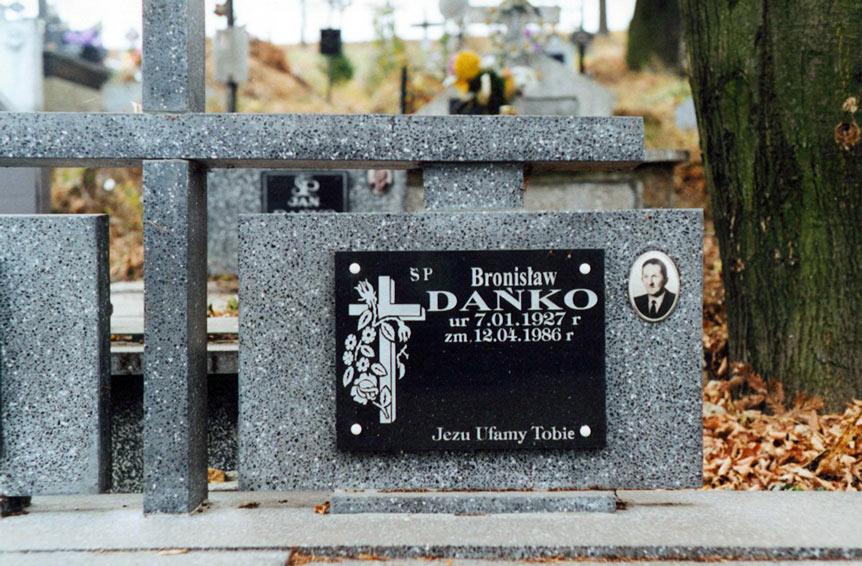
Finally, to wrap up, I’ve attached two photos.  The first is of one of the Danko graves in the Dubiecko cemetery in Poland.  I don’t know how Bronisław Dańko is related to me, but it’s likely he is related since my Dańko ancestors lived in the area for at least the last quarter century.  If you look closely, you can see that the grave behind Bronisław’s grave belongs to Jan Dańko.  I didn’t find any graves for my known ancestors in Dubiecko, however.  This observation isn’t particularly surprising, since graves in Poland are typically “rented” for a certain period of time; there usually isn’t any perpetual care provided, as is typical in the United States.  Almost all of the graves in the cemetery were post-World War II graves.

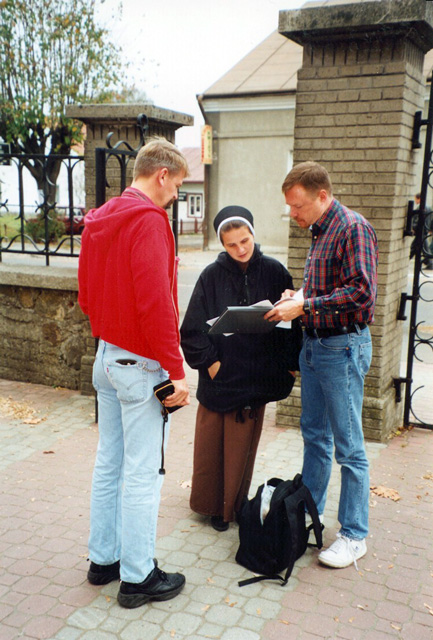
The second photo is a picture of my friend Tom and me (I’m on the right) outside the church in Dubiecko trying to explain to a nun who we were and why we were there.  In the end, she let us into the church and told us about the history of the church.  Thanks again, Christine for your comment that inspired today’s blog.

The Author at the Church in Dubiecko
Grave of Bronisław Dańko in Dubiecko

Copyright © 2006-2019 by Stephen J. Danko

Posted in Daily Journal | Tagged , | 7 Comments

Massachusetts Cemetery Records

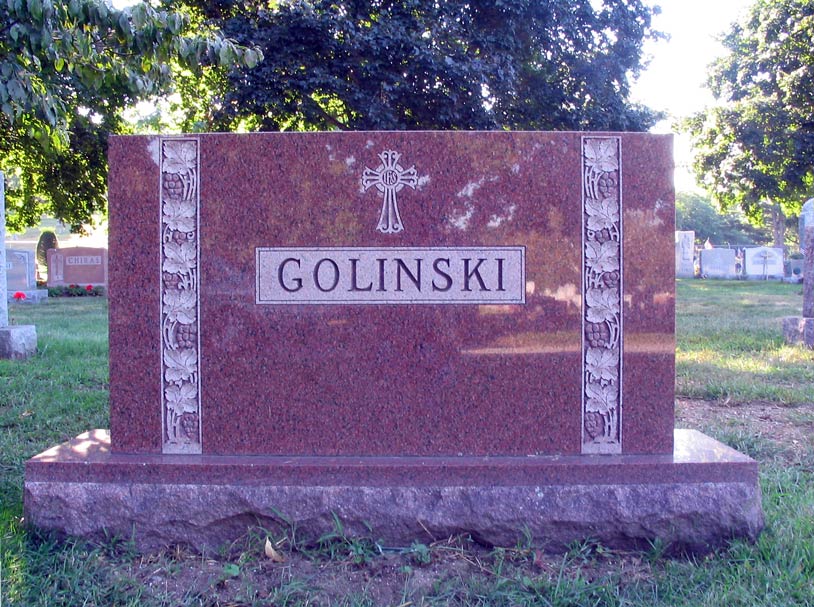
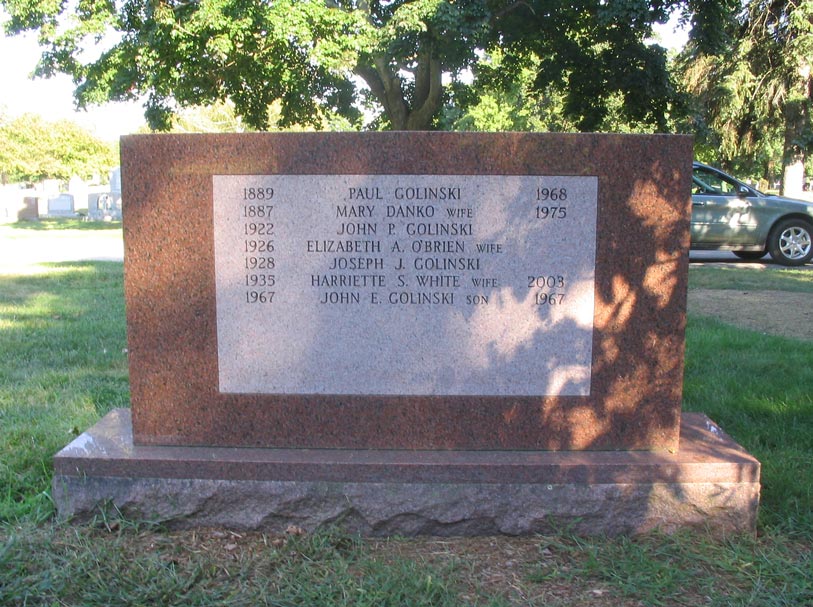
Two previous entries on this blog have dealt with cemetery records, so it’s about time to see what some of these records look like .  My experiences in cemeteries have been varied – the employees at some cemeteries have bent over backwards to help me find the graves for which I was looking, providing me with maps, copies of the burial records, and directions to the graves .  Others have been quite unfriendly, asking “Is this for genealogy?” (usually accompanied by a cold stare) .  Some cemeteries have charged for copies of the burial records, others have not .  In general, if the cemetery doesn’t charge for the copies and the employees have been helpful, I usually offer to make a donation . Â Sometimes there is a “Friends of the Cemetery” group or a special project for which the cemetery is raising funds.

The cemetery records themselves are not always available to the public, but they generally exist as either card files or computer files .  The records can contain a wealth of information, including dates of birth, death, and burial, locations of birth and death, location of grave, name of the owner of the plot and the amount paid for perpetual care, former address of the deseased, relationships between the people buried in the same plot, and relationship of the deceased to the owner of the plot or to living individuals.

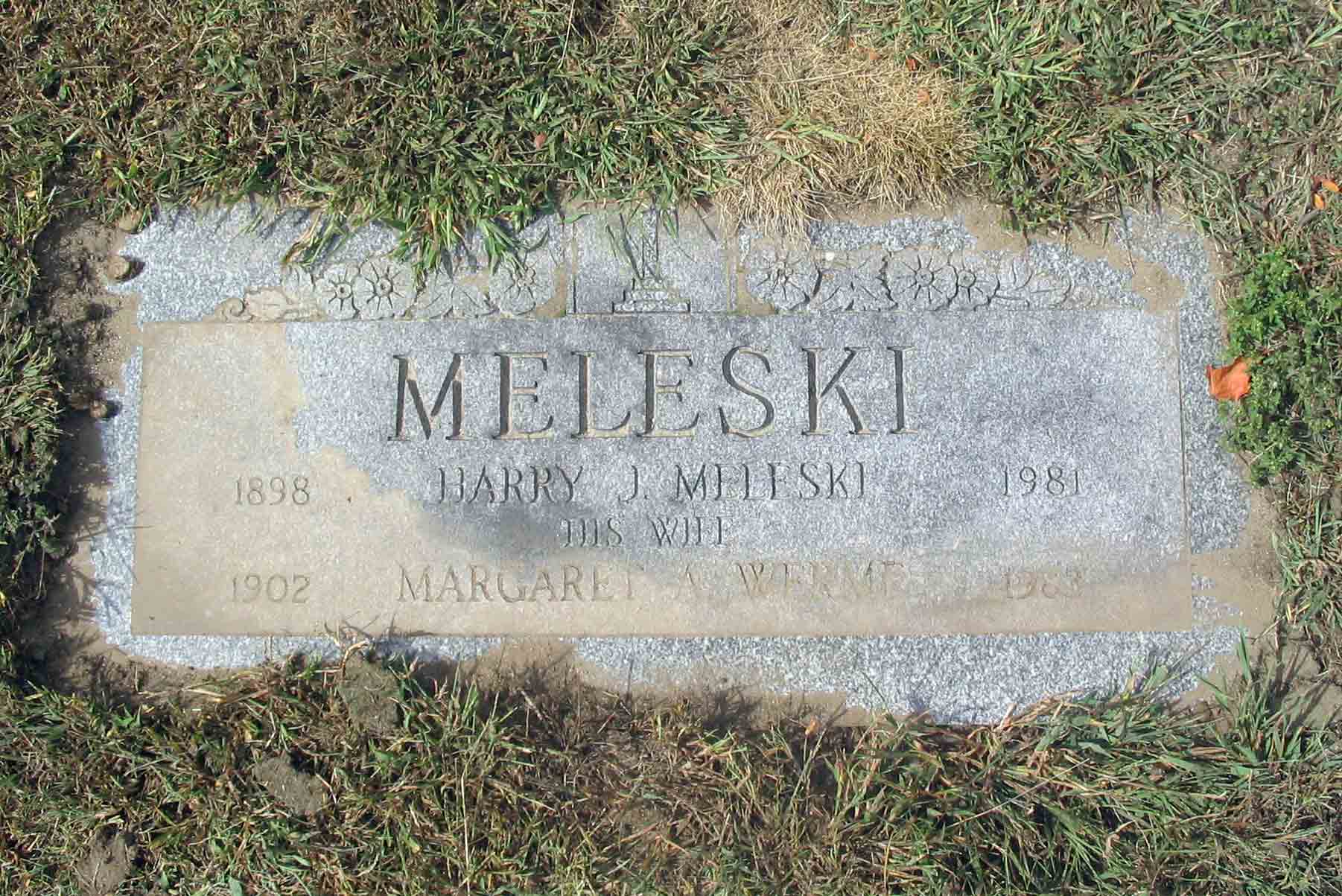
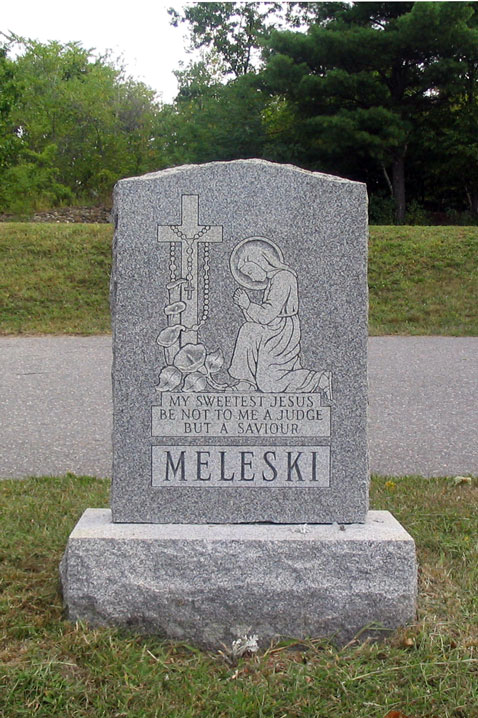
I previously posted the grave marker for Harry Meleski and his wife, Margaret .  The cemetery personnel at Hope Cemetery in Worcester, Massachusetts were extremely helpful and gracious and provided me with a map of Hope Cemetery and a copy of the burial record for Harry and Margaret Meleski, on the spot and all at no cost.

Burial Marker for Harry and Margaret Meleski

St. John’s Cemetery in Worcester, Massachusetts was also very helpful .  They printed out computer records and also provided me with a map of St. John’s Cemetery.

Monument for the Golinski Family - Obverse

Monument for the Golinski Family - Reverse

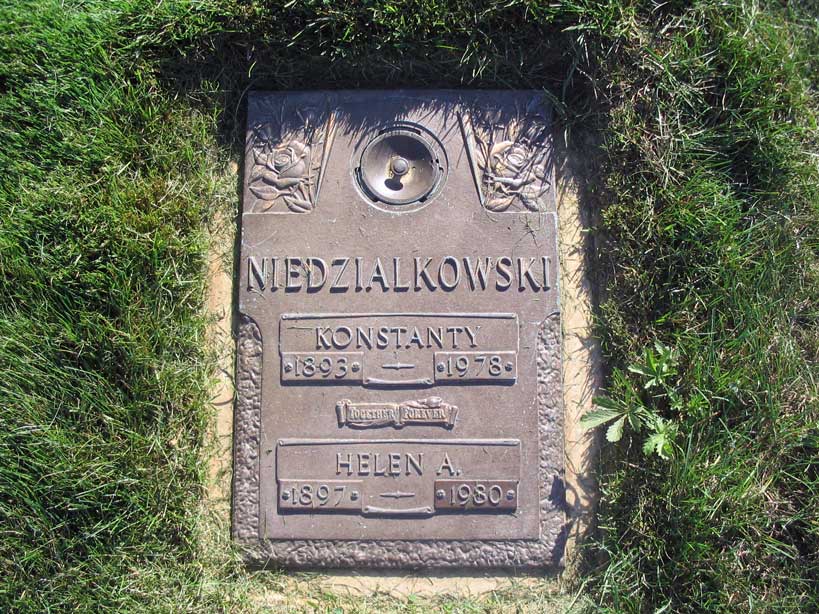
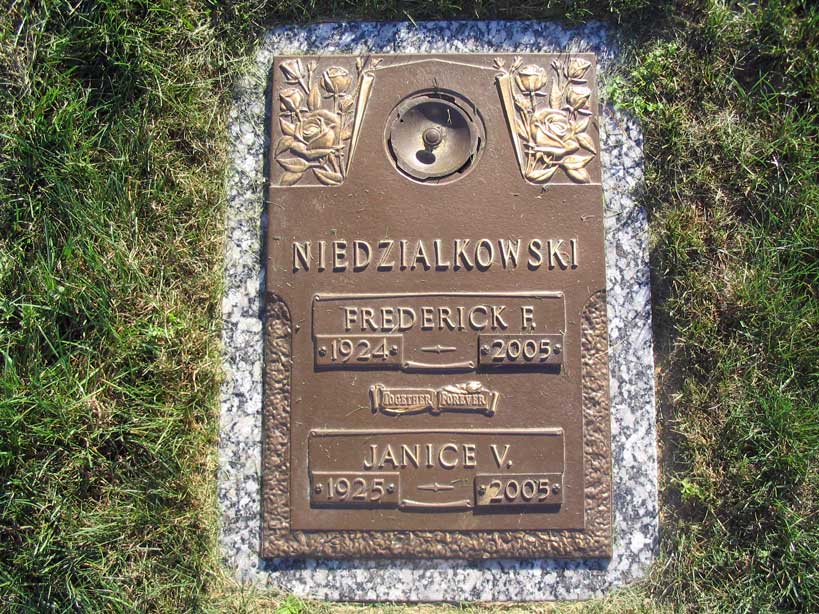
When I visited Worcester County Memorial Park in Paxton, Massachusetts, I arrived just after the office had closed, but the employee there let me in and provided me with grave locations .  He didn’t give me copies of the burial records, but it was after closing, so I didn’t press the question .  I did get a map of the Memorial Park, though .  In this cemetery, all the grave markers are flush with the ground .  Just today, I discovered that I can search for burial information online at the Memorial Park’s website.

Burial Marker for Kostanty and Helen Niedzialkowski

Burial Marker for Frederick and Janice Niedzialkowski

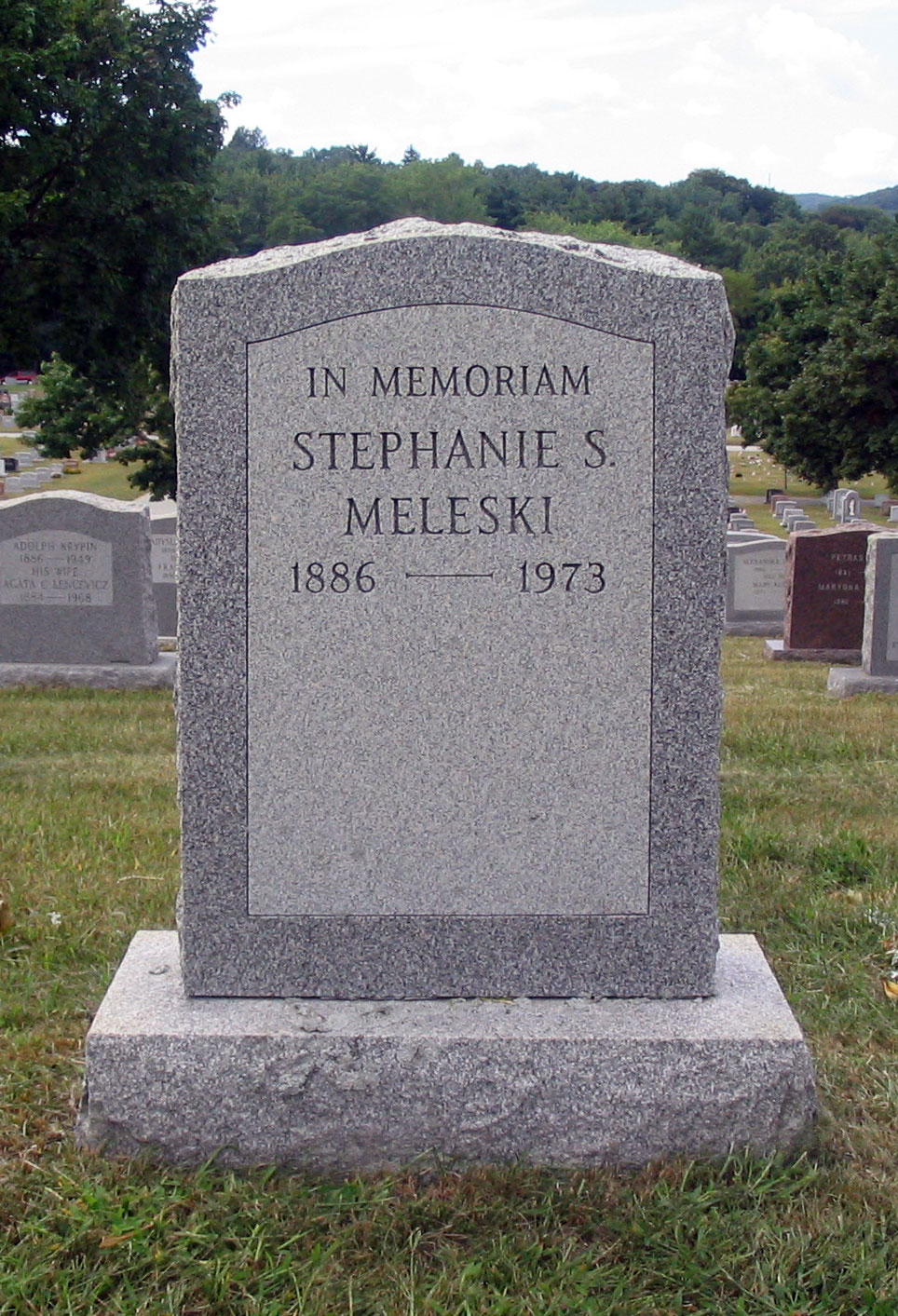
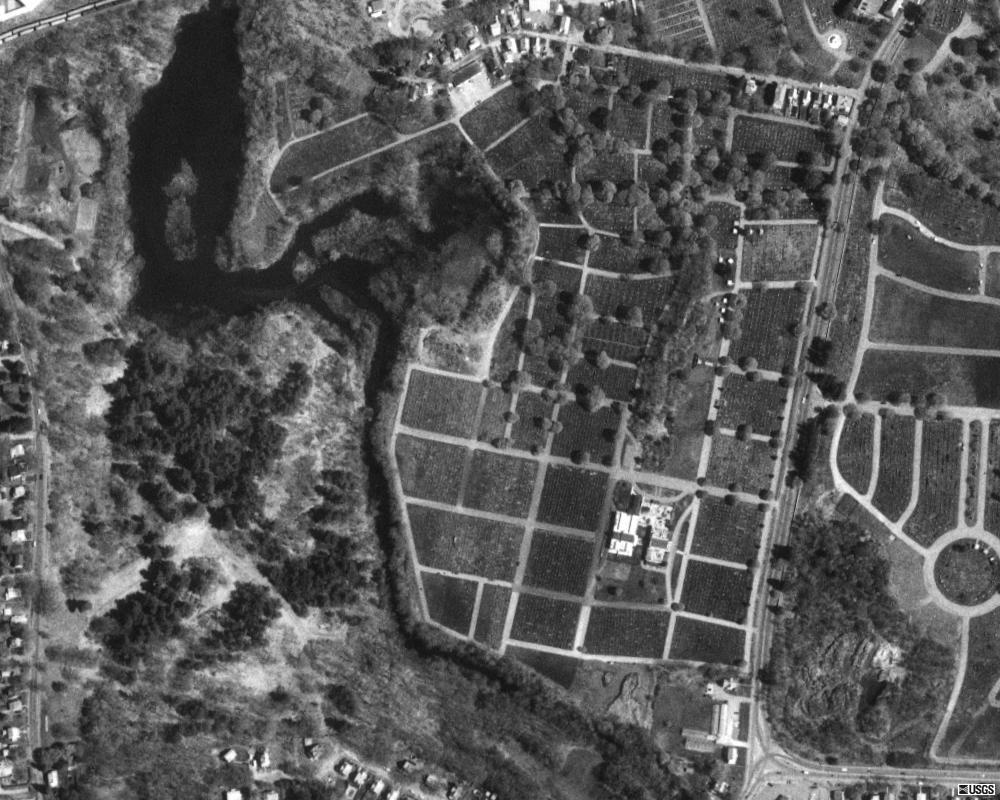
At Notre Dame Cemetery in Worcester, Massachusetts, the employees were busy and a little reluctant to give me on-the-spot help, but they did take time to print out some of the computer files I requested and then they mailed the rest to me later, all at no cost .  I also obtained a map of Notre Dame Cemetery and I obtained an aerial photo of the cemetery from TerraServer.

Monument for Stephanie Meleski - Obverse

Monument for Stephanie Meleski - Reverse

Aerial View of Notre Dame Cemetery in Worcester, Massachusetts

That’s about all for the Massachusetts cemeteries I’ve visited .  There’s more to come from New York, California, and Utah cemeteries.

Copyright © 2006 by Stephen J. Danko
Posted in Chmielewski/Meleski, Goliński, Niedziałkowski | Tagged | Comments Off on Massachusetts Cemetery Records

Aunt Bronisława Has Been Misplaced

Somehow my family misplaced my Aunt Bronisława .  Granted, she died 93 years ago, but how could the family misplace her?  Years ago, my Aunt Helen had prepared a family history and listed a sister called Bertha with no birth or death information, just a notation (Hope Cemetery) Worc. Ma.  This entry was the first time I had heard about this child .  Soon after I read this, my cousin Joe told me that this child was supposed to be buried in an unmarked grave in Hope Cemetery in Worcester, Massachusetts .  He had visited Hope Cemetery, but the cemetery had no record of her burial.

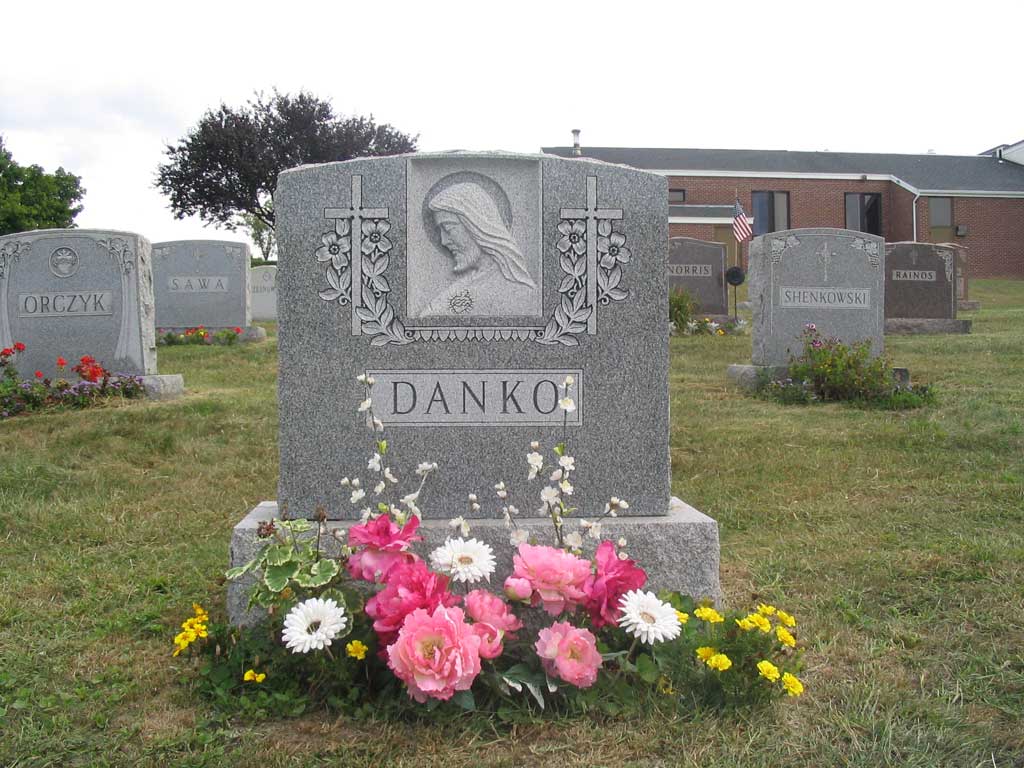
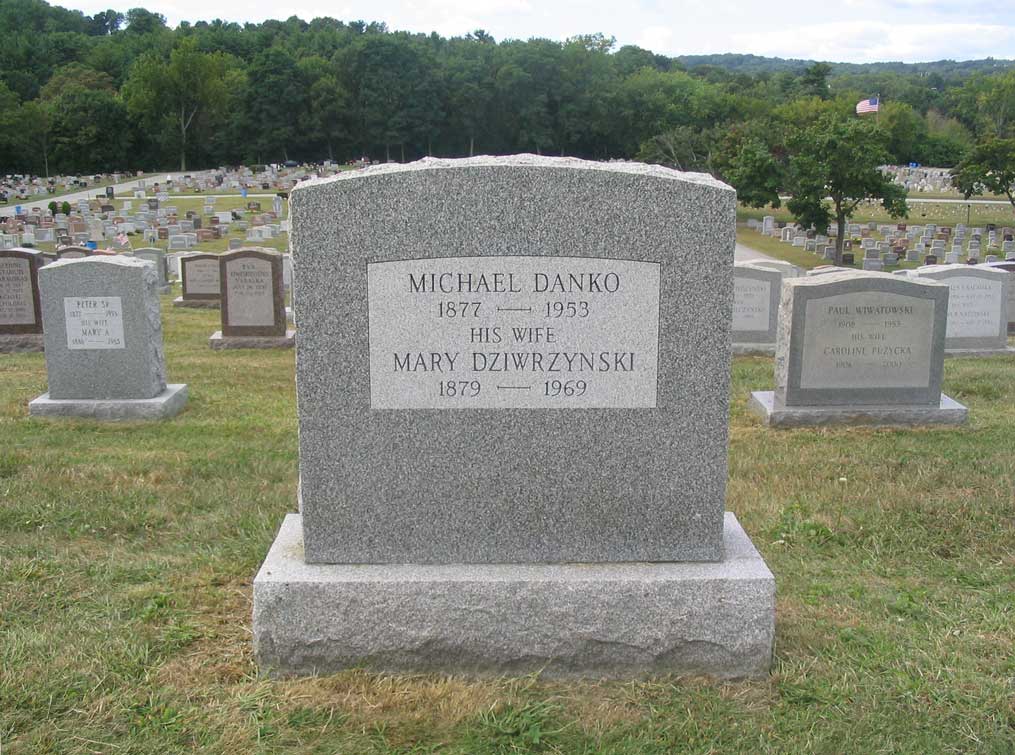
On one of my trips back east, I visited both Hope Cemetery and Notre Dame Cemetery in Worcester (the two cemeteries are right across the street from each other) .  I inquired about Bertha in both cemeteries, but both told me they had no record for her .  In fact, Hope Cemetery had no record for anyone with the surname Danko .  I’m familiar with both cemeteries since I have relatives buried in both, although most of my relatives are in Notre Dame Cemetery .  I have a map of Notre Dame Cemetery, and even an aerial photo of the cemetery .  Several of my relatives are buried there including my grandparents, Michael and Mary (Dziurzynska) Danko.

Notre Dame Cemetery in Worcester Massachusetts Monument for Michael Danko and Marianna Dziurzynska - Obverse

Monument for Michael Danko and Marianna Dziurzynska - Reverse

I visited the Massachusetts Registry of Vital Records in Dorchester and looked through the birth and death indexes there .  Sure enough, I found the child and obtained copies of her birth and death certificates . Â On the birth and death certificates, Bertha’s name was listed as Bronisława Danko .  She was born in Worcester on 03 January 1912 and died on 13 January 1913 of broncho pneumonia .  The death certificate stated that she was buried on 15 January 1913 in Worcester and the undertaker was Lucian Karolkewicz .  No cemetery was listed.

Now, I knew that most of my relatives were buried by Henry Karolkiewicz (Lucian’s son?)who ran Karolkiewicz Funeral Home (later called the Henry Funeral Home) .  Relatively recently, Henry sold the business and the funeral home is now called Henry-Dirsa Funeral Service .  I wrote to Henry-Dirsa and asked if they had any records for the burial of Bronisława .  I enclosed my phone number, email address, and a self-addressed, stamped envelope to be sure they had everything they needed to get in touch with me .  Six months later, I still hadn’t heard from them .  I wrote a second time, and a few days after I sent the second request, I received a call from the funeral home .  They told me that they had no records of burials before the 1950s, but they called Hope Cemetery and Notre Dame Cemetery to try to find where Bronisława was buried .  They received the same response that Joe and I had received:  no record of her burial .  I thanked the gentleman for his efforts and hung up .  A few minutes later, I received a second call from Henry-Dirsa Funeral Home telling me that Notre Dame Cemetery had just called them to let them know they found Bronisława!  The surname had been spelled “Danka” instead of “Danko” .  What luck!

But here is where the story really gets interesting .  Bronisława is buried in Notre Dame Cemetery in a single grave in Section 3, Lot 1464 with two other infants!  The cemetery had no record of ownership of the Lot, but had the following information:

Notre Dame Cemetery No. 01 – Owner: Owner, unknown
Lot – Sec-3 Lot-1464 Grv-1A-1C
UAAAAAAAAAAAAAAAAAAAAA
3                                         3
3                                         3
3                   1C                  3
3                   1B                  3
3                   1A                  3
3                                         3
3                                         3
AAAAAAAAAAAAAAAAAAAAAU
Space Deceased/Reserved  Burial Date     Age  Container
1A       Kurpiel, John            12/21/1912    1Month
1B       Danka, Bronislawa    01/15/1913   1
1C       Stonia, Franciszek    08/30/1914    8Months

AAAEnd of ListAAA  Perpetual Care Unpaid — No Activity Allowed Until Full Payment

So here is the great mystery .  Who are these two other children buried in the same grave with my aunt?  Why are they all buried together in a single grave?  And who purchased the lot?

Well, I’m still working on this mystery .  There is no stone on the grave, so I’m planning to have one set in place this year .  I paid the perpetual care fees that had been accumulating for over 90 years, so now I’m the legal owner of the lot .  The cemetery requires that I place the names of all three children on any stone I place on the grave, so I’m trying to find the birth and death dates for the other two children .  I have had some limited success.

John Kurpiel was born on 30 October 1912 .  Since he was buried on 21 December 1912, I assume he died a few days before he was buried, although I haven’t yet found a death record for him.

Franciszek Stonia is a more of a mystery .  I haven’t found a birth or death record for him, yet .  He was buried on 30 August 1914, so he probably died a few days before then .  He was 8 months old when he died, meaning he was probably born in December 1913.

The last time I was in Massachusetts, I visited the Vital Records Office in Dorchester again .  Unfortunately, they had just transferred all the records from 1910-1915 to the Massachusetts Archives .  So, I went over to the Archives .  When I arrived there, they told me that they had just sent all the 1910-1915 death records out to be microfilmed!

I’m planning to be in Massachusetts in July, so I’ll stop by the Archives again and try to find the missing records .  In any case, there will be a stone on Aunt Bronisława’s grave by the end of the year.

Copyright © 2006 by Stephen J. Danko
Posted in Dańko, Dziurzyński | Tagged | 3 Comments

The Church in Dubiecko and What I Found There

Yesterday, I showed how to find the parish church for a town in Poland by using a gazettee.  Two other gazetteers that cover Galicia are the Skorowidz Miejscowości Rzeczypospolitej Polskiej (Index of Place Names of the Republic of Poland) and the Genealogical Gazetteer of Galicia by Brian J. Lenius. There are others.

To be honest, I didn’t need to consult a gazetteer to find out the parish for Nienadowa was in Dubiecko.  My Uncle Joseph and his wife Helen had been there during Communist times and their son Joe sent me copies of some postcards on which the pastor of the Dubiecko parish had written some information.  In the year 2000, I visited Dubiecko and Nienadowa with two friends of mine to see what I could find.

Dubiecko Church Exterior
Dubiecko Church Interior

Upon arriving at the parish church (Parafia Rzymskokatolicka pw. Niepokalangeo Serca NMP w Dubiecko – Roman Catholic Parish of the Immaculate Heart of the Blessed Virgin Mary in Dubiecko) just before noon, we found the church all locked up except for the foyer in the back of the church.  We looked through the windows into the church and saw a History of the Church hanging on one wall.

History of the Church in Dubiecko

Translated into English, the history reads as follows:

History of the Church

Piotr Kmita, governor of Lubelski, founded the first church in Dubiecko. Construction was completed about 1407 and the church was located in the place currently known as Castle Park  Kmita also funded and constructed the second church in Dubiecko named Holy Spirit. At the beginning of the 16th century Stanislaw Stadnicki of the Lutheran faith, took both Churches from the Catholic community.  Andrzej Stadnicki, Stanislaw’s son, returned them 40 years later. Jerzy Krasicki demolished the churches and all buildings belonging to the church. Catholics practiced their religion in a small chapel located in the same place as the current church, which grew with time and served for 130 years until 1926.  Father Marcin Karakulski started to collect funds to build a new church.  In 1934, Father Gornicki began construction of the new church. After he died, construction was continued by Father Pawlikiewich and Father Jedziniak, and stopped when walls reached half the height of the windows.  From 1939-1948 construction was halted due to World War II.  Construction was resumed and was finished four years later in 1952 by Father Kazimierz Lisowicz.  On August 24, 1952, his Excellency F. Barda consecrated the new church and assigned the name Sacred Heart of Holy Mary and Holy Apostles Simon and Judas Thaddeus.  The church is 49 meters long and 41 meters wide in the shape of a cross.  The architect Tadeusz Pisiewicz from Lwow designed the Church. The interior painting was designed and executed by Prof. Stanislaw Jakubczyk from Krakow.  Father J. Mucha designed the site of the altar in the church.  His Excellency Bishop Ignacy Tokarczuk consecrated the 38 pipe Organ made by the Theodor Bochme Company.  His Excellency Bishop St. Jakiel consecrated the new altar made of murmur and placed there relics of Saint Mary Goretti.  Barbara Borkowska from the Art Academy of Krakow designed the altar and presbytery.  Dr. Tyhcik, originally from Dubiecko and now Adjunct Professor with the Art Academy in Krakow, decorated the interior in collaboration with the art committee of Kuri Metropolitan in Krakow.

At noon, just as we were leaving, a nun arrived to ring the church bells and say the Angelus.  She graciously let us into the church so we could take pictures and she spent some time telling us about the church.  Unfortunately, none of us could speak Polish well enough to understand what she said, but I did get her description on video tape!

We walked out back to the rectory, but nobody answered the bell.  Since a mass was scheduled at 4 PM that day, we decided to return at that time to see if the parish still held the historical registers of baptisms, marriages, and deaths.

Returning at 4 PM, we found the pastor of the church at the rectory.  He brought out several volumes of the church registers, but he told us that many Americans ask to find their ancestors in the registers, but no one ever finds anything.  Moreover, he said, some of the registers were missing and he didn’t know where they were.  Nonetheless, he spent several hours with us, going through the registers, looking for documentation of my ancestors.  In the time we were there, we found the record of the marriage of my great-grandfather Jakób Dańko to his second wife, Zofia Głowacz.  My great-grandmother, Agnieszka Sowa, had died after a fall when she was picking cherries, and my great-grandfather needed some help raising all the children.  The record of the Dańko-Głowacz Marriage shows that:

  1. Jakub Dańko and Zofia Głowacz were married on 3 September 1896
  2. Jakub was a Catholic, was 53 years old, and was a farmer
  3. Jakub was born in Nienadowa and he resided in house number 207 in Nienadowa
  4. Jakub was the son of Pawel Dańko and Zofia Szymańska
  5. Jakub was a widow and his first wife was Agnieszka Sowa
  6. Zofia Głowacz was Catholic, was 26 1/2 years old, and this was her first marriage
  7. Zofia was born in and resided in Nienadowa
  8. Zofia was the daughter of Jan Głowacz (a farmer) and Marianna Szymańska
  9. The witnesses to the marriage were Jakub Sowa (a farmer) and Marcin Pilch (a farmer)
  10. Banns of marriage were read on August 15, August 16, and August 23, 1896
  11. Reverend Tomasz Rapmowski officiated

The document was written in Latin and in the columnar style typical of Galicia.

Copyright © 2006-2023 by Stephen J. Danko

Posted in Daily Journal | Tagged , , | 17 Comments

Gazetteers, Maps, and Morgs

I know my grandfather, Michael Danko, lived in Nienadowa, Galicia, Austria-Poland, and I know that the church maintained the vital records. How do I find out where the church was? The answer is to consult a gazetteer, such as the Słownik Geograficzny Królestwa Polskiego i innych krajów słowianskich (The Geographical Dictionary of the Kingdom of Poland and other slavonic countries) and is available online.  The Słownik is a massive reference work, consisting of 16 volumes. It was written between 1880-1902, which just happens to be the time period when my grandparents were living in the old country.  The Słownik provides descriptions of the villages, regions, mountains, and rivers in the area and provides rich geographical and historical information about the areas my ancestors lived, at the time they lived there.  It also tells where the parish was for each village.

Take a look at the Słownik entry for Nienadowa.  Unfortunately, everything is in Polish! Because most people reading this blog can’t read Polish, I’ve provided the translations below .  There are actually two entries for Nienadowa, one for the mountain near the village, and one for the village itself.

Nienadowa, mountain top under a village of the same name, Przemyśl county, see Nienadowa village.

Nienadowa, Ruthenian Nenadowa, village, Przemyśl county, 28 kilometers northwest of the county court in Przemyśl, 3 kilometers east of the post office in Dubiecko.  To the east lie Babice, Skopów, Kramarzówka (in Jarosław county), to the northwest Hucisko Nienadowskie, to the west Śliwnica, Dubiecko, and Ruska Wieś (in Brzozów county), to the south Iskań (in Dobromil county) .  Along the southwest and south borders the San River flows from the northwest to the southeast; first it turns to the southwest and finally to the east.  From the left shore it flows into the San within the limits of the village:  then Kamieniec, flowing from the north in Hucisko Nienadowskie, carrying off numerous streams from both banks then Świnka, flowing from the north to the southwest.  Country buildings lie in the Kamieńca valley (306 meters to the north, 284 meters to the south).  A forest “The Jodłowski Section” occupies the northern part (378 meters), and the forest “Słoniec” occupies the southeast corner. Between the lower course of the Kamieńca and Świnki it rises to the left bank of the San “The Hill of Świnki”; in the western part on the boundary of Dubiecko “Gabiński Hill” (361 meters), and in the northeastern part at the Kramarzówski border “Nienadowa” (up to 443 meters; triangulation mark) .  Through the southern part of the village goes the leading track in Przemyśl, by way of the picturesque valley of the San River through Dubiecko to Dynów.  The greater property has 675 mórgs (1 mórg = 1.422 acres) of arable land, 72 mórgs of meadows and gardens, 49 mórgs of pastures, 818 mórgs of forests; the lesser property has 1452 mórgs of arable land, 153 mórgs of meadows and gardens, 312 mórgs of pastures, 184 mórgs of forests.  In 1880 there were 1823 inhabitants in the community, 109 manorial landowners (among them, 1625 are on the Roman Catholic shore).  The Roman and Greek Catholic parishes are in Dubiecko.  In the village there is a full-time, one-room school, a manor, a farm, a distillery, a mill, and a ranger’s house.  About old landowners, several details serve the village Siarczyński (Rkp. Ossolineum, No. 1826).  In 1588, Stanisław Stadnicki ceded Nienadowa in exchange for Łańcut to Anna Pilecka from Sienna, she passed the result of her claim on to Sieniński; afterwards the Derszniaks, the Krasiecs, and the Dembińskis held the town.

Source: Chlebowski, Bronisław, Władysław Walewski, and Filip Sulimierski, 1886, Słownik Geograficzny Królestwa Polskiego, Warsaw, Volume 7, page 101

One term that may be unfamiliar is mórg .  A mórg is a measure of area – theoretically the amount of land one man could plow in the morning.  The actual size of a mórg varied between the partitions: 1 mórg in the Russian partition was 1.388 acres, in the Prussian partition a mórg was 0.631 acres, and in the Austrian partition a mórg was 1.422 acres.  If a mórg was the amount of land one man could plow in a morning, I suppose this means that the farmers in the Prussian Partition were less industrious than those in the other partitions! To round out today’s discussion, Take a look at a 1910 Military Map of the area.  A whole set of these 1910 military maps of central Europe is available.

You’ll notice how close Nienadowa is to the parish church in Dubiecko, and you’ll notice how close Nienadowa is to Babice.  You may recall from a previous post that my grandfather stayed with Isaac Flichtenfeld, the umbrella maker, when he first came to America, and you may also recall that I discovered that most Flichtenfeld immigrants in the Ellis Island records were from Przemyśl (Nienadowa is in Przemyśl county) and one was from Babice, the next village down the road.

Hmmm… things are starting to connect!

Copyright © 2006-2025 by Stephen J. Danko

Posted in Daily Journal | Tagged , , | Comments Off on Gazetteers, Maps, and Morgs

When Genealogists Become Family Historians

The terms genealogy and family history are generally used interchangably, although the terms can mean quite different things .  Genealogy uses facts such as births, marriages, and deaths to define family relationships and documents these facts with source materials such as vital records .  Genealogy can show the descendants of a single individual or the ancestors of an individual . Â Family history, on the other hand, describes individuals and families through their biographies and in context with local, national, and world history .  Sooner or later, many genealogists become interested in more than just who is related to whom, and seek to understand how historical events affected the lives of their ancestors .  We may want to know why our ancestors immigrated to the United States, or why they chose a particular career .  Consequently, we may need to study local, national, and world history .  We may need to look into letters written by our ancestors, and we may want to find out where they went to school and where they worked.

One important aspect of my own family history is to discover where my ancestors lived, why my grandparents came to this country, how they got here, and how they adapted to life in their new environment .  Knowing where my ancestors lived is also very important in order to find their birth, marriage, and death records, and thus to extend my pedigree further into the past.

Passenger Manifest for Michael Danko - 1905

Passenger Manifest for Michael Danko – 1905

The passenger manifest for my grandfather, Michael Danko, provides an important clue to learning where he was born and where the records on his ancestors are located (click on the image above to enlarge the image) .  On his passenger manifest, my grandfather reported that he was from Nienadowa, his nationality was Austrian, and that he was Polish .  From studying history, I know that Poland was partitioned by Russia, Prussia, and Austria three times:  in 1772, 1793, and 1795 .  After these partitions, Poland effectively ceased to exist until after World War I, when Poland’s independence was restored .  At the time my grandfather immigrated to America in 1905, Poland was still partitioned and he lived in the Austrian partition, Galicia.

But what about his village, Nienadowa?  And where are the records I need to learn about his ancestors?  In Poland, all the birth/baptismal, marriage, and death/burial records were maintained by the parish church to which the people belonged, but most villages did not have a church .  How do I learn where the church was?  The answers to these questions will have to wait until another day.

Copyright © 2006 by Stephen J. Danko
Posted in Daily Journal | 1 Comment